Yala Peak — 11 Days | Nepal Lion Tours
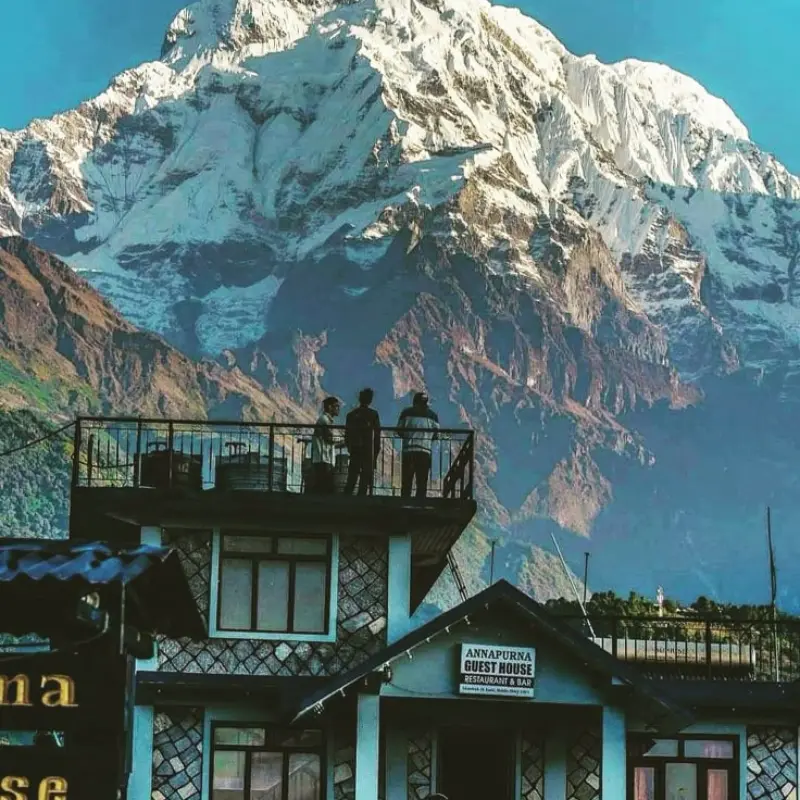
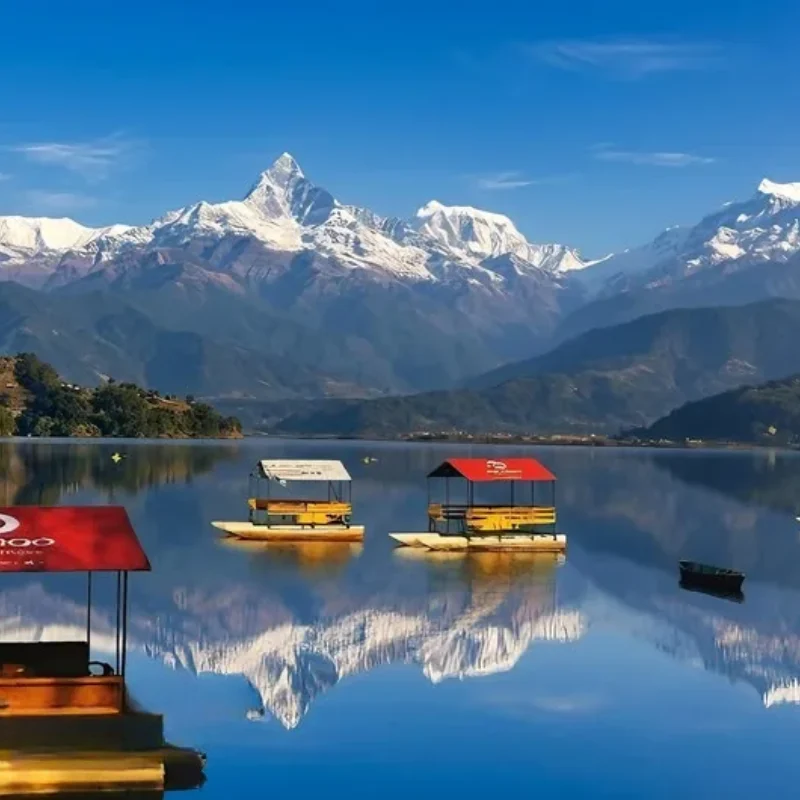
Experience an unforgettable Yala Peak climbing adventure in the Langtang region, trekking through beautiful alpine forests, traditional Tamang villages, and spectacular glacier landscapes before reaching the summit for breathtaking panoramic views of Langtang Lirung, Shishapangma, and the surrounding Himalayan peaks.
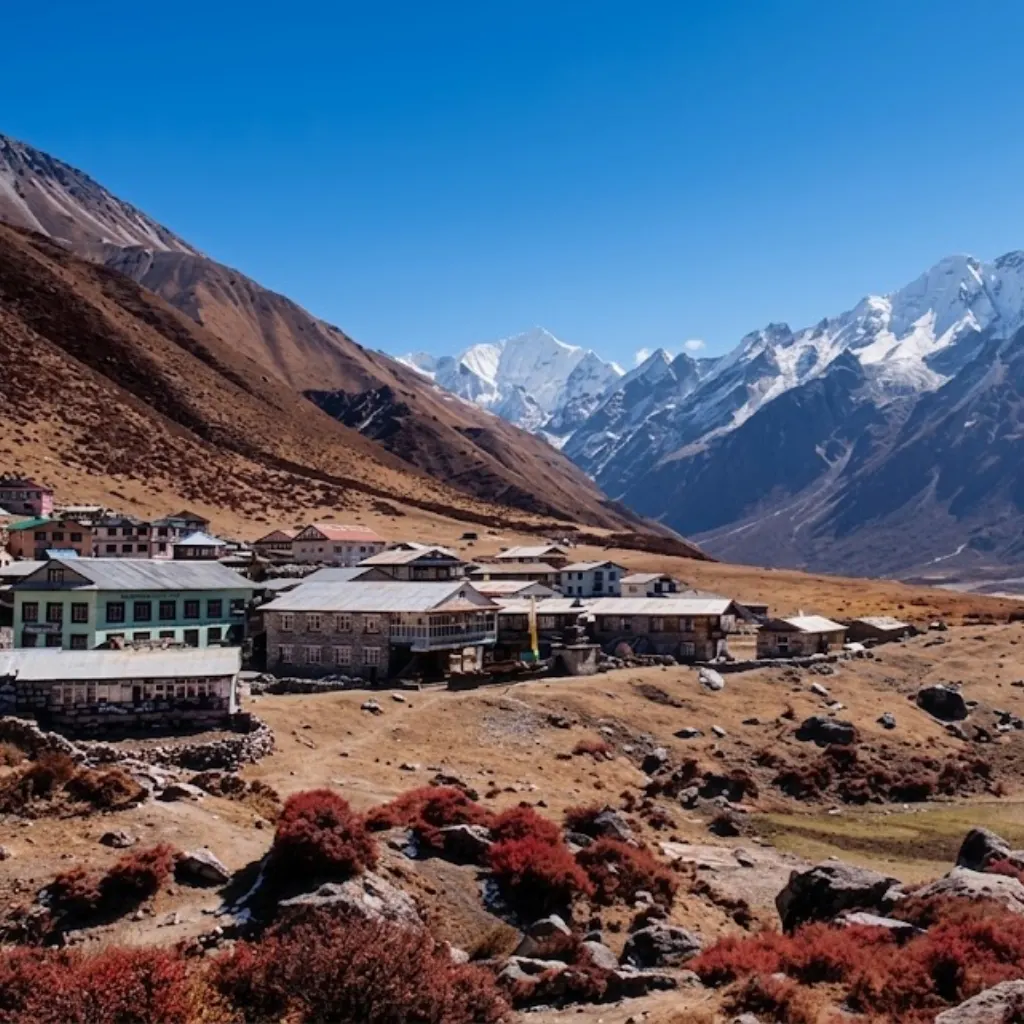
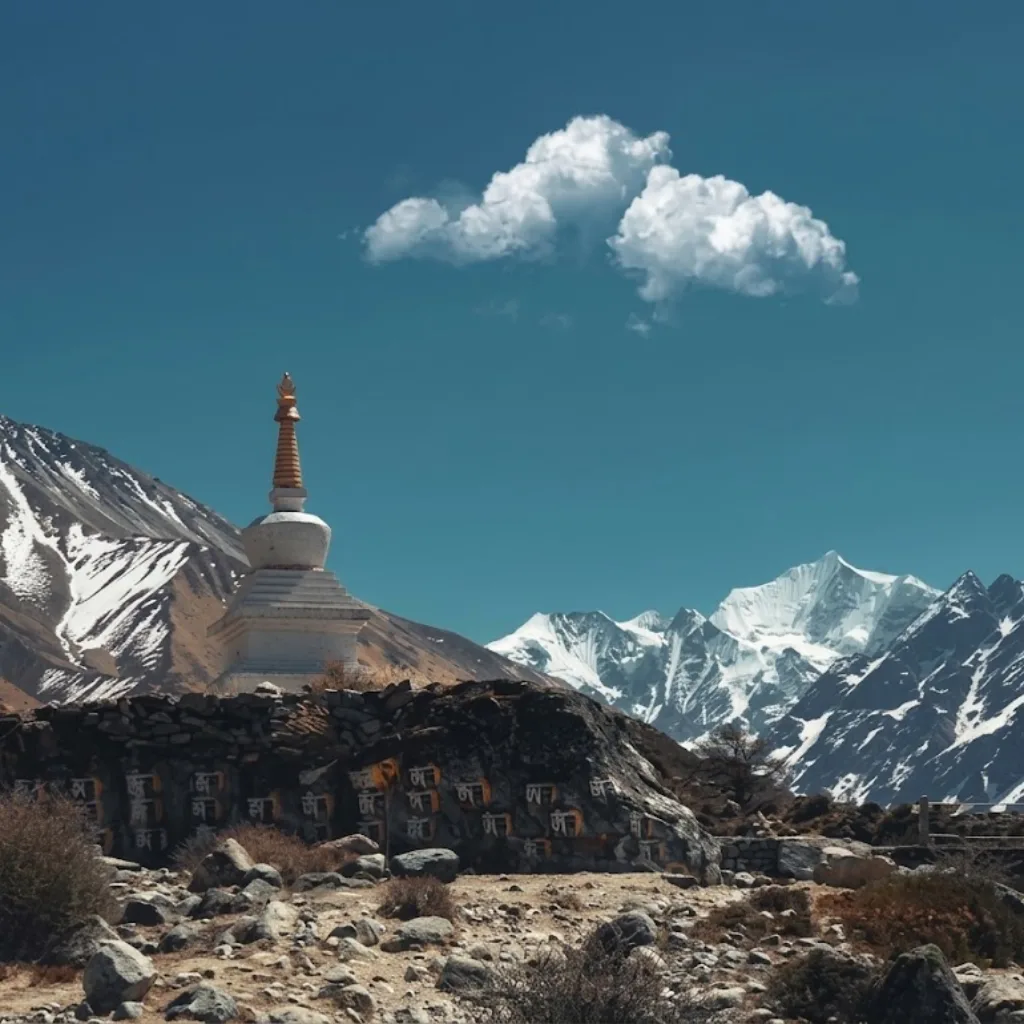
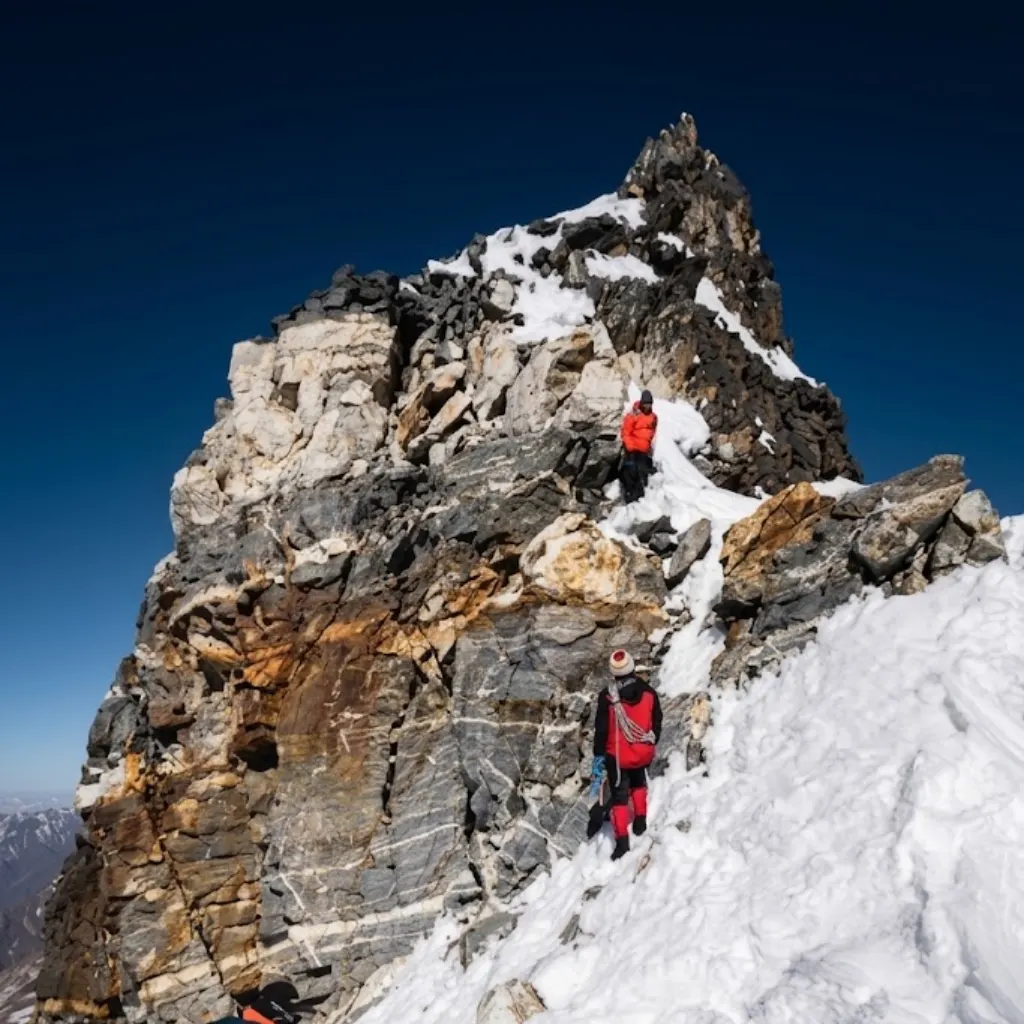
Tour Highlights
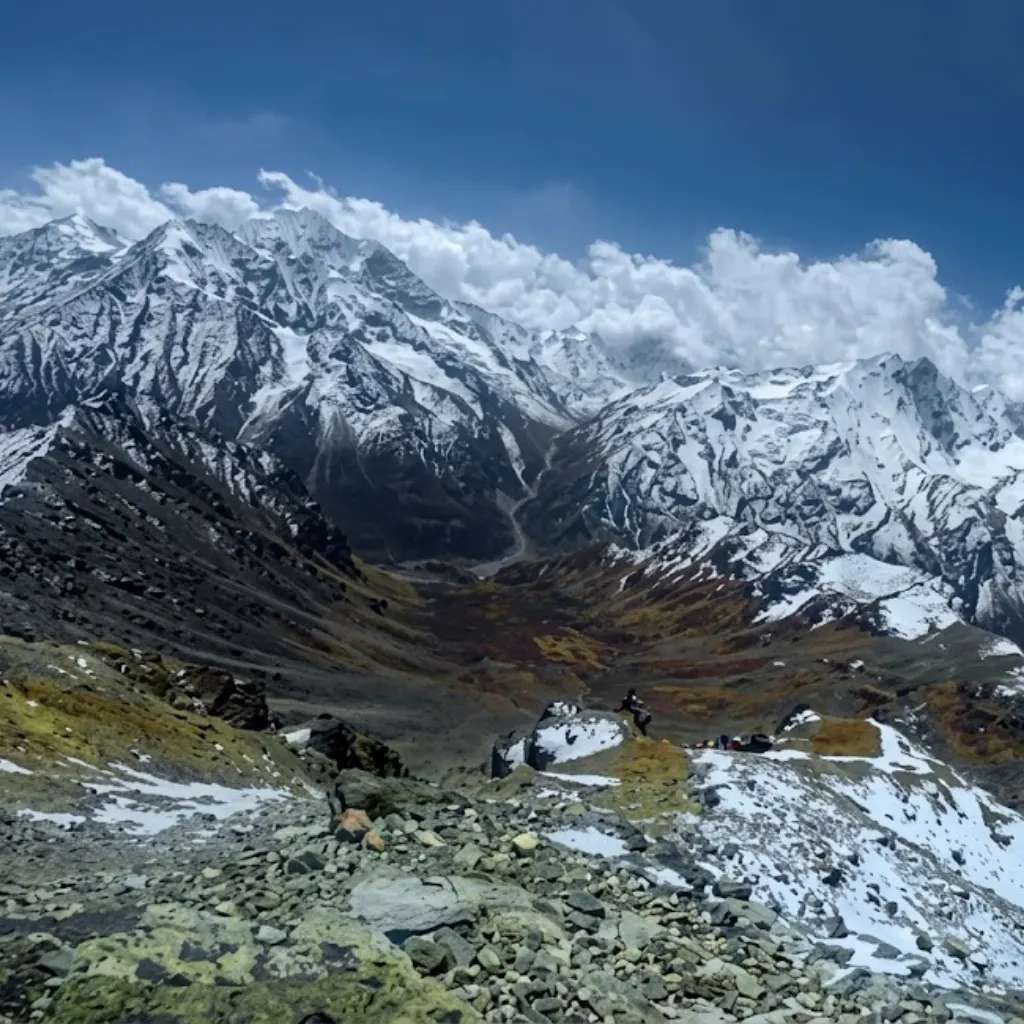
Eleven days feel compressed for a vision of the Himalaya like this, but the Langtang valley packs every landmark into a tight, road-linked loop. These are the moments the Yala Peak programme is remembered for.
- The 5,500 m Summit Sunrise — 5,500 m / 18,045 ft: the pre-dawn climb from Base Camp to Nepal’s classic first trekkers’ peak, reached on foot with an ice axe and crampons.
- Shishapangma Views — 8,027 m / 26,335 ft: the world’s 14th-highest peak, seen across the Tibetan border from the Yala summit, with the whole Langtang Himal below.
- Kyanjin Gompa and the Cheese Factory — 3,870 m / 12,697 ft: the valley’s highest village, its ancient monastery and the famous Tibetan-style yak-cheese factory.
- Langtang Village — 3,450 m / 11,319 ft: the historic village that gives the valley its name, rebuilt after the 2015 earthquake and now a warm, busy teahouse stop.
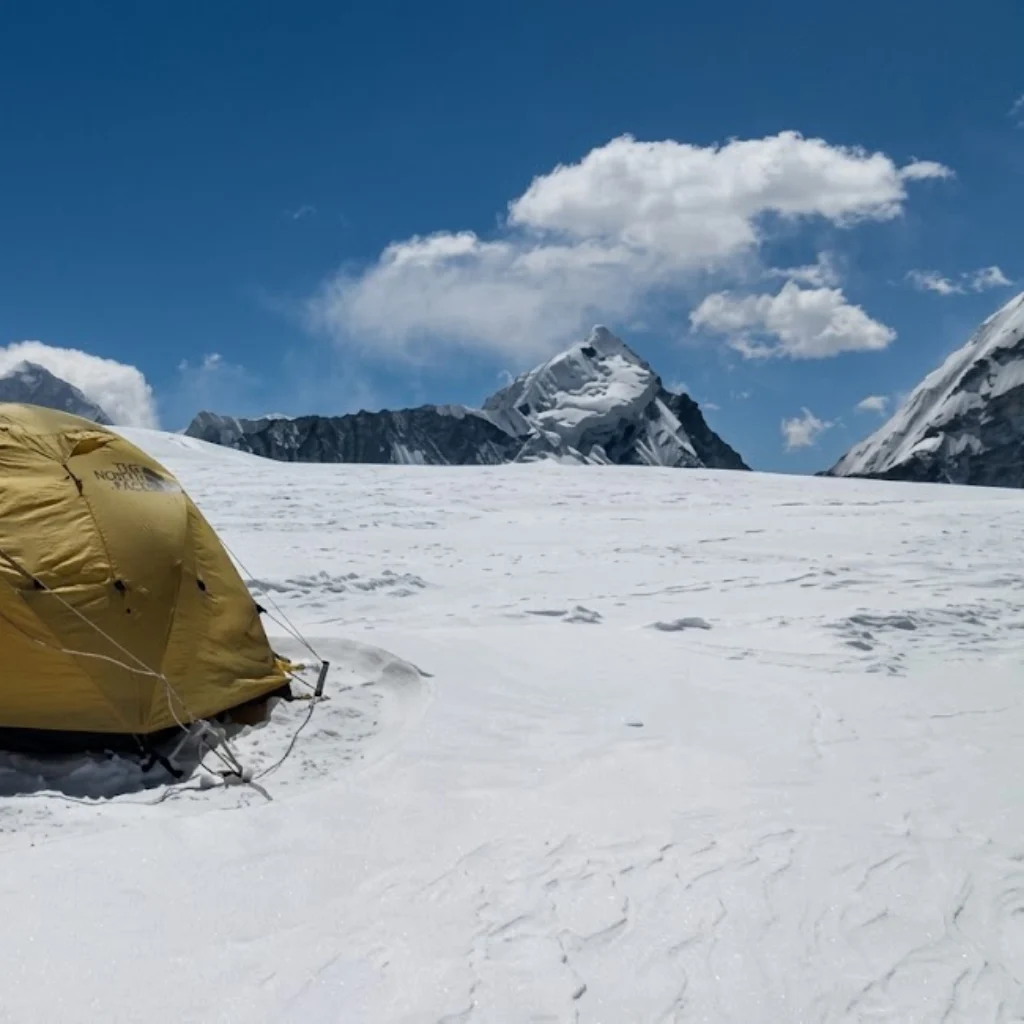
- Yala Peak Base Camp — 4,600 m / 15,092 ft: a night in the expedition tents beneath the summit snowfields, with a full route and equipment briefing from the climbing guide.
- The Riverside Forest Trail — Syabrubesi to Lama Hotel, 1,540 m to 2,450 m / 5,052 ft to 8,038 ft: a green valley walk through bamboo, rhododendron and oak beside the Bhote Koshi.
- A Road-Accessible Himalayan Peak — no flights: the entire trip runs on a 6–7 hour jeep drive from Kathmandu, cutting cost and weather risk from the programme.
- Tamang Culture and Tibetan Buddhism: mani walls, prayer flags and the warm hospitality of the Tamang people who have lived in the valley for centuries.
Yala Peak Overview
The Yala Peak Climbing is an 11-day guided programme in Nepal’s Langtang Valley that pairs the classic valley trek to Kyanjin Gompa with a genuine 5,500-metre Himalayan summit — the shortest, fully road-accessible way to stand on a snow peak along the Tibet border. Reaching a maximum altitude of 5,500 m / 18,045 ft at the Yala Peak summit, the itinerary is graded moderate for a climbing programme: a non-technical trekking peak where the final snow slope is walked with crampons and an ice axe, introduced and supervised by the climbing guide.
The route starts and ends in Kathmandu — no domestic flights are involved. A 123 km jeep drive of 6–7 hours reaches the trailhead at Syabrubesi (1,540 m / 5,052 ft), and the walk follows the Langtang valley through Lama Hotel, Langtang Village and Kyanjin Gompa (3,870 m / 12,697 ft). The climbing sector opens above the valley: a tent night at Yala Peak Base Camp (4,600 m / 15,092 ft), a pre-dawn summit attempt on Day 7, and a descent back through the valley to the jeep and home. From the top, Shishapangma (8,027 m) in Tibet, Langtang Lirung (7,227 m), Ganesh Himal (7,389 m) and Dorje Lakpa dominate the horizon.
With Nepal Lion Tours, the Yala Peak programme starts from USD 973.75 per person on the standard tier (5% OFF the regular USD 1,025) and USD 1,315 per person on the luxury tier, with group discounts from two trekkers and a small-group cap of 10. The package includes the Kathmandu–Syabrubesi–Kathmandu jeep transfers, the Langtang National Park and TIMS permits, a licensed trekking guide, full-board meals, teahouses plus the tent camp at Base Camp, a 3-star Kathmandu hotel with breakfast, and the provided down jacket, sleeping bag, duffel bag and trekking map.
Guide’s Note — Nepal Lion Tours
From our experience, Yala Peak is where a Langtang valley trekker becomes a first-time climber. The summit is objectively easy for a Himalayan peak, but it still demands an alpine start in the cold and a steady pace on the snow above 5,200 m — the kind of morning that rewards good boots, warm kit and a guide who manages the timings. That is why we run the summit day with climbing gear, rope systems and route decisions handled by the team, so you are left with just your footing, your breathing and a sunrise you will talk about for years.
— Nepal Lion Tours Lead Trekking Guide
What Makes Yala Peak Special?
The 5,500 m summit is the centrepiece — one of Nepal’s most accessible snow peaks and the classic first Himalayan summit. Yala Peak is a non-technical trekking peak: climbers walk the final snow slope in crampons and ice axe, with a short fixed rope only if the season’s snow conditions call for it, and from the top the panorama runs across Shishapangma (8,027 m) on the Tibetan side, Langtang Lirung (7,227 m), Ganesh Himal (7,389 m) and Dorje Lakpa — an 8,000-metre summit line-up few shorter itineraries bring together.
The trip also bundles the Langtang Valley trek into the same 11 days, so you get more than a summit. Day 5 reaches Kyanjin Gompa (3,870 m / 12,697 ft) with its famous yak-cheese factory and glacier views; Day 6 moves to the tented camp at Yala Peak Base Camp (4,600 m / 15,092 ft) with a full route and gear briefing; Day 7 is the summit day itself. The valley walks back through Langtang Village and the rhododendron and oak forests of Syabrubesi closes the loop in the classic Langtang style.
The road-only access is the other signature. Unlike Everest climbing peaks, Yala needs no flight — the whole itinerary sits within a 6–7 hour jeep drive of Kathmandu, which keeps the trip shorter, cheaper and far less weather-dependent than flight-based Himalayan programmes.
Why Choose Yala Peak?
You choose Yala Peak when you want a genuine snow summit without mountaineering experience, Everest-region prices or flight dependence. For a fit trekker who has walked a Himalayan trail and wants to step into climbing, Yala is the natural first peak — high enough to be a real summit, gentle enough to be doable, and at about half the price of an Island Peak or Lobuche programme.
It is also a flexible private departure: your dates, your pace, a dedicated guide and Nepal Lion Tours logistics managed start to finish. Solo travellers, couples and small groups take the same private itinerary, and because there is no flight leg, the programme is easier to schedule — the jeep rides between Kathmandu and Syabrubesi run to the roadhead on both ends of the trek.
Who Is This 11-Day Yala Peak Climb Suitable For?
The Yala Peak climb suits active trekkers who want a first taste of Himalayan peak climbing without weeks of expedition commitment. If you can walk four to seven hours a day on a rough mountain trail, manage two nights above 4,000 m including a tent camp at 4,600 m, and handle an alpine start on the summit morning, you are ready. It is particularly good for:
- First-time climbers moving up from a Langtang or Annapurna trek who want a real 5,500 m summit rather than another viewpoint.
- Fit trekkers without mountaineering experience — the climb is non-technical and fully guided, so no prior rope or ice work is assumed.
- Travellers on a two-week Nepal holiday who want the Langtang valley plus a summit in one itinerary without flights.
- Solo travellers and couples who prefer a private departure with flexible dates over a fixed-group calendar.
- View-hunters after the Tibetan panorama of Shishapangma and the Langtang range from one vantage point.
- Budget-conscious trekkers who want a Himalayan peak at roughly half the price of the Everest-region climbing peaks.
No climbing experience is required, and the one real caveat is the summit morning: expect a cold pre-dawn start and up to 8–10 hours of effort on summit day — the altitude and the early start do the work, not technical difficulty.
Quick Facts
| Trek Fact | Details |
|---|---|
| Trek Name | Yala Peak |
| Duration | 11 days / 10 nights |
| Region | Langtang Valley, Bagmati Province, Nepal |
| Maximum Altitude | 5,500 m / 18,045 ft at the Yala Peak summit |
| Difficulty | Moderate (non-technical trekking peak) |
| Main Highlight | Sunrise summit with Shishapangma, Langtang Lirung and Ganesh Himal |
| Start / End | Kathmandu to Kathmandu |
| Route | Kathmandu – Syabrubesi – Lama Hotel – Langtang Village – Kyanjin Gompa – Yala Peak Base Camp – Yala Peak Summit – Kyanjin Gompa – Syabrubesi – Kathmandu |
| Typical Walking | 4–7 hours per day (summit day 8–10 hours) |
| Best Season | Spring and Autumn |
| Price From | USD 973.75 per person (list USD 1,025; luxury USD 1,315) |
| Accommodation | Teahouses in the Langtang valley, tent camp at Base Camp, 3-star hotel in Kathmandu |
| Guide | Licensed English-speaking (or Chinese, Korean, Hindi, Nepali) trekking guide |
Yala Peak Climb Route and Elevation
The Yala Peak route is a road-linked valley loop with one true summit push: a jeep transfers Kathmandu to Syabrubesi (1,540 m / 5,052 ft), a four-day walk climbs the Langtang valley to Kyanjin Gompa (3,870 m / 12,697 ft), the climb leaves the trail for a tent camp and the 5,500 m summit, and the return descends the same valley to the roadhead for the drive home. The route gains three and a half thousand metres from the trailhead, then gives almost all of it back over two long descent days.
Yala Peak Climb Route at a Glance
| Day | Trek Route | Altitude | Highlights |
|---|---|---|---|
| Day 1 | Arrival in Kathmandu | 1,400 m / 4,593 ft | Airport transfer, orientation and hotel |
| Day 2 | Drive Kathmandu to Syabrubesi | 1,540 m / 5,052 ft | 123 km jeep ride, 6–7 hours, first Langtang views |
| Day 3 | Trek Syabrubesi to Lama Hotel | 2,450 m / 8,038 ft | Riverside forest trail, 5–7 hours |
| Day 4 | Trek Lama Hotel to Langtang Village | 3,450 m / 11,319 ft | Forest to high valley, monastery, Langtang Lirung views |
| Day 5 | Trek Langtang Village to Kyanjin Gompa | 3,870 m / 12,697 ft | Yak pastures, cheese factory, gear practice |
| Day 6 | Trek Kyanjin Gompa to Yala Peak Base Camp | 4,600 m / 15,092 ft | Alpine terrain, tent camp, summit briefing |
| Day 7 | Summit Yala Peak, return to Kyanjin Gompa | 5,500 m / 18,045 ft | Pre-dawn summit, 8–10 hours, Shishapangma panorama |
| Day 8 | Trek Kyanjin Gompa to Lama Hotel | 2,450 m / 8,038 ft | Valley descent past Mundu, Langtang Village and Ghodatabela |
| Day 9 | Trek Lama Hotel to Syabrubesi | 1,540 m / 5,052 ft | Final forest descent to the roadhead, 4–6 hours |
| Day 10 | Drive Syabrubesi to Kathmandu | 1,400 m / 4,593 ft | 123 km return jeep ride, 6–7 hours |
| Day 11 | Final departure | 1,400 m / 4,593 ft | Hotel transfer to the airport |
Yala Peak Climb Elevation Profile
The elevation profile rises in a steady, sensible curve. The trek starts at 1,540 m / 5,052 ft at Syabrubesi, climbs the valley in four days to the 3,870 m / 12,697 ft high point of Kyanjin Gompa, then makes the only real altitude jump of the trip in the final two days: 4,600 m / 15,092 ft at Base Camp and 5,500 m / 18,045 ft on the summit. From the summit the profile falls hard — back to 3,870 m at Kyanjin Gompa the same evening, 2,450 m at Lama Hotel on Day 8, and 1,540 m at Syabrubesi on Day 9 before the drive returns you to the 1,400 m of Kathmandu.
What that shape means physically is simple: steady, comfortable valley walking for the body of the trip, then one concentrated night and one hard morning above 4,500 m. Sleeping no higher than 4,600 m, alongside the 4,000 m-plus overnight at Kyanjin Gompa two nights earlier, is the acclimatisation design of the itinerary — you gain altitude slowly on the summit morning and return to a lower camp the same day. A trekking map and elevation profile are part of the trip materials provided by Nepal Lion Tours, so you can follow every gain and loss on the ground.
How to Get to the Yala Peak Climb
Getting to Yala Peak is the easiest part of a Himalayan climbing trip: the whole programme is based on road travel from Kathmandu. There is no domestic flight on the Yala route — the trailhead at Syabrubesi sits at the end of the Pasang Lhamu Highway, about a 6–7 hour drive from the capital.
Kathmandu to Syabrubesi: The Gateway Road
| Option | Approx. Travel Time | Best For |
|---|---|---|
| Private jeep | 6–7 hours | Flexible travellers in a private group |
| Shared tourist jeep | 6.5–8 hours | Budget-conscious small groups |
| Local bus | 7–9 hours | The most economical choice, with worst comfort |
Road times are approximate and vary with traffic, weather and roadwork. On Day 2 the itinerary uses a private jeep through the Trisuli Bazaar valley and up the Pasang Lhamu Highway — comfortable enough for the ~123 km distance, and arranged by Nepal Lion Tours with window seats for the mountain views that open up as the road gains the Langtang valley.
From Syabrubesi the Trek Begins
Syabrubesi (1,540 m / 5,052 ft) is the trailhead, and Day 3 morning marks the start of the walk. The first trekking day follows the Bhote Koshi river upstream through a lush forest of bamboo, oak and rhododendron — a pleasant, green start that climbs softly toward the simple lodges of Lama Hotel (2,450 m / 8,038 ft). From there the trail continues through the forest, steepens after Rimche, and breaks into the open upper valley at Ghodatabela before reaching the rebuilt village of Langtang on Day 4.
The ground between Syabrubesi and Kyanjin Gompa is the same classic Langtang Valley trail used by valley trekkers — well-defined, waymarked and lined with teahouses every two to three hours. The guide confirms the roadhead and local conditions each morning, and there is no river-crossing or route-finding challenge once you leave the jeep behind.
Road Conditions and What to Expect
The Kathmandu–Syabrubesi road is a mountain highway — engineered and drivable, but not a fast motorway. The first hours climb from the Kathmandu valley toward Trisuli Bazaar on the Prithvi Highway, then join the Pasang Lhamu Highway for the twisting ascent through the Langtang range. Expect narrow bends, occasional construction delays and, in monsoon, the possibility of landslide repairs — exactly why the itinerary’s drive days are written as full half-days (6–7 hours) rather than quick hops.
The return on Day 10 is the same road downhill, and the schedule keeps the drive in a full second half of the trip so there is no pressure to rush it. In dry season the transfer is straightforward; Nepal Lion Tours keeps the jeep to the itinerary and makes comfort stops, so the road days read as scenic transitions rather than endurance.
Guide’s Note — Nepal Lion Tours
In our experience of operating Langtang departures, the Kathmandu–Syabrubesi drive is the section trekkers under-prepare for. It is not difficult, but a bumpy 6–7 hours after a long international flight can set a tired tone for Day 3. We recommend sleeping properly in Kathmandu on Day 1, drinking plenty of water on the drive, and treating the last hour before Syabrubesi as plain arrival time — the valley itself will do the inspiration. From the trailhead the programme settles into its own gentle rhythm.
— Nepal Lion Tours Lead Trekking Guide
Returning to Kathmandu After the Trek
The trek ends where it began: at the roadhead. On Day 9 the descent reaches Syabrubesi (1,540 m / 5,052 ft), and on Day 10 the Nepal Lion Tours jeep collects the group for the ~123 km drive back to Kathmandu, arriving in the late afternoon. After checking back into the 3-star hotel, the evening is free for a hot shower, a proper meal and a look around Thamel before the Day 11 airport transfer.
The return drive uses the same private vehicle and driver as the outward leg, so the group stays together for the whole road segment. If you are extending your holiday, the airport transfer on Day 11 can be exchanged for a drop at your onward hotel, or the team can add time in Kathmandu, Pokhara or a Chitwan safari before you fly home.
A Practical Tip for International Travellers
Do not book an onward international flight too tight around the Yala programme — keep a full spare day. Although this itinerary has no flight leg and is easier to schedule than Everest itinerary, the jeep day and mountain weather can still flex by a few hours, and the programme officially ends with the Day 11 airport transfer. A last night in Kathmandu after the trek is the safety cushion most guests choose: it removes any stress from the return drive and leaves time to buy souvenirs or visit the monkey temple at Swayambhunath. Access on this route, once again, is the easiest of any Nepali climbing peak.
Yala Peak Climbing Difficulty, Fitness & Altitude
The programme is graded moderate, and for a Himalayan climbing trip that is genuinely accurate — but moderate does not mean flat. Yala Peak is non-technical: the summit snow slope is walked with crampons and an ice axe under guide supervision, and most fit trekkers complete the itinerary comfortably. The challenge is the familiar mountain trio of altitude, distance and early starts, not climbing skill.
Where the Effort Actually Is?
The summit day is the single hardest part of the trip — and the most rewarding. Day 7 begins before sunrise, gains the roughly 900 m of vertical distance from the 4,600 m Base Camp to the 5,500 m summit, and then descends all the way back to Kyanjin Gompa at 3,870 m — normally 8–10 hours in total, with the climbing guide setting the pace and rope management handled by the team.
Two other days earn their keep. Day 4 (Lama Hotel to Langtang Village) contains the valley’s biggest sustained climb as the trail steepens out of the forest. And the long descent days, Day 8 and Day 9, are deceptively tiring on knees and feet even though they go downhill — most trekkers finish mentally fresh but physically used up, so good boots and trekking poles earn their place in the pack.
Guide’s Note — Nepal Lion Tours
Of all the things that decide a Yala summit, the start time does the most. From our experience running this climb, the groups that summit comfortably are the ones that take the pre-dawn wake-up seriously: gear laid out the night before, a filling but light breakfast, and a calm departure from Base Camp while the snow is still firm. The climb itself is short for a 5,500 m peak, but the cold and darkness make preparation matter — so we hold the full briefing at Base Camp on Day 6 and give you every practical tip the night before.
— Nepal Lion Tours Lead Trekking Guide
How to Prepare for the Yala Peak Climb
- Walk regularly for 6–8 weeks beforehand — three to four sessions a week with one longer day builds the aerobic base the summit morning needs.
- Practicing hills and stairs — the Langtang valley and the summit slope reward leg strength and a steady uphill rhythm.
- Do longer day walks with weight — a loaded 15–20 kg daypack for 5–6 hours mirrors the trek’s real conditions.
- Get used to the early start — a couple of pre-dawn practice walks make the 4 am-adjacent wake-up on summit day feel routine.
- Break in your boots and train in them — blisters are the classic reason trekkers struggle on the descent days, and they are entirely avoidable.
- Avoid last-minute overtraining — the final week before departure is for rest, packing and sleep, not heroics.
How Difficult Is Yala Peak Compared with Other Himalayan Peaks?
Yala Peak sits at the gentle end of the Nepali climbing-peak scale — easier than Lobuche East, Island Peak or Mera Peak on nearly every measure. It is lower (5,500 m against 6,119 m, 6,189 m and 6,476 m), non-technical instead of short-roped, and reached by road rather than by flight or a long approach trek. An experienced trekker will find the walking days easier than a Super-Vista Everest programme and the summit morning comparable to a hard day on a viewpoint like Kala Patthar — but with a real summit under your feet at the top.
The honest comparison works both ways. Any Nepali 5,500 m peak demands proper acclimatisation, respect for altitude and a reasonable fitness baseline — the itinerary’s slow valley build to Kyanjin Gompa and the single night at Base Camp are not optional extras, they are the design. Compared with a pure trekking trip, the difference is the alpine start, the crampons and the commitment to one hard morning rather than a higher bracket of difficulty anywhere else.
Altitude, Acclimatization & Safety
The itinerary tops out at 5,500 m / 18,045 ft on the Yala summit — a genuinely high overnight-and-summit profile that asks trekkers to spend two nights above 4,000 m (Base Camp at 4,600 m and the summit approach), preceded by a slow, four-day valley build. Acclimatisation is managed deliberately across the whole trip, and the one hard altitude day is followed by an immediate descent back to 3,870 m.
Yala Peak Altitude Profile
- Kathmandu — 1,400 m / 4,593 ft: arrival, orientation and proper rest.
- Syabrubesi — 1,540 m / 5,052 ft: trailhead village and first teahouse night.
- Lama Hotel — 2,450 m / 8,038 ft: the forest stop, gained gently beside the Bhote Koshi.
- Langtang Village — 3,450 m / 11,319 ft: the first real altitude night, half a valley higher.
- Kyanjin Gompa — 3,870 m / 12,697 ft: the valley’s high point, with an acclimatisation-shaped afternoon on Day 5.
- Yala Peak Base Camp — 4,600 m / 15,092 ft: the expedition night directly beneath the summit cone.
- Yala Peak Summit — 5,500 m / 18,045 ft: the day’s high point, descended from the same morning.
How the Body Adapts to Altitude
The body adapts by making more red blood cells and breathing more deeply as it spends time at altitude — but the change takes days, which is why slow, staged gain is the only safe strategy. On the Yala itinerary that means: ascended-in-four-days valley walking, a restful afternoon at Kyanjin Gompa on Day 5, a short, walking-up base camp night at 4,600 m, and a summit day that pushes high in the morning only to return to 3,870 m the same evening. The programme also keeps the pace moderate, carries the pack weight low, and insists on hydration and regular eating — the two habits that most prevent the mild headache stage of altitude from developing.
Symptoms of Altitude Sickness to Watch For
- Common, mild symptoms: headache, mild nausea, reduced appetite, fatigue, disturbed sleep, light dizziness.
- More concerning symptoms: worsening headache that doesn’t improve with rest or painkillers, vomiting, loss of coordination, confusion, breathlessness at rest, or a dry, persistent cough.
The rule is simple and never negotiable: stop ascending, rest, and tell your guide. Mild symptoms are common above 3,000 m and usually settle with a rest day and fluids. If symptoms worsen, the correct response is to descend — the itinerary is designed so a descent from Base Camp or the summit returns you to teahouse comfort in a few hours, and your guide is trained to make that call early and calmly.
How Nepal Lion Tours Supports Altitude Safety
- A deliberately staged altitude profile — four climbing days before the first sleep at 3,870 m, and only one concentrated push above it.
- Experienced, licensed guides who monitor the group’s condition daily and control the pace on the summit morning.
- A summit-day structure that never sleeps at the high point — you push to 5,500 m and return to 3,870 m the same day.
- Early communication is encouraged — tell your guide about any symptom, however small; it costs nothing and keeps everyone safe.
- Health and safety framing from Day 1 — the pre-trek briefing covers insurance, hydration, medication and evacuation (by road to Dhunche or Kathmandu, or by helicopter in an emergency), so expectations are set before the trail begins.
Best Time to Climb Yala Peak
The best time to climb Yala Peak is autumn (October to November), when the Langtang skies are clear and the trail is at its driest, with spring (March to May) a strong second choice. The programme runs year-round — winter sums are possible with good gear and the right weather window, and monsoon is seasonally possible but frequently clouded out — so the season you pick mostly decides the quality of the views and the firmness of the snow.
| Season | Months | Weather & Trail Conditions | Mountain Views | Overall |
|---|---|---|---|---|
| Autumn | Sep–Nov | Dry, warm days, cool nights | Excellent on clear days | Best overall |
| Spring | Mar–May | Drying trails, rhododendron bloom | Very good | Highly recommended |
| Winter | Dec–Feb | Cold, snow above 3,500 m, firm summit snow | Good on clear days | Good with preparation |
| Monsoon | Jun–Aug | Wet trail, road landslide risk, leeches | Frequently limited by cloud | Less suitable |
Autumn - September to November
Autumn is the classic Langtang and Yala season, and for good reason. The monsoon has washed the dust from the sky, the trail is dry underfoot, and the air is at its clearest for the whole year — which is exactly what a summit morning wants. Days hover pleasantly warm in the valley, nights are cold but manageable, and the summit window closes reliably around late morning, so the early start usually meets a calm, blue dawn over Shishapangma.
The one seasonal factor to respect is the buildings of dust and smoke haze; but by November the high-pressure weather is stable, making this month groups chase for the highest summiting success. Teahouses are busy but never overwhelmed in this part of the Langtang valley, and the road drive is at its most reliable.
Spring - March to May
Spring is the other golden window, offering drier trails, rhododendron blossom and warming temperatures as summer approaches. April is the storybook month on the Langtang trail — the forests around Lama Hotel flush pink and red with rhododendrons, and the upper valley carries comfortable hiking temperatures with the last of the winter snow still firm on the summit slope early in the season.
The trade-off is weather variety: March can still deliver snow days above Kyanjin Gompa, and May triggers the first of the monsoon’s clouds on some afternoons. For trekkers who want spring flowers and don’t mind a flexible summit-day window, April is arguably the best-value time of year to climb Yala.
Winter - December to February
Winter is a committed season: cold, clear and surprisingly rewarding for well-equipped groups. Day temperatures in the valley stay workable, but nights at Kyanjin Gompa and Base Camp can sit well below freezing, and the summit snow is hard and firm — ideal crampon-holding conditions when the weather window opens. The scenery is at its starkest beauty, with snow on the walls of the upper Langtang valley.
The significant caveat is the cold at Base Camp and the harder logistics of the higher teahouses, which close some lodges for the season. It is doable and done, but it suits trekkers with real winter kit and a flexible schedule who want the valley almost to themselves.
Monsoon - June to August
Monsoon is the least suitable window for climbing Yala Peak — we say this openly and plan around it. The trail and the driving both suffer: the Pasang Lhamu Highway can face landslide closures after heavy rain, the forest section is muddy and leech-populated, and the peaks sit behind clouds for much of the day, hiding the views that make the climb special. The 5,500 m summit also carries deeper, softer snow in the wet season, which makes the snow slope harder to work.
Groups who must travel in the summer months can still reach Yala in weather windows, but the itinerary’s value drops sharply. For a first-time Yala goal we recommend shifting dates into autumn or spring — the difference in experience is as large as any single variable on the trip.
Which Season Should You Choose?
Choose the season by your priority: autumn for the firmest, clearest summit window; spring for flowers and warmth; winter for solitude and hard snow with proper kit; monsoon only if your dates allow nothing else. For photography, autumn and the shoulder of early spring give the cleanest horizons over Shishapangma. For budget, the start and end of peak season (early September or late November) often pair good weather with lighter prices. Whichever you pick, remember mountain weather moves fast at 5,500 m — the guide will use the forecast each evening and flex the summit to catch the window, so bring flexibility rather than a fixed plan.
Guide’s Note — Nepal Lion Tours
On clear autumn mornings, the view that opens from the Yala summit is the one trekkers frame for years — the snow spine of Shishapangma running off toward Tibet, Langtang Lirung catching the first sunlight, and the valley falling away beneath your boots. From our experience, the single photo everyone takes is the group shot with the 8,000-metre wall behind — which is exactly why we time the start for the summit to arrive around sunrise, when the light is at its best and the snow is firmest underfoot.
— Nepal Lion Tours Lead Trekking Guide
Yala Peak Climbing Permits & Regulations
The Yala route enters the Langtang National Park, which brings two regulated requirements — the Langtang National Park Entry Permit and the TIMS card — and, unusually for a Nepali climbing peak, no separate climbing permit at all. Nepal Lion Tours arranges the full paperwork before the trek begins, so on the trail you simply carry your passport and trek on.
Yala Peak Climbing Permits at a Glance
| Requirement | Who Needs It? | Who Arranges It? |
|---|---|---|
| Langtang National Park Entry Permit | Foreign and SAARC trekkers entering Langtang NP | Nepal Lion Tours |
| TIMS Card (Trekkers’ Information Management System) | Trekkers in the Langtang region | Nepal Lion Tours |
No restricted-area or climbing permit applies to the standard Yala route; fees are set by the authorities and can be revised, so the exact figures are confirmed at booking.
Langtang National Park Entry Permit
The Langtang National Park Entry Permit is your admission ticket to the park that protects the whole Yala approach. The 2026 fee standard is NPR 3,000 per foreign trekker, NPR 1,500 for SAARC nationals and NPR 100 for Nepali trekkers, issued as a one-time entry valid for the whole of your trek — you do not pay per day. The permit is processed at the park authorities’ counters including the Dhunche checkpoint on the road, using your original passport and a passport photograph; on the standard itinerary Nepal Lion Tours handles the application in advance and carries the paperwork onto the trail.
The permit matters because the Langtang National Park — established in 1976, Nepal’s second national park — covers the entire upper valley from the forests near Syabrubesi to the Yala snowfields. Park fees go into trail maintenance, the rebuilding of Langtang village and the ranger stations you pass, so the permit is both a legal requirement and a direct contribution to the valley you are walking.
The TIMS Card
The TIMS (Trekkers’ Information Management System) card is a mandatory trekker registration, separate from the park permit, and it is required in the Langtang region. The 2026 fee is NPR 2,000 for a solo registered trekker and NPR 1,000 per person when applied as part of a licensed agency group (with different rates for SAARC nationals), and since the 2023 trekking-registration guidelines, Langtang routes require trekking with a licensed guide — a condition the Yala itinerary is built around anyway.
The card records your route, dates and emergency contact details so that rescue and park services know where you are, and it supports the trekker-management system operated by the Nepal Tourism Board. On the Yala programme it is filed together with the park permit as a single pre-trip paperwork pack — you receive the documents and simply keep them with your passport.
No Separate Climbing Permit Is Needed for Yala Peak
Yala Peak is one of the rare Nepali peaks that carries no separate climbing permit — it is categorised as a free trekking peak, not a licensed climbing peak. Unlike Lobuche East, Island Peak or Mera Peak, which require a Department of Tourism climbing-peak permit with per-peak fees, Yala is climbed with the standard Langtang park permit and TIMS card alone. That is part of what makes Yala the ideal first peak: the paperwork is simple and there is no climbing-peak fee folded into the price.
The classification can change, and the authorities sometimes re-list trekking peaks, so the status is confirmed at booking — but on the current official listings, a Yala team needs exactly the two documents above and nothing more. If you combine Yala with a separately licensed peak later in the same holiday, that peak’s permit would be handled as a separate item by the same team.
Who Arranges the Permits?
Nepal Lion Tours arranges the Langtang National Park permit and TIMS card as part of your pre-trek paperwork — you do not queue for them yourself. The team prepares the applications in Kathmandu using your passport details, provides the physical permit documents, and the guide carries them onto the trail alongside a photocopy of your passport for the ranger checks at Syabrubesi and Dhunche.
The one thing to bring is the original passport with at least six months of validity — permits are issued against it. Fees and regulations are set by the National Park authority and can be revised between seasons, so the final figures are confirmed at booking, and any new requirement introduced by the authorities is simply added to your paperwork pack before you start.
Food & Accommodation on the Yala Peak Climb
The Langtang valley supports a complete teahouse network from Syabrubesi to Kyanjin Gompa, so the Yala programme sleeps in warm, simple mountain lodges for eight of its ten nights, with the one expedition exception being the tent night at Yala Peak Base Camp (Day 6). Food is the same hearty trekkers’ menu across the valley, and the guide coordinates meals and beds each evening, so the trip runs without you carrying a camping kit.
Teahouse Accommodation on the Yala Peak Climb
- Rooms are twin-sharing with foam mattresses, pillows and blankets — simple, warm and more than adequate after a long trekking day.
- Shared bathrooms are the norm in the lower valley; some larger lodges at Syabrubesi and Langtang Village have attached bathrooms.
- Hot showers are usually pay-per-use (around NPR 300–500 at the higher teahouses) — the programme recommends water here over delayed showers.
- Electricity and charging are available in most villages, with sockets in common rooms; power for a phone and camera is easy, but bring a power bank.
- Heated dining rooms are the social heart of every teahouse — wood-stove warmth, trekker conversation and tea in the evening.
- Wi-Fi exists at many Syabrubesi and mid-valley lodges and at Kyanjin Gompa, slow at higher stops; most guests rely on it for messages only.
- Bedding is provided, and the supplied sleeping bag liner plus NLT’s all-season sleeping bag keeps the higher, colder nights comfortable.
The standard falls into two bands: the mid-valley lodges (Lama Hotel to Langtang Village) are comfortable and homely with good food, while Kyanjin Gompa — the valley’s highest and busiest stop — can have several full lodges during peak season, which is exactly why bookings are confirmed in advance by the team.
What Food Is Available on the Yala Peak Climb?
- Dal bhat — the classic trekkers’ energy meal of rice, lentil soup and curried vegetables, with free refills in most Langtang lodges.
- Momos — steamed or fried dumplings, a Tibetan-influenced valley favourite.
- Noodles — chow mein, thukpa noodle soup and instant noodle snacks.
- Fried rice and vegetable rice — reliable, filling lunch or dinner options.
- Pasta and spaghetti — with tomato, cheese or vegetable sauce at the larger lodges.
- Soups — vegetable, garlic or mushroom soups are warming standard starters.
- Potatoes — rosti, fried and boiled forms are local staples.
- Eggs — omelettes and fried eggs are universal breakfast options.
- Porridge, pancakes and Tibetan bread — the classic trekking breakfasts.
- Tea and coffee — from butter tea to lemon tea and instant coffee, always available to sign before you order.
Dal bhat is the standout favourite with good reason: filling, hot, vegetarian by default, and refilled until you finish. The valley teahouses cater well to vegetarians, and vegan and gluten-free diets can be managed with notice — tell Nepal Lion Tours your requirements at booking so the lodges along the route are tipped off in advance.
What Food and Accommodation Are Included?
| Included in the Package | Usually Paid Separately |
|---|---|
| Full-board meals (Breakfast, Lunch, Dinner) on trekking days | Hot showers at village teahouses (NPR 300–500) |
| A cup of tea or coffee with each meal | Alcoholic drinks and soft drinks beyond meal drinks |
| Teahouse accommodation on the trek (twin sharing) | Bottled water and snacks between meals |
| Tent-camp night at Yala Peak Base Camp | Charging fees where the lodge charges for sockets |
| 3-star Kathmandu hotel with breakfast (2 nights) | Wi-Fi where the lodge charges for it |
| Airport transfers in a private vehicle | Tips for the guide, porter and crew |
The boundary is simple: core food, beds, transfers and permits are all in; personal extras are out. The exact inclusions are confirmed in writing at booking, and the guide will point out any pay-per-use service before you order it, so there are no surprise costs on the trail.
Drinking Water on the Climb
Do not assume Langtang tap water is safe to drink — treat or buy it. Bottled water is sold everywhere in the lower valley, and most Kyanjin and mid-valley lodges sell boiled and filtered drinking water (usually NPR 100–200 per litre) for a fraction of the bottled price. The programme recommends a reusable bottle plus water-purification tablets or a filter, which cuts both cost and plastic waste across the trek.
Carry at least 1 litre during the walking day, and aim for 2–3 litres total per day including evening hydration. The combination of altitude, dry air and effort makes dehydration the most common preventable cause of altitude headaches — drink steadily, eat the warm meals, and tell the guide if you become persistently thirsty or urine runs dark.
Staying Comfortable at Teahouses
- Keep a 1-litre water bottle filled by your sleeping bag overnight — at altitude you wake thirsty.
- Use the supplied sleeping bag liner inside the NLT sleeping bag for the cold Base Camp and Kyanjin nights.
- Carry a power bank — sockets are shared, and a charged phone and camera are worth their weight at the summit photo stop.
- Withdraw or exchange cash in Kathmandu — teahouses on the trail rarely take cards, and NPR is king at the higher lodges.
- Dress in layers for the dining room — heated rooms go from cold to roaringly warm in an hour.
- Give the lodge your dietary requirements at check-in — a simple note keeps dinner and breakfast safe and smooth.
Why Book with Nepal Lion Tours?
Nepal Lion Tours is a licensed, locally-run trekking company that actually operates in the Langtang valley, and this Yala Peak programme is the one it runs on the ground. Seven reasons trekkers book this specific itinerary, each matched by a first-hand reality:
- Local, licensed, English-speaking guides — your leader is a trained, government-licensed trekking guide who knows the Langtang valley and the Yala route from daily operation, not from a brochure. The climbing sector is handled by a guide experienced on the peak, responsible for gear, rope management and pace.
- A registered trekking company you can verify — Nepal Lion Tours operates from Kathmandu with a registered agency, verified permits and real operations; there are no middlemen on this itinerary, so you can check the company’s registration before you pay.
- Private departures from two trekkers — this is not a fixed-calendar group tour. Your dates set the departure: solo travellers, couples, friends and families all travel privately with their own guide and jeep.
- The easiest climbing peak in the region, done properly — the programme threads the classic Langtang Valley trek into the approach, so you climb a 5,500 m summit and see Shishapangma without the flights, the crowds or the Everest-region price tag.
- Private transfers and straightforward logistics — the Kathmandu–Syabrubesi–Kathmandu jeep rides are your own vehicle, and the guide coordinates every teahouse bed, meal and wake-up time on the trail.
- Budget-friendly pricing without cutting the experience — from USD 973.75 per person on the standard tier, with the full guide, permits, gear, meals and transfers included — plus a modest luxury tier for private-bathroom and extended comfort at the lower lodges.
- A local team you can contact before and during your trek — a WhatsApp message before departure and the guide’s phone during the trek keeps you connected to a real office the whole time you are in the mountains.
Book the Yala Peak Climb
The Yala Peak programme is one of Nepal’s most bookable climbs — road-linked, non-technical and fully guided, with the 5,500 m summit of Nepal’s classic first peak waiting at the end of a beautiful valley walk. If you can walk four to seven hours on a proper mountain trail and want a real snow summit on a two-week holiday, this is the itinerary that delivers, with the paperwork, transport and gear handled for you from the moment you land in Kathmandu.
Yala Peak Climb at a Glance
- Duration: 11 days / 10 nights
- Price: From USD 973.75 per person (standard tier); luxury tier available
- Difficulty: Moderate — non-technical, fully guided
- Maximum Altitude: 5,500 m / 18,045 ft at the Yala Peak summit
- Accommodation: Teahouses, one tent-camp night at Base Camp, 3-star Kathmandu hotel
- Meals: Full board on the trek, breakfast in Kathmandu
- Permits & Registration: Langtang National Park Entry Permit and TIMS card, arranged by the company
- Transportation: Private jeep (Kathmandu–Syabrubesi–Kathmandu) and private airport transfers
- Guide: Licensed, English-speaking via the local team
- Cancellation: Free cancellation up to 14 days before departure
Ready to Start Your Langtang Valley Adventure?
Secure your dates by sending Nepal Lion Tours a message or booking directly — the programme runs year-round as a private departure, so your travel dates set the schedule. Whether you are a solo trekker, a couple or a small group, the team will confirm availability, tailor the itinerary to your pace and answer any questions about the gear, the permits or the summit itself before you commit.
Contact the Kathmandu team via WhatsApp at +977-9851039020 any time before you book or during the trek itself — the same line that handles your departure also stays live while you are in the mountains. Close your browser tab and send the message: the Yala Peak sunrise is a morning you do not want to be planning from a sim card in a foreign lodge.
Related Langtang Region Treks
The Langtang valley supports a whole family of treks around the Yala Peak programme, from short cultural walks to the full Gosainkunda–Helambu loop — all starting from the same easy roadhead at Syabrubesi and all run by Nepal Lion Tours on the same private-departure model.
| Trek | Duration | Difficulty | Max Altitude | Best For |
|---|---|---|---|---|
| Short Tamang Heritage Trail Trekking | 7 days | Easy–Moderate | 3,160 m / 10,367 ft (Nagthali) | Cultural-first trek at lower elevation |
| Langtang Valley View Trekking | 5–6 days | Easy–Moderate | 3,870 m / 12,697 ft | Short road-access taste of the valley |
| Langtang And Tserko Ri View Treks | 8 days | Moderate | 4,985 m / 16,355 ft (Tserko Ri) | Valley trek plus summit viewpoint |
| Langtang Valley Trekking | 11 days | Moderate | 3,870 m / 12,697 ft (Kyanjin Gompa) | The classic full valley experience |
| Gosaikunda Trekking | 7 days | Moderate | 4,610 m / 15,125 ft (Lauribina Pass) | The sacred glacier lakes |
| Joint Treks of Langtang and Poon Hill | 12 days | Moderate | 3,870 m / 3,210 m | Two regions in one itinerary |
| Langtang Tamang Heritage Trail Trekking | 14 days | Easy–Moderate | 3,160 m / 10,367 ft | Deep cultural immersion at lower altitude |
| Langtang Gosainkunda & Helambu Round Trek | 16 days | Moderate–Challenging | 4,610 m / 15,125 ft | The full cross-country loop |
Most guests pair Yala Peak with a Kathmandu city tour at the start or end of their Nepal holiday, and the road access makes it easy to combine with Chitwan, Pokhara or elsewhere — the team plans combinations into a single itinerary without doubling the logistics. If Yala Peak is the goal, these sibling treks make ideal warm-ups, family alternatives or second trips in the same region.
Trip Essentials
Packing advice, required equipment & gear recommendations
Essential
The Yala programme runs through all three of the trek’s habitats — forest valley, high teahouse and snow summit — so pack for changing conditions rather than a single climate. Nepal Lion Tours provides the down jacket, all-season sleeping bag, duffel bag and trekking map, which removes the two bulkiest items from your luggage list.
Hiking Gear
- Trekking boots: broken-in, waterproof mid to high-cut walking boots with good grip.
- Crampons and ice axe: provided by the team, checked and fitted at Kyanjin Gompa.
- Trekking poles: two-light poles save your knees on the long Langtang descent days.
- Daypack: a 25–35 litre pack for essentials and layers while walking.
- Water bottles or bladder: a 1–2 litre system you can refill with treated water.
- Headlamp or torch: essential for the pre-dawn summit start and late teahouse evenings.
- Light crampon-compatible gaiters (optional): keep snow and mud out of your boots on summit day.
Clothing: Use Layers Rather Than Bulk
- Base layers: two lightweight merino or synthetic long-sleeve tops and bottoms.
- Mid-layers: a fleece or lightweight down mid-layer for the cold upper valley.
- Outer layers: a waterproof-breathable shell jacket and rain trousers for showers and wind.
- Trekking clothes: two pairs of quick-dry walking trousers and one pair of shorts.
- Headwear and gloves: a warm beanie, a buff or neck gaiter, sun hat, and insulated gloves for summit morning plus a thin liner pair.
Layering is everything on this itinerary: hot uphill walking in the forest, cold winds above Kyanjin Gompa, and a genuinely frosty pre-dawn summit. Start mornings in a warm layer, shed as you heat up, and always keep the shell and gloves within reach.
Sleeping and Evening Comfort
- Sleeping bag liner: a silk or cotton liner for teahouse beds and to boost warmth.
- Warm sleepwear: thermal sleep clothes and a good pair of socks for the cold nights.
- Fleece mid-layer and down jacket provided: NLT supplies the down jacket; bring a personal fleece for lodge evenings.
- Small towel and toiletries kit: for the pay-per-use showers at the villages.
Toiletries and Personal Health Items
- Toothbrush, toothpaste and floss
- Biodegradable soap or shampoo
- Hand sanitiser gel
- Sunscreen (SPF 50+) and lip balm with SPF
- Personal first-aid basics (plasters, antiseptic, blister kit)
- Paracetamol or ibuprofen for altitude headaches
- Water-purification tablets or a filter bottle
- Prescription medications with a note from your doctor
- Diarrhoea and rehydration-salt packets
- Eye drops (for dusty, dry higher air)
- Tissues and wet wipes (few lodges have paper)
- A small personal medication bag listing allergies
- Insect repellent for the lower forest days
Electronics
- Smartphone and charger — for photos, messages and the guide’s WhatsApp contact.
- A power bank of 10,000–20,000 mAh — teahouse sockets are shared and sometimes charged.
- Camera (optional) — the Shishapangma panorama deserves more than a phone.
- Universal travel adapter plus a multi-socket extension — helpful at busy lodges.
Charging and Wi-Fi improve as you descend the valley: reliable at Syabrubesi and mid-valley lodges, slower at Kyanjin Gompa, and nil at Base Camp — where the expedition runs on the crew’s supply. Download your maps and e-books in Kathmandu.
Documents and Money
- Original passport with six months’ validity (permits are issued against it)
- Two spare passport photographs (for any paperwork updates)
- Visa and travel documents, plus copies kept separately
- USD or NPR cash — around NPR 15,000–25,000 for showers, drinks and tips (withdraw in Kathmandu)
- A photocopy of your travel insurance policy and emergency contact numbers
How Much Should You Pack?
Pack light, because everything you carry is carried by you on the trail. The sweet spot is a main duffel of 10–12 kg for the porter team plus a 5–6 kg daypack for layers, water, snacks and camera. Nepal Lion Tours provides the duffel bag and sleeping bag, the team handles the shared climbing gear, and teahouse nights need no tent, mat or cooker — the Bali-tight logistics leave room for what actually matters: good boots, warm layers, and the discipline to keep the pack light. Better a clean, light trek than a fully-equipped heavy one.
Read Before You Book
Permits, terms, medical considerations & advisory guidelines
Advisory
Before you confirm your Yala Peak dates, these eight points give you the honest picture of the trip — what the programme includes, what it does not, and the habits that make it a success.
Accommodation and Facilities
Expect simple, warm mountain teahouses rather than hotels on the trek. Rooms are twin-sharing with shared bathrooms at most stops, hot showers cost extra at the higher villages, and electricity is available but shared — the pattern is the same across the entire Langtang valley. Kathmandu nights are the comfort contrast: a 3-star hotel with breakfast on Day 1 and after the trek, with a private airport transfer both ways.
Food and Dietary Requirements
The valley’s teahouse menu covers dal bhat, momos, noodles, soups, eggs and porridge, with vegetarian options at every stop. Vegan and gluten-free needs are manageable with advance notice, and telling Nepal Lion Tours at booking lets the lodges prepare. Expect simple, hearty, fuel-for-walking food rather than a restaurant spread — and note that the Base Camp night is expedition-style cooking back at the tents.
Altitude, Health and Insurance
The programme climbs to 5,500 m with two nights above 4,000 m, so altitude fitness and awareness matter. The staged valley profile is the itinerary’s own acclimatisation design, but you should still arrive well-rested, hydrate hard, and carry travel insurance that covers trekking to 5,500 m including helicopter evacuation — the one policy clause worth checking twice before you fly. Standard Nepali trekking insurance is not the same thing.
Money and Tipping
Bring cash. Teahouses in the Langtang valley do not reliably accept cards. Withdraw NPR in Kathmandu for showers, drinks, snacks and gratuities — a practical figure is NPR 15,000–25,000 for the trail. Tipping is culturally expected and split at the end: a common guideline is USD 8–12 per trekker for the guide and USD 6–8 for the porter per trek day, adjusted for service — and your guide will explain the local custom on the trail rather than leaving you guessing.
Culture and Responsible Trekking
- Ask permission before photographing people, monks or inside monasteries — a smile and a respectful gesture go far.
- Pass prayer walls and mani stones on the left and keep walkways clear for porters and locals.
- Buy water and snacks at the local teahouses — the valley’s lodges are the local economy.
- Leave no rubbish: carry your plastic out to Syabrubesi, bring a reusable bottle and filter.
- Support the Tamang communities directly — the rebuilt Langtang village and its lodges are a community project worth your custom.
- Dress modestly in villages and around the monastery at Kyanjin Gompa.
Route Options
The standard itinerary is the 11-day road-linked Yala programme, but the route flexes around you. Trekkers with less time can shorten the valley by driving straight to Kyanjin Gompa and climbing in a 7–8 day version; those with more can add a rest and acclimatisation day at Kyanjin Gompa, tag Tserko Ri (4,985 m) as a warm-up viewpoint, or combine Yala with the Gosaikunda trek or a Tamang Heritage Trail in a longer circuit. Nepal Lion Tours prices each variation from the same base programme.
Booking and Before You Arrive
- Confirm your dates at least 6–8 weeks ahead in autumn or spring, when the best lodges fill.
- The 5% discount applies on the standard tier — list USD 1,025, standard-price from USD 973.75.
- Expect the Kathmandu hotel and jeep to be confirmed in the booking details before travel.
- Arrive fit to walk 4–7 hours a day — the groundwork decides how much you enjoy the summit.
- Pack for cold even in spring — the summit start is always frosty.
- Share medical conditions and dietary needs at booking so the team can plan around them.
- Read the inclusions list twice — the tent night, full-board meals and permits are all inside the price.
A Few Final Tips
The Yala summit belongs to the early riser. A proper night sleep at Base Camp, layers laid out before dawn, a light breakfast, and a calm start are worth more than any training session. Add the classic routines — hydration, honest reporting to your guide, and a steady place in the rope of the group — and the Langtang programme rewards you with the easiest, cheapest and most beautiful first Himalayan summit in Nepal.
Day-by-Day Itinerary
Explore each day's route, trekking elevation, and activities
Morning
Upon your arrival at Tribhuvan International Airport, a representative from Nepal High Trek & Expedition will warmly welcome you to Nepal. After completing immigration, baggage collection, and customs formalities, you will meet our representative outside the arrival terminal.
Midday
You will be transferred by private vehicle to your hotel in Kathmandu. After checking in, you can settle into your room and take some time to rest after your international journey.
Afternoon
You may spend the afternoon relaxing at the hotel or exploring the nearby streets of Thamel. Our team will ensure that your trekking and climbing arrangements are properly organized.
Evening
In the evening, your guide will provide a detailed briefing about the Yala Peak climbing adventure, trekking conditions, safety procedures, and the itinerary. Our team will also check your essential trekking and climbing equipment and help identify anything that may still be required.
Morning
After an early breakfast, we begin the journey toward Syabrubesi, the main gateway to the Langtang region. We travel by local sharing jeep, following the winding roads through the hills north of Kathmandu.
Midday
The journey passes through rural settlements, terraced farmland, forested hills, and river valleys. Along the way, the jeep will stop at a suitable local restaurant for lunch and a short rest.
Afternoon
As we approach Syabrubesi, the landscape becomes increasingly mountainous. You will pass traditional villages and enjoy views of the surrounding hills and river valleys. The approximately 123-kilometer journey may take longer depending on road and traffic conditions.
Evening
After reaching Syabrubesi, check into your lodge and relax. If time permits, you can take a short walk around the town and observe the traditional Tamang culture and mountain lifestyle.
Morning
After breakfast, we begin our first full day of trekking. The trail initially follows the river before gradually entering the lush forests of the Langtang Valley.
Midday
The trail passes through Pahiro and continues toward Dovan and Bamboo. You will walk through dense forests containing bamboo, rhododendron, oak, and other Himalayan vegetation. The Langtang Khola accompanies much of the route.
A lunch break will be taken at a suitable teahouse along the trail.
Afternoon
After lunch, the trail continues through the forest toward Rimche. The route includes several uphill and downhill sections before gradually climbing toward Lama Hotel.
Evening
Upon arrival, check into the lodge and enjoy the peaceful forest surroundings. Your guide will brief you about the following day's trek while you relax after the first demanding walking day.
Morning
After breakfast, we continue along the Langtang Khola. The trail climbs steadily through dense woodland, with occasional openings providing glimpses of the surrounding mountains.
Midday
We reach Ghodatabela, where the landscape begins to open and the mountain scenery becomes more prominent. This is an excellent place to pause for lunch and enjoy the surrounding Himalayan environment.
Afternoon
After lunch, we continue toward Langtang Village. The trail gradually leaves the dense forest behind and enters a more open mountain landscape. As we approach the village, views of Langtang Lirung and surrounding peaks become increasingly impressive.
Evening
After checking into the lodge, you can explore the village and experience the distinctive Tamang and Tibetan Buddhist culture of the region. Depending on local conditions and available time, you may visit a Buddhist monastery or interact with local residents.
Morning
After breakfast, we leave Langtang Village and follow the gradually ascending trail toward Kyanjin Gompa. The route passes through smaller settlements and open yak grazing areas.
Midday
The landscape becomes increasingly alpine as we gain elevation. We take a lunch break along the route before continuing toward Kyanjin Gompa.
Afternoon
The final section of today's walk is relatively gradual. After reaching Kyanjin Gompa, we check into our lodge and take time to explore the surrounding area.
You can visit the historic Buddhist monastery and, subject to operating conditions, the local cheese factory. The surrounding Himalayan panorama provides excellent views of Langtang Lirung and other peaks.
Evening
Enjoy dinner at the lodge and prepare for the following day's journey to Yala Peak Base Camp. Your climbing guide will discuss the route, weather conditions, equipment, and safety considerations.
Morning
After an early breakfast, we leave Kyanjin Gompa and begin ascending toward Yala Peak Base Camp. The trail becomes more rugged as we move away from the established trekking settlements.
Midday
We continue through increasingly barren alpine terrain. The trail may include rocky sections and glacial landscapes, so careful footing is important. We stop for lunch and a short rest before continuing toward base camp.
Afternoon
The final section takes us through rugged Himalayan terrain with increasingly impressive views of the surrounding peaks. After approximately 4–5 hours of walking, we reach Yala Peak Base Camp.
Evening
Our crew will arrange the campsite and prepare dinner. The climbing guide will provide a detailed briefing for the summit attempt, including climbing techniques, equipment use, route conditions, and safety procedures. An early night's rest is recommended because the next day begins before dawn.
Morning
We wake very early and prepare for the summit push. Starting before dawn allows us to make the ascent while conditions are generally more favorable. After checking climbing equipment, we begin ascending with our climbing guide.
The route involves rocky and potentially snow- or ice-covered sections depending on seasonal conditions. Climbers must follow the guide's instructions carefully and maintain a steady pace.
Midday
After several hours of climbing, we aim to reach the summit of Yala Peak. From the summit, you can enjoy panoramic views of the Langtang range and surrounding Himalayan peaks, including Langtang Lirung and Ganesh Himal. On clear days, the Shishapangma massif in Tibet may also be visible.
After spending appropriate time at the summit, we begin our careful descent.
Afternoon
We retrace the route toward base camp and continue descending to Kyanjin Gompa. The descent requires concentration, particularly on loose, rocky, or steep sections.
Evening
After reaching Kyanjin Gompa, enjoy a well-deserved meal and rest. This is a rewarding evening to reflect on the summit experience and enjoy the mountain atmosphere.
Morning
After breakfast, we begin our long descent toward Sherpa Gaun. The route retraces the Langtang Valley trail through alpine meadows and mountain settlements.
Midday
We continue downhill through Mundu and other settlements before stopping for lunch. As we lose elevation, vegetation becomes increasingly dense.
Afternoon
The trail passes through Ghodatabela and Lama Hotel before continuing toward Sherpa Gaun. The route is predominantly downhill, although several short uphill sections may be encountered.
Evening
After reaching Sherpa Gaun, check into the lodge and relax. The village provides a peaceful setting to experience traditional mountain life and local Tamang cultural heritage.
Morning
After breakfast, we leave Sherpa Gaun and continue descending toward Syabrubesi. The trail passes through forested hills and traditional settlements.
Midday
The route continues through beautiful woodland and quiet mountain landscapes. Depending on the season, you may encounter flowering plants and rhododendrons along sections of the trail.
We stop for lunch at a suitable teahouse along the route.
Afternoon
After lunch, we continue along the final section of the trail. The path gradually becomes easier as we approach Syabrubesi and lower elevations.
Evening
After arriving in Syabrubesi, check into your lodge and enjoy a relaxing evening. This marks the completion of the trekking and climbing portion of the journey.
Morning
After breakfast, we board a local sharing jeep and begin the approximately 123-kilometer drive back to Kathmandu.
Midday
The road winds through mountain villages, terraced fields, forested hills, and river valleys. The vehicle will make a suitable stop for lunch and refreshments during the journey.
Afternoon
We continue along the winding mountain roads, gradually descending toward the Kathmandu Valley. Depending on road and traffic conditions, the complete journey generally takes around 6–7 hours.
Evening
After reaching Kathmandu, transfer to your hotel and relax. You can spend the evening at leisure, explore Thamel, or simply rest after the long journey.
Morning
Enjoy your final breakfast in Kathmandu and complete your packing. Depending on your departure time, you may have some free time at the hotel.
Midday
Our representative will meet you at the hotel and transfer you to Tribhuvan International Airport. We recommend reaching the airport well in advance of your international flight.
Afternoon
Complete check-in, security, immigration, and other airport formalities before boarding your flight.
Evening
Your Yala Peak climbing adventure comes to an end as you depart Nepal. Nepal High Trek & Expedition will arrange your airport transfer and farewell assistance. We hope the experience of trekking through the Langtang Valley and climbing Yala Peak remains a memorable part of your Nepal adventure.
Want to customize this itinerary?
Tailor duration, lodges, acclimatization days, or add private helicopter flights.
Inclusions & Exclusions
Everything that is covered and what you'll need to budget separately
What is Included
Fully covered in your package price
- Pick-up or Drop-off service from and to Airport (in our own vehicle)
- 3 star hotel in Kathmandu with breakfast
- Transportation from Kathmandu to Lukla and back to Kathmandu (by flight)
- Food all along the trip(Breakfast, Lunch, Dinner and a cup of coffee or tea) and accommodations during the trip in hotels with family environment
- One licensed English or Chinese or Korean or Hindi along with Nepali speaking trekking guide
- Transportation, food, accommodation and insurance of Guide during the trip
- Down jacket, all-season sleeping bag, duffel bag and trekking map(in case if you don't have your own. Down jacket, sleeping bag and duffel bag must be returned after completion of the trip)
- First Aid Medical Kit(Carried by the guide)
- All the required permits and paperworks
- 2 Nights hotel free
What is Excluded
Personal expenses & optional extras
- International Airfare
- Visa Charges
- Your travel and medical insurance
- Personal Expenses such as shopping, bar bills, hot shower, telephone, laundry, titbits etc
- Services not mentioned or not promised by the Agent / Agency
- Emergency expenses such as expenses on charted Flights / Helicopter
Our Customer Reviews
Authentic experiences and feedback from our travelers
Write a Review
Share your adventure experience with other travelers
Thank You!
Your review has been submitted and is awaiting approval.
Please Wait
You've submitted several reviews recently. Please wait a few minutes before trying again.
No reviews yet
Be the first to share your experience with this trek!
Frequently Asked Questions
Essential information on preparation, route specifics, safety standards, and logistical details.