Bhutan Tour 8 Days — Paro, Thimphu, Punakha & Phobjikha | Nepal Lion Tours
Discover the enchanting Kingdom of Bhutan with a memorable 7-night, 8-day journey through ancient monasteries, peaceful valleys, vibrant culture, and breathtaking Himalayan landscapes.


Tour Highlights
Eight days of dzongs, monasteries, mountain passes and Himalayan valleys make the Bhutan Tour 8 Days the classic first journey through the Kingdom. These are the experiences that define the tour.
- Tiger’s Nest Monastery (Taktsang) — Paro: Bhutan’s most iconic cultural site, perched 800 m / 2,625 ft above the valley on a cliff face, reached by a roughly 5-hour round-trip hike. A horse can be hired for part of the ascent for about US$25 per person.
- Punakha Dzong — 1,350 m / 4,429 ft: A 1637 fortress-monastery set dramatically at the meeting point of the Pho Chhu (Male River) and Mo Chhu (Female River); the winter seat of Bhutan’s central monastic body.
- Dochula Pass — 3,140 m / 10,302 ft: The high point of the tour, marked by 108 Druk Wangyal Chortens and panoramic Himalayan views on clear days.
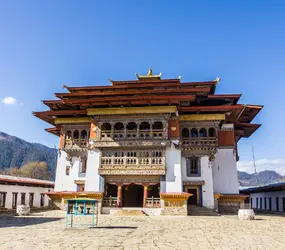
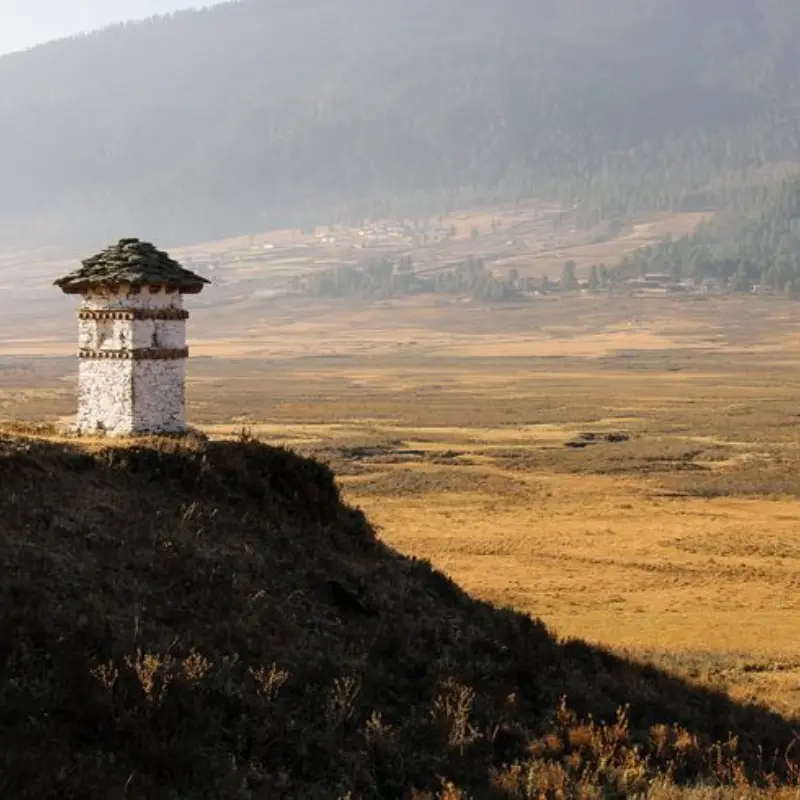
- Phobjikha Valley & Gangtey Monastery — approx 2,800 m / 9,186 ft: A glacial valley and the winter home of the endangered black-necked crane, with the historic Gangtey Monastery on its slopes.
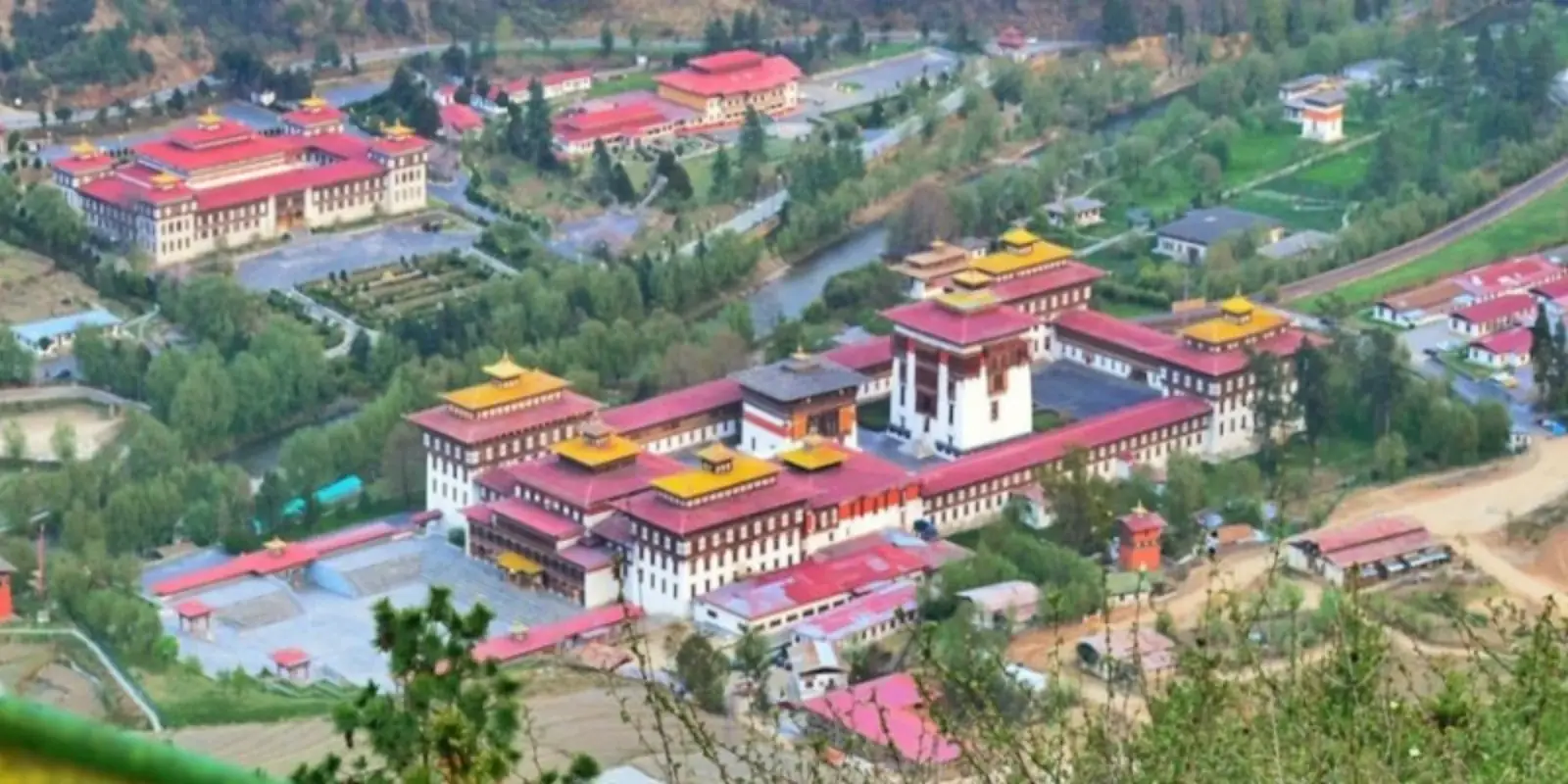
- Thimphu — 2,320 m / 7,612 ft: Bhutan’s capital and the only capital city in the world without traffic lights; home to the Buddha Dordenma, the Memorial Chorten and Tashichho Dzong.
- Cheri Monastery Hike — near Thimphu: A short walk of about 1 hour round-trip to a 1620 hillside monastery, through forest and part of the Jigme Dorji ecosystem that is rich in birdlife.
- Trongsa Museum (Ta Dzong): A restored 17th-century watchtower above the Trongsa Dzong, now a museum dedicated to the Bhutanese monarchy and its centenary.
- Chimi Lhakhang — Punakha: The “Temple of Fertility”, built in 1499, reached by a gentle 30-minute walk across paddy fields and villages.
- Paro Valley Heritage: Rinpung Dzong, the 7th-century Kichu Lhakhang and the ruins of Drugyel Dzong, with views of the sacred peak Jhomolhari (7,326 m / 24,035 ft) on clear days.
- Cultural Immersion: A visit to a traditional Paro farmhouse for a glimpse of rural Bhutanese life, with an optional hot-stone bath for about US$25 per person.
The Bhutan Tour 8 Days is a 7-night, 8-day cultural and scenic journey through the Kingdom of Bhutan, one of the last surviving Buddhist kingdoms in the Himalayas. Starting and ending at Paro International Airport, the tour travels through Paro, Thimphu, Dochula Pass, Phobjikha (Gangtey), Trongsa and Punakha before returning to Paro for the famous Tiger’s Nest Monastery (Taktsang) hike. The route stays between roughly 1,350 m / 4,429 ft in the Punakha valley and 3,140 m / 10,302 ft at Dochula Pass, so it is graded easy to moderate and suits most reasonably fit travellers.
Unlike a trekking holiday, this is a road-based cultural tour. You travel in a private vehicle with a licensed English-speaking local guide, and the walking is made up of short, rewarding hikes — the Cheri Monastery walk, the Gangtey Nature Trail, the Chimi Lhakhang fertility-temple path and the highlight climb to the Tiger’s Nest Monastery clinging to a cliff 800 m / 2,625 ft above the Paro valley floor. Between stops you visit dzongs (fortress-monasteries), temples, a museum and a traditional farmhouse, with time to enjoy Bhutanese food, crafts and daily life.
With Nepal Lion Tours, the Bhutan Tour 8 Days package starts from USD 1,852 per person and includes private transportation, all necessary travel permits, an English-speaking local guide, twin or single-room accommodation, sightseeing and monastery entrance fees, and full-board meals throughout the tour. The Bhutan visa and Sustainable Development Fee (SDF) are arranged as part of your booking and confirmed at the current published rate.
What Makes the Bhutan Tour 8 Days Special?
The tour is built around the living culture of Bhutan rather than a single mountain or viewpoint. In Thimphu, the world’s only capital without traffic lights, you visit the Buddha Dordenma at Kuensel Phodrang, the Memorial Chorten and the grand Tashichho Dzong, and you hike to the hilltop Cheri Monastery, founded in 1620. The journey then crosses Dochula Pass, where 108 Druk Wangyal Chortens stand against a panorama of Himalayan peaks, and drops into the glacial Phobjikha Valley, the winter home of the rare black-necked crane.
The eastern section adds history: the Gangtey Nature Trail and the Trongsa Museum (Ta Dzong), a former watchtower above the Trongsa Dzong, once the seat of Bhutan’s monarchy. The route then returns west through the warm Punakha valley to see Punakha Dzong, built in 1637 between the Pho Chhu and Mo Chhu rivers, and the fertility temple of Chimi Lhakhang.
The defining experience comes on Day 7 — the hike to Taktsang (Tiger’s Nest) Monastery, perched 800 m / 2,625 ft up a sheer cliff, reached by a roughly 5-hour round-trip walk. For many travellers, this single day, paired with an evening at a traditional Paro farmhouse, sums up the whole tour: Himalayan scenery, deep Buddhist heritage and genuine Bhutanese hospitality in one itinerary.
Why Choose the Bhutan Tour for 8 Days?
Eight days gives you a balanced introduction to Bhutan without the longer drive times of a full-country itinerary. The circuit is compact, the roads are paved, and the nightly stops — Thimphu, Gangtey, Trongsa, Punakha and Paro — are close enough that you spend more time sightseeing than sitting in the vehicle.
Because the tour is road-based and hotel-based, it suits travellers who want culture, comfort and scenery rather than camping or long treks. The only demanding activity is the Tiger’s Nest hike, which is optional and can be managed at your own pace, or partly by horse for an additional cost. Everything else involves comfortable drives, short walks and gentle sightseeing.
The tour also works as a standalone Bhutan holiday or as a perfect pairing with a Nepal trip, since most travellers reach Paro via Kathmandu — Nepal Lion Tours’ home base — where we can connect your Bhutan tour with a Nepal trek, city tour or Chitwan safari.
Who Is This 8-Day Bhutan Tour Suitable For?
The Bhutan Tour 8 Days is a good choice for:
- First-time visitors to Bhutan who want the classic cultural circuit in one trip
- Couples and honeymooners looking for a quiet, scenic Himalayan escape
- Travellers who prefer comfortable hotels and short walks over long trekking days
- Culture, photography and architecture enthusiasts drawn to dzongs, monasteries and festivals
- Families with older children comfortable with gentle hikes and road travel
- Travellers combining Nepal and Bhutan in a single South Asia itinerary
- Anyone who wants to see the Tiger’s Nest Monastery without committing to a multi-day trek
No trekking experience is required. The only fitness consideration is the Tiger’s Nest hike — a 5-hour round-trip walk with steady uphill and downhill sections, some of it on stone paths. It can be done at a relaxed pace, and horse assistance partway up is available for an extra US$25 per person.
Guide’s Note — Nepal Lion Tours
From our experience operating Bhutan Tour 8 Days departures, the itinerary works best when you keep the pacing unhurried. The long drives in western Bhutan are scenic rather than difficult, and our guides normally set an early start on the Tiger’s Nest morning so the climb is done in cooler air and with clearer light for photographs. We recommend carrying a light daypack on that day and treating the monastery visit itself as the reward rather than racing the trail.
— Operations Team, Nepal Lion Tours
Quick Facts
| Tour Fact | Details |
|---|---|
| Tour Name | Bhutan Tour 8 Days (7 Nights / 8 Days) |
| Duration | 8 days / 7 nights |
| Region | Bhutan (Kingdom of Bhutan), South Asia |
| Maximum Altitude | 3,140 m / 10,302 ft at Dochula Pass |
| Difficulty | Easy to Moderate |
| Main Highlight | Tiger’s Nest Monastery (Taktsang) hike |
| Additional Highlights | Punakha Dzong, Dochula Pass, Phobjikha Valley |
| Start / End | Paro to Paro |
| Route | Paro – Thimphu – Dochula Pass – Gangtey (Phobjikha) – Trongsa – Punakha – Paro |
| Typical Driving | 1.5–6 hours per day |
| Best Season | March–May and September–November |
| Price From | USD 1,852 per person |
| Accommodation | 3-star hotels and lodges (single/twin room basis) |
| Guide | Licensed English-speaking local guide |
| Meals | Full board (breakfast, lunch and dinner) |
Bhutan Tour 8 Days Route and Elevation
The Bhutan Tour 8 Days route is a loop through western and central Bhutan, beginning and ending at Paro. From Paro you drive briefly east to the capital, Thimphu, before crossing the high Dochula Pass (3,140 m / 10,302 ft) into the Phobjikha valley and continuing to Trongsa. The road then turns back west through the lower, warmer Punakha valley, and finally climbs to Paro for the Tiger’s Nest hike and your onward flight.
The driving distances between stops are manageable, and the altitude profile is gentle for a Himalayan destination: the highest point is the Dochula Pass at 3,140 m / 10,302 ft, while the lowest overnight is around 1,350 m / 4,429 ft in the Punakha valley. Most of the tour is spent between roughly 1,250 m and 2,900 m, so altitude is a minor factor compared with a trekking holiday.
Bhutan Tour 8 Days Route at a Glance
| Day | Tour Route | Altitude | Highlights |
|---|---|---|---|
| Day 01 | Paro Airport → Thimphu | 2,320 m / 7,612 ft | Scenic Himalayan flight, Tamchhog Lhakhang, Buddha Point, Memorial Chorten, Tashichho Dzong |
| Day 02 | Thimphu (full day) | 2,334 m / 7,657 ft | Cheri Monastery hike, handmade paper factory, weekend market, craft bazaar |
| Day 03 | Thimphu → Gangtey (Phobjikha) | 3,140 m / 10,302 ft at Dochula Pass | Dochula Pass, 108 Druk Wangyal Chortens, Phobjikha Valley, Gangtey Monastery |
| Day 04 | Gangtey → Trongsa | 2,200 m / 7,218 ft | Gangtey Nature Trail walk, Trongsa Museum (Ta Dzong) |
| Day 05 | Trongsa → Punakha | 1,350 m / 4,429 ft | Punakha Dzong, Chimi Lhakhang fertility temple |
| Day 06 | Punakha → Paro | 2,200 m / 7,218 ft | Rinpung Dzong, Kichu Lhakhang, Drugyel Dzong, Jhomolhari views |
| Day 07 | Paro (Tiger’s Nest) | 2,200 m / 7,218 ft | Taktsang (Tiger’s Nest) Monastery hike, farmhouse visit |
| Day 08 | Paro → Departure | 2,200 m / 7,218 ft | Airport transfer and farewell |
Bhutan Tour 8 Days Elevation Profile
The elevation changes are modest but noticeable. From Paro (about 2,200 m / 7,218 ft) and Thimphu (2,320 m / 7,612 ft), the road climbs on Day 3 to the tour’s high point, Dochula Pass at 3,140 m / 10,302 ft, then eases to the Phobjikha valley near 2,800 m. On Day 5 the route descends into the Punakha valley at about 1,350 m / 4,429 ft, the lowest overnight of the tour, before climbing back to Paro.
That profile means the tour mixes cool highland air with warmer valley days — a light jacket for Dochula and Gangtey and lighter clothing for Punakha is the practical way to pack. Because the highest point is a road pass rather than a sleeping altitude, most travellers adjust without difficulty.
A route map and elevation profile can be provided with your tour materials so you can follow each day’s drive, overnight stops and elevation changes throughout the journey.
How to Get to the Bhutan Tour 8 Days
Most travellers begin the Bhutan Tour 8 Days by flying into Paro International Airport (PBH), Bhutan’s only international airport. Flights to Paro operate from a small number of cities, most commonly Kathmandu (Nepal), Delhi, Kolkata, Dhaka and Bangkok, on Drukair and Bhutan Airlines. Because Nepal Lion Tours is based in Kathmandu, many of our guests fly to Paro from Kathmandu, and we can help coordinate the Nepal leg of the journey.
The approach into Paro is one of the world’s most spectacular landings — a visual flight through the Himalayan foothills, with views of high peaks on clear days. Flights are daylight-only and weather-dependent, so it is worth keeping a little flexibility around your arrival date.
Flying to Paro: What to Expect
| Option | Approx. Travel Time | Best For |
|---|---|---|
| Kathmandu → Paro flight | Around 1 hour | Travellers combining Nepal and Bhutan |
| Delhi / Kolkata → Paro flight | 1.5–2.5 hours | Travellers routing via India |
| Bangkok → Paro flight | Around 4 hours | Travellers arriving from Southeast Asia |
*Flight schedules, routes and carriers change seasonally — confirm current services and timings at booking.
Because Paro’s runway is short and surrounded by mountains, flights use visual approach procedures and often operate only in the morning. If your flight is delayed or cancelled due to weather, your Bhutan visa clearance and itinerary can normally still proceed on the next available service, and your guide will adjust the schedule accordingly.
On the Ground: Paro to Thimphu
On arrival you are met by your licensed Bhutanese guide and driver and driven to the capital, Thimphu — approximately 50 km, or about 1 hour 30 minutes, along a scenic valley road. En route you stop at Tamchhog Lhakhang, a temple associated with the iron-bridge builder Thang Thong Gyalpo, before checking in to your Thimphu hotel.
The transfer is private, so you travel directly with your group and luggage rather than arranging separate local transport. Your guide confirms the day’s sightseeing timings once you are settled.
Guide’s Note — Nepal Lion Tours
From our experience operating Bhutan Tour 8 Days departures, the Paro flight is the single biggest variable in the itinerary. Paro is a visual-flight airport, so morning departures are far more reliable than afternoon ones, and we normally build a small buffer into arrival and departure days. We recommend keeping your onward international flight a day clear of your Bhutan departure, and letting our team handle the visa clearance timing so a weather delay does not disrupt the rest of your trip.
— Operations Team, Nepal Lion Tours
Returning to Paro After the Tour
The tour is a full loop, ending back in Paro on Day 7 for the Tiger’s Nest hike. On the morning of Day 8 you are transferred a short distance to Paro International Airport for your departure, with assistance on exit formalities.
Because departure flights also leave in the morning, we recommend an early breakfast and a prompt start. Your guide will confirm the exact pickup time based on your confirmed flight.
A Practical Tip for International Travellers
If you are connecting Bhutan with a Nepal trek or an onward international flight, avoid booking your Paro departure and Kathmandu connection too tightly on the same day. Mountain weather can shift schedules, and a buffer day between Bhutan and your next destination removes most of the stress.
With the Bhutan visa and SDF handled in advance and your private airport transfers arranged, getting to and from the tour is straightforward and leaves you free to enjoy the Kingdom itself.
Bhutan Tour 8 Days Difficulty, Fitness & Altitude
The Bhutan Tour 8 Days is graded easy to moderate. It is not a trekking holiday — most of the tour is spent in a private vehicle, at heritage sites and around hotels — but it does include several short walks and one genuinely demanding hike. The tour suits reasonably fit travellers of most ages, including families with older children.
The main physical challenge is the Tiger’s Nest Monastery hike on Day 7, a roughly 5-hour round-trip walk with steady uphill sections on the way up. The remaining walks are gentle: the Cheri Monastery path (about 1 hour round trip), the Gangtey Nature Trail (about 2 hours) and the Chimi Lhakhang walk (about 30 minutes each way). Typical days involve short to moderate walking, with the rest of the time on comfortable paved roads.
The maximum altitude on the tour is 3,140 m / 10,302 ft at Dochula Pass, but you do not sleep at that elevation. The highest overnight is in the Phobjikha/Gangtey area at around 2,800 m / 9,186 ft, which is well within comfortable limits for most travellers.
Where the Effort Actually Is?
The effort on this tour is concentrated in a few specific places rather than spread across every day.
The Tiger’s Nest hike is the most demanding section. The trail climbs steadily from the trailhead, passes a viewpoint cafe at roughly the halfway mark, and continues to a series of viewpoints and a waterfall before the final steps to the monastery. The full round trip takes about 5 hours at a relaxed pace, and horse assistance is available for the uphill section for about US$25 per person.
The Cheri Monastery hike is short but steep in parts, gaining elevation quickly over about 30 minutes each way. The Gangtey Nature Trail is gentler, crossing open grassland and forest for roughly 2 hours, and the Chimi Lhakhang path is a flat, easy 30-minute walk across fields.
Driving days range from about 1.5 hours to 6 hours. The Trongsa to Punakha leg is the longest at around 6 hours, but the road is paved and the scenery is continuous.
How to Prepare for the Bhutan Tour 8 Days
You do not need a trekking training programme for this tour. The most useful preparation is comfortable walking fitness for a few steeper days, especially the Tiger’s Nest hike.
- Walk regularly before you travel: A few 1–2 hour walks in the weeks before departure will make the Tiger’s Nest day noticeably easier.
- Practise some hills: Include uphill walking, stairs or an inclined treadmill so your legs are ready for the Tiger’s Nest and Cheri Monastery climbs.
- Break in your shoes: Bring comfortable, well-cushioned walking or light hiking shoes that you have already worn in.
- Carry a daypack on hike days: A small pack for water, a layer, sunscreen and your camera is enough for the Tiger’s Nest and Gangtey trails.
- Prepare for early starts: Several days begin early, especially the Tiger’s Nest morning, so rest well and eat a proper breakfast.
- Keep the pace relaxed: The tour rewards a slower rhythm. Take the monastery visit as the goal rather than rushing the trail.
How Difficult Is the Bhutan Tour Compared with a Nepal Trek?
The Bhutan Tour 8 Days is considerably easier than a Nepal trekking holiday. There are no multi-day walking days, no teahouse-to-teahouse sections and no sleeping above 3,000 m. The only comparable activity is the Tiger’s Nest hike, which is a single day rather than a week of walking.
That said, it is more active than a pure city tour. Between the short hikes and the sightseeing, you will be on your feet for a good part of several days, so a basic level of fitness is worthwhile.
With comfortable shoes and a relaxed approach, most reasonably fit travellers complete the tour comfortably.
Altitude, Acclimatization & Safety
The Bhutan Tour 8 Days reaches a maximum altitude of 3,140 m / 10,302 ft at Dochula Pass, but the tour does not sleep near that height. The highest overnight is around 2,800 m / 9,186 ft in the Phobjikha/Gangtey area, with most nights lower still.
At these elevations, altitude sickness is uncommon, but travellers should still pay attention to how they feel, especially on the first full day after arrival in Thimphu. Walking at a comfortable pace, drinking enough water and getting proper rest all help.
Bhutan Tour Altitude Profile
- Paro — about 2,200 m / 7,218 ft: Arrival and departure point; home to the Tiger’s Nest trailhead.
- Thimphu — 2,320 m / 7,612 ft: The capital, and your first two overnights.
- Dochula Pass — 3,140 m / 10,302 ft: The tour’s highest point, crossed by road on Day 3.
- Phobjikha / Gangtey — approx 2,800 m / 9,186 ft: The highest overnight of the tour.
- Trongsa — approx 2,200 m / 7,218 ft: A central overnight with the Ta Dzong museum.
- Punakha — about 1,350 m / 4,429 ft: The tour’s lowest overnight, warm and sheltered.
How the Body Adapts to Altitude
As altitude increases, the air pressure drops and less oxygen reaches your blood with each breath. Your body responds by breathing faster and adjusting circulation over a day or two.
For this tour the practical approach is simple: walk at a relaxed pace, drink water regularly, eat well, sleep properly and tell your guide if you feel unwell. Because the tour climbs gently and sleeps low, acclimatization is rarely an issue.
Symptoms of Altitude Sickness to Watch For
Mild acute mountain sickness (AMS) symptoms can include:
- Headache
- Nausea or loss of appetite
- Unusual tiredness
- Dizziness
- Difficulty sleeping
Tell your guide promptly if these appear. More concerning signs include:
- A severe or persistent headache
- Repeated vomiting
- Confusion or unusual behaviour
- Poor coordination or difficulty walking
- Shortness of breath at rest
If significant symptoms develop, the priority is to stop climbing, rest and descend to a lower altitude, and to seek medical advice.
How Nepal Lion Tours Supports Altitude Safety
- Low sleeping altitudes: The itinerary sleeps no higher than about 2,800 m / 9,186 ft, keeping headache risk low.
- Gradual route profile: The tour crosses the high Dochula Pass by road and descends the same day rather than sleeping there.
- Experienced local guidance: Your licensed Bhutanese guide monitors how the group is feeling and can adjust the pace.
- Early communication: Travellers are encouraged to report headaches, dizziness or unusual fatigue rather than pushing through.
- Health and safety: Your guide can assist with basic first-aid needs and help you seek medical care if required. Travel insurance is strongly recommended and should cover medical treatment and, where appropriate, emergency evacuation.
Best Time to Visit Bhutan for the 8-Day Tour
The best time to visit Bhutan for the 8-day tour is generally spring (March–May) and autumn (September–November). Spring brings warmer weather and blooming rhododendrons and magnolias, while autumn offers clear mountain views and the peak festival season. The tour runs year-round, but winter is colder at the higher stops and the monsoon months bring cloud and rain.
| Season | Months | Weather & Road Conditions | Mountain Views | Overall |
|---|---|---|---|---|
| Spring | March–May | Mild, warmer days; occasional showers | Good; blossoms in the valleys | Highly recommended |
| Autumn | September–November | Dry, stable and clear; festival season | Excellent on clear days | Best overall |
| Winter | December–February | Cold, especially at Dochula and Phobjikha | Clear but cold; possible snow | Good with warm layers |
| Monsoon | June–August | Wet, humid; cloud and landslide risk on roads | Frequently limited by cloud | Less suitable |
Autumn — September to November
Autumn is the best overall season for the Bhutan Tour. Post-monsoon skies are typically clear, the roads are in good condition and the Himalayan views from Dochula Pass are at their sharpest. This is also festival season, when many of Bhutan’s famous tsechus (masked-dance festivals) take place, adding colour to the itinerary.
Spring — March to May
Spring is another excellent time for the tour. Temperatures are comfortable, the valleys turn green, and rhododendrons and magnolias bloom along the higher roads. Spring is also a strong season for the Tiger’s Nest hike, with mild conditions on the trail.
Winter — December to February
Winter brings colder, quieter conditions. Days are often clear, giving excellent mountain views, but Dochula Pass and Phobjikha can be very cold, with snow possible on the passes. Winter is a good time for travellers who prefer fewer crowds and are prepared for low temperatures.
Monsoon — June to August
Monsoon is the least predictable season for the tour. Rain and cloud are common, mountain views can be obscured, and landslides occasionally affect the mountain roads. The landscape is exceptionally green, and fewer tourists travel, but travellers should expect wet-weather delays.
Which Season Should You Choose?
Choose autumn for the clearest mountain views and the best chance of catching a festival. Choose spring for warmer weather and blossoming valleys. Winter suits travellers who want quiet roads and can handle cold passes, while the monsoon is best reserved for those comfortable with rain and flexible timing.
Weather in the Himalayas can change quickly, so conditions are never guaranteed. Checking the forecast shortly before departure is recommended.
Guide’s Note — Nepal Lion Tours
From our experience running Bhutan Tour 8 Days departures, the view from Dochula Pass is the single most weather-dependent moment of the trip. On clear autumn and early-winter mornings the Himalayan panorama typically opens up soon after sunrise and is often gone by midday, so our guides normally aim to cross the pass in the morning where the schedule allows. We recommend carrying a warm layer and a windproof jacket on that day even in spring and autumn.
— Operations Team, Nepal Lion Tours
Bhutan Tour 8 Days Permits & Regulations
The Bhutan Tour 8 Days operates entirely within the standard tourist region of Bhutan, so there are no restricted-area permits to obtain. However, every international visitor (except nationals of India, Bangladesh and the Maldives) needs a Bhutan visa and must pay the government’s Sustainable Development Fee (SDF), which is charged per night of stay.
For travellers booking through Nepal Lion Tours, the Bhutan visa application, visa clearance and SDF arrangements are handled through a licensed Bhutanese operator as part of your booking, so you do not need to navigate the process independently.
Bhutan Tour Permits at a Glance
| Requirement | Who Needs It? | Who Arranges It? |
|---|---|---|
| Bhutan Tourist Visa (visa clearance letter) | All international visitors except India, Bangladesh and Maldives | Nepal Lion Tours (via licensed Bhutanese operator) |
| Sustainable Development Fee (SDF) | Most international visitors, charged per night | Nepal Lion Tours (paid as part of the booking) |
| Monastery & heritage entry fees | All visitors at ticketed sites | Nepal Lion Tours (included in the package) |
*Government fees and visa rules are set by the Royal Government of Bhutan and can change. Confirm the current visa fee and SDF rate at booking.
The Bhutan Tourist Visa
Bhutan does not issue visas on arrival for most nationalities. Instead, a visa clearance letter is applied for in advance by a licensed Bhutanese tour operator and presented on arrival at Paro International Airport, where your passport is stamped.
What you need:
- A passport valid for at least six months beyond your departure from Bhutan
- A clear colour scan of your passport photo page
- Your confirmed tour arrangements and payment of the applicable fees
Applications are normally processed in about 5–7 working days. The standard visa application fee is USD 40 per person, one-time and non-refundable, and is separate from the SDF. Indian, Bangladeshi and Maldivian nationals do not pay this visa fee.
Sustainable Development Fee (SDF)
The Sustainable Development Fee (SDF) is Bhutan’s flagship “High Value, Low Volume” tourism levy. It is paid per person, per night of your stay and funds free healthcare, education and conservation across the Kingdom.
Current rate: USD 100 per person, per night for most international visitors — a 50% reduction from the original USD 200 rate, in effect until 31 August 2027 (confirm the current rate at booking).
Key points:
- Children aged 6–12 pay a reduced rate (50%); children under 6 are generally exempt
- Indian nationals pay a separate rate of about Nu/INR 1,200 per night
- The SDF is separate from accommodation, meals, transport and entry fees
- Bhutan no longer offers duration-based SDF incentives
Because the SDF is a nightly charge, the total depends on the length of your stay. Your Nepal Lion Tours booking includes SDF at the applicable rate, confirmed and quoted clearly before you travel.
Do You Need a Restricted-Area Permit?
No, not for the standard Bhutan Tour 8 Days.
The route through Paro, Thimphu, Gangtey (Phobjikha), Trongsa and Punakha stays entirely within the standard tourist region of western and central Bhutan. It does not enter any of Bhutan’s designated restricted areas, which are limited and covered by separate daily permits.
Permit rules can change, and requirements may differ if you extend the itinerary or add a remote region. Your tour operator should confirm the current requirements before departure.
Who Arranges the Permits?
When you book the Bhutan Tour 8 Days with Nepal Lion Tours, the visa clearance, SDF payment and all ticketed monastery and heritage entry fees are arranged as part of the package.
You should still carry your original passport during the tour, as it may be required for identification or permit checks. Because government fees and regulations can be revised, the final visa and SDF requirements should always be confirmed before departure.
Food & Accommodation on the Bhutan Tour 8 Days
Accommodation and meals are a comfortable part of the Bhutan Tour 8 Days. You stay in hotels and lodges in each town on a single or twin-room basis, and the package runs on a full-board basis, so breakfast, lunch and dinner are provided throughout the tour. Facilities vary slightly between towns, but the standard is comfortable and well suited to a cultural holiday.
Your guide can help with dietary requirements along the way and will point you to local dishes worth trying at each stop.
Hotel Accommodation on the Bhutan Tour
You generally stay in 3-star hotels and lodges in Bhutan’s main towns, in single or twin-sharing rooms. Bhutanese hotels are typically built in the local architectural style, with timber details, painted lintels and warm dining areas.
Typical facilities include:
- Rooms with beds, bedding and en-suite or attached bathrooms at most hotels
- Heating for the cooler nights, particularly at Thimphu, Gangtey and Trongsa
- Wi-Fi in the lobby or rooms at most hotels, although speed varies
- Hot water for showers at the larger hotels, with supply sometimes limited in smaller lodges
- Dining areas serving Bhutanese and continental dishes
- Electricity for lighting and device charging, usually available in the room
Thimphu, Punakha and Paro generally offer the widest choice of hotels and facilities. Accommodation in Gangtey (Phobjikha) and Trongsa can be simpler, but still provides the essentials needed after a day of driving and sightseeing.
What Food Is Available on the Bhutan Tour?
Food on the tour is a highlight in itself. Bhutanese cuisine leans on chilli, cheese and red rice, and hotels serve both local dishes and familiar international meals.
Popular options include:
- Ema datshi — Bhutan’s national dish of chillies cooked in cheese
- Kewa datshi — potatoes cooked with cheese and chilli
- Shamu datshi — mushrooms cooked in cheese
- Red rice, Bhutan’s distinctive nutty staple grain
- Momos and noodle soups
- Fried rice, noodles and pasta
- Curries with chicken, beef or pork
- Fresh vegetables and seasonal greens
- Simple breakfasts with eggs, toast, porridge and fruit
Ema datshi, the chilli-and-cheese dish, is the dish most travellers remember. Many hotels also cook milder versions for visitors who prefer less heat. Vegetarian meals are widely available, and Bhutanese cuisine is naturally generous with vegetable dishes.
If you follow a vegan, gluten-free or other specific diet, or have a food allergy, tell Nepal Lion Tours before departure so your guide can communicate your requirements to each hotel in advance. Choices can be more limited in smaller towns, so advance notice is helpful.
What Food and Accommodation Are Included?
For the standard package, accommodation and all meals are provided throughout the tour according to the package inclusions.
| Included in the Tour Package | Usually Paid Separately |
|---|---|
| Hotel and lodge accommodation (single/twin basis) | Alcoholic drinks and some soft drinks |
| Breakfast, lunch and dinner on tour days (full board) | Optional horse ride to Tiger’s Nest (about USD 25) |
| Private transportation throughout the tour | Optional hot-stone bath at the farmhouse (about USD 25) |
| English-speaking local guide | Personal expenses and tips |
| All necessary travel permits, sightseeing and monastery entry fees | Insurance of any kind |
| Additional costs due to natural calamity or unforeseen circumstances |
Always check the final inclusions provided at booking, as individual services and hotel facilities can change depending on the itinerary and operating conditions.
Drinking Water on the Tour
Safe drinking water is important throughout the Bhutan Tour 8 Days. Do not assume that untreated tap or stream water is safe to drink.
You can usually buy bottled water or obtain boiled or filtered drinking water at hotels and restaurants. For a more environmentally responsible option, carry a reusable bottle and use a suitable water filter or purification tablets where practical. Bottled water is affordable and widely available in the towns along the route.
How much water you need depends on the day’s activity and weather. Drink regularly, and increase your intake on the Tiger’s Nest hike and the warmer Punakha days.
Staying Comfortable on the Tour
A few simple preparations can make the trip more comfortable:
- Carry a reusable water bottle or hydration flask
- Bring a warm layer for the Dochula Pass and the cooler highland towns
- Carry a power bank, as charging can be limited in some lodges
- Keep some cash in Bhutanese Ngultrum or Indian Rupees for small purchases and tips
- Bring comfortable walking shoes for the hike days
- Tell your guide about dietary requirements before the tour starts
The Bhutan Tour 8 Days combines comfortable hotels with the character of a Himalayan kingdom. After a day of monasteries, mountain passes and valley drives, a warm meal and a comfortable room waiting at the end of the day is part of what makes the tour so enjoyable.
Why Book with Nepal Lion Tours?
A great Bhutan Tour 8 Days is about more than a checklist of sights. The quality of your guide, the clarity of the pricing, the transport arrangements, the hotels and the way the itinerary is managed can make a significant difference to the experience. With Nepal Lion Tours, the Bhutan Tour 8 Days package is designed around straightforward logistics, licensed local guidance and a clearly defined itinerary.
- Local, licensed English-speaking guides
Each departure is accompanied by a government-licensed Bhutanese guide who speaks English. Local guides bring practical knowledge of the route, including the best times to cross Dochula Pass, when to start the Tiger’s Nest hike and how to make the most of each monastery and town.
- A registered company you can verify
Nepal Lion Tours is a registered trekking and tour company based in Thamel, Kathmandu, with Reg. No. 184920/074/075. Company and licence details can be provided to travellers who want to verify the operator before booking. Choosing a registered local company gives you a clear point of contact before, during and after your Bhutan tour.
- Private departures from two travellers
This 8-day Bhutan tour can be arranged from just two travellers, making it suitable for couples, friends and families who prefer a private experience. With private departures you can travel on your own dates and keep a flexible pace rather than depending on a large fixed group.
- An itinerary built around the Tiger’s Nest and the classic dzongs
The route is designed to include the highlights travellers most want to see — Punakha Dzong, Dochula Pass, Phobjikha Valley, Trongsa and the Tiger’s Nest Monastery — without long, tiring drives or rushed sightseeing.
- Private transfers and straightforward logistics
A private vehicle and driver are provided throughout the tour, along with airport transfers in Paro. The team also handles the Bhutan visa clearance, SDF payment and heritage entry fees as part of the booking, so you focus on the experience rather than the paperwork.
- Comfortable, well-paced travel with no group-tour rush
The tour stays in comfortable hotels and moves at a pace set by you rather than a fixed group schedule. The best available room at each stop helps make the Himalayan evenings restful after a day on the road.
- A local team you can contact before and during your tour
From the first booking enquiry to your return to Paro Airport, Nepal Lion Tours provides a direct point of contact for questions about the itinerary, visa, transport and preparation. Having a team available in the region can make planning simpler, particularly for first-time visitors to Bhutan.
Book the Bhutan Tour 8 Days
Ready to see the Tiger’s Nest Monastery, walk through Punakha Dzong and cross the Dochula Pass? The Bhutan Tour 8 Days brings together Himalayan scenery, living Buddhist culture, mountain valleys and the Kingdom’s most famous sights in one memorable journey.
Tour at a Glance
- Duration: 8 days / 7 nights
- Price: From USD 1,852 per person
- Difficulty: Easy to Moderate
- Maximum Altitude: 3,140 m / 10,302 ft at Dochula Pass
- Accommodation: 3-star hotels and lodges (single/twin basis)
- Meals: Full board — breakfast, lunch and dinner
- Permits & Registration: Bhutan tourist visa, SDF and heritage entry fees arranged
- Transportation: Private vehicle and airport transfers as outlined in the itinerary
- Guide: Licensed English-speaking local guide
- Cancellation: Free cancellation up to 14 days before departure, subject to the booking terms
Ready to Start Your Bhutan Adventure?
Secure your Bhutan Tour 8 Days dates with Nepal Lion Tours today. Send us your preferred travel dates and group size through the booking form or WhatsApp at +977-9851039020, and our team will help confirm your itinerary, visa, SDF, transportation, accommodation and other arrangements.
Whether you are travelling solo, as a couple, with friends or with family, we will help you prepare for a smooth and enjoyable journey through the Kingdom of Bhutan.
Your Tiger’s Nest view is waiting — choose your dates and start planning your Bhutan tour today.
Related Bhutan Tours
If the Bhutan Tour 8 Days appeals to you, these related Bhutan journeys offer different lengths and emphases — from a shorter cultural introduction to a more in-depth look at the Kingdom.
| Tour | Duration | Difficulty | Highlights | Best For |
|---|---|---|---|---|
| Bhutan Tour 6 Days | 6 days | Easy–Moderate | Paro, Thimphu, Punakha and Tiger’s Nest | A compact first visit to Bhutan |
| Bhutan Tour 5 Days | 5 days | Easy–Moderate | Thimphu, Paro and Tiger’s Nest | Travellers short on time |
| Bhutan Tour 4 Days | 4 days | Easy | Paro and Thimphu highlights | A quick cultural break |
| Bhutan Tour 3 Days | 3 days | Easy | Paro valley and Tiger’s Nest | A short extension from Nepal |
| Bhutan with Nepal Combination | 10–14 days | Easy–Moderate | Nepal highlights plus a Bhutan circuit | Travellers combining two countries |
If you want to go beyond the standard circuit, your Bhutan tour can be combined with a Nepal trek, a Kathmandu city tour or a Chitwan Jungle Safari for a fuller South Asia itinerary. Because most Bhutan flights connect through Kathmandu, pairing the two countries is straightforward.
Trip Essentials
Packing advice, required equipment & gear recommendations
Essential
Bhutan Tour 8 Days Packing List
Packing for the Bhutan Tour 8 Days is relatively simple because you stay in hotels rather than camping. The key is to pack for changing conditions: warm highland towns such as Thimphu, Gangtey and Trongsa, colder moments at Dochula Pass, and warmer days in the Punakha valley. A light layering system works better than bulky clothing, and covers both the sightseeing days and the Tiger’s Nest hike.
Nepal Lion Tours provides a down jacket, sleeping bag, duffel bag and trekking map as part of the package, so you can leave several bulky items at home.
Hiking Gear
- Comfortable walking or hiking shoes, broken in before you travel, for the Tiger’s Nest and valley walks
- A 20–30 litre daypack for hike days, with a rain cover
- Reusable water bottle or hydration flask
- Water purification tablets or a filter, if you prefer to treat your own water
- Trekking poles if you like support on the Tiger’s Nest descent
- Small dry bags or waterproof pouches to protect electronics and documents
Clothing: Use Layers Rather Than Bulk
Temperatures vary from warm valley days to cold mountain passes, so pack lightweight layers.
Base layers
- 2–3 lightweight shirts or thermal tops
- 1 thermal bottom for winter or cold departures
Mid-layers
- 1 fleece or warm mid-layer
- 1 lightweight insulated jacket or puffer for cold mornings and highland towns
Outer layers
- 1 waterproof and wind-resistant jacket with a hood
- Waterproof trousers or rain pants, especially for the monsoon fringe and shoulder seasons
Touring clothes
- 2–3 pairs of comfortable trousers or walking pants
- 3–4 shirts, depending on how often you prefer to change
- 3–4 pairs of socks
- Modest clothing for monastery and dzong visits — shoulders and knees covered
Headwear and gloves
- Warm beanie or fleece hat for the highland towns and Dochula Pass
- Sun hat or cap with a brim
- Light gloves for cold mornings
- Buff or neck gaiter for sun, wind and dust
A few versatile layers cover almost every condition you are likely to meet on the tour.
Sleeping and Evening Comfort
Hotels provide beds and bedding, but a few personal items can make the evenings easier.
- Sleeping-bag liner if you prefer an extra layer for hygiene or warmth
- Earplugs if you are sensitive to noise
- Eye mask for early starts
- Lightweight slippers or sandals for hotel use
Toiletries and Personal Health Items
Keep toiletries compact and bring only what you are likely to use during the eight days.
- Sunglasses with good UV protection
- Sunscreen and SPF lip balm
- Personal medications
- Small personal first-aid kit
- Blister plasters or blister treatment
- Basic pain relief if you normally use it
- Rehydration salts if needed
- Toothbrush and toothpaste
- Biodegradable soap or a small body wash
- Hand sanitiser
- Quick-dry towel
- Wet wipes
- Toilet paper or tissues
Electronics
You do not need much technology for the Bhutan tour, but these items are useful:
- Mobile phone and charging cable
- Power bank, preferably around 10,000–20,000 mAh
- Camera and spare batteries, especially for the Himalayan views from Dochula Pass
- Universal travel adapter — Bhutan uses Type D, F and G plugs at 230 V
Charging facilities are available at most hotels, and Wi-Fi is generally offered, though connection speed can vary between towns.
Documents and Money
Keep important documents protected and easily accessible.
- Passport and copies of important travel documents
- Bhutan visa clearance letter provided by your operator
- Travel insurance details, including your insurer’s emergency contact information
- Sufficient Bhutanese Ngultrum or Indian Rupees for personal expenses, drinks and tips
- Emergency contact details stored both on your phone and separately
Your guide or tour operator handles the Bhutan visa clearance, SDF and applicable entry fees according to current regulations.
How Much Should You Pack?
For an eight-day Bhutan tour, lighter is generally better. Avoid heavy clothing, unnecessary shoes and bulky toiletries.
A practical approach is to carry only the clothing and equipment you will actually use, keeping frequently needed items such as water, sunscreen, layers and valuables in your daypack.
The goal is not to pack for every possible weather condition. Pack versatile layers, comfortable footwear, rain protection and the personal essentials you genuinely need.
Read Before You Book
Permits, terms, medical considerations & advisory guidelines
Advisory
What to Know Before Booking
The Bhutan Tour 8 Days is a comfortable, hotel-based cultural journey, but a little preparation makes the eight days much easier. Here are the practical things worth knowing before you book.
Accommodation and Facilities
You will stay in 3-star hotels and lodges on a single or twin-room basis. Larger towns such as Thimphu, Punakha and Paro generally offer more facilities, while Gangtey and Trongsa are simpler.
Heating is provided for the cooler nights, and Wi-Fi is generally available, though speed varies. Carry a power bank and some local cash for personal expenses.
Food and Dietary Requirements
Meals are on a full-board basis, with Bhutanese and continental options. Ema datshi, kewa datshi, red rice, momos, noodles and curries are commonly served.
Vegetarian meals are widely available. If you are vegan, gluten-free or have a food allergy, tell Nepal Lion Tours before departure so your guide can communicate your requirements to each hotel.
Altitude, Health and Insurance
The highest point of the tour is Dochula Pass at 3,140 m / 10,302 ft, but you do not sleep at that height — the highest overnight is about 2,800 m / 9,186 ft in the Phobjikha/Gangtey area. Altitude sickness is uncommon, but it is still worth walking at a comfortable pace and telling your guide if you feel unwell.
Travel insurance is strongly recommended and should cover medical treatment and evacuation appropriate to your itinerary. Check the policy’s altitude limits and exclusions before travelling.
Money and Tipping
Carry enough Bhutanese Ngultrum or Indian Rupees for personal expenses such as drinks, snacks, souvenirs and optional activities. Cash is useful outside the larger hotels, and Indian Rupees are widely accepted.
Tipping is customary but voluntary. If you are happy with the service of your guide and driver, a tip at the end of the tour is a common way to show appreciation.
Culture and Responsible Travel
The route passes through Buddhist communities, dzongs and monasteries, where respectful behaviour matters.
A few simple habits go a long way:
- Ask before photographing local people, monks and religious ceremonies
- Dress respectfully around dzongs and temples — shoulders and knees covered
- Remove your hat and shoes where indicated inside temples
- Walk clockwise around chortens and prayer flags
- Avoid littering and carry your waste out where bins are limited
- Buy from local shops and support locally run hotels and restaurants
Route Options
The standard 8-day Bhutan Tour covers the classic western and central circuit. If your schedule or interests differ, other options may suit you better:
- Bhutan Tour 6 Days: A shorter version covering Paro, Thimphu, Punakha and Tiger’s Nest
- Bhutan Tour 4 Days: A quick Paro and Thimphu introduction
- Bhutan Tour 3 Days: A short Paro and Tiger’s Nest extension, ideal after a Nepal trip
- Bhutan with Nepal Combination: Add a Nepal trek, city tour or Chitwan safari
Your itinerary can also be discussed with Nepal Lion Tours if you want to adjust the pace, dates, transportation or accommodation standard.
Booking and Before You Arrive
Before confirming your Bhutan Tour 8 Days package, make sure you understand:
- What is included in the package price
- Your accommodation and meal arrangements
- The Bhutan visa and SDF arrangements and current fees
- Transportation to and from Paro Airport
- Cancellation and payment terms
- What equipment Nepal Lion Tours provides
- Your travel insurance coverage
Once your dates are confirmed, share your arrival and departure details with your tour company so the visa clearance and pre-tour arrangements can be coordinated.
A Few Final Tips
Break in your walking shoes before arriving, carry a small amount of local cash, keep your passport and visa clearance letter accessible, and download anything you may need offline before you leave.
Most importantly, leave some flexibility in your schedule. Mountain flights, weather and road conditions can occasionally change plans, and a relaxed itinerary is much more enjoyable than trying to fit every connection down to the minute.
Day-by-Day Itinerary
Explore each day's route, trekking elevation, and activities
Arrive at Paro Airport and then drive to the capital city Thimphu.
The flight into the Himalayas reveals scenic and breathtaking views of Himalayan Mountains of the world. If weather permits you will be able to see Mt Everest (8848m, 29,198ft) and other Himalayan mountain ranges. After checking into the hotel later visit,Your representative from the agency will greet you on arrival and drive you to the capital city, Thimphu.On the way to Thimphu visit, Tamchhog Lhakhang which is located on the opposite side of the river. This is a temple built by Thang Thong Gyalpo of Tibet, who was responsible for building numerous iron bridges throughout Bhutan.Kuenselcholing View Point: A place from where you can get a good overview of the Thimphu valley is from the Buddha point (Kuensel Phodrang). It is again a short drive from the town. You can pay your obeisance and offer prayers to the Buddha, the largest statue in the country and then walk around and take a glimpse of the valley.Memorial Chorten: This particular chorten was constructed in 1974 as a memorial for the third King of the country, King Jigme Dorji Wangchuck, who is widely regarded as the father of modern Bhutan.Tashichho Dzong : The names means – Means Fortress of Glorious Religion. It was built in 1641 by Zhabdrung Ngawang Namgyel. It houses the secretariat building, the throne room and the office of the king, and the central monk body.Later relax for the day and stroll around the city.Overnight in Thimphu
Morning take a hike to Cheri Monastery (Includes Dodina and Jigme Dorji Wild life Sanctuary): Hike about 1hrs (to and fro) leds to Cheri Goemba (Cheri Dorji Dhen). Zhabdrung Ngawang Namgyal built this monastery in 1620 and established the first monk body here. A chance to spot birds such as Mrs Gould’s Sunbird, Yellow-browed Tit, Yellow-rumped Honeyguide, Long-billed Thrush, Ultramarine Flycatcher.Paper factory: The handmade paper making in Bhutan stemmed from the age old tradition originated in 8th century of Bhutanese history. The handmade paper constitutes as valuable National heritage of Bhutanese cultural identity and is preserved through all the ages. The Traditional paper is recognized and held high esteem both in home and outside world.
The weekend market: Held every Friday, Saturday and Sunday, the people crowd the stalls every day, dressed in full colour and gathered to meet and to barter, much like the street markets in London!Bhutan Craft bazaar: The private stalls had a variety of high-end quality products from places across the country such as wood carved national symbols, bags and western wears with touch of traditional designs, wooden and clay utensils, Bangchung, Dhapa, key hanger of jewelry boxes, bookmarks and handmade packing papers (Deysho) in different patterns, antique items and etc. The stalls have a distinctly rich outlook with fine tones of elegance, and a warm and inviting atmosphere. The craft bazaar is also an exemplary of how bamboo can be used to construct houses in the country.Later you can stroll around the city.Overnight in Thimphu.
Morning driving towards Gangtey, we come across a pass known as Dochula (3140m, 10362ft) from where a beautiful panoramic view of the Himalayan mountain range can be seen, especially in clear winter days. The beauty of this place is further enhanced by the Druk Wangyal Chortens- a 108 stupas built by the eldest Queen, Her Majesty Ashi Dorji Wangmo Wangchuck.In the mountains east of Wangdue Phodrang lies the beautiful Phobjikha valley, on the slopes of which is situated the great monastery of Gangtey, established in the 17th century. The village of Phobjikha lies a few km. down from the monastery, on the valley floor. This quiet, remote valley is the winter home of black necked cranes, which migrate from the arid plains of Tibet in the north, to pass the winter months in a milder climate. Overnight in Gangtey.
Morning you will hike across Gangtey Nature Trail: (Duration: Half day: two hours at a quicker pace): This is one of the most beautiful and shortest of the existing nature trail. In this trail you have the opportunity to visit the magnificent Goemba(Monastery), it also leads to sloping area of green grass, flanked by pine trees on either side. You will even come across some villages, rivers, crane roosting ground.Trongsa Museum: Situated strategically above the Trongsa dzong, the Ta Dzong served as the watch tower for centuries. It was built by Choeje Minjur Tempa in 1652.The museum is equipped with state of the art technology and includes a media room where visitors can watch a documentary programme on the history of the monarchy.The Ta Dzong was renovated and converted as a museum at a cost of Nu. 97 millions with funds from the Austrian government. The museum is dedicated to the coronation and centenary celebrations. Overnight in Trongsa.
Morning drive to Punakha visit Punakha Dzong (fortress): Built in 1637 by Zhabdrung which is remarkably located between the rivers of Mo (Female) Chu (river) and Pho (Male) Chu. Until the time of second king it served as a seat of the king.Hike to Chimi Lhakhang(Temple of fertility): This Temple was built by lam Drukpa Kuenley (The Divine Madman) in 1499. It is about thirty minutes hike across fields from the road –Wooden phalluses are often found hanging in the four corners of the houses and also phalluses are painted on the walls of houses. It is the common belief that this helps in driving away evil spirits.(30 minutes hike to and fro, gentle steep, good footh path across the valleys and villages).Overnight in Punakha/Wangdue.
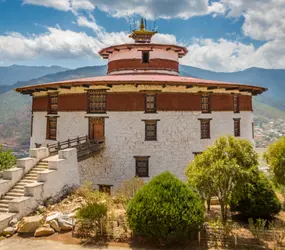
Morning drive to Paro and visit, Rimpung Dzong: The Bhutanese Dzongs are huge architectural structures constructed for a variety of functions throughout the country, from administrative buildings to monasteries and temples, yet they are carefully and thoughtfully designed and are strikingly beautiful. The Rimpung Dzong, known as the “fortress of the heap of jewels” in the picturesque setting of the Paro valley, is of course no exception, built in the time of the dynamic spiritual and political leader Zhabdrung in 1644. Once a year, as part of the Tsechu festival, one of the oldest Thongdol (gigantic scroll paintings) is ceremonially unfurled here.
Kichu Lhakhang(Monastery): It is one of the two most sacred and the oldest temples in Bhutan. It was built in 7th century by Tibetan King Songtsen Gampo.Drugyel dzong: This ruined dzong is of historical importance. It was built in 1649 by Zhabdrung to commemorate the victory of the Drukpas over the Tibetan invasion in 1644. The Bhutanese still vividly recall and celebrate this victory which was tremendously important to the history of the area. On a clear day (7326m/ 24176ft), you have a fascinating view of the white domed peak of sacred Jhomolhari (Mountain of Goddess).Overnight in Paro.
Morning hike to Taktshang Monastery (Tiger’s nest): This is Bhutan’s most recognizable cultural icon perched 800m/2640ft up a seemingly sheer cliff. Although it was tragically and mysteriously consumed by fire in April 1998 it has now been restored to its former glory. It is believed that in the 8th century, the great tantric master Guru Rimopche/ Padmasambhava (2nd Buddha) flew on the back of a tigress to the site where the monastery now stands. (Five hours hike to and fro, some gentle and some steep hike, some stony foot path and some good ones) If you ride a horse upward it will cost extra US$25 per person.
Visit Farmhouse: Picturesque farm houses dot the valley amongst fields and hillsides. We welcome you to enjoy the hospitality of the Paro farmers. Thrill yourself as the farmers welcome you to their homes with genuine smiles. The two to three-storied Bhutanese farm houses are handsome in appearance, with colorfully decorated outer walls and lintels, and are traditionally built. A visit to a farm house gives an interesting glimpse into the lifestyle of a farming family. (If you take hot stone bath in the farm house it will cost extra US$25 per person.)Later stroll around the town and see how locals live.Overnight in Paro.
Early breakfast at the hotel and then drive to the airport. Your escort will assist you with exit formalities and bid you farewell.
Want to customize this itinerary?
Tailor duration, lodges, acclimatization days, or add private helicopter flights.
Inclusions & Exclusions
Everything that is covered and what you'll need to budget separately
What is Included
Fully covered in your package price
- Private transportation.
- All necessary travel permits.
- English speaking local guide.
- Accommodation on single/twin room basis.
- Sightseeing and monastery entrance fees as per the itinerary.
- Meal plan: Full Board Basis.
What is Excluded
Personal expenses & optional extras
- Insurance of any kind.
- Additional cost due to natural calamity and unforeseen circumstance.
- Personal expenses such as drink, guide tips & etc.
Our Customer Reviews
Authentic experiences and feedback from our travelers
Write a Review
Share your adventure experience with other travelers
Thank You!
Your review has been submitted and is awaiting approval.
Please Wait
You've submitted several reviews recently. Please wait a few minutes before trying again.
No reviews yet
Be the first to share your experience with this trek!
Frequently Asked Questions
Essential information on preparation, route specifics, safety standards, and logistical details.