Island Peak Climbing — 18 Days | Nepal Lion Tours
Challenge yourself with Island Peak Climbing in Nepal’s Everest region, combining spectacular Himalayan trekking, traditional Sherpa villages, glacier crossings, and technical mountaineering for an unforgettable summit adventure with breathtaking views of Everest, Lhotse, Ama Dablam, and surrounding snow-capped peaks.
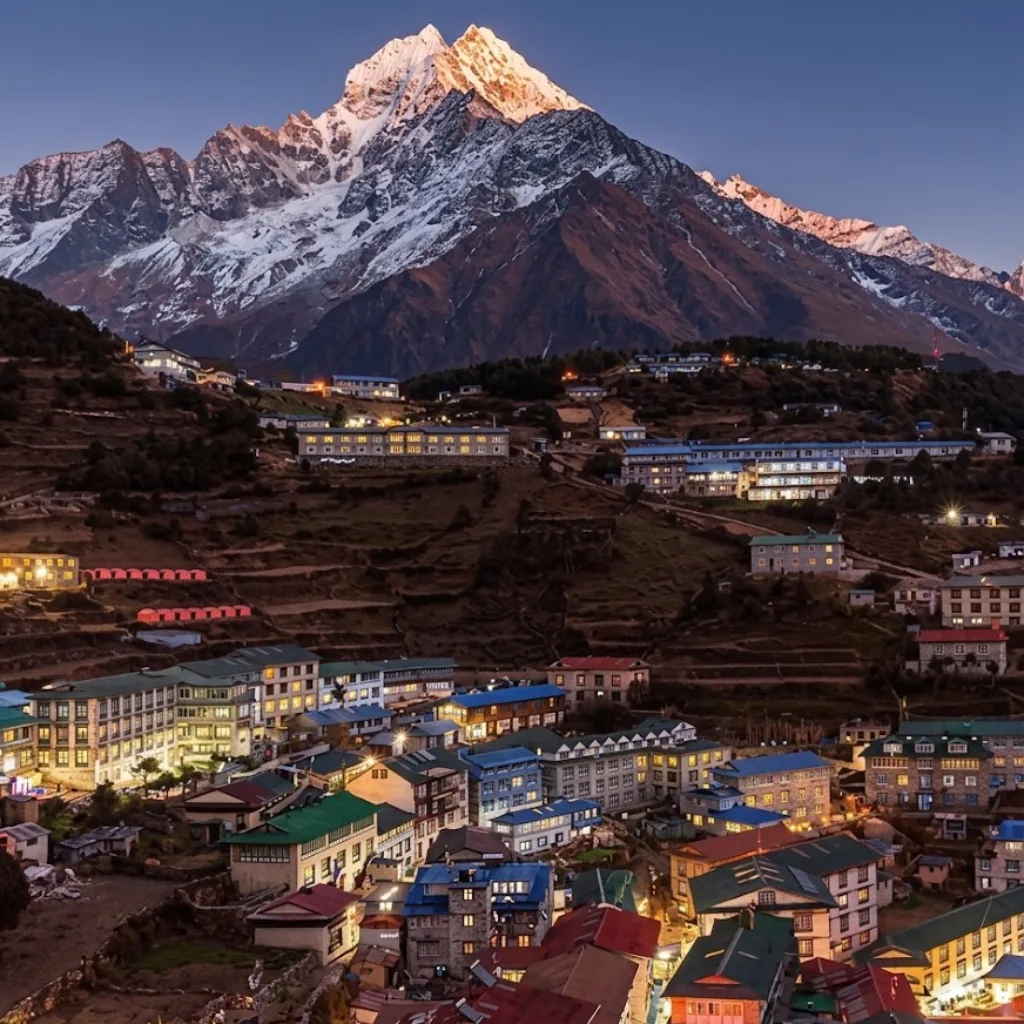

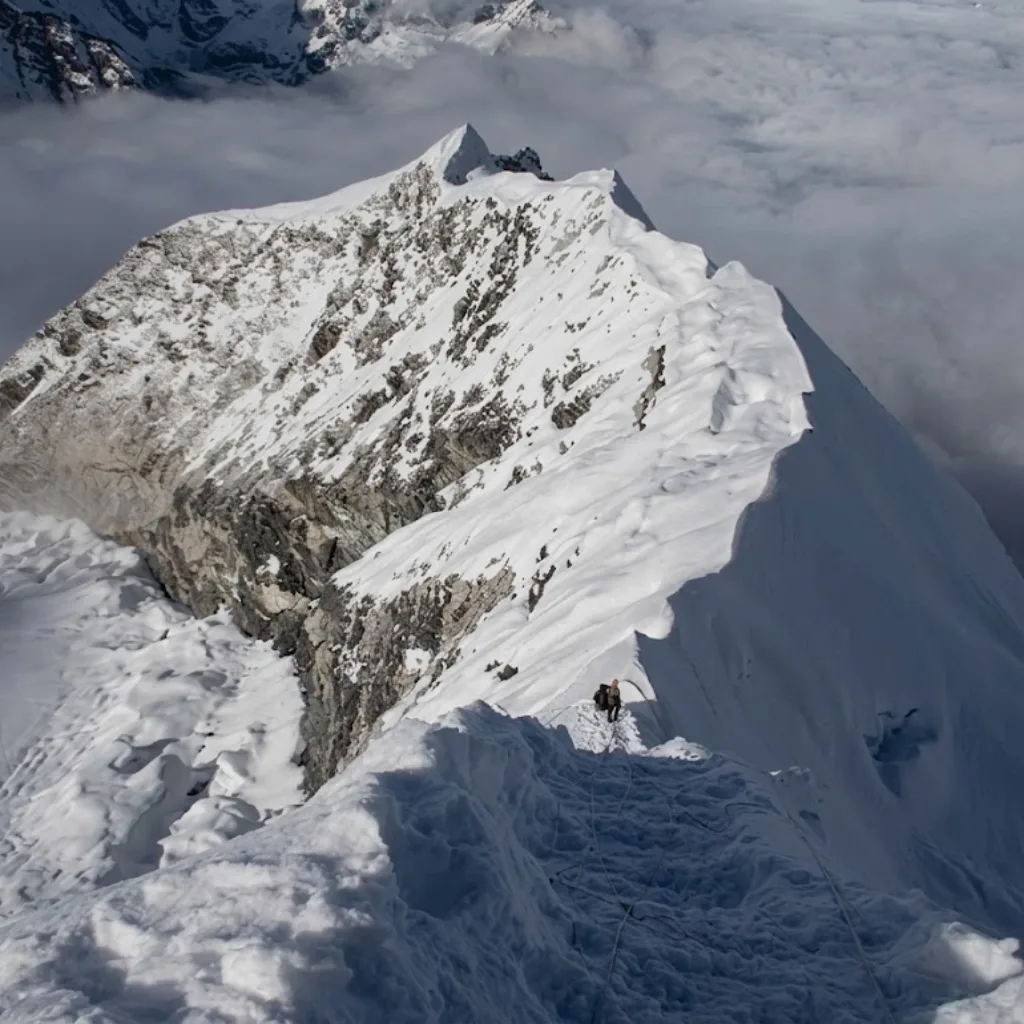
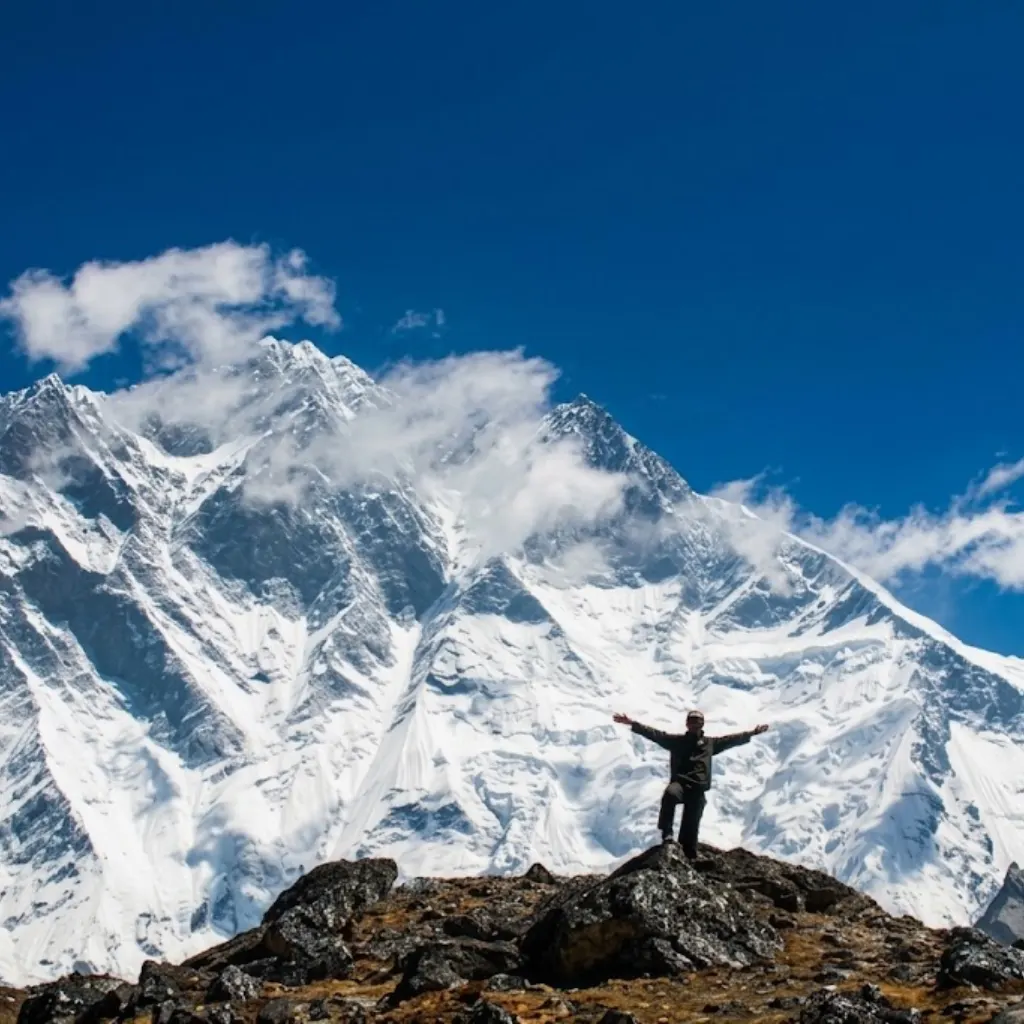
Tour Highlights
The expedition strings together a classic Khumbu trek, two high passes and a genuine 6,000 m summit — a deep Everest-region experience rather than a single-day peak hop.
- Island Peak Summit — 6,189 m / 20,305 ft: climb the glacier and the fixed-rope headwall to a real summit with Everest, Lhotse, Makalu, Baruntse and Ama Dablam ringed around you.
- Kala Patthar Viewpoint — 5,545 m / 18,192 ft: the Khumbu’s most famous Everest lookout, climbed from Gorakshep on Day 9 for the classic close-up of the mountain.
- Kongma La Pass — 5,535 m / 18,159 ft: one of the three great Khumbu passes, crossed on the way to Chhukung and added a second high-altitude day to the plan.
- Namche Bazaar Acclimatisation — 3,440 m / 11,286 ft: a rest day with an optional hike toward Khumjung to keep the legs moving while the body adapts.
- Tengboche Monastery — 3,956 m / 12,979 ft: the spiritual heart of the Khumbu, set in a clearing with Everest and Ama Dablam towering overhead.
- Dingboche Acclimatisation — 4,380 m / 14,370 ft: a hike toward Nangkar Tshang with views of Makalu and the peaks of the Imja Valley.
- Island Peak Base Camp — 5,087 m / 16,690 ft: the tented camp below the mountain, where the climbing team reviews route, rope and safety procedures.
- Imja Valley and Pangboche — 3,985 m / 13,074 ft: the quieter valley below Island Peak, with the Upper Pangboche Monastery en route back.
- 18-Day High-Altitude Journey — 1,400 m to 6,189 m: two acclimatised weeks through the Khumbu, capped by a summit that most fit trekkers can prepare for in a few months.
Island Peak Climbing Overview
Island Peak, also known as Imja Tse, is a 6,189 m / 20,305 ft climbing peak in the Everest (Khumbu) region of Nepal — the most climbed first Himalayan summit in the country, and the natural next step from Everest Base Camp or Mera Peak trekking. This 18-day expedition pairs the classic Khumbu trek route — Lukla, Namche Bazaar, Tengboche, Dingboche — with a high-mountain climb that ends at a true summit with Everest, Lhotse, Makalu and Ama Dablam on the horizon. It is graded challenging: no technical climbing experience is required, but the summit day’s altitude, cold and pre-dawn start demand solid fitness and a good preparation mindset.
The route runs Kathmandu to Kathmandu. A short flight lifts you to Lukla (2,860 m), then the trail climbs through Phakding, Namche Bazaar and Tengboche before turning into the Imja Valley. Along the way the plan builds proper acclimatisation — rest days at Namche Bazaar and Dingboche, an extra night at Lobuche, and a crossing of the 5,535 m Kongma La Pass into Chhukung — before reaching Island Peak Base Camp (5,087 m). The summit attempt starts around 2:00 AM, climbs a glacier and the fixed-rope headwall, and returns to base camp the same day, followed by a two-day descent to Lukla and a flight back to Kathmandu.
With Nepal Lion Tours, the Island Peak Climbing package starts from USD 2,563 per person in the Standard tier (USD 3,460 in the Luxury tier, with group discounts on both). Included are the Island Peak climbing permit and Sagarmatha National Park entry, an NMA-licensed Sherpa climbing leader, full-board food, guesthouse and base-camp accommodation, the Kathmandu-Lukla-Kathmandu flights, group climbing equipment (crampons, ropes, harness), airport transfers and trekking gear.
What Makes Island Peak Special?
Island Peak’s claim to fame is its combination of a real summit and a real climb with a friendly learning curve. Rising 6,189 m / 20,305 ft above the Imja Valley, the summit is reached by glacier walking and a steep, roped headwall that is the defining moment of the route — a fixed-line climb that gives genuine 6,000 m mountaineering without years of prior climbing experience. From the cramped summit crest the reward is among the biggest viewpoints in the Khumbu: Everest and Lhotse tower overhead, Makalu and Baruntse fill the eastern horizon, and Ama Dablam stands guard across the valley.
The approach is the second signature. Instead of rushing straight at the mountain, this itinerary crosses the 5,535 m Kongma La Pass, one of the three great Khumbu passes, delivering a second high-altitude experience on top of the climb itself, plus Kala Patthar’s Everest sunrise view from Gorakshep. The result is an expedition that feels like two adventures — a Khumbu high-altitude traverse and a peak climb — within a single 18-day plan.
Why Choose the Island Peak Climb?
For most first-time 6,000 m climbers, Island Peak is the obvious first choice. It is higher than many alternatives but technically gentler than peaks like Lobuche East, with the steep section concentrated on a single fixed-rope headwall that a competent team climbs in under an hour. The approach uses the same well-serviced Khumbu teahouse network, so logistics are proven and familiar to the region’s operators, and the two acclimatisation days plus the Kongma La crossing give the altitude management this mountain demands.
The package keeps things practical for climbers travelling on their own or in small groups. Kathmandu is the start and end city; the Lukla flights and base-camp tents are handled by the team; and the NMA-licensed climbing leader plus group climbing equipment mean you bring fitness, personal gear and a sense of adventure rather than an expedition’s worth of hardware.
Who Is This 18-Day Island Peak Climb Suitable For?
- First-time 6,000 m climbers — the classic graduation from high-altitude trekking to a real summit
- Everest Base Camp trekkers looking for more — the same Khumbu trail plus a genuine climb
- Mera Peak aspirants — a different summit with more technical (but shorter) climbing
- Fit hikers with trekking experience — no rope skills needed, but honest fitness is essential
- Climbers preparing for higher objectives — Lobuche East, Ama Dablam or 7,000 m peaks later
- Small groups, couples and private departures — our climbs run from two trekkers
- Photographers and view-chasers — the Everest/Lhotse/Makalu panorama from the summit and Kala Patthar
No technical climbing experience is required — your climbing leader teaches crampon walking, rope work and headwall technique as you go. What matters is a baseline of trekking fitness: expect to walk 4–7 hours most days for two weeks, sleep above 4,000 m from the middle of the trip, and handle a pre-dawn, cold 10–11 hour summit day.
Guide’s Note — Nepal Lion Tours
From our experience running Island Peak departures, the climbers who summit first try are the ones who respect the two quiet preparation days — the acclimatisation hike at Dingboche and the early night at Base Camp. The headwall looks intimidating from below but climbs fast with fixed ropes; the real challenge is the altitude and the long, dark summit morning. We recommend arriving at Base Camp rested, eating and drinking steadily through the summit attempt, and treating the 2 am start as the beginning of a long trek rather than a race.
— Nepal Lion Tours Lead Trekking Guide
Quick Facts
Trek Fact | Details |
|---|---|
Trek Name | Island Peak Climbing |
Duration | 18 days / 17 nights |
Region | Everest (Khumbu), Koshi, Nepal |
Maximum Altitude | 6,189 m / 20,305 ft at the Island Peak summit |
Difficulty | Challenging |
Main Highlight | Summit of 6,189 m Island Peak (Imja Tse) with views of Everest, Lhotse, Makalu and Ama Dablam |
Start / End | Kathmandu to Kathmandu |
Route | Kathmandu – Lukla – Phakding – Namche Bazaar – Tengboche – Dingboche – Lobuche – Gorakshep – Kongma La – Chhukung – Island Peak Base Camp – Summit – Pangboche – Lukla – Kathmandu |
Typical Walking | 4–7 hours per day, plus the 10–11 hour summit day from Base Camp |
Best Season | Spring (Mar–May) and Autumn (Sep–Nov) |
Price From | USD 2,563 per person (Standard) / USD 3,460 (Luxury) |
Accommodation | Kathmandu hotels, Khumbu teahouses, tented nights at Island Peak Base Camp |
Guide | NMA-licensed Sherpa climbing leader plus English-speaking trekking guide |
Island Peak Climb Route and Elevation
The Island Peak expedition is a there-and-back Khumbu traverse with the summit day as its peak. From Kathmandu you fly to Lukla and walk the classic valley route through Namche Bazaar and Tengboche to Dingboche; a short day over the Thukla Pass reaches Lobuche; and the route then loops through Gorakshep, over the Kongma La and into the Imja Valley, where Chhukung leads to Island Peak Base Camp. The descent retraces the Imja Valley to Pangboche and rejoins the main trail back through Namche Bazaar and Phakding to the Lukla flight.
Island Peak Climb Route at a Glance
| Day | Trek Route | Altitude | Highlights |
|---|---|---|---|
| 1 | Arrive Kathmandu, climbing briefing | 1,400 m / 4,593 ft | Airport transfer, Thamel, team briefing |
| 2 | Fly Kathmandu–Lukla, trek to Phakding | 2,651 m / 8,698 ft | Scenic flight, first forested walking |
| 3 | Phakding–Namche Bazaar | 3,440 m / 11,286 ft | Dudh Koshi bridges, Sagarmatha NP entry, Hillary Bridge |
| 4 | Acclimatisation day at Namche | 3,700 m / 12,139 ft | Hike toward Khumjung, Everest views, rest |
| 5 | Namche–Tengboche | 3,956 m / 12,979 ft | Rhododendron forest, Tengboche Monastery |
| 6 | Tengboche–Dingboche | 4,380 m / 14,370 ft | Imja Valley, Ama Dablam views |
| 7 | Acclimatisation day at Dingboche | 4,380 m / 14,370 ft | Nangkar Tshang hike, Makalu views, rest |
| 8 | Dingboche–Lobuche | 4,938 m / 16,201 ft | Thukla Pass, Everest climbers’ memorial |
| 9 | Lobuche–Gorakshep, hike Kala Patthar | 5,545 m / 18,192 ft | Everest Base Camp moraine views, Everest sunrise viewpoint |
| 10 | Gorakshep–Lobuche | 4,938 m / 16,201 ft | Restful descent, recovery night |
| 11 | Lobuche–Chhukung via Kongma La | 5,535 m / 18,159 ft | High pass crossing, Imja Valley entry |
| 12 | Chhukung–Island Peak Base Camp | 5,087 m / 16,690 ft | Moraine approach, gear + safety briefing, tented camp |
| 13 | Summit Island Peak, return to Base Camp | 6,189 m / 20,305 ft | 2 am start, glacier, headwall, summit panorama |
| 14 | Base Camp–Pangboche | 3,985 m / 13,074 ft | Long descent via Chhukung, Orsho and Shomare |
| 15 | Pangboche–Namche Bazaar | 3,440 m / 11,286 ft | Tengboche monastery, Dudh Koshi gorge |
| 16 | Namche–Lukla | 2,860 m / 9,383 ft | Final descending day through Monjo and Phakding |
| 17 | Fly Lukla–Kathmandu, farewell dinner | 1,400 m / 4,593 ft | Return flight, free afternoon, celebration |
| 18 | Final departure from Kathmandu | 1,400 m / 4,593 ft | Airport transfer, end of expedition |
Island Peak Climb Elevation Profile
The profile is a long, steady ramp that holds its altitude gains in short, swimmable steps. Kathmandu at 1,400 m jumps to Lukla (2,860 m) by air, then the walking days climb in the classic Khumbu rhythm — Namche at 3,440 m, Tengboche near 3,956 m, Dingboche at 4,380 m with a rest day, Lobuche at 4,938 m. Two controlled high points follow: Kala Patthar (5,545 m) as a daytime hike on Day 9, and the Kongma La (5,535 m) crossing on Day 11, both returned to sleep lower.
Above Chhukung the mountain staircase begins. Island Peak Base Camp (5,087 m) holds the first tented night, and the summit day reaches 6,189 m through a glacier shelf and the headwall before descending more than 1,000 m back to camp the same day. For the body this pattern — sleep lower than you walk, gain in controlled steps, no night above Base Camp — is the essence of the acclimatisation plan. Our team carries the trekking map and elevation profile for the full route, and is happy to share it with you at briefing.
How to Get to the Island Peak Climb
The expedition starts and ends in Kathmandu (1,400 m / 4,593 ft), and the only air legs are the Lukla flights — everything else is walked, with private transfers in the city and a return flight that drops you back at your Kathmandu hotel on Day 17.
Kathmandu to Lukla: The Gateway Flight
| Option | Approx. Travel Time | Best For |
|---|---|---|
| Lukla flight from Kathmandu | ~35–40 minutes | Standard routing; scenic approach over the foothills |
| Lukla flight via Ramechhap | ~4-hour road transfer + ~20-minute flight | High-season (Oct–Apr) departures when Kathmandu city airport is busy |
| Helicopter sector | ~45–60 minutes | Private comfort upgrades, weather flexibility |
The Day 2 morning flight from Tribhuvan International Airport (or from Ramechhap’s Manthali airport in the busiest months) drops you at Tenzing-Hillary Airport, Lukla — 2,860 m / 9,383 ft, the same gateway used by every Everest-region trek. Weather governs this flight more than any other in Nepal: departures can slip by hours or a day, which is why the itinerary carries flexibility and why we advise travel insurance with a helicopter-evacuation provision.
From Lukla the Expedition Begins
The first walking day heads down the Dudh Koshi valley to Phakding (2,651 m), a gentle introduction after the early flight. The next morning the trail climbs through Monjo — where you register at Sagarmatha National Park — crosses a string of prayer-flag suspension bridges, conquers the Hillary Bridge and climbs the stadium-edge switchbacks into Namche Bazaar (3,440 m). From Namche the route rolls through Tengboche, Pangboche and Dingboche before the high passes and the summit valley.
Returning to Kathmandu After the Summit
After the summit, two long descent days bring you back to Lukla on Day 16 in time for the Day 17 flight. The return sector takes roughly 30–35 minutes, and the itinerary carries a free Kathmandu afternoon and farewell dinner afterward — so even a same-day flight delay has a designated buffer before your international departure on Day 18. Our team monitors the Lukla schedule on both legs and keeps guides and transfers coordinated around it.
Ramechhap: High-Season Airport Routing
In the peak months (October to April), Lukla flights sometimes operate from Ramechhap (Manthali) instead of Kathmandu’s city airport to reduce congestion. That means an early ~4-hour road transfer from Kathmandu to Ramechhap, a short hop to Lukla, and the same on return. Your package includes the flights and the road transfer, and our team plans the early departure so you are not unduly rushed. In quieter months the same flights leave directly from Kathmandu.
A Practical Tip for International Travellers
Hold at least one spare day after the Day 17 return flight before your international departure — weather can close Lukla for hours even in the best seasons. The itinerary’s Day 18 departure gives you that margin automatically. Note also that climbing itineraries are weather-managed: summit day may shift by a day, and the Kongma La crossing can move forward or back depending on snow and wind. Keep your flight home flexible and your travel insurance arranged for a possible extension.
Guide’s Note — Nepal Lion Tours
From our experience operating Island Peak departures, the Lukla flight is the hinge of the whole expedition, and the most common cause of a changed plan. When the weather closes Lukla, flights reroute through Ramechhap or slip to the next morning — so we build the spare-day buffer into the itinerary on purpose and track the schedule on both legs rather than leaving you at the airport guessing. On summit mornings the same principle applies in reverse: the day can shift by a day, so arrive with loose international connections and let the team handle the movement side.
— Nepal Lion Tours Lead Trekking Guide
Island Peak Climb Difficulty, Fitness & Altitude
The climb is graded challenging, and the challenge is altitude and length rather than technical difficulty. The route offers genuine high-mountain climbing — glacier travel with crampons and a rope, plus a steep fixed-rope headwall — but the techniques are learned and coached, not assumed. What you bring is baseline fitness: expect 4–7 walking hours most days for two weeks, nights at or above 4,000 m from the middle of the trip, and a long, cold, pre-dawn summit day.
Where the Effort Actually Is?
Three moments concentrate on the real difficulty. First, the sustained 18-day length — even gentle days add up, and Day 16’s final push from Namche to Lukla (7–8 hours) arrives after a lot of walking. Second, the summit day — a 2 am start from Base Camp, a rock-and-ice climb through the glacier shelf, the headwall on fixed ropes, and a descent of more than 1,000 m back to camp, cold and exposed throughout. Third, the altitude itself — the Kongma La at 5,535 m on Day 11 and Kala Patthar at 5,545 m on Day 9 are both genuine high-point tests that set you up for the summit.
Guide’s Note — Nepal Lion Tours
The headwall is where Island Peak makes its reputation, but from our experience it is rarely the make-or-break. A competent team clips in, moves steadily and clears it in under an hour; the harder hours are the slow, cold glacier shelf below it in the dark. We recommend arriving at Base Camp rested, eating in your pockets through the summit morning, and charging your headlamp with spare batteries in an inner pocket so the cold does not kill them. Teams that eat and drink steadily through the summit morning feel the descent far less.
— Nepal Lion Tours Lead Trekking Guide
How to Prepare for the Island Peak Climb
- Build 3–4 months of consistent cardio — 3–5 sessions weekly: hiking, running or cycling at 45–90 minutes
- Walk with elevation gain — two or three long hill or stair sessions a week for 6–8 weeks before departure
- Do one multi-day trek above 3,000 m if possible (EBC, Annapurna Base Camp or similar) to test your altitude response
- Practice carrying a loaded pack — 8–12 kg on the hill sessions mirrors the trekking weight
- Strengthen legs, core and balance — squats, lunges, step-ups and single-leg work protect you on the long descents
- Get your crampon-compatible boots early and break them in fully — blisters above 4,000 m are catastrophic
- Test altitude medication (diamox/acetazolamide) with your doctor before travel and know your tolerance
How Difficult Is Island Peak Compared with Other Peaks?
Compared with Mera Peak (6,461 m), Island Peak is lower but more technical — the headwall and fixed ropes add real climbing, where Mera is almost pure glacier walking. Compared with Lobuche East (6,119 m), Island Peak is generally considered the gentler first peak, with a shorter and less sustained technical section. Compared with Everest Base Camp trekking (5,364 m), Island adds 800 m of altitude, a climbing day and tented nights, but demands no climbing skills you cannot learn on the approach. Most fit trekkers who complete a Khumbu trek can, with training, climb Island Peak.
Altitude, Acclimatization & Safety
Altitude is the expedition’s main risk, and the programme is built around managing it. The route holds two full acclimatisation days (Namche Bazaar and Dingboche), gains height in controlled steps, includes daytime high-points (Kala Patthar and the Kongma La) that you return from to sleep lower, and keeps the summit-day return to Base Camp so no night is spent above 5,100 m.
Island Peak Climb Altitude Profile
- Kathmandu — 1,400 m / 4,593 ft: arrival, briefing and departure days
- Lukla — 2,860 m / 9,383 ft: flight-in gateway to the Khumbu
- Phakding — 2,651 m / 8,698 ft: first trekking night
- Namche Bazaar — 3,440 m / 11,286 ft: acclimatisation stop and Khumbu capital
- Tengboche — 3,956 m / 12,979 ft: monastery stop below Everest
- Dingboche — 4,380 m / 14,370 ft: acclimatisation stop in the Imja Valley
- Lobuche — 4,938 m / 16,201 ft: high overnight below the moraine passes
- Kala Patthar — 5,545 m / 18,192 ft: daytime Everest viewpoint, sleep lower
- Kongma La — 5,535 m / 18,159 ft: high pass crossed on the way to Chhukung
- Island Peak Base Camp — 5,087 m / 16,690 ft: first tented night on the approach
- Island Peak Summit — 6,189 m / 20,305 ft: the objective; no overnight
How the Body Adapts to Altitude
Acclimatisation works through exposure, rest and nutrition. The two classic Khumbu acclimatisation days — a hike high, sleep low pattern at Namche Bazaar and Dingboche — adapt most climbers naturally, and the extra night at Lobuche plus the Kongma La crossing add deliberate control before Base Camp. Your climbing leader paces each day and asks each climber about sleep, appetite and headache — early amber flags, not drama. Drinking 4–5 litres a day, eating carbohydrate-dense meals (dal bhat, noodles, porridge), and sleeping at the camps each night are the three habits that get people up this mountain.
Symptoms of Altitude Sickness to Watch For
- Mild (normal at altitude, manage): headache, breathlessness on effort, disturbed sleep, reduced appetite, light dizziness
- More concerning (act immediately): severe unrelieved headache, vomiting, confusion, loss of coordination, breathlessness at rest
The rule is absolute: stop ascending, tell your leader, and descend. On Island Peak a descent is always downhill from camp to the valley — that remedy is part of the route design. Your climbing leader carries the protocol, a first-aid kit and communication, and will turn the team if conditions or health say so; the decision to descend is final, never a debate.
How Nepal Lion Tours Supports Altitude Safety
- Gradual, acclimatisation-led route progression with two high-sleep-low days built in
- Controlled high points — Kala Patthar and Kongma La climbed without sleeping at altitude
- NMA-licensed Sherpa climbing leader with a strong personal track record on Island Peak
- Daily health checks — sleep, appetite, headache and pulse-ox monitoring where useful
- Training before the summit — headwall technique and rope skills practised before summit morning
- Descent-ready design — the summit-day return to Base Camp means no night above 5,100 m
Best Time to Climb Island Peak
The best time is generally spring (March to May) and autumn (September to November), the two windows of stable high-pressure weather that give the summit its best success odds. The climb runs year-round, but outside these windows the snow, wind and cold raise the difficulty and reduce the weather margin on summit day.
Season | Months | Weather & Snow Conditions | Summit Conditions | Overall |
|---|---|---|---|---|
Autumn | Sep–Nov | Clearest and most stable; settled snow | Excellent success rates | Best overall |
Spring | Mar–May | Warmer, drier; drier snow on glacier | Very good; more teams | Highly recommended |
Winter | Dec–Feb | Extremely cold above 4,000 m, deep snow | Possible with preparation, cold | Good for experienced teams |
Monsoon | Jun–Aug | Heavy cloud, wet trails, more crevasse risk | Frequently poor | Not recommended |
Autumn — September to November
Autumn is the most reliable season for the whole expedition. Post-monsoon skies are clear and stable, daytime temperatures at valley level are pleasant, the headwall and glacier hold well-packed snow, and the summit success rate is typically the highest of the year. October in particular offers the classic conditions: cold dawns, warm walking days, and the crisp visibility that makes the Everest-Lhotse-Makalu panorama stand out. It is also when the NMA climbing permit costs the low seasonal rate, making autumn the best season by most measures.
Spring — March to May
Spring is the other peak season, with milder temperatures and generally good snow after the winter. The Khumbu trails and teahouses are busy, the rhododendron along the approach blooms in April, and the longer days give the summit push a comfortable start. Success rates are high, though the mountain sees more teams and the climbing permit is at its spring-peak price of USD 350 per person.
Winter — December to February
Winter is a committed mountaineer’s season: brilliant clear air, almost no other teams, but bitter cold above 4,000 m, deep snowfall on the glacier and short windows of stable weather. Walking days must be efficient, the tented night at Base Camp needs serious cold-weather kit, and summit success depends on snow conditions through the glacier shelf. It is feasible for well-prepared, experienced groups but not a first-choice season for early peak climbers.
Monsoon — June to August
The monsoon is not recommended for Island Peak. Cloud and rain sit over the Khumbu, the teahouse trails turn to mud, and upper-mountain weather becomes unpredictable — with soft snow and increased crevasse risk through the glacier route. Some operators run reduced departures with constant weather watching; if your dates fall in these months, insist on flexible summit scheduling and full insurance coverage.
Which Season Should You Choose?
Choose autumn (September to November) for the best summit odds, the calmest weather and the lower permit rate. Choose spring (March to May) for milder temperatures, rhododendron flowers and long daylight — accepting the higher peak-season permit price. Choose winter only if you are experienced and want solitude. Avoid the monsoon unless your dates are fixed and your leader confirms the route is safe. Whichever you pick, verify the NMA permit price for your season at booking and keep at least one spare day after the summit for weather.
Guide’s Note — Nepal Lion Tours
From our experience of Island Peak departures, autumn is the season we recommend for first-timers within reason: the post-monsoon air is clear, the Khumbu sky holds its walk, and the summit window behaves. Spring is a close second and runs warmer with longer daylight, but the mountain sees more teams and the permit costs more. The honest advice we give every enquiry is to pick the season that fits your schedule and your fitness, then hold one spare day at the end — weather, not the calendar, decides the summit.
— Nepal Lion Tours Lead Trekking Guide
Island Peak Climb Permits & Regulations
Climbing Island Peak requires a climbing permit for the peak itself — issued by the Nepal Mountaineering Association (NMA) for Imja Tse — plus entry permits for Sagarmatha National Park and the Khumbu Pasang Lhamu Rural Municipality, whose ground the whole route sits inside. Nepal Lion Tours arranges all of these as part of the pre-expedition paperwork; you travel with your original passport and the documents ride with the climbing leader.
Island Peak Climb Permits at a Glance
Requirement | Who Needs It? | Who Arranges It? |
|---|---|---|
Island Peak (Imja Tse) Climbing Permit — NMA | Foreign and SAARC climbers attempting the summit | Nepal Lion Tours |
Sagarmatha National Park Entry Permit | Foreign and SAARC trekkers entering the park | Nepal Lion Tours |
Khumbu Pasang Lhamu Rural Municipality Permit | All trekkers in the Khumbu | Nepal Lion Tours |
Travel insurance with high-altitude + evacuation cover | All climbers (recommended, not a permit) | You |
Island Peak Climbing Permit (NMA)
The climbing permit for Island Peak is issued by the Nepal Mountaineering Association and is required for every climber attempting the summit. As of the NMA’s September 2025 revision, the rate for foreign climbers is USD 350 per person in spring (March–May) and USD 175 per person in autumn, winter and summer — the same Group B bracket that covers Mera Peak and Lobuche East. Nepal Lion Tours obtains the permit in your name before the expedition using your passport details, and the official document is carried by the climbing leader on the mountain.
Sagarmatha National Park Entry Permit
On Day 3 the route enters Sagarmatha National Park at Monjo, and every foreign trekker must hold the park’s entry permit. The fee is NPR 3,000 for foreign nationals and NPR 1,500 for SAARC nationals (2026 schedule — confirm at booking). The permit is checked at the park gate, so carry your original passport; Nepal Lion Tours arranges the document ahead of your arrival.
Khumbu Pasang Lhamu Rural Municipality Permit
All trekkers in the Khumbu must also hold the Khumbu Pasang Lhamu Rural Municipality permit, which replaced the old TIMS card in this region. The fee is NPR 3,000 for foreign nationals and NPR 2,000 for SAARC nationals (2026 schedule — confirm at booking). Nepal Lion Tours processes this together with the park permit, so your paperwork is complete before you leave Kathmandu.
Who Arranges the Permits?
Nepal Lion Tours arranges all applicable permits and registrations as part of your pre-trek preparation. You simply travel with your original passport (required for identification and permit checks) and any required passport photos or documentation we request. Government fees and rules can be revised by the authorities, so we always confirm the current fees with you at booking and state them clearly in your invoice.
No restricted-area permit is needed for this route — the standard Island Peak itinerary passes through Lukla, Namche Bazaar, Tengboche, Dingboche, Lobuche, Gorakshep and Chhukung, none of which fall in Nepal’s restricted zones. Regulations can change, and modified or extended itineraries may differ, so confirm the current position with our team when you book.
Food & Accommodation on the Island Peak Climb
For most of the route you stay in the Khumbu’s well-established teahouse network — warm, food-served lodges in Lukla, Namche, Tengboche, Dingboche, Lobuche, Gorakshep, Chhukung and Pangboche — with two tented nights at Island Peak Base Camp for the climb itself. Your trekking guide and climbing leader coordinate meals, beds and the camp, so you focus on walking and resting.
Teahouse Accommodation on the Island Peak Climb
- Twin-sharing rooms in family-run mountain lodges
- Shared bathrooms on most stops; private bathrooms more common in bigger villages
- Hot showers available at many teahouses for a small fee
- Solar/hydro electricity at most lodges, with charging usually payable
- Heated dining rooms where you gather for meals and evenings
- Wi-Fi available in larger settlements (Namche, Tengboche, Dingboche), weaker higher up
- Thick quilts and blankets provided; your sleeping bag adds the warmth guarantee
Village-to-village standards vary — Namche and Tengboche are the most comfortable, Lobuche and Gorakshep simpler — and the two Base Camp nights are fully tented with the expedition’s own camp setup. Everywhere you stay, the lodges are locally operated and were chosen partly for their food, warmth and welcome.
What Food Is Available on the Island Peak Climb?
The Khumbu menu keeps expeditions fed with a reliable, high-carb rotation: dal bhat (lentils and rice — the trekker’s favourite for energy), momos, noodle soups, fried rice, pasta, baked potatoes, eggs, porridge, pancakes and toast. Soups and garlic dishes are popular at altitude, and bakeries in the bigger villages offer fresh bread and cakes as a treat. Vegetarian food is widely available; vegan or gluten-free needs can be met with advance notice, so tell Nepal Lion Tours your dietary requirements before you travel.
What Food and Accommodation Are Included?
Included in the Island Peak Package | Usually Paid Separately |
|---|---|
Full-board food during trek and climb (breakfast, lunch, dinner, tea/coffee, seasonal fruit) | Drinks outside meals (soft drinks, beer, extra hot showers) |
All teahouse accommodation for 15 nights | Kathmandu dinners outside the welcome/farewell meals |
2 tented nights at Island Peak Base Camp | Snacks, chocolate and personal food cravings |
Welcome and farewell dinners in Kathmandu | Luxury hotel upgrades on pre/post nights |
NMA climbing permit, park and municipality permits | Porter service (optional add-on at booking) |
Flights Kathmandu/Lukla for guest and guide | Travel insurance and helicopter evacuation cover |
Your final inclusions are confirmed in writing at booking, so there are no surprises on the mountain — and our team is happy to split out the add-on options (porter, extra Kathmandu hotel nights) into a clear quote.
Drinking Water on the Trek
Never assume mountain tap water is safe. Drink boiled, bottled or chemically treated water throughout — teahouses sell boiled and bottled water, and clean water is available at every stop. Bring a reusable bottle (and filter or purification tablets if you prefer), drink 4–5 litres a day at altitude, and refill where the leader confirms the source is safe. Carrying a reusable bottle also reduces plastic at altitude.
Staying Comfortable at Teahouses
- Bring a water bottle and fill it boiled each evening
- Use your sleeping bag liner and pillow cover for warmth and hygiene
- Carry a power bank — teahouse sockets are limited and often paid
- Keep cash (NPR) for showers, Wi-Fi and extra drinks
- Layer up in the dining room; evenings get cold even in spring
- Tell your guide about any dietary needs before each meal
With good preparation — and the knowledge that warmth sits in your layers, not the building — teahouse life on the Island Peak trail is comfortable, sociable and part of the experience.
Why Book with Nepal Lion Tours?
Booking a high-altitude climb with Nepal Lion Tours means climbing with a Kathmandu-based registered trekking company that runs the logistics — permits, flights, teahouses, base camp, climbing leader — and stays reachable from your first inquiry to your safe return. Here is why trekkers book Island Peak with us.
- Local, licensed climbing leaders and guides. Nepal Lion Tours works with NMA-licensed Sherpa climbing leaders and government-licensed English-speaking guides who know the Island Peak headwall and the Khumbu trail as home ground.
- A registered trekking company you can verify. Based in Kathmandu, with company and licence details available on request, so you know exactly who is organising your expedition.
- Private departures from two trekkers. Your climb runs on your dates with your team, at a pace that suits you — no joining someone else’s fixed group.
- A complete expedition, not just a summit bid. The itinerary adds the Kongma La Pass and Kala Patthar to the climb, turning a peak day into a full Khumbu high-altitude experience.
- Private transfers and straightforward logistics. City transfers, Lukla flights, teahouse bookings and the base-camp camp are all handled end to end.
- Budget-visible pricing without cutting safety. The Standard tier (from USD 2,563) and Luxury tier (from USD 3,460) share the same route, permit set and climbing leadership; the difference is hotel grade and some comfort levels, never safety or support.
- A local team you can contact before and during your climb. WhatsApp, email and in-Kathmandu presence mean questions get real answers before you fly, and backup is on the ground while you climb.
The business of a mountain expedition is trust, and everything Nepal Lion Tours does — from the permit paperwork to the headwall rope work — is built so you can concentrate on one thing: climbing well.
Book the Island Peak Climb
Your first 6,000 m summit is a bigger decision than a trek, and that is exactly why our 18-day plan exists — time to acclimatise, time to train on the approach, and a full support system on summit morning. When the fixed ropes come into view and you clip in for the headwall, the preparation is already done.
Island Peak Climb at a Glance
- Duration: 18 days / 17 nights
- Price: From USD 2,563 per person (Standard); USD 3,460 (Luxury) — group discounts from 2 pax
- Difficulty: Challenging
- Maximum Altitude: 6,189 m / 20,305 ft
- Accommodation: Kathmandu hotels, Khumbu teahouses, 2 tented nights at Base Camp
- Meals: Full board during trek and climb; welcome and farewell dinners in Kathmandu
- Permits & Registration: NMA climbing permit, Sagarmatha NP and Khumbu Pasang Lhamu permits arranged by us
- Transportation: Flights Kathmandu–Lukla–Kathmandu, airport and city transfers, trailhead support
- Guide: NMA-licensed Sherpa climbing leader plus English-speaking trekking guide
- Cancellation: Free cancellation up to 14 days before departure (subject to booking terms)
Ready to Start Your Everest Region Adventure?
Send us your preferred travel dates, group size and any questions through the booking form or WhatsApp at +977-9851039020, and we will confirm availability, permits and pricing — including which season’s permit rate applies to your dates. Whether you’re travelling solo, as a couple, or with friends, we’ll help you prepare for a smooth and enjoyable climb. Your Island Peak summit is waiting — choose your dates and start planning your expedition today.
Related Everest Region Climbs and Treks
The Island Peak climb sits naturally alongside other Everest-region expeditions, and combining it with a classic trek gives you the fullest Khumbu season.
| Trek | Duration | Difficulty | Max Altitude | Best For |
|---|---|---|---|---|
| Everest Panorama Trek | 6–9 days | Easy–Moderate | 3,880 m (Everest View Hotel) | Shortest route to big Everest views |
| Everest Base Camp Trek | 12–14 days | Moderate | 5,545 m (Kala Patthar) | The classic EBC + Kala Patthar experience |
| Gokyo Lakes & Cho La Pass Trek | 12–14 days | Moderate–Challenging | 5,357 m | Turquoise lakes and a high pass crossing |
| Everest Three Passes Trek | 18–21 days | Challenging | 5,535 m | Full high-altitude Khumbu traverse |
| Mera Peak Climb | 16 days | Challenging | 6,461 m | Nepal’s highest trekking peak, glacier walking |
If Island Peak is your first climb, the Everest Three Passes share its Kongma La crossing and reward further acclimatisation; the Everest Base Camp Trek covers the classic valley you walk on this itinerary; and Mera Peak offers a higher but less technical summit if you enjoy this one. Many climbers pair Island Peak with a Chitwan Jungle Safari or a day of Kathmandu valley touring after the descent — ask our team to build the combo around your dates.
Trip Essentials
Packing advice, required equipment & gear recommendations
Essential
The Island Peak trail runs through teahouses, not tents (apart from two Base Camp nights), so pack for changing mountain weather and the cold, technical summit morning. Nepal Lion Tours provides a down jacket, sleeping bag, duffel bag and trekking map; everything below is the personal kit you bring.
Hiking Gear
- Crampon-compatible mountaineering boots — worn in well before departure; the single most important item
- Daypack (30–40 litres) — carried by you on trekking days
- Duffel bag — provided and porter/transport carried for the full route
- Trekking poles — take loads off knees and balance on the descents
- Headlamp with spare batteries — mandatory for the 2 am summit start
- Water bottles (2 × 1 litre) or hydration bladder — plus purification tablets or filter
- Sunglasses and sunscreen — intense above the snowline
Clothing: Use Layers Rather Than Bulk
Base layers: synthetic or merino long-sleeve tops (2–3), thermal leggings. Avoid cotton against the skin.
Mid-layers: fleece jacket, lightweight insulated jacket, trekking trousers (2 pairs).
Outer layers: waterproof/breathable shell jacket and trousers, plus a warm down layer for the summit morning.
Trekking clothes: comfortable shirt, long trekking pants, warm glove liners and insulated mitts, warm hat, sun hat and a buff.
Headwear and gloves: a warm beanie for the cold summit push, a wide-brim sun hat for the trail, liner gloves plus waterproof shell mitts for the glacier.
Layers let you add and subtract as the day heats and cools — the same principle from the Lukla valley floor to the summit wind.
Sleeping and Evening Comfort
- Sleeping bag — provided; bring a liner for hygiene and extra warmth
- Down jacket — provided for the cold evenings and summit morning
- Slippers or light camp shoes — comfort in the teahouse dining room
- Ear plugs and a sleep mask — for the shared nights and bright high-altitude mornings
Toiletries and Personal Health Items
- Sunscreen (SPF 50+) and lip balm — high-altitude sun is brutal
- Basic first-aid items — plasters, blister treatment, painkillers
- Any personal medication — plus a note from your doctor if prescribed
- Diamox/acetazolamide — only after discussing with your doctor
- Hand sanitiser and wet wipes
- Toothbrush and toothpaste, biodegradable soap, small towel
- Insect repellent for the lower valley sections
- Electrolyte sachets for the water bottles
- Personal toiletries in small sizes
- A small notebook and pen for the trip diary
- Thermos or insulated flask — hot drink for the summit morning
Electronics
- Power bank (20,000 mAh) — the camps charge nothing; teahouse sockets are modest
- Universal adapter — Nepal uses three-round-pin sockets, so bring one before you fly
- Phone and spare charging cable in a zip-lock bag
- Camera or phone camera with spare batteries and memory — cold drains battery fast at 5,700 m and above
Documents and Money
- Passport — required for permits and identification at park gates
- Passport photos (2–3) — useful for permit paperwork
- Travel insurance documents — must cover climbing to 6,189 m and helicopter evacuation
- Cash in NPR and small USD — for hot showers, Wi-Fi, extra drinks and tips
- Cards for Kathmandu, where ATMs and card payments are reliable
How Much Should You Pack?
Lighter is better. Your duffel is carried or porter-assisted for the whole route, and your daypack holds only the day’s needs — water, layers, snacks and camera. Most climbers manage with a 15–20 kg duffel and a 30–40 litre daypack; our packing list above is complete, not a checklist to empty a shop. Pack every item, then remove the items you know you will not use — and remember, everything you do not carry, nobody has to carry up a mountain.
Read Before You Book
Permits, terms, medical considerations & advisory guidelines
Advisory
Before you book your Island Peak expedition, here are the practical details that make the difference between a smooth and a stressful climb.
Accommodation and Facilities
Teahouse standards vary across the Khumbu: Namche, Tengboche and Dingboche are the most comfortable, while Lobuche and Gorakshep are simpler and the two Base Camp nights are tented. Expect shared bathrooms, paid hot showers and limited Wi-Fi at higher stops.
Food and Dietary Requirements
Full board is included on trek and climb days. Vegetarian food is widely available; tell Nepal Lion Tours about vegan, gluten-free or allergy needs before you travel so the kitchens can prepare.
Altitude, Health and Insurance
This is a 6,000 m climb — altitude is the main risk. Travel insurance must cover high-altitude trekking, climbing to 6,189 m and helicopter evacuation, which is the standard rescue tool above Gorakshep. Carry any personal medication and discuss altitude medication with your doctor.
Money and Tipping
Carry cash in Nepali rupees for showers, Wi-Fi, extra drinks and meals in Kathmandu. Tipping for the climbing leader, guide and porters is customary and not included in the package; our team will suggest fair amounts at briefing.
Culture and Responsible Trekking
- Respect Buddhist sites — walk clockwise around monuments, remove hats in monasteries
- Ask before photographing people and religious objects
- Leave no trace — carry out wrappers, batteries and used items
- Support local — buy snacks and drinks from the teahouses you sleep in
- Follow your guide’s lead on trail etiquette and mountain rules
- Be patient with local pace — the Khumbu runs on Nepali time and weather
Route Options
- Island Peak with Kongma La (this itinerary): adds the high pass and Kala Patthar for a full Khumbu traverse
- Island Peak short itinerary: fly to Lukla, climb, return — can be completed in 13–14 days with less acclimatisation
- Island Peak + Everest Base Camp: climb EBC trekking and the peak in one longer expedition
- Lobuche East or Mera Peak: more advanced or higher alternative summits for climbers with experience
- Custom departures: private dates, extended Base Camp training days and itinerary tweaks are all possible
Booking and Before You Arrive
- Book early — Island Peak is the most popular trekking peak; spring dates fill ahead
- Passport length — ensure at least 6 months validity and 2 blank pages
- Get your Nepal visa — on arrival at Tribhuvan Airport (USD 25 for 15 days, USD 40 for 30 days) or online in advance
- Arrange insurance early — confirm your policy covers 6,189 m and helicopter evacuation
- Train before departure — the 3–4 months of cardio in our preparation list are the real summit plan
- Bring camera memory and a spare power bank — the summit panorama is the prize
- Confirm your hold luggage — the duffel carried for you has a weight limit set at booking
A Few Final Tips
The summit counts as a straight climb with ropes, so treat it with the respect altitude deserves — but remember it is designed to be achievable. Follow the acclimatisation days, sleep at the right heights, eat and drink steadily, and let your leader pace you. That is how most teams stand on 6,189 m and come down smiling.
Day-by-Day Itinerary
Explore each day's route, trekking elevation, and activities
Morning
Arrive at Tribhuvan International Airport in Kathmandu, where our representative will meet you and transfer you to your hotel. After check-in, take some time to rest following your journey.
Midday
Use the available time to settle into the hotel and prepare for your upcoming Island Peak climbing expedition. You may explore the nearby streets of Thamel if your arrival schedule allows.
Afternoon
Meet our climbing team for a detailed briefing about the expedition. Your guides will explain the trekking route, climbing schedule, equipment requirements, permits, safety procedures, and altitude considerations.
Evening
Use this time to ask any remaining questions and check your personal climbing equipment. Rest at the hotel and prepare for the early departure toward Lukla the following morning.
Overnight at a hotel in Kathmandu.
Morning
Depart Kathmandu early in the morning on a domestic flight toward Lukla. The short flight offers beautiful aerial views of Nepal's hills, valleys, rivers, and Himalayan landscapes.
The airport at Lukla, known as Tenzing-Hillary Airport, serves as one of the principal gateways to the Everest region. Flights are dependent on weather and operational conditions, so schedules can occasionally be affected.
Midday
After landing in Lukla and organizing your equipment, begin the trek toward Phakding. The trail initially passes through mountain settlements and forested areas before gradually descending toward the Dudh Koshi Valley.
Afternoon
Continue walking through pine and rhododendron-covered sections of the trail. The relatively short first trekking day allows you to adjust to the mountain environment after the early flight.
Evening
Arrive at Phakding, situated at approximately 2,651m. Check into your teahouse, enjoy dinner, and rest before the longer trek toward Namche Bazaar.
Overnight at a teahouse in Phakding.
Morning
After breakfast, follow the Dudh Koshi River upstream through pine forests and traditional Sherpa settlements. The trail crosses several suspension bridges decorated with prayer flags.
Continue toward Monjo, where you enter Sagarmatha National Park and complete the required entry formalities.
Midday
Continue through Jorsalle and the forested valley, enjoying views of Thamserku and the surrounding mountain landscape. Stop for lunch before continuing toward the higher sections of the trail.
Afternoon
Cross the famous Hillary Bridge and begin the sustained uphill climb toward Namche Bazaar. The trail becomes steeper as you gain elevation, so maintain a steady pace and take regular breaks.
Evening
Reach Namche Bazaar, the main Sherpa trading and trekking center of the Khumbu region. After checking into your teahouse, you can explore the market area and purchase any last-minute snacks or trekking supplies if required.
Overnight at a teahouse in Namche Bazaar.
Morning
Spend the day acclimatizing in Namche Bazaar before continuing toward higher elevations. Rather than remaining inactive, take a gradual hike to gain elevation during the day before returning to Namche to sleep.
Midday
Continue toward Khumjung Village, a traditional Sherpa settlement surrounded by mountain scenery. The area is known for its cultural heritage and traditional way of life.
Depending on the group's interest and local conditions, you can explore the village and visit important local sites.
Afternoon
Return gradually toward Namche Bazaar while enjoying views of the surrounding Himalayan peaks. Take time to rest and hydrate after the acclimatization hike.
Evening
Relax at your teahouse and prepare for the trek toward Tengboche. The acclimatization day is important before moving to increasingly higher elevations.
Overnight at a teahouse in Namche Bazaar.
Morning
Leave Namche Bazaar and follow the scenic trail toward Tengboche. The route gradually moves away from the busy market town and into a quieter mountain environment.
The trail passes through forests and along ridgelines with impressive views of Everest, Ama Dablam, Lhotse, Thamserku, and other Himalayan peaks.
Midday
Continue through rhododendron and juniper forests while following the mountain trail. Stop for lunch along the route and take time to enjoy the surrounding scenery.
Afternoon
Climb toward Tengboche, where the famous Tengboche Monastery sits in a spectacular mountain setting. Explore the monastery if it is open to visitors and observe the Buddhist cultural traditions of the region.
Evening
Enjoy the panoramic mountain views around Tengboche before settling into your teahouse. Rest and prepare for the next day's trek toward Dingboche.
Overnight at a teahouse in Tengboche.
Morning
After breakfast, leave Tengboche and descend through the forest toward the Imja Khola. Continue along the valley through increasingly open and rugged terrain.
Midday
Follow the trail toward Pangboche and continue through the Imja Valley. The surrounding vegetation gradually becomes sparser as the altitude increases.
Afternoon
Continue toward Dingboche, one of the highest permanent settlements in the Khumbu region. The village is surrounded by impressive mountain scenery, particularly Ama Dablam.
Arrive around the afternoon and take time to rest after the day's trek.
Evening
Enjoy dinner at the teahouse and prepare for the following day's acclimatization hike.
Overnight at a teahouse in Dingboche.
Morning
Enjoy breakfast before beginning an acclimatization hike above Dingboche. The gradual climb provides an opportunity to gain additional elevation while returning to Dingboche for the night's sleep.
Midday
Hike toward Nangkar Tshang, where the higher viewpoint provides broad views across the surrounding Himalayan landscape. Depending on weather and visibility, you may see Makalu and other major peaks.
Afternoon
Descend carefully back toward Dingboche after completing the acclimatization hike. Spend the remaining afternoon resting, hydrating, and preparing your equipment.
Evening
Enjoy dinner and receive any necessary guidance from your climbing team regarding the higher-altitude sections ahead.
Overnight at a teahouse in Dingboche.
Morning
Leave Dingboche and begin trekking toward Lobuche. The trail gradually climbs through alpine scrub and open yak pastures as the landscape becomes increasingly rugged.
Midday
Continue toward Thukla, where the trail begins climbing toward Thukla Pass. The surrounding landscape offers views of several high Himalayan peaks, including Ama Dablam, Lhotse, and Nuptse.
Afternoon
Cross the Thukla Pass area and visit the memorial dedicated to climbers and mountaineers who lost their lives in the Everest region.
Continue toward Lobuche, a small high-altitude settlement surrounded by dramatic mountain scenery.
Evening
Arrive in Lobuche, check into your teahouse, and enjoy dinner. Rest well before continuing toward Gorakshep and Kala Patthar.
Overnight at a teahouse in Lobuche.
Morning
After breakfast, leave Lobuche and follow the trail toward Gorakshep, the last settlement on the traditional Everest Base Camp route.
The trail crosses rugged glacial terrain with impressive views of the surrounding Himalayan peaks.
Midday
Arrive at Gorakshep and check into your teahouse. After lunch and a short rest, prepare for the afternoon hike toward Kala Patthar.
Afternoon
Begin the climb to Kala Patthar, one of the most renowned viewpoints in the Everest region. The trail is steep and demanding at high altitude, but the summit provides exceptional views toward Mount Everest, Nuptse, Pumori, and surrounding peaks.
Spend time at the viewpoint taking in the Himalayan panorama before descending back to Gorakshep.
Evening
Return to Gorakshep and enjoy dinner at the teahouse. Rest well after the high-altitude excursion.
Overnight at a teahouse in Gorakshep.
Morning
After breakfast, retrace the trail from Gorakshep toward Lobuche. The route gradually descends through the rugged Khumbu landscape.
Midday
Continue across the glacial valley while enjoying views of the surrounding mountains. The lower elevation provides some relief after the previous day's high-altitude excursion.
Afternoon
Arrive at Lobuche and settle into your teahouse. Spend the afternoon resting and preparing for the crossing toward the Imja Valley.
Evening
Enjoy dinner and prepare your equipment for the following day's trek toward Chhukung via Kongma La Pass.
Overnight at a teahouse in Lobuche.
Morning
Start early from Lobuche and begin the challenging ascent toward Kongma La Pass, one of the high passes of the Everest region.
The trail climbs through rugged terrain, with rocky and potentially snow-covered sections depending on seasonal conditions.
Midday
Continue toward the top of Kongma La Pass, taking regular breaks due to the high elevation. From higher sections of the route, enjoy dramatic views of the surrounding peaks and glacial valleys.
Afternoon
After crossing Kongma La, descend toward the Imja Valley and continue toward Chhukung. The descent gradually becomes easier as you lose elevation.
Evening
Arrive at Chhukung, a small mountain settlement surrounded by spectacular Himalayan peaks. Rest at the teahouse and prepare for the approach to Island Peak Base Camp.
Overnight at a teahouse in Chhukung.
Morning
Leave Chhukung after breakfast and follow the trail through the Imja Valley toward Island Peak. The route crosses rugged glacial moraine and gradually moves into a more exposed high-altitude environment.
Midday
Continue toward the runoff from Imja Lake, following the trail through the surrounding hills and rocky terrain. The distinctive form of Island Peak becomes increasingly prominent as you approach the base camp.
Afternoon
Reach Island Peak Base Camp, situated at approximately 5,087m. Settle into camp and organize your climbing equipment.
The climbing team will review the route, equipment, rope procedures, and safety considerations before the summit attempt.
Evening
Enjoy dinner at camp and make final preparations for the early morning climb. Prepare your crampons, harness, ice axe, headlamp, clothing, and other technical equipment before resting.
Overnight at Island Peak Base Camp.
Morning
Begin the summit attempt around 2:00 AM, depending on weather and climbing conditions. Start the ascent over rocky and steep terrain under the guidance of your climbing team.
As you approach approximately 5,700m, the effects of altitude become more noticeable, requiring a slow and controlled pace.
Midday
Continue toward the glacier section, where you will use appropriate climbing equipment such as crampons, harnesses, ropes, and ice axe. Depending on current route conditions, fixed ropes and ladders may be required on some sections.
Cross the glacier carefully and continue toward the base of the Headwall.
Afternoon
Climb the steep Headwall using the fixed climbing ropes established by the climbing team. With favorable weather and suitable route conditions, reach the summit of Island Peak at 6,189m.
From the summit, enjoy expansive views across the Everest region, including surrounding Himalayan peaks and glaciers.
Begin the descent under the supervision of your climbing guides. Descend the Headwall carefully, cross the glacier, and return toward the lower sections of the route.
Evening
Continue descending to Island Peak Base Camp. Once back at camp, pack your climbing equipment, enjoy a meal, and rest after the demanding summit day.
Overnight at Island Peak Base Camp.
Morning
After breakfast, leave Island Peak Base Camp and retrace the trail through the Imja Valley. Today's descent is considerably easier on the body as you return to lower elevations.
Midday
Continue toward Chhukung and follow the trail through the valley. The landscape becomes greener as the altitude decreases.
Continue toward Orsho and Shomare, traditional Sherpa settlements in the Khumbu region, with a lunch stop along the route.
Afternoon
Continue toward Pangboche. Depending on local conditions and the group's interest, you may visit the Upper Pangboche Monastery or continue directly to the village.
Evening
Arrive in Pangboche and check into your teahouse. Enjoy the surrounding mountain views, including Ama Dablam, Kangtega, Thamserku, and the Kongde range.
Overnight at a teahouse in Pangboche.
Morning
Leave Pangboche after breakfast and follow the trail toward the Imja Tse River. Continue through forested terrain toward Tengboche.
Midday
Reach Tengboche and, if time and monastery opening hours permit, visit Tengboche Monastery. Continue after lunch toward the Dudh Koshi Valley.
Afternoon
Cross the Dudh Koshi River and continue through rhododendron, juniper, and pine forests. The trail follows the gorge before gradually climbing toward Namche Bazaar.
Keep an eye out for wildlife along the forested sections, although sightings are never guaranteed.
Evening
Arrive back in Namche Bazaar and settle into your teahouse. Enjoy dinner and reflect on the Island Peak climbing adventure completed over the previous days.
Overnight at a teahouse in Namche Bazaar.
Morning
After breakfast, leave Namche Bazaar and begin the long descent toward Lukla. Retrace the familiar trail through Monjo and along the Dudh Koshi Valley.
Midday
Continue through forests, suspension bridges, and traditional mountain villages before reaching Phakding. Stop for lunch and take a short break.
Afternoon
Continue trekking through the lower Khumbu region. The trail includes several gradual climbs and descents before the final approach to Lukla.
Evening
Arrive in Lukla, check into your teahouse, and enjoy your final evening in the Everest region.
Overnight at a teahouse in Lukla.
Morning
Take an early morning flight from Lukla to Kathmandu, subject to weather and operational conditions. Enjoy one final aerial perspective of the Himalayan foothills and mountain valleys.
Midday
Upon arrival in Kathmandu, meet your representative and transfer to your hotel. Check in and take time to rest after completing the trek and climb.
Afternoon
Enjoy free time in Kathmandu for relaxation or last-minute shopping. You may explore Thamel and purchase souvenirs or gifts if desired.
Evening
Join the team for a farewell dinner to celebrate the successful completion of your Island Peak climbing adventure.
Overnight at a hotel in Kathmandu.
Morning
Enjoy your final breakfast at the hotel and prepare for your international departure from Nepal.
Our representative will transfer you to Tribhuvan International Airport in sufficient time for your scheduled flight, generally around three hours before international departure.
Midday
Arrive at the airport and complete check-in, security, and immigration procedures before proceeding to your departure gate.
Afternoon
Board your international flight and depart Kathmandu, carrying memories of your Island Peak climbing expedition and your journey through the Himalayan landscapes of Nepal.
Evening
Your 18-day Island Peak Climbing itinerary officially comes to an end. If you are extending your stay in Nepal, additional trekking, touring, or adventure activities can be arranged according to your travel plans.
Want to customize this itinerary?
Tailor duration, lodges, acclimatization days, or add private helicopter flights.
Inclusions & Exclusions
Everything that is covered and what you'll need to budget separately
What is Included
Fully covered in your package price
- Airport pick up and drop off, upon arrival and departure in Kathmandu (International and domestic both).
- Mera Peak climbing permit fee and Makalu Barun National Park entrance fee.
- Food during the trek and climb (full board with breakfast, lunch and dinner with tea/coffee and seasonal fresh fruits).
- All guesthouse accommodation during the trekking period.
- High altitude climbing leader (Sherpa guide) licensed by Nepal Mountaineering Association (NMA).
- Domestic flight Kathmandu / Ramechhap - Lukla - Kathmandu / Ramechhap for guest and guide inclusive with all taxes and transfers.
- First aid, worst case help with all rescue and evacuation arrangements.
- Sleeping bag and down jacket, duffel bag, area map.
- Well experienced English speaking assistant guide if the group size exceeds 5+ persons.
- Group climbing equipment including ropes, ice screws, snow bars, harness, carbine, eight figure etc.
- All applicable taxes as per the government rules and regulations.
Optional Addons
- Porter
- Hotel in KTM/Night
What is Excluded
Personal expenses & optional extras
- Nepal visa (USD 25 for 15 days and USD 40 for 30 days).
- Your international flight to and from Nepal.
- Travel insurance (for helicopter evacuation if needed whilst trekking / climbing).
- Porters to carry luggage (you can add a porter when booking).
- Personal expenses such as laundry, telephone, internet/e-mail, etc.
- Tips for guide, porter, driver.
Our Customer Reviews
Authentic experiences and feedback from our travelers
Write a Review
Share your adventure experience with other travelers
Thank You!
Your review has been submitted and is awaiting approval.
Please Wait
You've submitted several reviews recently. Please wait a few minutes before trying again.
No reviews yet
Be the first to share your experience with this trek!
Frequently Asked Questions
Essential information on preparation, route specifics, safety standards, and logistical details.