Gosaikunda Trek – 7 Days | Nepal Lion Tours
A Scenic Himalayan Journey to the Sacred Gosaikunda Lake Through Forests, Mountain Views, and Traditional Villages


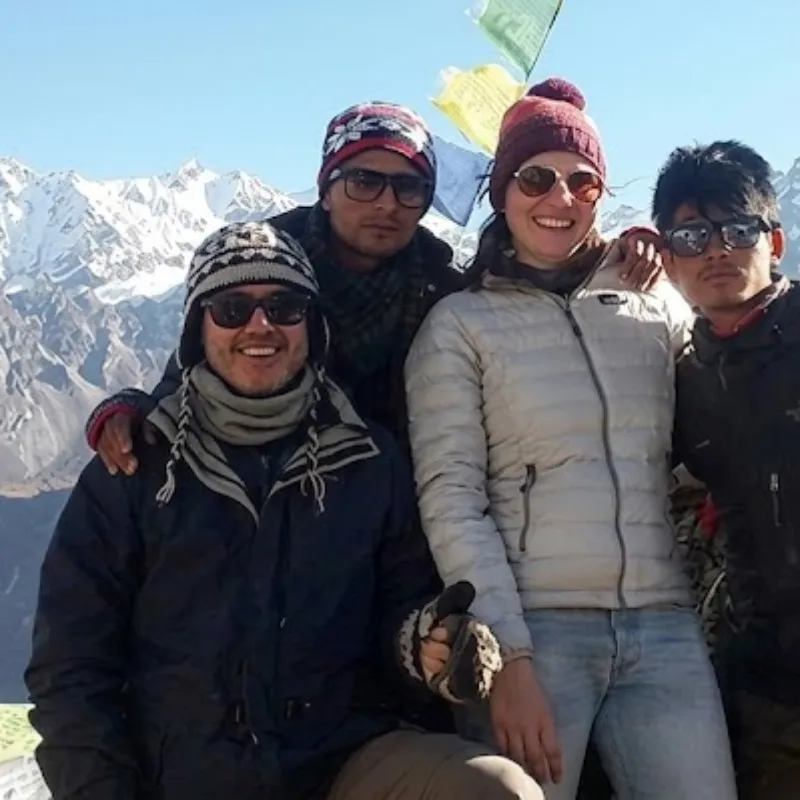
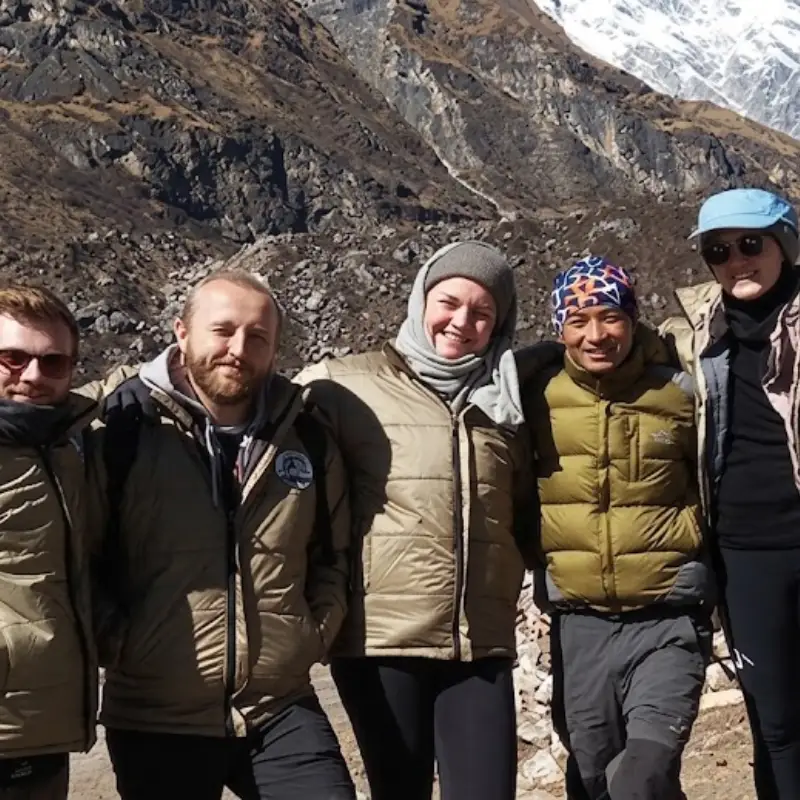
Tour Highlights
The Gosaikunda Trek follows one river up to one holy basin, and in doing so delivers the most spiritually resonant scenery in the Langtang region — forest, farmland, alpine lakes and a ring of Himalaya.
- Gosaikunda Lake — ~4,380 m / ~14,370 ft: the sacred glacial lake of the trek, believed by Hindus to have been created by Shiva, ringed by peaks and surrounded by the smaller Bhairav, Saraswati and Chandra Kundas.
- Sing Gompa — 3,250 m / 10,663 ft: the cheese- and curd-making village on the Gosaikunda River, a sociable overnight stop famous for its local dairy.
- Lauribinayek — 3,910 m / 12,828 ft: the last settlement below the lakes, base camp for the final morning climb and the start of the yaks-and-prayer-flags terrain.
- Gosaikunda River and forest trail: the river the whole way up, through oak, rhododendron and bamboo alive with langur monkeys, wild boars, martens and red pandas.
- Janai Purnima pilgrimage: every full moon of August, thousands of Hindu pilgrims climb to bathe in the lake — an unforgettable window on Nepali faith.
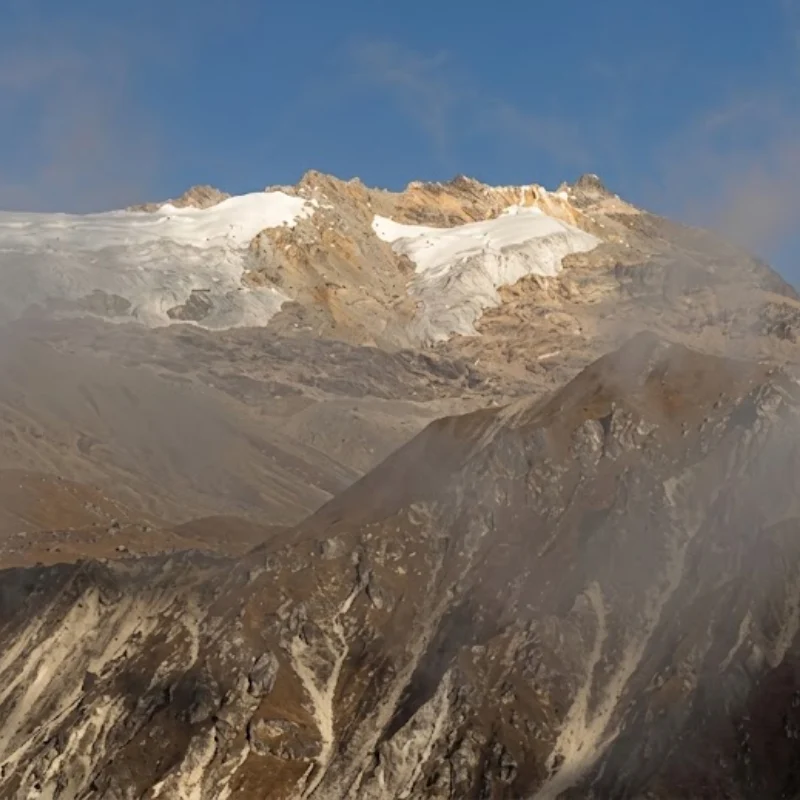
- Ganesh Himal and Langtang Lirung — 7,422 m / 24,350 ft and 7,227 m / 23,711 ft: the two guardians of the skyline from the upper trail and the lake basin.
- Cheese and curd of Sing Gompa: a genuine high-altitude specialty from the village’s dairy cooperative.
- Wildlife and birds: the forest section supports yellow-throated martens, wild boars, langur monkeys, red pandas and Himalayan black bears, with frequent birdlife.
- Short and sacred: 7 days Kathmandu-to-Kathmandu, 5–7 walking hours a day, one true high day — a manageable pilgrimage to Himalaya’s holy lake.
Gosaikunda Trek Overview
The Gosaikunda Trek is a 7-day pilgrimage trek in the Langtang region of Nepal that climbs from the roadhead town of Dhunche (1,980 m / 6,496 ft) through rhododendron, pine and bamboo forest to the sacred high-altitude lakes of Gosaikunda at roughly 4,380 m / 14,370 ft — passing the mountain settlements of Sing Gompa and Lauribinayek on the way. Graded moderate, it is one of Nepal’s great mountain pilgrimages, sacred to both Hindu and Buddhist trekkers, and it rewards a week on the trail with the deepest cultural reverence in the Himalaya.
The route runs Kathmandu to Kathmandu: a 6–7 hour road transfer to Dhunche, the gateway town of the Langtang region, then five walking days following the Gosaikunda River up through forest, past the cheese-producing village of Sing Gompa, above the tree line to the lakes, and back down the same green corridor to the roadhead. The loop is compact, profiled for gentle acclimatization, and at its heart holds one of Nepal’s holiest bodies of water — a glacial lake ringed by peaks that fills with Hindu pilgrims at every Janai Purnima full moon.
With Nepal Lion Tours, the Gosaikunda Trek starts from USD 570 per person with group discounts for larger parties, and includes a licensed English-speaking guide, teahouse and lodge accommodation, full board meals on trekking days, all Langtang National Park permits, road transfers, and a down jacket, sleeping bag and duffel bag loaned for the trip.
What Makes the Gosaikunda Trek Special?
The defining experience is standing by the frozen turquoise water of Gosaikunda Lake at 4,380 m, a place Hindus believe was created by the god Shiva when he thrust his trident into the mountain to draw water to end his thirst. Whether you are a pilgrim or a trekker, the moment the lake basin opens — Bhairav Kunda and Saraswati Kunda glowing beside the main lake, with Ganesh Himal and Langtang Lirung on the skyline — feels different from any ordinary viewpoint.
The trail itself builds the atmosphere: the Gosaikunda River the whole way up, quiet forests alive with langur monkeys, red pandas and Himalayan black bears, the cheese and curd village of Sing Gompa with its famous local dairy, and the climb above the clouds where the prayer flags begin. The descent retraces the river with all the views you were too busy climbing to notice, making the return leg a second trek in itself.
Why Choose the Gosaikunda Trek?
Because it delivers a classic high-altitude pilgrimage in one week: road transfer in, five focused walking days, a sacred 4,380 m lake and its neighbours, and the return drive — all on a moderate, flight-free route that suits both first-timers and repeat visitors. The trailhead at Dhunche sits on the regular road network north of Kathmandu, so there is no weather-dependent flight leg to buffer.
The trek is also a cultural centrepiece of Nepal: every August the Janai Purnima festival draws thousands of Hindu pilgrims for a ritual bath in the holy waters, and the trail on that week becomes a moving festival of its own. For most of the year it is a quiet, spiritual valley trek with moderate walking days, forest changing to alpine scrub, and one significant high day — a distinctive alternative to the busier Annapurna and Everest routes.
Who Is This 7-Day Gosaikunda Trek Suitable For?
- First-time Himalayan trekkers seeking a rewarding moderate route with real altitude.
- Pilgrims and spiritually minded travellers for whom Gosaikunda’s Shiva legend and Janai Purnima ritual matter.
- Travellers on a one-week Nepal holiday, including arrival and departure days.
- Couples and small groups, who can depart privately from two trekkers.
- Nature lovers after forest wildlife — red pandas, langur monkeys and high-altitude birds.
- Culture-focused trekkers who enjoy traditional villages, monasteries and local cheese production.
- Return visitors to Nepal who want a quieter, deeper alternative to the classic view treks.
No previous trekking experience is required and nothing on the route is technical. The one stamina caveat is the climb from Lauribinayek to the lake basin on Day 4, which reaches roughly 4,400 m and is the trek’s true high-altitude moment.
Guide’s Note — Nepal Lion Tours: “From our experience guiding Gosaikunda departures, trekkers are always surprised by how different the lakes feel from the ridge viewpoints of the Annapurna region. The basin is silent, the water is impossibly blue, and even in the busiest autumn weeks the client’s first minutes by the water are quiet ones. We reach the lake early, let the group sit by the water, and save the downhill for the afternoon.” — Nepal Lion Tours, Langtang Team
Quick Facts
Trek Fact | Details |
|---|---|
Trek Name | Gosaikunda Trek |
Duration | 7 days / 6 nights |
Region | Langtang, Bagmati, Nepal |
Maximum Altitude | 4,380 m / 14,370 ft at Gosaikunda Lake |
Difficulty | Moderate |
Main Highlight | The sacred glacial lake of Gosaikunda and its neighbouring Kundas |
Start / End | Kathmandu to Kathmandu |
Route | Kathmandu – Dhunche – Sing Gompa – Lauribinayek – Gosaikunda – Sing Gompa – Dhunche – Kathmandu |
Typical Walking | 5–7 hours per trekking day |
Best Season | Spring and autumn |
Price From | USD 570 per person (standard tier) |
Accommodation | Tea-house lodges; hotel night in Dhunche |
Guide | Licensed English-speaking trekking guide |
Gosaikunda Trek Route and Elevation
The Gosaikunda Trek is road-first, then one river valley up and down: a private transfer to the roadhead at Dhunche, a five-day walk up the Gosaikunda River through forest and alpine meadow to the lake basin at roughly 4,380 m, and a two-day descent back to the road before the return drive. The profile is a long smooth staircase followed by a mirrored staircase down — steady, moderate, and shaped so the body climbs gradually before the one real high-altitude push on Day 4.
Gosaikunda Trek Route at a Glance
Day | Trek Route | Altitude | Highlights |
|---|---|---|---|
1 | Kathmandu to Dhunche (drive) | 1,980 m / 6,496 ft | Trishuli valley, small villages, Langtang gateway town |
2 | Dhunche to Sing Gompa | 3,250 m / 10,663 ft | Gosaikunda River, oak and bamboo forest, cheese village |
3 | Sing Gompa to Lauribinayek | 3,910 m / 12,828 ft | Rhododendron and pine, first Ganesh Himal and Lirung views |
4 | Lauribinayek to Gosaikunda | 4,380 m / 14,370 ft | The sacred lake basin, Bhairav and Saraswati Kundas |
5 | Gosaikunda to Sing Gompa | 3,250 m / 10,663 ft | Downhill back through forest, views missed on the way up |
6 | Sing Gompa to Dhunche | 1,980 m / 6,496 ft | Bamboo village, forest trail, return to the roadhead |
7 | Dhunche to Kathmandu (drive) | 1,400 m / 4,593 ft | Return road day, farewell dinner |
Gosaikunda Trek Elevation Profile
The profile climbs in four clear steps. The road day finishes at Dhunche (1,980 m / 6,496 ft); Day 2 climbs gently through forest to Sing Gompa (3,250 m / 10,663 ft); Day 3 rises through rhododendrons to Lauribinayek (3,910 m / 12,828 ft); and Day 4 makes the final push to Gosaikunda Lake at roughly 4,380 m / 14,370 ft — a climb of about 470 m from Lauribinayek that is the trek’s one sustained high-altitude effort.
After the lake, the route mirrors its own ascent: Day 5 drops all the way back to Sing Gompa and Day 6 to Dhunche, both on the same river trail seen from the other direction. Physically that means three gentle climbing days, one honest high day, and two downhill cruises — but the descents are long, so knees, ankles and well-broken-in boots matter just as much as lung capacity on the way up. The Nepal Lion Tours team provides a trekking map and elevation profile of the route before you set out each morning.
How to Get to the Gosaikunda Trek
The trek starts from Kathmandu and reaches its trailhead at Dhunche entirely by road — the route carries no flight dependency at all. The Nepal Lion Tours team transfers you from the airport on arrival, and on the morning the itinerary begins a vehicle collects you from your hotel door for the drive north.
Kathmandu to Dhunche: Flight or Road?
Option | Approx. Travel Time | Best For |
|---|---|---|
Private road transfer | 6–7 hours | The standard choice; included in the package |
Tourist / local bus | 7–9+ hours | Budget travellers arranging independently |
Flight | Not available | No scheduled airport serves Dhunche |
There is no flight option for the Gosaikunda Trek, which keeps coordination simple — no weather-grounded aircraft and no missed connections. The transfer uses ordinary national roads through the Trishuli valley, past small hill villages, and finishes in Dhunche, the district headquarters of Rasuwa and the gateway town of the entire Langtang region.
The drive is worth more than its compromise: the first hours run beside the Trishuli River through terraced farmland, and approaching Dhunche the Langtang range begins to build on the northern skyline. On the return Day 7 the same corridor heads back toward Kathmandu in around 6–7 hours, with a farewell dinner in the city that evening.
Dhunche to the Trailhead
Dhunche itself is the trailhead — the trail begins at the northern end of the town, crossing the Gosaikunda River and entering the forest on Day 2. At about 1,980 m / 6,496 ft, Dhunche is the working heart of Rasuwa district and the base for the whole northern approach: the Langtang National Park headquarters is here, along with lodges, shops, internet and telephone.
Because the road day is long, the itinerary arranges a hotel night in Dhunche at both ends of the trek — you sleep there after Day 1’s drive and return there on Day 6 for the final evening before driving home. This keeps the walking days clean and means the group starts Day 2 rested rather than straight off a 7-hour transfer.
Returning to Kathmandu After the Trek
After the Day 6 descent back to Dhunche and an overnight rest, the vehicle collects the group on Day 7 for the drive to Kathmandu, arriving with daylight for last-minute shopping or sightseeing. The package then closes with a festive farewell dinner in the city and a transfer to the airport for your onward flight.
For international travellers the team can arrange onward sightseeing, a jungle safari in Chitwan or a Pokhara extension before departure — a natural way to extend a one-week pilgrimage into a fuller Nepal holiday.
A Practical Tip for International Travellers
Don’t book international departure flights for the same night you return to Kathmandu. The Dhunche drive can stretch beyond 7 hours with traffic and stops, and a missed international flight is the one risk that no trek insurance covers. Keep at least one full Kathmandu night after the trek — the itinerary naturally includes it, since Day 7’s farewell dinner happens in the city and Day 8 is your own before the airport transfer.
Guide’s Note — Nepal Lion Tours: “From our experience operating Gosaikunda departures, the road day is one of the longest parts of the itinerary, and we treat it as part of the journey rather than just transport. We leave early, stop for lunch in the Trishuli valley, and most groups are checked into Dhunche by mid-afternoon with daylight to spare. Our standing advice: plan around the road, and keep a Kathmandu night at the end before any international flight.” — Nepal Lion Tours, Langtang Team
Gosaikunda Trek Difficulty, Fitness and Altitude
The Gosaikunda Trek is graded moderate, with the single caveat that its goal is a 4,380 m lake basin — the highest sustained altitude of any of Nepal Lion Tours’ 7-day Langtang packages. Nothing on the trail is technical: no ropes, no exposed ledges, no pass crossing on the standard route. But the Day 4 climb above 4,000 m and the long downhill days both ask for honest preparation.
Where the Effort Actually Is?
The trek’s concentrated effort is the climb from Lauribinayek to Gosaikunda on Day 4 — roughly 470 m / 1,542 ft of ascent above 3,900 m, the altitude where the air genuinely thins and the trail rises above the last forest into rocky, prayer-flag country. The Day 2 and Day 3 forest climbs are moderate by comparison, and the two descent days on Days 5 and 6 are downhill cruises that ask more of the knees than the lungs.
Everything else is rhythm walking: 5–7 hours per day through riverside forest, village farmland and alpine meadow, with tea-houses spaced for regular stops. The terrain mix — riverbed boulders, rhododendron root-steps, pine-needle paths and short rocky sections above the tree line — keeps the walking interesting without ever feeling exposed.
Guide’s Note — Nepal Lion Tours: “From our experience, the Day 4 climb from Lauribinayek to Gosaikunda is short compared with the long high ascents of Everest or Annapurna treks, but it is the first time most of the group crosses 4,000 m, and the thin air makes every step honest. We recommend arriving at Lauribinayek early, eating a good dinner, and starting the lake push slowly after breakfast so the group reaches the water with energy left to sit and take it in.” — Nepal Lion Tours, Langtang Team
How to Prepare for the Gosaikunda Trek
- Walk regularly for 40–60 minutes, 4–5 times per week, for 5–6 weeks before departure.
- Practicing hills and stairs — the Day 2 forest climb and the Day 4 lake push are where this pays off most.
- Build leg and core strength with squats, lunges and step-ups to protect your knees on the long descents.
- Take one or two longer weekend hikes carrying a small loaded daypack to test boots, fit and stamina.
- Practise breathing at effort using longer uphill intervals — 4,000 m rewards efficiency more than raw speed.
- Avoid last-minute heroics — a consistent six-week base beats a frantic fortnight of overtraining.
How Difficult Is the Gosaikunda Trek Compared with Longer Treks?
This trek is moderately difficult compared with the Langtang Valley View or Short Tamang Heritage treks because of its altitude — Gosaikunda’s basin sits around 600 m higher than the Kyanjin Gompa overnight — but it is far easier than Everest Base Camp or the Annapurna circuit, with no pass, no glacier and no sleep above 4,400 m. The descent is long but gentle, and the whole route follows one known river valley with permanent settlements.
The trade-off is the one steep, high morning: trekkers who handle a sustained uphill effort above 3,900 m will find the Gosaikunda trek well within range. The short walking windows and the pine-to-alpine scenery make it an ideal stepping stone toward higher Nepali treks.
Altitude, Acclimatization and Safety
The trek’s highest point is Gosaikunda Lake at roughly 4,380 m / 14,370 ft, reached on Day 4 after three nights climbing from 1,980 m — a gradual, naturally paced gain that keeps the risk of acute mountain sickness low but real. Because the lake basin sits at the route’s turnaround, any atmospheric symptoms resolve simply by continuing the planned descent on Days 5 and 6.
Gosaikunda Trek Altitude Profile
- Kathmandu — 1,400 m / 4,593 ft: arrival, hotel night and pre-trek briefing.
- Dhunche — 1,980 m / 6,496 ft: roadhead and district headquarters; night before the first walking day.
- Sing Gompa — 3,250 m / 10,663 ft: cheese village on the Gosaikunda River after the first trekking day.
- Lauribinayek — 3,910 m / 12,828 ft: last settlement below the lakes, base for the high morning.
- Gosaikunda Lake — ~4,380 m / ~14,370 ft: the sacred lake basin, highest point of the trek; adjacent Bhairav, Saraswati and Chandra Kundas close by.
- Sing Gompa — 3,250 m / 10,663 ft: first descent stop on the return leg.
- Dhunche — 1,980 m / 6,496 ft: trailhead return for the road day.
How the Body Adapts to Altitude
Above about 3,500 m / 11,480 ft the body needs time to produce more oxygen-carrying red blood cells, which happens gradually over consecutive nights at altitude. On this trek the practical approach is simple: ascend steadily, walk at a pace where you can hold a conversation, drink plenty of water, eat regular meals and sleep early. Because the itinerary spends two nights above 3,000 m — Sing Gompa and Lauribinayek — before the lake morning, most trekkers adapt comfortably without medication.
Symptoms of Altitude Sickness to Watch For
- Mild symptoms (common, worth monitoring): headache, loss of appetite, disturbed sleep, mild fatigue, slight breathlessness on steep ground.
- More concerning symptoms (act immediately): vomiting, worsening headache at rest, confusion, breathlessness at rest, unsteady walking.
On this route the practical response is to stop ascending, rest, drink and, if symptoms persist, descend — your guide carries a first-aid kit, monitors the group throughout the day, and since the lake is the turnaround point, any descent is a true descent toward thicker air and the road at Dhunche.
How Nepal Lion Tours Supports Altitude Safety
- Licensed, English-speaking guide on every departure, carrying a first-aid kit.
- Gradual itinerary that spends two nights above 3,000 m before the lake and sleeps a maximum of roughly 4,400 m on a single high night.
- Slow ascending pace set by the guide, with the slowest member of the group setting the rhythm.
- Early communication culture — trekkers are asked to report any symptom, no matter how small.
- Travel insurance strongly recommended to cover medical treatment and road evacuation — reviewed with you before the trek.
Best Time to Trek the Gosaikunda Trek
The best time to trek to Gosaikunda is autumn (September to November) for the clearest skies and driest trails, with spring (March to May) close behind when frosts ease and the rhododendrons bloom along the lower trail. The lake basin sits high enough that winter brings deep cold and snow above Lauribinayek, while the monsoon months of June to August keep the trail green but shut the views in cloud — with one brilliant exception: the Janai Purnima pilgrimage full moon in August, when the route fills with Hindu pilgrims.
Season | Months | Weather & Trail Conditions | Overall |
|---|---|---|---|
Autumn | Sep–Nov | Clear, dry, cool nights; best visibility | Best overall |
Spring | Mar–May | Mild, rhododendron bloom, occasional rain | Highly recommended |
Winter | Dec–Feb | Cold, crisp, snow above ~3,500 m; very quiet | Good with preparation |
Monsoon | Jun–Aug | Wet, green, cloudy; Janai Purnima pilgrimage | Special during Janai |
Autumn – September to November
Autumn is the clear first choice for the Gosaikunda Trek. Days are warm and dry, nights are brisk at Sing Gompa and sharply cold by the lakeside, and the post-monsoon air sheets the basin in blue. October and November are the most reliable months for the full panorama over Bhairav Kunda and the Ganesh Himal range — and with pilgrims gone until August, the trail settles into quiet walking with only the prayer flags for company.
Spring – March to May
Spring offers a different beauty. March brings clear late-winter skies, April shows the first green flush of the forest, and as the month warms the rhododendrons bloom in pink and red through the thick, moss-hung sections below Sing Gompa. Days are mild, the nights at altitude are easier on the body, and the occasional April shower keeps the dust down and the trees vivid. Views soften late in the day as cloud builds over the ridges — plan the lake morning early.
Winter – December to February
Winter is for the committed and the quiet. Days are crisp and clear in the forest, but snow lies above Lauribinayek, nights at the lake drop well below freezing, and the upper trail can be icy. The reward is a near-empty path and the stillest, bluest reflections on the water. You will want the loaned down jacket and all-season sleeping bag, and the guide checks the snow line each morning before the group sets out.
Monsoon – June to August
Monsoon is ordinarily the least suitable window — rain, mud and cloud hide the mountains that are the point of the trek. But August carries the one exception: Janai Purnima, the full-moon festival when thousands of Hindu pilgrims ascend to Gosaikunda for a ritual bath, turning the trail into a moving river of faith. If you want to experience the lake as pilgrimage rather than scenery, this is the week — arrange it deliberately with the Nepal Lion Tours team, not casually.
Which Season Should You Choose?
If clear views and calm trails are your priority, book October or November. If you prefer warmth and rhododendron bloom, choose April or early May. If you want the truest pilgrimage atmosphere, time your trek for Janai Purnima in August. Whichever you choose, weather in the high mountains changes fast — the Nepal Lion Tours team checks the Langtang forecast before each departure and adjusts the plan if the lake morning looks unsafe.
Guide’s Note — Nepal Lion Tours: “In our experience the Gosaikunda lake basin is most magical in the first stillness after dawn, before valley cloud builds. That is why we schedule the Day 4 arrival for late morning in autumn, after the pilgrim buses and before the forecast turns — and in August for Janai Purnima we plan around the festival crowds rather than against them, because the atmosphere is the experience.” — Nepal Lion Tours, Langtang Team
Gosaikunda Trek Permits & Regulations
The trek enters Langtang National Park, one of Nepal’s oldest and most loved Himalayan protected areas, so the paperwork is straightforward: a national park entry permit and a TIMS registration card, both handled by Nepal Lion Tours as part of the package. There is no restricted-area permit required for the standard Gosaikunda route from Dhunche.
Gosaikunda Trek Permits at a Glance
Requirement | Who Needs It? | Who Arranges It? |
|---|---|---|
Langtang National Park Entry Permit | Foreign and SAARC trekkers entering the park | Nepal Lion Tours |
TIMS Card (Trekkers’ Information Management System) | All trekkers on the route | Nepal Lion Tours |
Langtang National Park Entry Permit
The Langtang National Park Entry Permit is the essential document for this trek, required for all foreign and SAARC visitors entering the park. You will need your original passport for the permit — the Nepal Lion Tours team prepares the formalities, but officials check the traveller, the passport and the permit together, so carrying the document with you on the trail is essential.
The current fee is NPR 3,000 for foreign nationals, NPR 1,500 for SAARC nationals and NPR 100 for Nepali nationals, and government rates can be revised by the authorities without notice — the Nepal Lion Tours office confirms the exact figure at booking.
TIMS Card
The TIMS (Trekkers’ Information Management System) card is the nationwide trek-registration record that ties every trekker to a licensed agency and a route, operating in digital form (e-TIMS) since 2026. It is required as a safety and traceability measure for all trekkers on the Langtang routes.
The standard fee is NPR 2,000 for independent trekkers and NPR 1,000 when going through a registered agency like Nepal Lion Tours, which makes travelling with a local operator both simpler and cheaper. Your TIMS and park permits are arranged together and issued before the trek begins.
Do You Need a Restricted-Area Permit?
No — the standard Gosaikunda route is not in a restricted zone and requires no Restricted Area Permit or special government-issued trekking pass. The trail villages and stops — Dhunche, Sing Gompa, Lauribinayek and Gosaikunda — all fall inside Langtang National Park rather than a restricted border area, so the park entry permit and TIMS card are the complete set of paperwork.
Rules can change and itineraries that extend toward Tibet or into bordering valleys could differ, so the Nepal Lion Tours office reviews current requirements with every booking.
Who Arranges the Permits?
Nepal Lion Tours arranges all permits and registration as part of the pre-trek preparation, so you never queue at the national park office or the TIMS counter yourself. You simply carry your original passport on the trek and present it at the park checkpoint when required.
Permit fees and regulations are set by the Nepali government and can be adjusted at any time — the price of the package reflects the current schedule, and the team confirms the figures when you book.
Food & Accommodation on the Gosaikunda Trek
The Gosaikunda route runs through a well-established lodge network: family-run tea-houses at every overnight stop, from the comfortable lodges of Dhunche to the simpler rooms of Sing Gompa and Lauribinayek, with a warm dining room and a fire at each. It is lodge-based trekking — no camping, no heavy carries — and the guide coordinates each stop so the group arrives at a bed, a meal and company.
Tea-House Accommodation on the Gosaikunda Trek
- Twin-sharing rooms are standard, with a mattress, pillow and blanket at every stop.
- Shared or attached bathrooms vary by lodge; facilities are simplest at Lauribinayek.
- Hot showers are available at most stops in the lower part of the trek, usually for a small fee.
- Electricity reaches most lodges; charging points may be limited and come at a small cost.
- Heated dining rooms are the social core of each lodge — dinner, card games and conversation.
- Wi-Fi is good in Dhunche and patchy at Sing Gompa, with none above — expect disconnection around the lake.
- Bedding is provided, but Nepal Lion Tours loans an all-season sleeping bag for the cold lake night.
Sing Gompa is the culinary star of the route — its cheese and curd are famous across the Langtang region — while the hotel night in Dhunche offers a comfortable start and finish to the trek.
What Food Is Available on the Gosaikunda Trek?
- Dal bhat — the trekker’s staple: rice, lentil soup, curried vegetables and pickles, served with refills.
- Sing Gompa cheese and curd — the local specialty, fresh from the village dairy.
- Sherpa stew, thukpa noodle soup and Tibetan bread — classic high-altitude warmth.
- Fried momos — dumplings stuffed with vegetables or meat.
- Fried rice, chow mein and noodle soups — quick energy after a long afternoon.
- Fresh soups — tomato, mushroom and vegetable soups are warming standbys at every lodge.
- Boiled potatoes, eggs, chapati and roti — filling, cheap additions to any meal.
- Porridge, pancakes, muesli and toast — standard trekking breakfasts.
- Tea, coffee and hot chocolate — hot drinks are a ritual of the trail.
Dal bhat is the most reliable energy source at altitude, and vegetarian food is available across the whole route. If you have vegan, gluten-free or allergy needs, tell the Nepal Lion Tours team before departure so the lodges can prepare in advance.
What Food and Accommodation Are Included?
Included in the Trek Package | Usually Paid Separately |
|---|---|
Full board meals on trekking days (breakfast, lunch, dinner) | Drinks and additional snacks beyond the standard menu |
Tea and coffee with meals at most lodges | Extra hot showers at some lodges |
Tea-house and lodge accommodation on trekking days | Alcoholic drinks and soft drinks at lodges |
A hotel night in Dhunche at the start of the trek | Food and accommodation in Kathmandu outside the stated plan |
Welcome or farewell dinner in Kathmandu at a cultural restaurant | Tips for guides and porters |
Permits, road transfers and guide services | Personal expenses, laundry and phone calls |
The precise split of included meals and Dhunche vs Kathmandu nights is confirmed in your booking details, and the Nepal Lion Tours team lays it out clearly before you pay.
Drinking Water on the Trek
Do not assume any tap water is safe. On the Gosaikunda route the practical options are boiled water (available for a small fee at most lodges), bottled water at lower villages, or treated water using your own purification tablets or filter. Above Sing Gompa resupply is sparse, so plan water for the lake morning carefully.
Carry a reusable bottle and a supply of purification tablets or a filter — this keeps you hydrated, cuts the cost of bottled water and reduces plastic on the trail. Drink regularly through the day, especially above 3,500 m, where dehydration mimics the early symptoms of altitude sickness.
Staying Comfortable at Tea-Houses
- Carry a reusable water bottle and purification tablets for drinking water at every stop.
- Use the Nepal Lion Tours sleeping bag liner inside your sleeping bag for warmth at altitude.
- Bring a power bank — upper-valley charging points are not always sufficient for all devices.
- Carry small cash (NPR) to settle drinks, showers and extra meals quickly.
- Dress in layers in the evening — dining rooms are warm but the walk between room and dinner is cold.
- Give the guide your dietary needs before the trek so each lodge can prepare properly.
With the cheese of Sing Gompa and the warmth of the Dhunche hotels at each end, the Gosaikunda route is one of the most comfortable ways to reach 4,380 m in Nepal.
Why Book with Nepal Lion Tours?
Booking the Gosaikunda Trek with Nepal Lion Tours means a steadily run, deeply local trip handled end-to-end by a Kathmandu team that knows the Langtang region intimately. From your airport pickup to the farewell dinner, permits, transfers, lodges, pacing and the Janai Purnima festival logistics are managed by people who walk this river valley themselves.
- Local, licensed English-speaking guides — government-licensed, with deep knowledge of the Langtang region and the Gosaikunda pilgrimage. Nepal’s requirement that foreign trekkers use a licensed guide has been law since April 2023, and Nepal Lion Tours places an experienced, certified guide on every departure to interpret the route and its rites well.
- A registered trekking company you can verify — based in Kathmandu, with company and licence details provided on request. You are not booking a distant middleman; the Nepal Lion Tours team is a registered local operator whose documentation you can check before you travel.
- Private departures from two trekkers — your own dates, your own pace, no joining a stranger’s group. Couples, friends and small families travel privately, and the guide paces the group to its own rhythm throughout the five walking days.
- The sacred-lake itinerary by design — three gentle climbing days, one high morning, and a genuine rest at the lake basin. The trek is structured for gradual acclimatization and for pilgrim-like stillness at the water — no rush to the top, no hurried pass crossing.
- Private transfers and straightforward logistics — road to the trailhead, drop at your Dhunche hotel, guide with you throughout. The long driving days are handled with a private vehicle, a lunch stop in the Trishuli valley and a guide who owns the whole trip.
- Budget-friendly trekking without removing the main experiences — value pricing with the full pilgrimage in the plan. Inexpensive permits, a no-flight route and teahouse economics keep the cost down without cutting the lakes, the forests or the festival options.
- A local team you can contact before and during your trek — WhatsApp support from enquiry to your return home. Send the Nepal Lion Tours team a message at any point and you talk directly to the people running your trip.
Book the Gosaikunda Trek
Seven days, one river, and a holy lake at 4,380 m that has drawn pilgrims and trekkers for centuries — the Gosaikunda Trek is the Langtang region’s most spiritual week, and the Nepal Lion Tours team is ready when you are.
Trek at a Glance
- Duration: 7 days / 6 nights, Kathmandu to Kathmandu
- Price: From USD 570 per person (standard tier), with group discounts and a luxury-tier option
- Difficulty: Moderate
- Maximum Altitude: 4,380 m / 14,370 ft at Gosaikunda Lake
- Accommodation: Tea-house lodges on trekking days; hotel night in Dhunche
- Meals: Full board on trekking days; welcome or farewell dinner in Kathmandu
- Permits & Registration: Langtang National Park Entry Permit and TIMS card, arranged by Nepal Lion Tours
- Transportation: Road transfer, Kathmandu to Dhunche and return
- Guide: Licensed English-speaking trekking guide
- Cancellation: Free cancellation up to 14 days before departure (subject to booking terms)
Ready to Start Your Langtang Adventure?
Secure your dates through the booking form on the website or WhatsApp at +977-9851039020 — send your preferred travel dates and group size and the team will confirm availability, current permit fees and your exact package price. Whether you travel solo, as a couple, with friends or with family, the itinerary adjusts to your pace and your holiday length.
Your Gosaikunda pilgrimage is waiting — choose your dates and start planning your journey to the holy lake today.
Related Langtang Treks
The Gosaikunda Trek sits in the heart of the Langtang region’s trekking family, and the same river highways connect to the valley’s other great routes — cultural trails, the Kyanjin viewpoint treks, and long circuits that link the lakes with the valley.
Trek | Duration | Difficulty | Max Altitude | Best For |
|---|---|---|---|---|
Short Tamang Heritage Trail Trekking | 7 days | Moderate | ~3,135 m / 10,285 ft | Tamang villages, cultural loop and family-run homestays |
Langtang Valley View Trekking | 7 days | Moderate | ~4,800 m / ~15,748 ft | The classic Kyanjin Gompa valley trek with sunrise viewpoint |
Langtang and Tserko Ri View Treks | 8 days | Moderate | ~4,985 m / 16,355 ft | The valley plus the higher Tserko Ri summit viewpoint |
Langtang Valley Trekking | 11 days | Moderate | ~3,870 m / 12,697 ft | The full classic valley trek with acclimatization days |
Joint Treks of Langtang and Poon Hill | 12 days | Moderate | ~3,210 m / 10,531 ft | Two regions in one wide-view journey |
Related-trek details are approximate and hedged as web estimates — the Nepal Lion Tours team confirms exact figures and routes on the live pages. The Gosaikunda Trek can also be linked into the longer Langtang Gosainkunda & Helambu Round Trek, or combined with a Chitwan jungle safari and Pokhara lakeside days before or after the mountains.
Trip Essentials
Packing advice, required equipment & gear recommendations
Essential
Gosaikunda Trek Packing List
Packing for the Gosaikunda Trek is about layers, protection and one carefully planned cold night: the trek is lodge-based, you carry a daypack while the main bag travels with you, and conditions span warm valley afternoons to a sharp night beside a 4,380 m lake. Nepal Lion Tours loans a down jacket, all-season sleeping bag, duffel bag and trekking map, removing the two most expensive items from your list.
Hiking Gear
- Broken-in trekking boots with ankle support and lugged soles — the single most important item.
- Trekking poles — a real knee-saver on the two long descent days.
- Daypack (30–40 litres) for daily layers, water, snacks and valuables.
- Small duffel bag (loaned by Nepal Lion Tours) for the main luggage carried between lodges.
- Headlamp or torch with spare batteries — needed for the lake morning and early starts.
- Reusable water bottle (1–2 litres) and purification tablets or a filter.
- Trekking map of the region (provided by Nepal Lion Tours) and an elevation profile.
Clothing: Use Layers Rather Than Bulk
Base layers — merino or synthetic long-sleeve tops; two sets, worn on rotation.
Mid-layers — a fleece or lightweight synthetic down jacket as the workhorse for mornings and evenings.
Outer layers — a waterproof and windproof shell jacket and trousers for the monsoon-tinged seasons; a down jacket (loaned by Nepal Lion Tours) for the lake night.
Trekking clothes — two pairs of trekking trousers, three short-and-long sleeve shirts, warm hat, sun hat, gloves and a neck gaiter or buff.
Headwear and gloves — a warm beanie, light sunhat, liner gloves and a heavier pair for the lake morning.
The Gosaikunda night is the coldest of the trek: layer up for the lake evening, and keep the down jacket and warm hat within easy reach in the top of your daypack all day.
Sleeping and Evening Comfort
- All-season sleeping bag — loaned by Nepal Lion Tours; essential for the freezing lake night.
- Sleeping bag liner for hygiene and a small comfort bump.
- Down or fleece booties for cold lodge floors at Sing Gompa and Lauribinayek.
- Toiletries and a small quick-dry towel; villages have basic wash-up facilities.
Toiletries and Personal Health Items
- Sunscreen (SPF 30+), lip balm with SPF, moisturiser.
- Soap, shampoo, toothbrush, toothpaste, deodorant.
- Personal first-aid items: plasters, blister patches, antiseptic, painkillers.
- Paracetamol or ibuprofen for headaches and aches at altitude.
- Waterproofing dry bags or zip bags to protect electronics and documents.
- Scented hand sanitiser and a small pack of wet wipes.
- Motion-sickness tablets for the winding road days if you are prone.
- Altitude medication — discuss with your doctor; diamox is an option for some trekkers.
- Any personal prescription medicines, with extras in the main bag.
- Sunglasses with UV filter, essential above the tree line.
- Travel insurance documents stored digitally and in the daypack.
- A small daypack towel and spare shoelaces.
Electronics
- Mobile phone plus power bank and cables — the main camera and communication tool.
- Light camera (or use the phone) for the lake basin and forest scenes.
- Universal adapter for Nepali sockets (two round pins, 220V).
- Nepal Lion Tours SIM card (provided) for coverage in Dhunche and along the valley.
Wi-Fi is reliable in Dhunche, patchy at Sing Gompa and effectively absent above — most trekkers put the phone on flight mode and let the guide handle weather and logistics.
Documents and Money
- Original passport — required for the Langtang National Park permit check.
- Extra passport photos and a photocopy of the passport main page.
- Travel insurance documents with emergency contact numbers.
- Cash in Nepali rupees for drinks, hot showers, laundry and tips — about USD 100–150 worth is typical.
- A credit or debit card for Kathmandu, where cards are widely accepted; carry cash on the trail.
- Emergency contacts written down, including the Nepal Lion Tours WhatsApp number.
How Much Should You Pack?
Less is genuinely more. A carry-on sized duffel plus a 30–40 litre daypack is plenty for seven days, and every extra kilogram becomes a surcharge on your knees. The Nepal Lion Tours team loans the down jacket, sleeping bag and duffel, so your own list is mostly layers, toiletries and small items.
Keep the daypack light — water, snacks, rain shell, camera, money and documents — and leave the bulky gear in the duffel that travels with the group. Porter support is available as an optional add-on for trekkers who prefer to walk unloaded; the Nepal Lion Tours team arranges it at booking if required.
Read Before You Book
Permits, terms, medical considerations & advisory guidelines
Advisory
What to Know Before Booking
The Gosaikunda Trek is a scenic high-altitude trek with mountain trails, alpine landscapes and the sacred Gosaikunda Lake, so good preparation helps make the journey more comfortable. Here are the practical things worth knowing before you book.
Accommodation and Facilities
All nights on the trail are in family-run tea-houses and lodges, from the comfortable guesthouses of Dhunche (where a hotel night is included) to simpler rooms at Sing Gompa and Lauribinayek. Twins, shared bathrooms and heated dining rooms are the standard; the lake night is the coldest of the trek, and the loaned all-season sleeping bag covers it.
Food and Dietary Requirements
The trail menu is hearty and vegetarian-friendly, with dal bhat the staple and Sing Gompa’s cheese and curd the local star. If you have allergies, vegan or gluten-free needs, tell the Nepal Lion Tours team before departure so the lodges can prepare — kitchens at the upper villages are flexible but not infinitely stocked.
Altitude, Health and Insurance
The trek sleeps at roughly 4,380 m on the lake night and walks its highest ground on Day 4, so altitude caution genuinely applies — drink, pace yourself and report symptoms early. Travel insurance is strongly recommended and should cover trekking in Nepal, medical treatment and road evacuation to Kathmandu, with your activities declared.
Money and Tipping
Carry NPR cash on the trail for drinks, showers and extra meals — no cards are accepted in the mountains. It is customary to tip guides and porters at the end of the trek; the Nepal Lion Tours team can advise on a fair amount for your group size.
Culture and Responsible Trekking
- Gosaikunda is a living pilgrimage site — treat the lake and its rituals with reverence; do not disturb pilgrims or take ritual items.
- The region is Tamang and Tibetan-influenced — greet people with “namaste”, ask before photographing people, and dress modestly in villages.
- Dress modestly in villages and at monasteries, and remove shoes before entering sacred buildings.
- Walk with a reusable bottle to avoid plastic at altitude.
- Buy from the Sing Gompa dairy and local tea-houses — every purchase supports the valley economy.
- Carry out what you carry in, especially batteries and wrappers.
Route Options
The Gosaikunda Trek is the direct 7-day pilgrimage from Dhunche. For more altitude and a full circuit, the Langtang Gosainkunda & Helambu Round Trek crosses the high pass toward Helambu in 16 days; the Tserko Ri option adds the region’s highest viewpoint; and the Langtang Valley treks run 7–11 days along the Kyanjin Gompa corridor. Customize the pace, add a rest day at the lake, or combine the trek with Chitwan and Pokhara.
Booking and Before You Arrive
- Confirm your dates and group size through the booking form or WhatsApp at +977-9851039020.
- Understand the included meals and accommodation — the Dhunche and Kathmandu split is stated clearly in your booking details.
- Check the latest permit fees — government rates can change between booking and departure.
- Arrange travel insurance covering trekking to at least 4,400 m and road evacuation.
- Arrive in Kathmandu the night before Day 1 — the itinerary starts at your hotel door in the early morning.
- Carry your original passport throughout the trek for the national park checkpoint.
- For Janai Purnima in August, book early and expect the trail busier — the festival changes the trail’s rhythm for the better.
A Few Final Tips
- Spend time by the lake — the pilgrimage is the point; do not rush the return.
- Eat dal bhat and try the Sing Gompa cheese — both are the fuel and the flavour of the route.
- Start walking days early and take the afternoon slowly once you reach the lodge.
- Drink more water than you think you need — above 3,500 m dehydration hides as fatigue.
- Carry small cash every day — the mountain tea-houses deserve your custom.
- Personalise the trip — a rest day at the lake or a slower descent is easy to arrange.
Day-by-Day Itinerary
Explore each day's route, trekking elevation, and activities
You should let us know about your arrival to Kathmandu, we will be there to pick you up from Airport to your Hotel but our package only starts from the second day of your arrival.
Our representative will come at your door, at your hotel in Kathmandu, to receive you before we start the trip.
The trip also starts with a drive of around 6 to 7 hours through lush green forest, meandering road through the hills and gracefully flowing riverside, like the way to Pokhara.
As we start journey early by bus to Dhunche; the starting point of the trek, after we pass Trisuli Bazaar the road might be slightly tricky and adventurous because of the grubby road. During the travel you will pass through many small villages on the way will be fascinating you with snippets. We stay overnight in Dhunche and get ourselves ready for adventurous tomorrow.
The River we are following today, all along our way, is mostly the Gosaikunda River. You can enjoy the walk going through oak, rhododendron and bamboo forests. There is also a variety of wildlife in these forests: yellow-throated martens, wild boars, langur monkeys, red pandas and Himalayan black bears,This place is famous for cheese and curd. You can enjoy your free-time here in this environment full of lush and greenery along with local ethnic culture.
After having breakfast, we will continue our trip to our next destination. Today we are starting our trip descending towards a steep forest slope to Chandan Bari sing Gompa the trail slightly goes uphill to Lauribinayek. Along the trails past rhododendron and pine forest trees and vista of Ganesh Himal, Langtang Lirung, and Manaslu range, and Tibetan peak is high lights of the adventure
After morning breakfast in Lauribinayek the trail slightly goes uphill to Gosaikunda, Gosaikunda as the abode of the Hindu deities Shiva and Gauri. The Hindu scriptures Bhagavata Purana, Vishnu Purana and the epics Ramayana and Mahabharata refer to Samudra manthan, which is directly related to the origin of Gosaikunda.
We walk all the way downhill but you will see fantastic views of towering mountain what you have missed on the way up.
We will descend down to Bamboo village. Continuing further from here, we will be in front of two trails separated; one goes to Dhunche village and of course we will take the left(the latter) one. From here the trail starts ascending up through beautiful green forests with distant views village is a pretty village, close to district headquarters; Dhunche has all the minimum facilities for a trekker. Some nice lodges are built, internet and telephone is available here.
Early morning after having breakfast transfer your Bus station to start your journey towards Kathmandu, along the bus journey you will drive through beautiful village and you will see snow Scrapped Mountain along the Gosikunda lake and it will make your trekking become pleasant and touch your heart
Want to customize this itinerary?
Tailor duration, lodges, acclimatization days, or add private helicopter flights.
Inclusions & Exclusions
Everything that is covered and what you'll need to budget separately
What is Included
Fully covered in your package price
- Airport pickup and drop services on a private vehicle
- Transportation from Kathmandu to Dhunchha and back to Kathmandu in local bus
- Food all along the trip(Breakfast, Lunch, Dinner and a cup of coffee or tea) and accommodations during the trip in hotels with family environment
- Licensed English or Chinese or Korean or Hindi along with Nepali speaking trekking guide
- Transportation, food, accommodation and insurance of Guide during the trip
- Down jacket, all-season sleeping bag, duffel bag and trekking map(in case if you dont have your own. Down jacket, sleeping bag and duffel bag must be returned after completion of the trip)
- First Aid Medical Kit(Carried by the guide)
- All the required permits and paperworks(National park permit, TIMS etc)
- Welcome or farewell dinner in Kathmandu at a cultural restaurant(complimentary)
- A nation-wide operated Mobile SIM Card and a map of the trekking region
Optional Addons
- Porter
What is Excluded
Personal expenses & optional extras
- International Airfare
- Your Visa Charges
- Hotel Expenses(In Kathmandu)
- Your travel and medical insurance
- Personal Expenses such as shopping, bar bills, hot shower, telephone, laundry, titbits etc
- Food and accommodations in Kathmandu
- Services not mentioned or not promised by the agent/agency
- Emergency expenses such as expenses on charted helicoptor
Our Customer Reviews
Authentic experiences and feedback from our travelers
Write a Review
Share your adventure experience with other travelers
Thank You!
Your review has been submitted and is awaiting approval.
Please Wait
You've submitted several reviews recently. Please wait a few minutes before trying again.
No reviews yet
Be the first to share your experience with this trek!
Frequently Asked Questions
Essential information on preparation, route specifics, safety standards, and logistical details.