Chisapani to Nagarkot Hiking — 3 Days | Nepal Lion Tours
Hike Through Lush Forests, Traditional Villages, and Scenic Hills to the Peaceful Town of Nagarkot


Tour Highlights
This is a compact valley-rim loop, but it punches above its size: a morning in national-park forest, an afternoon of ridge views, a Himalayan sunset and sunrise from the same hill station, and a walk down to one of Nepal’s oldest temples. The highlights run in this order:
- Sundarijal Trailhead — ~1,450 m / 4,757 ft: Kathmandu’s historic water source, where a two-hour private drive turns directly into stone-step forest paths.
- Shivapuri Nagarjun National Park — 2,150 m / 7,054 ft at the ridgeline: the protected watershed that supplies the valley, full of oak forest, rhododendron and birdsong.
- Chisapani — around 2,200 m / 7,218 ft: the forest settlement at the rim, with sunset views west over the valley and, on clear evenings, the Himalaya.
- Wildlife Encounters: mongoose, porcupine, jungle cat, pangolin and many bird species, with Himalayan black bear and Indian leopard recorded in the park.
- Chauki Bhanjyang and Jhule — 2,000 m / 6,562 ft: the trail-side settlements where Day 02’s lunch stop breaks the ridge walk.
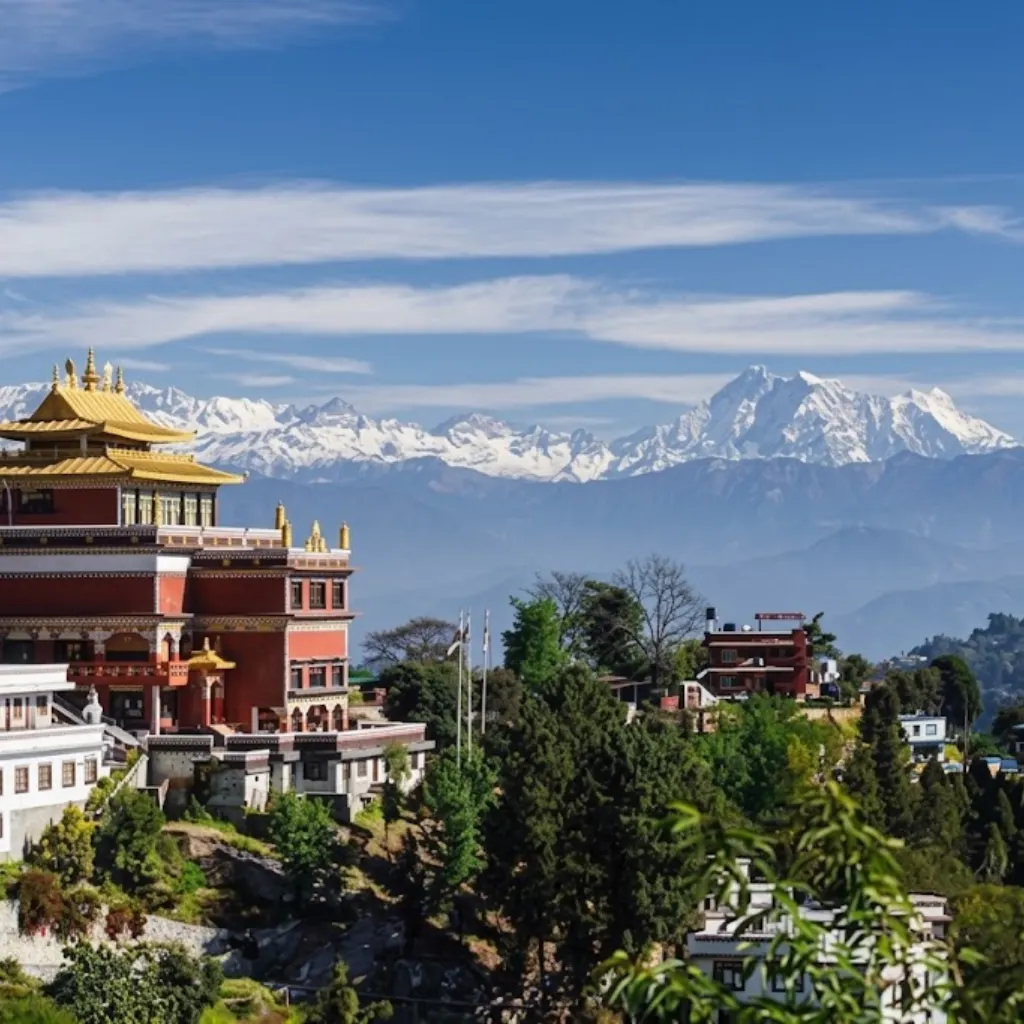
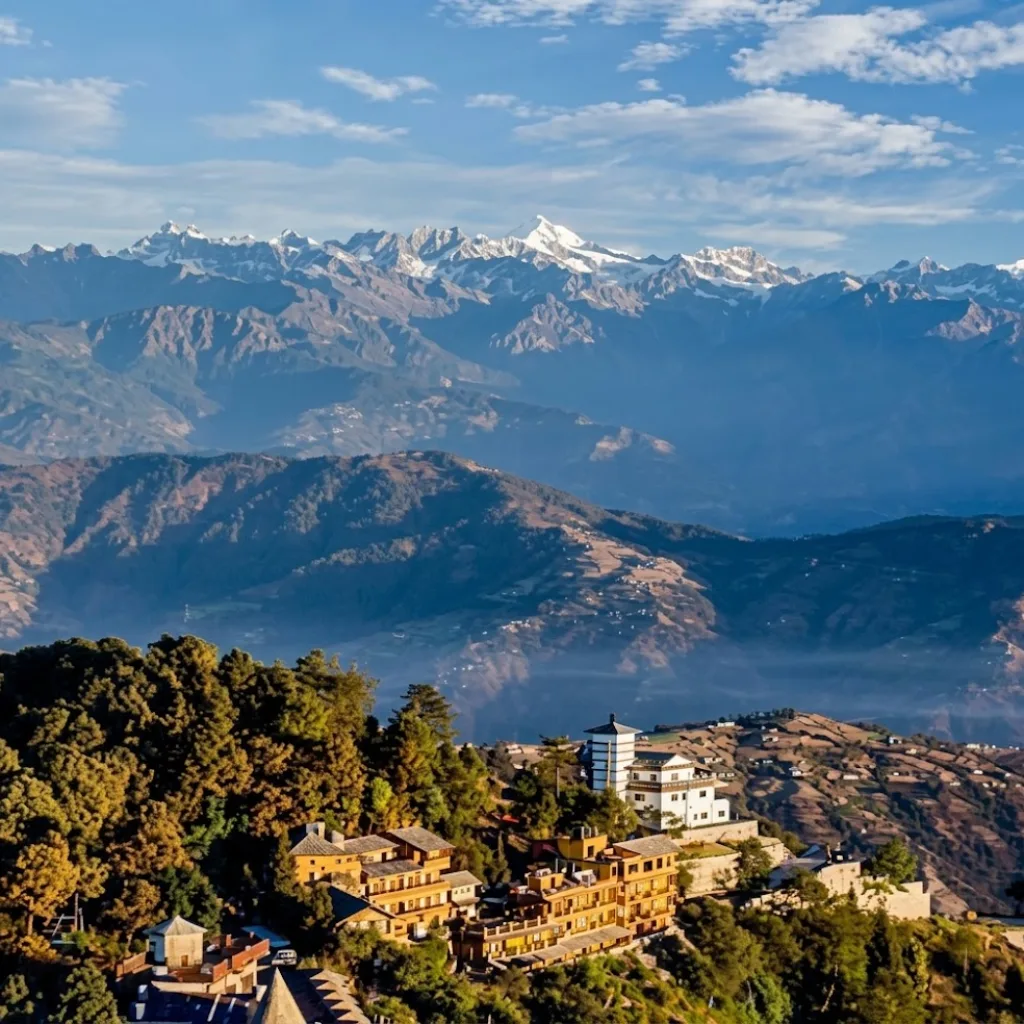
- Nagarkot — 2,175 m / 7,136 ft: Nepal’s most famous hill-station viewpoint, ringed by resort hotels and a view tower.
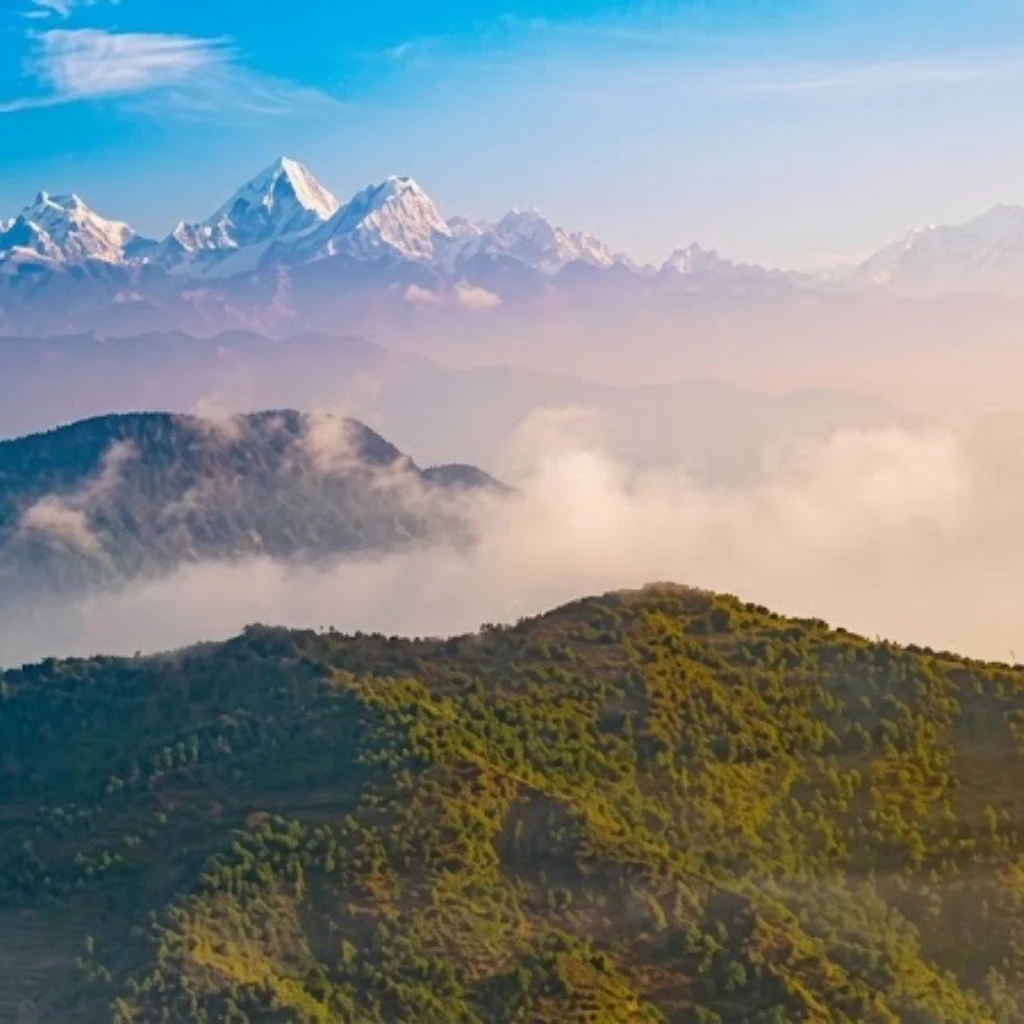
- Himalayan Sunrise and Sunset: on clear days the horizon runs from Everest through Langtang, Ganesh Himal, Annapurna and Dhaulagiri.
- Changu Narayan Temple — 1,530 m / 5,020 ft: a UNESCO-listed monument zone and traditionally one of Nepal’s oldest temples, reached by a downhill walk.
- The Easy 3-Day Loop: no technical terrain, no camping, 6-7 walking hours a day, and a private drive back to Kathmandu on Day 03.
Chisapani to Nagarkot Hiking Overview
The Chisapani to Nagarkot Hiking is Nepal Lion Tours’ 3-day, 2-night easy walk on the rim of the Kathmandu Valley in Nepal’s Bagmati Province, from the Sundarijal trailhead through Shivapuri Nagarjun National Park to the hill-station viewpoint of Nagarkot at 2,175 m / 7,136 ft, finishing down at the ancient Changu Narayan Temple before returning to Kathmandu. It is graded Easy, walks 6-7 hours a day on forest trails under 2,400 m / 7,874 ft, and suits first-timers, families and travellers who want a Himalayan sunrise without a long expedition.
The route starts with a two-hour private drive from Kathmandu to Sundarijal, the valley’s historic water source, then climbs on stone steps and forest paths through the protected woodlands of Shivapuri Nagarjun National Park to the forest settlement of Chisapani. Day 02 crosses the quieter ridge country past Chauki Bhanjyang or Jhule to the famous hill station of Nagarkot, where the sunset comes from your hotel balcony. On the final morning you watch the first light run along the Himalaya from Nagarkot, walk downhill for around four hours to Changu Narayan Temple, and drive the short loop back to your Kathmandu hotel.
With Nepal Lion Tours, the package starts from USD 239.40 per person (list USD 252, currently 5% off), with one night in a Chisapani lodge and one night in a Nagarkot hotel (Hotel View Point or similar), 3 breakfasts, 3 lunches and 2 dinners, a licensed English-speaking guide for all three days, private transport from Kathmandu to Sundarijal, and Shivapuri Nagarjun National Park and monument entry fees arranged in advance.
Honest note: The package is one of our newer Kathmandu-rim hikes, it currently shows no guest reviews on our site, and we publish real reviews as they arrive.
What Makes the Chisapani to Nagarkot Hiking Special?
It is the shortest easy hike from Kathmandu that ends on a Himalayan sunrise: three walking days, two nights, and a finale from Nagarkot at 2,175 m / 7,136 ft, where on clear mornings the range runs from Everest (8,849 m / 29,032 ft) in the east along Dhaulagiri, Annapurna and Langtang towards Ganesh Himal. The route spends its first two days inside Shivapuri Nagarjun National Park, Kathmandu’s protected watershed, walking quiet woodland where the wildlife list includes mongoose, porcupine, jungle cat, pangolin and a rich bird population — with Himalayan black bears and Indian leopards also recorded in the region.
The trail is a genuine escape that stays near the city: you leave the Kathmandu traffic at Sundarijal and are on stone-stair forest paths within minutes, yet you sleep in comfortable lodges with hotel beds both nights and are back in Kathmandu by late afternoon on Day 03. The famous sunsets and sunrises, the 2,175 m / 7,136 ft viewpoint, and a day ending at one of Nepal’s oldest temples, Changu Narayan, all sit in a package short enough to slip into a free weekend or a spare pre-trek slot.
What’s Tucked Into the Tour?
- Private Kathmandu–Sundarijal transfer — travel comfortably to the trailhead and start the trek without arranging local transport.
- Two comfortable hotel nights — one night at the best-available lodge in Chisapani and one at Hotel View Point or a similar hotel in Nagarkot, with twin-sharing accommodation.
- Licensed English-speaking guide — a guide throughout all three days, with salary, insurance, meals and accommodation included.
- Meals throughout the trek — 3 breakfasts, 3 lunches and 2 dinners served from the available lodge menus.
- Shivapuri Nagarjun National Park entry — the required park entry permit is arranged in advance.
- Nagarkot and Changu Narayan entry fees — included as part of the package.
- Changu Narayan–Kathmandu return drive — private transport brings you back to Kathmandu after completing the trail.
- Comfort-focused hill trekking — stay in lodges and hotels rather than camping, with the three days centered on forest trails, village scenery, sunrise views and cultural sights.
Who Is This 3-Day Chisapani to Nagarkot Hiking For?
- First-time hikers in Nepal — an Easy, short, hotel-based walk that introduces the country’s countryside, forests and mountain views.
- Families with older children and active travellers — comfortable beds, private transport and manageable 6-hour walking days.
- Travellers short on time — the entire loop fits into three days and ends back at your Kathmandu hotel before evening.
- Couples and honeymooners — two nights of hill-station hotel rooms and a balcony sunrise over the Himalaya.
- Trekkers adding a warm-up or a finale — a gentle acclimatisation ride before a bigger trek, or a soft landing back in the valley afterwards.
- Photographers and birdwatchers — forest, farmland and one of Nepal’s most famous viewpoints.
No experience is required beyond comfortable shoes and a normal level of fitness; the only real demand is the early alarm for the Day 03 sunrise.
Guide’s Note — Nepal Lion Tours — This is the loop we recommend to guests who want a genuine mountain sunrise without giving up hotel beds or a whole week. From our experience walking these trails, the quiet magic is the access: within an hour of leaving Kathmandu you are in national-park forest, and by evening at Chisapani the only sounds are birds and tea-house kitchens. The sunrise at Nagarkot rewards those who actually get up for it, so we build the whole final day around an early start — it is the single most photographed moment of the trip. — Nepal Lion Tours
Quick Facts
Chisapani to Nagarkot Hiking at a Glance
| Fact | Details |
|---|---|
| Tour Name | Chisapani to Nagarkot Hiking |
| Duration | 3 Days / 2 Nights |
| Region | Kathmandu Valley rim, Bagmati Province, Nepal |
| Maximum Altitude | 2,175 m / 7,136 ft at Nagarkot |
| Difficulty | Easy |
| Main Highlight | Himalayan sunrise from Nagarkot |
| Start / End | Kathmandu to Kathmandu |
| Route | Sundarijal – Chisapani – Nagarkot – Changu Narayan |
| Typical Walking | 6-7 hours per day |
| Best Season | Spring and Autumn |
| Price From | USD 239.40 per person (5% off list USD 252) |
| Accommodation | Chisapani lodge and Nagarkot hotel (twin-sharing) |
| Guide | Licensed English-speaking local guide for all 3 days |
Chisapani to Nagarkot Hiking Route and Elevation
The loop moves clockwise along the valley rim: a private drive climbs out of Kathmandu to Sundarijal, two walking days follow the forested rim through Chisapani to Nagarkot, and a third downhill day drops to the Changu Narayan ridge before the road brings you home. Every night is in a warm bed, and the elevation stays under 2,400 m / 7,874 ft for the whole route.
Chisapani to Nagarkot Hiking Route at a Glance
| Day | Route | Altitude | Highlights |
|---|---|---|---|
| Day 01 | Kathmandu → drive to Sundarijal → hike to Chisapani | 1,350 m → 2,200 m / 4,429 ft → 7,218 ft | Forest trail in Shivapuri Nagarjun NP; 6 hours walking |
| Day 02 | Chisapani → Chauki Bhanjyang / Jhule → Nagarkot | 2,200 m → 2,175 m / 7,218 ft → 7,136 ft | Woodland, ridge villages, sunset from Nagarkot; 7 hours |
| Day 03 | Nagarkot → Changu Narayan → drive to Kathmandu | 2,175 m → 1,350 m / 7,136 ft → 4,429 ft | Sunrise, downhill walk, temple heritage; 7 hours |
Chisapani to Nagarkot Hiking Elevation Profile
The day-by-day elevation story is a gentle bell curve: Kathmandu at 1,350 m / 4,429 ft, the trailhead at Sundarijal around 1,450 m / 4,757 ft, a steady forest climb to the rim at Chisapani (commonly quoted between 2,100 m and 2,300 m / 6,890 ft and 7,546 ft), a rolling ridge day that peaks around Nagarkot at 2,175 m / 7,136 ft, and a largely downhill final morning of about four hours to Changu Narayan at 1,530 m / 5,020 ft. The highest ground sits between Chisapani and Nagarkot; you gain or lose altitude in the hundreds of metres, never in thousands.
Physically the profile is friendly: the hardest stretch is the first morning’s stone-step climb out of Sundarijal, and the rest of the route rolls gently with no summits, passes or major climbs. Because the nights are at roughly 2,200 m / 7,218 ft and 2,175 m / 7,136 ft, altitude strain is minimal — this is a walk that bookends itself around views rather than around a high camp. A trekking map and elevation profile for the valley-rim loop are available with our trip materials.
How the Three Days Unfold
Day 01 is the access day: a two-hour private drive from Kathmandu to Sundarijal, a short tea break, then roughly 6 hours of walking on stone steps and oak-forest paths inside Shivapuri Nagarjun National Park up to the rim settlement of Chisapani. Dinner and the first lodge night come with valley views.
Day 02 is the ridge day and the longest at 7 hours: the trail rolls through national-park woodland and rural country, pauses for lunch at Chauki Bhanjyang or Jhule, and finishes climbing gently into Nagarkot in the late afternoon — in time to watch the sunset either from a viewpoint or the town’s famous viewing tower before dinner.
Day 03 begins early with sunrise over the Himalaya from Nagarkot, then turns into the day of culture: after breakfast a main downhill trail of around four hours drops to Changu Narayan Temple, a UNESCO monument zone traditionally counted among Nepal’s oldest temples. After exploring the temple, its restored heritage complex and the nearby living museum of Newari culture, the drive returns to Kathmandu in about an hour or so, concluding the loop at your hotel.
How to Get to the Chisapani to Nagarkot Hiking
Getting to this hike is easier than any trek in Nepal: the trailhead at Sundarijal is roughly 15-20 km from central Kathmandu, reachable by private vehicle in about two hours through the city’s northern edge. There is no airport connection involved, and the entire loop starts and ends at your Kathmandu hotel.
Kathmandu to Sundarijal: Getting to the Trailhead
| Option | Approx. Time | Best For |
|---|---|---|
| Private car (included) | About 2 hours | The package standard — door-to-door, no logistics |
| Private taxi | About 1.5-2 hours | Independent day-trippers reaching the trail on their own |
| Local microbus (Pulchowk / Budhanilkantha routes) | 1.5-2.5 hours | Budget travellers who enjoy local transport |
The included private car transfer picks you up at your Kathmandu hotel in the morning after breakfast, which removes every piece of street-level planning — no bus stops, no baggage coordination, no trailhead confusion. The guide meets you in Kathmandu, so the briefing happens before the day’s walking begins, not after a crowded approach.
Guide’s Note — Nepal Lion Tours — From our experience operating this valley-rim hike, the two-hour Kathmandu-to-Sundarijal drive is the easiest trailhead access in Nepal, but leaving on empty streets matters. We schedule the 8-9 AM departure so we clear the city before the worst of the morning traffic, which is also why the first walking hours are so quiet — the park gate opens early and the stone steps belong to us. The Day 03 drive home is short by contrast, and we time it to dodge the same traffic in reverse. — Nepal Lion Tours
The Return Leg: From Changu Narayan Back to Kathmandu
The final drive is short by Nepal standards: Changu Narayan sits on a ridge roughly 12-15 km east of Kathmandu, and the return road brings you back to your hotel in around an hour or a little more, depending on city traffic. The itinerary describes this transfer as part of the package, and our team confirms the pickup point with the guide so the vehicle is waiting at the roadhead when you finish the temple visit — no waiting, no haggling.
Arriving in Kathmandu from Abroad
Nearly all international flights land at Tribhuvan International Airport (KTM), about 30-45 minutes from the Thamel and Durbar Marg hotel belts depending on traffic. Most nationalities obtain a tourist visa on arrival, typically from about USD 30 for 15 days, paid in cash or card with two passport photos — confirm the exact fee for your nationality before departure. Because the hike starts and ends at your hotel, you do not need to manage airport taxis or bus stations at all; a practical tip is to arrive in Kathmandu the day before departure and leave the day after your return, giving the loop two clean bookend nights.
Chisapani to Nagarkot Hiking Difficulty, Fitness & Altitude
The hike is graded Easy, but easy does not mean flat: Day 01 includes a stone-stair climb out of Sundarijal, Day 02 has a 7-hour ridge day, and Day 03 is a long downhill that taxes knees more than lungs. The route stays under 2,400 m / 7,874 ft, uses forest and village trails rather than technical ground, and every night ends in a hotel bed rather than a tent.
Where the Effort Really Goes
The genuine effort sits in three places: the first morning’s stair-and-climb section from Sundarijal (the steepest single stretch of the loop), the length of Day 02 at 7 hours of steady ridge walking, and the four-hour downhill from Nagarkot on Day 03, which is gentle on the heart and demanding on leg joints. The middle is friendly: rolling paths, oak shade, tea-house lunch stops and altitude that stays low enough to feel like hill-walking rather than mountain travel.
Guide’s Note — Nepal Lion Tours — The honest answer for most guests is that the first morning’s climb out of Sundarijal decides the tone of the whole loop: a stretch of stone steps inside the forest, and walkers who pace it slowly arrive at Chisapani feeling great. From our experience the guests who struggle are the ones who start fast, so we deliberately set a slow rhythm for the first two hours and let the trail reward them. Carry water within reach, pause for the birds, and save the sprint for the Nagarkot tower stairs. — Nepal Lion Tours
How to Prepare for the Hiking
- Walk regularly — 30-60 minutes, four or five days a week, in the months before you go.
- Practice hills and stairs — a short stair climb twice a week mirrors the Sundarijal section exactly.
- Build leg strength — squats and lunges make the four-hour descent noticeably easier on the knees.
- Take one longer walk — a 5-6 hour day with a pack builds the stamina for Day 02.
- Break in your shoes — wear your actual hiking footwear for several weeks, never first on the trail. No technical skill is required; this is a walk, not a climb, so a normal level of daily activity plus footwear that fits is genuinely enough.
How Difficult Is This Hike Compared with Longer Treks?
Compared with classic Nepal itineraries it is very gentle: there is no high pass, no sleeping altitude above 2,400 m / 7,874 ft, and no camping, where a Langtang or Annapurna trek strings together 8-10 hours of walking with trailside teahouses. The Chisapani to Nagarkot loop is closer in feel to a hill-station weekend — real mountain scenery, comfortable beds, meals prepared for you — which is exactly why we recommend it as a warm-up trek before a bigger itinerary or a soft landing after one.
Altitude, Acclimatization & Safety
Maximum altitude on the loop is 2,175 m / 7,136 ft at Nagarkot, and the sleeping nights sit at about 2,200 m / 7,218 ft and 2,175 m / 7,136 ft — comfortably inside the range where almost all walkers adapt without issue.
Chisapani to Nagarkot Hiking Altitude Profile
- Kathmandu — 1,350 m / 4,429 ft: start and end point, and where your body is already acclimatised.
- Sundarijal — ~1,450 m / 4,757 ft: the trailhead, where the walking begins.
- Chisapani — around 2,200 m / 7,218 ft: the first overnight, on the valley rim.
- Nagarkot — 2,175 m / 7,136 ft: the second overnight and the sunrise viewpoint.
- Changu Narayan — 1,530 m / 5,020 ft: the Day 03 temple stop, low and warm.
How the Body Adapts to Altitude
Below 2,400 m / 7,874 ft the body adjusts quickly: you climb gradually over two days, sleep two nights, and stay hydrated, and most travellers feel nothing more than extra breath on the stairs. The practical recipe is a comfortable pace, regular water, meals at the lodges, and an honest word to your guide if you feel unwell — at these altitudes symptoms resolve with rest, fluids and time rather than drama.
Symptoms of Altitude Sickness to Watch For
- Mild: mild headache, poor appetite, disturbed sleep, slight breathlessness on effort.
- More concerning: a headache that worsens despite rest, nausea or vomiting, dizziness, shortness of breath at rest, confusion.
Any persistent symptom is answered the same way: stop ascending, rest, drink water, tell your guide. Because the loop never sleeps above 2,200 m / 7,218 ft and can descend to the valley within a morning, altitude issues on this route are uncommon and easily managed.
How Nepal Lion Tours Supports Altitude Safety
- Gradual route progression — the climb spreads across two walking days instead of one hard push.
- Experienced licensed guide — trained in altitude recognition and basic first aid, with the office reachable at all times.
- Hotel-based nights — you sleep in heated rooms, not tents, with proper food and rest every night.
- Early communication — tell the guide anything; the response is to rest or descend early.
- Insurance and evacuation note — travel insurance with medical cover is strongly recommended, and our team coordinates any evacuation through local health posts and road transport.
Best Time to Take the Chisapani to Nagarkot Hiking
The best time is spring (late February to May) and autumn (late September to November) — the classic clear-skied, mild-weather windows when the forest trails are dry and the Nagarkot sunrise genuinely performs. The loop also runs year-round for flexible travellers, with honest trade-offs in every season.
| Season | Months | Conditions on the Trail | Mountain Views | Overall |
|---|---|---|---|---|
| Autumn | Sep-Nov | Dry, clear, festival colour in the villages | Superior on clear days | Best overall |
| Spring | Mar-May | Warm days, rhododendron bloom, green forest | Very good | Highly recommended |
| Winter | Dec-Feb | Crisp, cold dawns, thin crowds | Excellent on clear days | Good with layers |
| Monsoon | Jun-Aug | Rain showers, lush trails, fewer hikers | Frequently limited by cloud | Less suitable |
Spring in Kathmandu — Late February to May
Spring brings warming days, rhododendron colour along the ridge trails, and clear early mornings — the forest wakes up, the walking is pleasant, and clean Nagarkot sunrises are common through March and April. Temperatures climb as the season advances, so early starts and plenty of water become the rhythm.
Autumn in Kathmandu — Late September to November
Autumn is the valley rim’s classic season: the monsoon has rinsed the dust from the air, the Himalaya line is at its sharpest, and festival season fills the villages and temple squares with Newari colour — notably Dashain and Tihar, which can dress Changu Narayan and the surrounding settlements in lights and ceremony. Book early; this is the busiest window for every valley view itinerary.
Winter in Kathmandu — December to Mid-February
Winter is crisp, clear and cold, with the year’s most reliable mountain visibility — the price is frost at dawn on Nagarkot’s viewing tower, answered with a fleece, gloves and hot tea before the sunrise walk. Trails are dry, crowds are thin, and the low sun makes the forest paths photograph beautifully.
Monsoon in Kathmandu — June to Early September
June to early September brings afternoon rain, humidity and deep-green forest walls — the trails stay fully walkable under a light rain layer, and you share them with almost nobody, but Nagarkot’s sunrise is the monsoon’s least reliable attraction. It is the budget and solitude season; if your dates lock into it, the hike is still enjoyable with realistic expectations.
Which Season Suits You Best?
Choose autumn for clarity and festivals, spring for warmth and flowers, winter for the starkest mountain views with the fewest people, and monsoon for quiet trails at the lowest rates. Whatever the season, your guide checks the Nagarkot weather the evening before and adjusts the Day 03 sunrise wake-up to the genuine outlook — you do not climb the tower at 5 AM for a cloud bank.
Guide’s Note — Nepal Lion Tours — From our experience on the valley-rim trails, autumn and spring mornings from the Nagarkot viewing tower are as reliable as anything in the Himalaya: the ranges from Everest to Dhaulagiri line up in a single clean panorama on clear days. We always build the sunrise into Day 03 rather than Day 02, because the tower views are at their sharpest in the first hour of light, and the hotel staff confirm the wake-up time the night before based on the actual forecast. — Nepal Lion Tours
Chisapani to Nagarkot Hiking Permits & Regulations
The loop is not a protected-area trek in the classic sense, but it does enter Shivapuri Nagarjun National Park — which requires an entry permit for every visitor — and it visits ticketed heritage sites at Nagarkot and Changu Narayan. All of these are arranged in advance by Nepal Lion Tours, so you carry only your passport.
Chisapani to Nagarkot Hiking Permits at a Glance
| Requirement | Who Needs It? | Who Arranges It? |
|---|---|---|
| Shivapuri Nagarjun NP entry permit | All visitors to the park | Nepal Lion Tours (arranged before departure) |
| Nagarkot viewpoint / viewing tower entry | Sightseers using the tower | Nepal Lion Tours (arranged before departure) |
| Changu Narayan Monument Zone ticket | All visitors | Nepal Lion Tours (arranged before departure) |
| TIMS card | Not required for this route | — |
| Restricted-area permit | Not required | — |
Shivapuri Nagarjun National Park Entry Permit
Shivapuri Nagarjun National Park is the green lung of the valley: an area first protected as a watershed in 1978 and formally gazetted as a national park in 2002, covering roughly 159 square kilometres of oak, pine and rhododendron forest above Kathmandu. A park entry permit is required for all visitors, with foreign nationals paying more than SAARC or Nepali visitors; the exact fee is set by the park authorities and can be revised. Your guide carries the pre-arranged permit on the trail, so there is no queue and no paperwork for you — just your passport for identification at the park gate.
Nagarkot and Changu Narayan Entry Fees
Both of the Day 03 sites are ticketed heritage entry points. Nagarkot is Nepal’s most famous hill-station viewpoint, where the local authorities levy a small entry fee for the panoramic view area and viewing tower. Changu Narayan Temple, a UNESCO World Heritage monument zone and traditionally one of Nepal’s oldest temples, sits on its own ridge and charges a modest entry ticket. Both are included in the package price and handled by your guide on arrival, and both were part of the valley’s post-2015 earthquake restoration, co-ordinated by UNESCO and partners.
How Nepal Lion Tours Arranges the Permits
All permits and entry fees are handled as pre-departure paperwork: our team procures the Shivapuri Nagarjun National Park permit, the Nagarkot entry, and the Changu Narayan monument tickets before you arrive, so the guide simply presents them at each gate. You carry your original passport for identification and your visa details if checked. Government fees and regulations can change, so we confirm the current rates at booking — but the administrative load is entirely on our side.
Food & Accommodation on the Chisapani to Nagarkot Hiking
The loop is a hotel-and-lodge hike rather than a teahouse trek, which means proper beds, restaurant dining and predictable meals at both overnight stops. Meals included are 3 breakfasts, 3 lunches and 2 dinners, selected from the local lodge and hotel menus, exactly as the itinerary pairs them — full board on Days 01 and 02, breakfast and lunch on Day 03.
Meals on the Chisapani to Nagarkot Hiking
Meals land around the walk, never the other way round: breakfast at the lodge before setting off each morning, lunch at a trail-side settlement or lodge around midday — at Chauki Bhanjyang or Jhule on Day 02 — and dinner at whichever property you are sleeping in. The menus are Nepali-and-hill-station classics: dal bhat, momos, thukpa, fried rice, noodles, soups, eggs, porridge and fresh vegetable dishes. Vegetarian food is standard and excellent, and vegan, Jain, gluten-free and allergy requirements are handled with notice at booking; bottled and filtered water are available everywhere a meal is served.
Chisapani: A Forest-Lodge Night
Chisapani sits at roughly 2,200 m / 7,218 ft on the valley rim, and the package’s first night is at the best-available local lodge — modest but warm, with twin-sharing rooms, simple attached or shared facilities, and a dining room where dinner laps against the wood stove. The rhythm is early sleep after the Day 01 walk; the reward is an evening quiet enough to hear the forest, with sunset colour over the valley from the lodge veranda.
Nagarkot: A Hill-Station Evening and Its Kitchen
Nagarkot is the opposite of a trail stop — it is a hill station built around views — and the package’s second night is at a named hill-station hotel (Hotel View Point or similar) with twin-sharing rooms, attached bathrooms, heating for the cool evening, and a restaurant kitchen that leans wider than a mountain lodge: continental and Nepali menus, warm drinks, and a dining room positioned for the sunset. The sunrise is effectively from your doorstep: a short walk to the view area or viewing tower, then breakfast as the light climbs. It is a noticeably more comfortable bed than most teahouse circuits offer, and the reason this loop works so well for families and older travellers.
Drinking Water Along the Way
Use sealed bottled or filtered water throughout — the standard advice in Nepal. Refillable bottles are welcome at the lodges and hotels, which saves money and plastic, and your guide keeps water in the vehicle and on the trail so you never face a thirsty stretch between villages. Drink regularly on the walking days, particularly on the 7-hour Day 02; dehydration, not altitude, is the most common reason walkers feel off on this route.
Why Book with Nepal Lion Tours?
This hike is cheap to arrange badly and easy to arrange well: the difference is a permit bought in advance, a guide who knows the ridge trails, transport timed to the hotel door, and a sunrise wake-up that actually matches the forecast. Nepal Lion Tours covers all of it.
Seven Reasons to Book the Chisapani to Nagarkot Hiking with Nepal Lion Tours
- Local, licensed English-speaking guides — government-licensed, with practical knowledge of the valley-rim trails, the park gate and the Nagarkot weather habits.
- A registered trekking company you can verify — based in Kathmandu, with company and licence details provided to travellers on request.
- Private departures from two trekkers — your dates, your pace, a vehicle and guide reserved for your group alone.
- A signature sunrise itinerary — the loop is deliberately built around Nagarkot’s sunset and sunrise from comfortable hotel beds, not dawn taxi dashes.
- Permits and entry fees are arranged in advance — Shivapuri Nagarjun National Park and the monument entries are included and handled, so you never queue at a gate.
- Budget-friendly pricing without cutting the experience — from USD 239.40 per person including guide, lodge nights, meals and transport.
- A local team you can contact before and during your hike — from the booking enquiry to the moment you are back at your hotel, one WhatsApp message away.
Because the package is newer, it currently shows no guest reviews — we show honest reviews as they come, and we would rather build trust than pad them. The route, the beds and the guiding are the same standards as our established Kathmandu and Chitwan packages.
Book the Chisapani to Nagarkot Hiking
Three days, two forest-and-ridge nights, one Himalayan sunrise at 2,175 m / 7,136 ft, and a walk down to one of Nepal’s oldest temples — secured with a booking, authorised with a passport, and run end-to-end from your Kathmandu hotel.
Chisapani to Nagarkot Hiking Pricing
The price breaks down by tier and group size, with both tiers covering the same guide, meals, permits and transport — the difference is the hotel category, with the Luxury tier using superior Nagarkot and valley properties confirmed at booking. List price is USD 252, currently shown at 5% off for solo travellers.
| Tier | 1 Pax | 2-4 Pax | 5-9 Pax | 10+ Pax |
|---|---|---|---|---|
| Standard | USD 239.40 | USD 227 | USD 215 | USD 203 |
| Luxury | USD 323 | USD 307 | USD 291 | USD 275 |
| Feature | Standard | Luxury |
|---|---|---|
| Price from (1 pax) | USD 239.40 | USD 323 |
| Accommodation | Best-available Chisapani lodge and Nagarkot hill hotel | Superior-category Nagarkot and valley properties |
| Guide, meals and permits | Included | Included |
| Transport | Private Kathmandu-Sundarijal and Changu Narayan-Kathmandu | Same private transfers |
| Best for | Value-conscious hikers and families | Honeymooners and comfort-focused travellers |
Group discounts apply automatically as your party grows, and the final price can vary depending on dates, services and requested itinerary changes — send us your group size for an exact quote.
Ready to Start Your Nagarkot Hill-Station Adventure?
Send your preferred dates, party size and tier through the booking form or WhatsApp at +977-9851039020, and the team confirms your hotels, guide, permits and transport in writing. Free cancellation applies up to 14 days before departure, subject to booking terms. Whether you travel solo, as a couple, with friends or with family, the forest rim, the sunrise and the temple walk are waiting — choose your dates and start planning today.
Related Nepal Tours
The valley rim is the natural first chapter or final rest of almost any Nepal itinerary — pair the hike with the valley’s heritage, a safari, or a gentle warm-up trek for the full country.
| Trek | Duration | Difficulty | Max Altitude | Best For |
|---|---|---|---|---|
| Nagarkot Sunrise Tour | 1 day | Easy | 2,175 m / 7,136 ft | The sunrise in a single private day |
| Kathmandu City Day Tour | 1 day | Easy | 1,350 m / 4,429 ft | Heritage squares and stupas |
| Kathmandu City Tour Luxury | 3 days | Easy | 2,175 m / 7,136 ft | All 7 UNESCO zones plus the sunrise |
| Chitwan Jungle Safari Tour | 3 days | Easy | Lowland | Jungle, rhinos and river safaris |
| Ghorepani Poon Hill Luxury Trek | 6 days | Moderate | 3,210 m / 10,531 ft | A longer easy-moderate trek with a famous sunrise |
Advice for combining: run the Chisapani to Nagarkot loop as a warm-up before a Langtang or Everest trek, tag it onto the Kathmandu City Day Tour for a complete valley experience, or follow it with Chitwan for forest-in-the-hills plus forest-in-the-plains — and note that the hikes pair naturally with the Nagarkot Sunrise Tour if you want the view without the walking days.
Trip Essentials
Packing advice, required equipment & gear recommendations
Essential
The loop is a lodge-and-hotel hike, not a camping trek, so you pack for changing valley conditions, two walking days and one cool hilltop morning — everything fits in one small suitcase and a day bag, and your Nepal Lion Tours package can include a trekking map plus a locally-borrowed trek pack with your gear list on request.
Essential Clothing
- Breathable, modest shirts or tops — cotton or quick-dry, comfortable for walking.
- Walking trousers or comfortable long shorts — knee coverage where the trail bushes over.
- A fleece or warm jacket — Nagarkot’s dawn and evening air at 2,175 m / 7,136 ft is genuinely cool.
- A light rain layer — insurance against a monsoon shower or a sudden ridge wind.
- A hat and sunglasses — the valley sun is real even at altitude.
- Warm sleepwear and socks — the lodge and hotel rooms cool down overnight.
Hiking Gear
- A small daypack (20-30 litres) for water, camera, layers and snacks.
- Flat, comfortable, broken-in walking shoes — the single most important item; no new boots on Day 01.
- A 1L+ water bottle or hydration bladder — refilled at the lodges and hotels each morning.
- Walking poles (optional) — welcome on the long Day 03 descent, easy to request.
- Headlamp or phone torch — for the pre-dawn walk to the Nagarkot sunrise viewpoint.
- Sunblock and lip balm — reapplied through the walking days.
Travel Documents and Personal Items
- Passport with six months’ validity and a printed copy of your booking.
- Nepal visa (obtained on arrival) with cash or card for the fee.
- Travel insurance certificate covering medical treatment; the team can advise on suitable cover.
- Small-denomination NPR cash for drinks, snacks and tips; cards work in the Nagarkot hotels and better restaurants.
- A photocopy of your passport — useful for the park gate and monument tickets.
Toiletries and Personal Health Items
- Basic toiletries and any personal medications — nothing exotic is needed.
- Hand sanitiser and tissues — trail-side and restaurant essentials.
- Insect repellent for the lower forest sections and evenings.
- Blister plasters and a small first-aid kit — your guide carries a fuller kit, but your own plasters fit best.
- Any personal wellness items you carry at home.
Electronics and Connectivity
- Smartphones with a local SIM or eSIM — coverage is strong across the loop and solid at Nagarkot.
- Camera — the sunrise from the Nagarkot tower and the Changu Narayan carvings are the payoff.
- Power bank and adapters — the lodges and hotels charge reliably, but a bank smooths the trail day.
- Earbuds or headphones — for the drives between Kathmandu and the trailhead.
How Much Should You Pack?
Lighter is better. A small suitcase plus a day bag covers everything: the loop needs no camping gear, no down suit, and no cold-weather kit beyond a fleece and a light jacket. The vehicle carries the bag on the drive sections, and the lodges handle the rest, so you walk each day with only the daypack. Pack for two climates — warm forest days and one cool hilltop sunrise — and the valley rim takes care of the rest.
Read Before You Book
Permits, terms, medical considerations & advisory guidelines
Advisory
The fine print worth reading before you commit — beds, food, altitude, money, culture and the honest shape of the three walking days.
Accommodation and Facilities
Both nights are in twin-sharing rooms at local properties: a modest but warm best-available lodge in Chisapani, and a named hill-station hotel in Nagarkot (Hotel View Point or similar) with attached facilities, heating and restaurant dining. Facilities at the Chisapani lodge are simpler than the Nagarkot hotel; if you are particular about bathrooms or heating, ask us when booking and we will match the property to your comfort level.
Food and Dietary Requirements
Meals are 3 breakfasts, 3 lunches and 2 dinners, served at the lodges and hotels and eaten around the walking. Menus run to Nepali and continental hill-station favourites, vegetarian food is standard, and vegan, Jain, gluten-free and allergy needs are handled with notice at booking — communicate them to our team when you reserve, not on the trail.
Altitude, Health and Insurance
The route never sleeps above about 2,200 m / 7,218 ft and peaks at Nagarkot’s 2,175 m / 7,136 ft, so altitude risk is low; the greater daily demands are the Day 01 stair climb and the long Day 02. Travel insurance covering medical treatment in Nepal is strongly recommended, and you should carry a small personal first-aid kit in the daypack alongside your guide’s fuller one.
Money and Tipping
Carry NPR cash for trail-side drinks, snacks and tips; cards work in the Nagarkot hotels and better restaurants but are patchy at the Chisapani lodge. Tipping the guide and driver follows standard Nepal practice — there is no set amount, and the team is paid properly as part of the package regardless.
Culture and Responsible Hiking
The valley rim is home to Newari, Tamang and other hill communities, and it treats its heritage seriously:
- Dress modestly at Changu Narayan Temple — shoulders and knees covered inside the temple complex.
- Ask before photographing people, homes and temple interiors.
- Carry your rubbish out — the national-park and village trails earn their cleanliness from walkers.
- Support the villages — buy tea and snacks at the family-run stops like Chauki Bhanjyang and Jhule.
- Respect the shrines — remove hats at temple entrances and never touch idols.
- Stay on the trail — the forest is a working watershed, not a playground.
Route Options
The standard loop is fixed at three days, but the valley rim offers honest variations: add a second Nagarkot night for a sunset-and-sunrise double, combine with the Kathmandu City Day Tour or Nagarkot Sunrise Tour for a pure-view day, or extend into the Tamang Heritage Trail or a Langtang trek if you want the loop to grow into a full itinerary — our team can bundle any option onto one booking.
Booking and Before You Arrive
Book through the website form or WhatsApp +977-9851039020 with dates, party size and tier. Confirmations arrive in writing with hotels, guide and permit details; free cancellation applies up to 14 days before departure, and payment terms follow the booking confirmation. Make sure you understand the four practicalities ahead of time: arrive in Kathmandu the day before and leave the day after, break in your walking shoes, carry your passport for the park gate, and pack layers for the Nagarkot dawn — then the trail does the rest.
A Few Final Tips and the Bottom Line
Start early on all three days — the forest light, the empty trails and the dawn at Nagarkot all reward the first hour. Drink regularly, eat at the lodges, tell the guide anything, and treat the Day 03 descent gently. Three days, seven highlights, one sunrise at 2,175 m / 7,136 ft, and two comfortable beds at a price that starts from USD 239.40 per person — the valley rim, done properly. Choose dates, confirm the tier, and let Nepal Lion Tours handle the rest.
Day-by-Day Itinerary
Explore each day's route, trekking elevation, and activities
Morning
After breakfast, depart Kathmandu by private vehicle and drive toward Sundarijal. The journey takes around two hours. Sundarijal is an important water source for Kathmandu, and the area still features sections of the historic water pipeline dating from the previous century.
Upon arrival, take a short break and, if desired, enjoy a cup of tea before leaving the city's busy atmosphere behind.
Midday
Start walking from Sundarijal along stone steps and forest paths. The trail gradually enters the protected surroundings of Shivapuri Nagarjun National Park.
The area forms part of an important watershed supplying water to Kathmandu. It was protected as a watershed area in 1978 and later established as a national park in 2002.
Afternoon
Continue through peaceful woodland, following the mountain trail toward Chisapani. The changing landscape and quiet forest environment provide a refreshing contrast to Kathmandu.
After completing the day's hike, arrive at Chisapani and check into the hotel.
Evening
Spend the evening relaxing at the hotel and taking in the surrounding hills and Himalayan scenery. Enjoy dinner and an overnight stay in Chisapani.
Morning
After breakfast, begin the day's trek from Chisapani. The trail continues through the forested landscapes of Shivapuri Nagarjun National Park and surrounding rural areas.
The woodland provides opportunities to observe Nepal's natural environment, with wildlife in the area including mongoose, porcupine, jungle cat, pangolin, and various bird species. Larger animals such as Himalayan black bears and Indian leopards have also been recorded in the region.
Midday
Continue along the forest trail toward the settlements of Chauki Bhanjyang or Jhule. Stop here for lunch and take some time to rest before continuing toward Nagarkot.
Afternoon
Resume the hike after lunch and continue toward Nagarkot. The trail gradually leads through countryside and forested sections before reaching the famous hill station.
Arrive in Nagarkot and settle into the hotel.
Evening
In the evening, head to a suitable viewpoint or the local viewing tower to enjoy the sunset over the Himalayan landscape. Afterward, return to the hotel for dinner and an overnight stay in Nagarkot
Morning
Wake early to witness sunrise over the Himalayan ranges from Nagarkot. As the morning light appears, clouds may move across the mountains, creating changing views of the Himalayan panorama.
After enjoying the sunrise, have breakfast in the cool morning atmosphere before preparing for the day's hike.
Midday
Begin the walk toward Changu Narayan. The trail is mainly downhill and takes around four hours.
Reach Changu Narayan Temple, an ancient temple dedicated to Lord Vishnu and traditionally regarded as one of Nepal's oldest temples. Explore the historic surroundings and learn about the area's religious and cultural significance.
Afternoon
Explore the Changu Narayan Monument Zone and its surrounding heritage area. The site was significantly affected by the 2015 earthquake, with UNESCO and other organizations involved in restoration efforts.
Visit the nearby living museum, which offers insight into traditional Nepali and Newari culture, art, and history.
Evening
After completing the sightseeing, continue to the roadhead and drive back to Kathmandu. Upon arrival, transfer to your hotel and conclude the Chisapani–Nagarkot trekking experience.
Want to customize this itinerary?
Tailor duration, lodges, acclimatization days, or add private helicopter flights.
Inclusions & Exclusions
Everything that is covered and what you'll need to budget separately
What is Included
Fully covered in your package price
- 1 night accommodation in Chisapani Lodge (best available lodge): Twin-sharing room in a local mountain lodge/teahouse along the trekking trail.
- 1 night accommodation in Nagarkot Hotel (Hotel View Point or similar): Twin-sharing room in a local mountain lodge/teahouse along the trekking route.
- Guide for 3 days: Licensed, English-speaking local guide, including salary, insurance, meals, and accommodation.
- Kathmandu–Sundarijal private transportation: Private car transfer from Kathmandu to Sundarijal.
What is Excluded
Personal expenses & optional extras
- Changunarayan–Kathmandu private transportation: Private car transfer from Changunarayan to Kathmandu.
- Shivapuri National Park permit: The required trekking permit will be arranged in advance before departure, so no additional paperwork is required from your side.
- Nagarkot and Changunarayan entry permits: All required entry permits will be arranged before departure, with no paperwork required from your side.
- Meals during the hike: 3 breakfasts, 3 lunches, and 2 dinners, with meals selected from the available teahouse menus during the trek.
Our Customer Reviews
Authentic experiences and feedback from our travelers
Write a Review
Share your adventure experience with other travelers
Thank You!
Your review has been submitted and is awaiting approval.
Please Wait
You've submitted several reviews recently. Please wait a few minutes before trying again.
No reviews yet
Be the first to share your experience with this trek!
Frequently Asked Questions
Essential information on preparation, route specifics, safety standards, and logistical details.