Langtang Valley Trekking – 11 Days | Nepal Lion Tours
An 11-Day Himalayan Journey Through the Scenic Langtang Valley, Traditional Villages, and Spectacular Mountain Landscapes


Tour Highlights
The Langtang Valley Trek walks one river to the valley head and adds Kathmandu’s great monuments and the highest viewpoint of the Langtang route around it — a complete 11-day Himalaya adventure with no flight dependency and no technical climbing.
- Tserko Ri — 4,984 m / 16,351 ft: the optional Day 7 climb above Kyanjin Gompa, the highest viewpoint on any standard Langtang route, with a 360° panorama of the Langtang Himal and the Tibetan plateau.
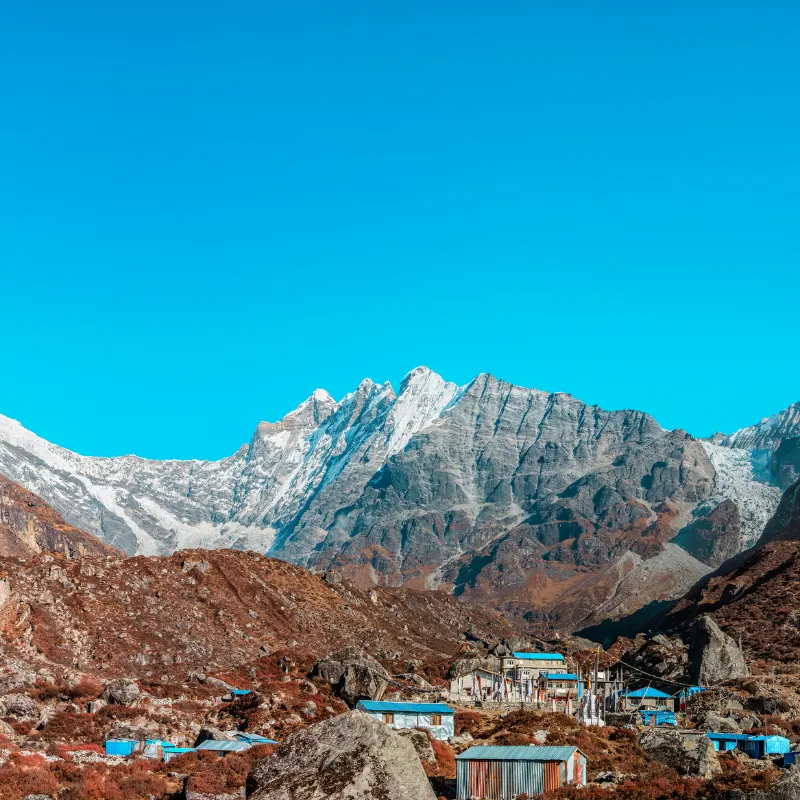
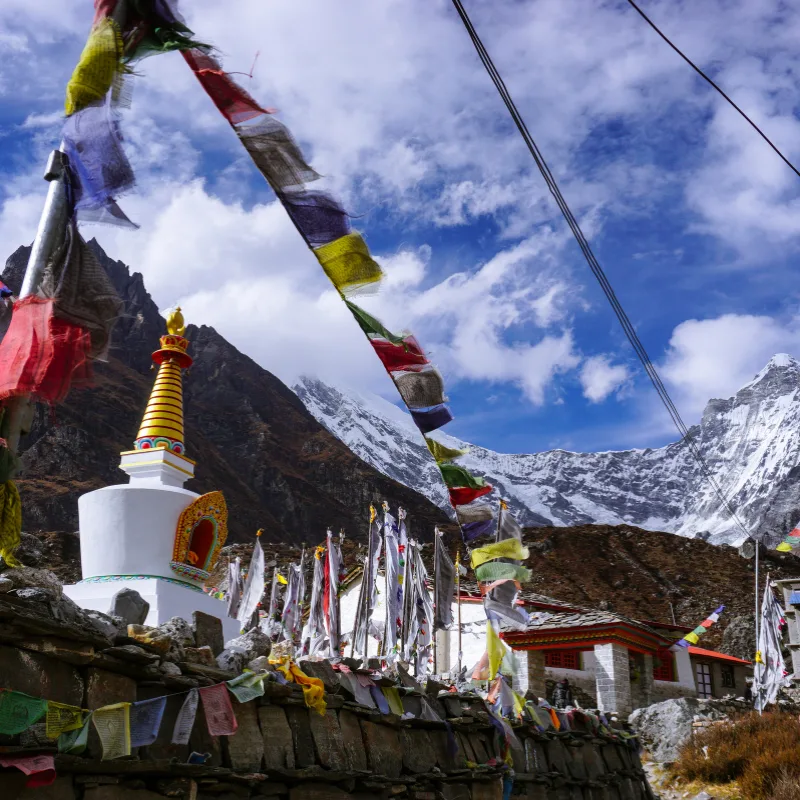
- Kyanjin Gompa — 3,870 m / 12,697 ft: the last settlement in the valley, ringed by peaks and home to the monastery and the Swiss-founded yak-cheese factory.
- Langtang Village — 3,430 m / 11,253 ft: the 2015 avalanche destruction and the rebuilt Tamang village, now a living community again.
- Kathmandu’s heritage circuit: Pashupatinath temple, the giant Boudhanath stupa and the hilltop Swayambhunath on Day 2.
- Langtang Lirung — 7,227 m / 23,711 ft: the sentinel of the valley, with its hanging glacier and icefall dominating the views from both villages and the summit.
- Langshisa Glacier option — about 4,050 m / 13,287 ft: the alternative Day 7 walk up-valley from Kyanjin Gompa toward the Langshisa Kharka pastures and glacier.
- Rhododendron and oak forest: the lower valley’s dense, wildlife-rich woodland, home to red pandas, langurs, wild boars and Himalayan black bears.
- Tamang culture: mani walls, carved prayer stones, chortens, twin-roofed houses and monasteries from Syabrubesi to the grazing heights.
- The yak-cheese factory and monastery at Kyanjin Gompa: a genuine working corner of high-altitude Nepal, established with Swiss technical help in the 1970s.
- Road reliability: a fully road-based start and finish with no flights to weather-grounded.
Langtang Valley Trek Overview
The Langtang Valley Trekking is an 11-day trek in the Langtang National Park of Nepal that follows the Langtang River from the roadhead village of Syabrubesi (1,550 m / 5,085 ft) through thick rhododendron and oak forest, past the rebuilt village of Langtang (3,430 m / 11,253 ft), and up to the grazing heights of Kyanjin Gompa (3,870 m / 12,697 ft) — with a full acclimatization day that opens the option of climbing the high viewpoint of Tserko Ri (4,984 m / 16,351 ft). Graded moderate, it is the classic Langtang Valley route in its fullest form, slow enough to acclimatize properly and long enough to walk into the heart of a living Buddhist valley.
The itinerary runs Kathmandu to Kathmandu with two cultural days at either end: an arrival day, a full day of Kathmandu Valley sightseeing (Pashupatinath, Boudhanath and Swayambhunath), two road days to and from the trailhead, and six walking days up and down one river valley. Because the route spends a full extra day at Kyanjin Gompa, it lets trekkers add the highest viewpoint of the Langtang valley — Tserko Ri at 4,984 m / 16,351 ft, by the itinerary’s own flex day — without compressing the schedule.
With Nepal Lion Tours, the Langtang Valley Trek starts from USD 926.25 per person with group discounts for larger parties, and includes a 3-star hotel with breakfast in Kathmandu, a licensed English-speaking guide, tea-house and lodge accommodation, full board meals on trekking days, all Langtang National Park permits, road transfers, and a down jacket, sleeping bag and duffel bag loaned for the trip.
What Makes the Langtang Valley Trek Special?
The defining experience is walking up one river valley to the head of the Himalaya, from sub-tropical forest dense enough to harbour red pandas to the yak pastures and prayer-flag terrain of Kyanjin Gompa — then, on the flex day, climbing Tserko Ri to nearly 5,000 m for a 360-degree panorama that runs from Langtang Lirung (7,227 m / 23,711 ft) to the Tibetan plateau and Shishapangma (8,027 m) across the border.
The route is also the longest form of Nepal’s closest-to-Kathmandu valley trek: 11 days gives the schedule breathing room that other Langtang itineraries lack. A full day of Kathmandu heritage, a restful exploration day at Kyanjin Gompa (where trekkers can instead walk up-valley to the Langshisa glacier at about 4,050 m / 13,287 ft), and a gentle descent all fold into one unhurried week and a half that still peaks within reach of 5,000 m.
Why Choose the Langtang Valley Trek?
Because it is the classic Langtang route without the rush: the itinerary’s extra day at Kyanjin Gompa turns a viewpoint-push trek into an acclimatized, flexible adventure. The route carries no flight dependency, the trailhead sits on the regular road network north of Kathmandu, and the permit setup is the simplest in high-altitude Nepal — Langtang National Park entry plus a TIMS card, both arranged by Nepal Lion Tours.
The trek is also a rich cultural experience, not just a walk: Pashupatinath, Boudhanath and Swayambhunath in Kathmandu, then a valley of Tamang villages, mani walls and monasteries where most travellers stop to meet the people rather than rush past them. For trekkers weighing their first real Himalayan valley, the 11-day version is the one that lets the landscape sink in before any altitude demands a decision.
Who Is This 11-Day Langtang Valley Trek Suitable For?
- First-time high-altitude trekkers who want a moderate valley trek with a real climax at 4,984 m.
- Travellers with a two-week Nepal holiday, who can add arrival and departure days around the 11-day trek.
- Culture-focused travellers after Kathmandu’s heritage valleys plus Buddhist Tamang villages.
- Hikers wanting a gentler pace, with a full rest-and-explore day at Kyanjin Gompa.
- Couples and small groups, who can depart privately from two trekkers.
- Nature lovers after forests, glaciers, red panda territory and yaks.
- Return visitors to Nepal who want the valley done properly, not hurried.
No previous trekking experience is required and nothing on the route is technical, but the optional Tserko Ri climb on Day 7 is a serious 4–5 hour push above 4,000 m — the reason the itinerary allows a full day for it, and the reason trekkers are never required to do it.
Guide’s Note — Nepal Lion Tours: “From our experience, the 11-day Langtang Valley is the most balanced itinerary we run — trekkers arrive in Kathmandu rested, spend a day seeing the city’s three great monuments, and then walk the valley with a full acclimatization day before choosing the Tserko Ri summit. Our guides encourage the group to decide on the Tserko Ri option the evening before, based on each trekker’s energy signs.” — Nepal Lion Tours, Langtang Team
Quick Facts
| Trek Fact | Details |
|---|---|
| Trek Name | Langtang Valley Trekking |
| Duration | 11 days / 10 nights |
| Region | Langtang National Park, Rasuwa, Bagmati, Nepal |
| Maximum Altitude | 4,984 m / 16,351 ft at Tserko Ri |
| Difficulty | Moderate |
| Main Highlight | Kyanjin Gompa and the optional Tserko Ri viewpoint climb |
| Start / End | Kathmandu to Kathmandu |
| Route | Kathmandu – Syabrubesi – Lama Hotel – Langtang – Kyanjin Gompa – Tserko Ri – Lama Hotel – Syabrubesi – Kathmandu |
| Typical Walking | 4–7 hours per trekking day |
| Best Season | Spring and autumn |
| Price From | USD 926.25 per person (standard tier) |
| Accommodation | Tea-house lodges; 3-star Kathmandu hotel; hotel nights in Syabrubesi |
| Guide | Licensed English-speaking trekking guide |
Langtang Valley Trek Route and Elevation
The Langtang Valley Trek is road-first, then one river valley up, a high plateau, one valley down: a road transfer north, six walking days following the Langtang Khola to Kyanjin Gompa, a full flex day at the valley head (Tserko Ri or Langshisa), and the return drive. The profile is a long staircase climbed across three days, a high plateau of options, and a mirrored staircase down — the extra day at the top being what turns the route into a comfortable acclimatization trek.
Langtang Valley Trek Route at a Glance
| Day | Trek Route | Altitude | Highlights |
|---|---|---|---|
| 1 | Arrive Kathmandu | 1,400 m / 4,593 ft | Airport transfer, meet guide and group |
| 2 | Kathmandu Valley sightseeing | 1,400 m / 4,593 ft | Pashupatinath, Boudhanath, Swayambhunath, Durbar Square |
| 3 | Kathmandu to Syabrubesi (drive) | 1,550 m / 5,085 ft | Trishuli valley, hill roads, Tamang roadhead |
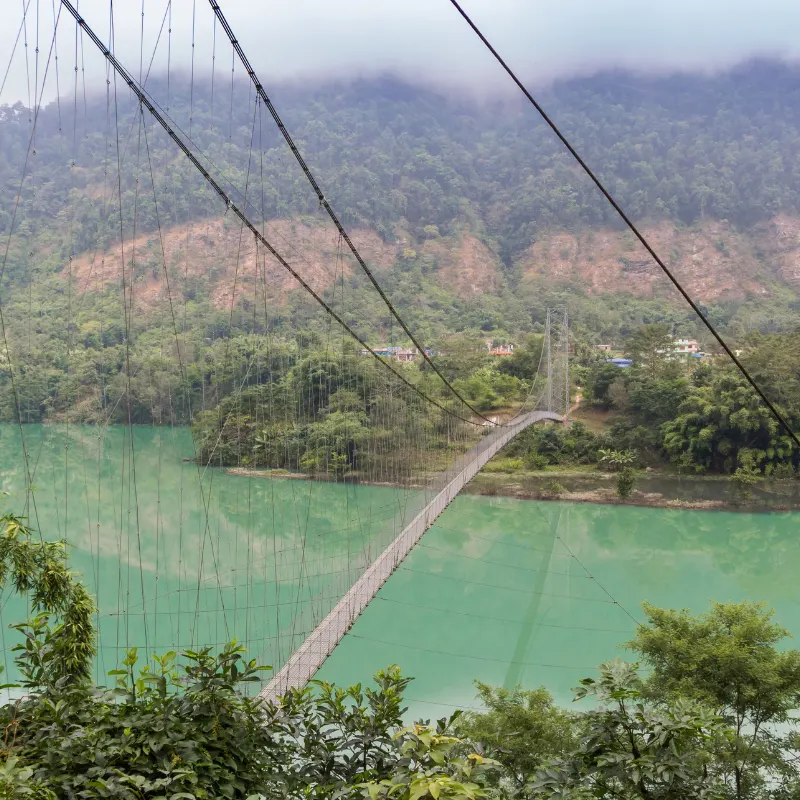
| 4 | Syabrubesi to Lama Hotel | 2,470 m / 8,104 ft | Forest trail, suspension bridges, wildlife |
| 5 | Lama Hotel to Langtang | 3,430 m / 11,253 ft | Ghora Tabela, rhododendron and pine forest |
| 6 | Langtang to Kyanjin Gompa | 3,870 m / 12,697 ft | Yak pastures, mani wall, monastery and cheese factory |
| 7 | Kyanjin Gompa flex day | 3,870–4,984 m / 12,697–16,351 ft | Tserko Ri climb or Langshisa glacier walk |
| 8 | Kyanjin Gompa to Lama Hotel | 2,470 m / 8,104 ft | Photo-stop descent through forest |
| 9 | Lama Hotel to Syabrubesi | 1,550 m / 5,085 ft | Forest descent, Ganesh Himal views |
| 10 | Syabrubesi to Kathmandu (drive) | 1,400 m / 4,593 ft | Return road day, farewell dinner |
| 11 | Departure | — | Airport drop-off |
Langtang Valley Trek Elevation Profile
The profile climbs in four clear steps. Day 3’s road ends at Syabrubesi (1,550 m / 5,085 ft); Day 4 climbs through dense forest to the Lama Hotel area (2,470 m / 8,104 ft); Day 5 rises to Langtang village (3,430 m / 11,253 ft); and Day 6 reaches the valley head at Kyanjin Gompa (3,870 m / 12,697 ft). Day 7 then offers the summit option: Tserko Ri at 4,984 m / 16,351 ft, climbed and descended within the day, climbing high and sleeping low.
After the valley head, the route mirrors its own descent: Day 8 drops through the pastures and forests back to the Lama Hotel area and Day 9 all the way to Syabrubesi, with the return road on Day 10 and departure on Day 11. Physically the trekion requires patience in both directions — three long uphill days, one high flex day, and two long downhill cruises — so knees, ankles and properly broken-in boots matter as much as lung capacity. The Nepal Lion Tours team provides a trekking map and daily elevation overview of the route.
How to Get to the Langtang Valley Trek
The trek starts from Kathmandu and reaches its trailhead at Syabrubesi entirely by road — the route carries no flight dependency at all. The Nepal Lion Tours team transfers you from the airport on arrival, and the Day 3 departure heads north from your Kathmandu hotel on the highway toward the Langtang region.
Kathmandu to Syabrubesi: Flight or Road?
| Option | Approx. Travel Time | Best For |
|---|---|---|
| Private road transfer | 6–7 hours | Comfort and a fixed schedule; often available as an upgrade |
| Local bus (included) | 7–9+ hours | The standard package transport through the Trishuli valley |
| Flight | Not available | No scheduled airport serves the Langtang region |
There is no flight option for the Langtang Valley Trek, which keeps coordination simple — no weather-grounded aircraft and no missed connections. The transfer uses the national highway network north of Kathmandu through the Trishuli Valley, past rural villages and terraced hillsides, finishing at Syabrubesi, the gateway village of the whole Langtang region. On the return (Day 10) the same corridor heads back to Kathmandu in 6–7 hours, with the guide transferring you to your hotel for the farewell dinner.
The drive holds real scenery of its own: the first hours run beside the Trishuli River through farmland and forested hills, and as the road bends north after Dhunche, the Langtang range begins to build on the skyline. Between the two road days the itinerary also gives you Kathmandu’s mour own best day out — Pashupatinath, Boudhanath and Swayambhunath — so the transit days carry cultural weight too.
Syabrubesi to the Trailhead
Syabrubesi is the trailhead — the trek begins at the village’s northern edge on Day 4, crossing the Langtang Khola and entering the national park. At about 1,550 m / 5,085 ft, Syabrubesi is the working gateway of the Langtang region: a tight Tamang settlement of lodges, shops and tea-houses between steep ridges, with the river below its terraces.
The itinerary stays one night in Syabrubesi on the way in and returns for one night before the drive back, keeping the walking days clean and letting the group start the trails rested. The roadhead’s proximity to a proper bed makes the first and last walking days psychologically easier than on routes where the walk begins straight off the bus.
Returning to Kathmandu After the Trek
Day 10 returns to Kathmandu by road along the same highway, taking 6–7 hours depending on traffic and roadworks. The drop-off is at your hotel in the city, with the afternoon for last-minute shopping or exploration before the included farewell dinner at a cultural restaurant. Day 11 closes the loop with an airport drop-off for your flight home.
A Practical Tip for International Travellers
The transfer north is all on the Arniko and Pasang Lhamu highways, sealed for most of the way but subject to monsoon slides and winter fog that can slow the driver — so patience on the road days pays off. Nepal Lion Tours coordinates the bus, the Kathmandu hotel and the airport transfers, and our team is reachable 24/7 via WhatsApp at +977-9851039020 if anything shifts en route.
Guide’s Note — Nepal Lion Tours: “The drive north is a fixed feature of every Langtang departure and most guests enjoy it more than they expect — the Trishuli valley has a rhythm of farmland, river bends and hilltop villages that tells you exactly where you are in Nepal. We book the Day 3 bus early and time the return drive to beat the afternoon congestion into Kathmandu.” — Nepal Lion Tours, Langtang Team
Langtang Valley Trek Difficulty, Fitness and Altitude
The Langtang Valley Trek is graded moderate, and the extra days make the grading more honest than on shorter versions of the route: the valley walking is gentle and the itinerary includes a full acclimatization day at Kyanjin Gompa, while the optional Tserko Ri climb on Day 7 climbs roughly 1,100 m from the gompa to 4,984 m. Anyone fit enough to walk 4–7 hours a day on hilly terrain will manage the route; the effort is steady rather than technical, with no climbing or scrambling required.
Where the Effort Actually Is?
The single hardest moment is the optional Day 7 climb to Tserko Ri: from Kyanjin Gompa (3,870 m / 12,697 ft) the summit at 4,984 m / 16,351 ft is a sustained 4–5 hour uphill over grass, scree and rock, all of it above the tree line, with the thin air at nearly 5,000 m demanding short steps and long breaths. The surprise for most trekkers is that this is the route’s only genuinely hard push — the itinerary is built so the summit is a choice, not a requirement.
The valley days carry their own quiet demands. Days 4–6 climb steadily through forest on a mild-but-constant gradient that never feels punishing but never ends, and the long downhill days on Days 8–9 run roughly 5–6 hours through steps and switchbacks from the valley head back to Syabrubesi — hard on knees and ankles rather than lungs. The 11-day schedule spreads these loads across enough days that very few trekkers find the trek over-reaching.
Altitude is present but managed: the route sleeps below 4,000 m for every night, with the extra night at Kyanjin Gompa (3,870 m) giving trekkers a full 24 hours above 3,700 m before attempting the summit. That extra rest day is the difference between a moderate well-paced trek and a hurried one.
How to Prepare for the Langtang Valley Trek
- Walk regularly for 40–60 minutes, 4–5 times per week, for 5–6 weeks before departure.
- Practise hills and stairs — the Days 5–6 forest climbs and the optional Day 7 summit push are where this pays off.
- Build leg and core strength with squats, lunges and step-ups to protect your knees on the Days 8–9 descents.
- Take one or two longer weekend hikes carrying a small loaded daypack to test boots, fit and stamina.
- Practise slow-paced uphill breathing using longer intervals — 4,000 m to 5,000 m rewards efficiency more than speed.
- Avoid last-minute heroics — the 11-day schedule is designed so a six-week base beats a frantic fortnight.
How Difficult Is the Langtang Valley Trek Compared with Longer Treks?
Compared with the Everest and Annapurna circuits, the Langtang Valley is shorter, lower and lighter. It reaches its highest point at 4,984 m / 16,351 ft (Tserko Ri), where Everest Base Camp trekkers pass 5,364 m at Kala Patthar and Annapurna Circuit trekkers top 5,416 m at Thorong La — so the optional summit sits below the serious high passes of the classic circuits.
Length works the other way: at 11 days the trek is longer than most Langtang valley loops, but the extra days are typically rest and acclimatization days, not extra effort. Compared with similar 11-day routes in the region, the Langtang Valley keeps the grade moderate precisely because of that flex day at the top. It is often a traveller’s first route to reach near-5,000 m without technical terrain.
Altitude, Acclimatization and Safety
Langtang Valley Trek Altitude Profile
The trek sleeps at Kathmandu (1,400 m / 4,593 ft), Syabrubesi (1,550 m / 5,085 ft), the Lama Hotel area (2,470 m / 8,104 ft), Langtang (3,430 m / 11,253 ft) and two nights at Kyanjin Gompa (3,870 m / 12,697 ft) — every overnight below 4,000 m. The only higher point is the optional Tserko Ri summit at 4,984 m / 16,351 ft, climbed and descended within Day 7.
How the Body Adapts to Altitude
Above roughly 2,500 m the body compensates for thinner air by breathing deeper and faster and producing more red blood cells over days, which is why the itinerary spreads the climbing across Days 4–6 and sleeps in the valley head for an extra night before the summit. Hydration, carbohydrate-rich meals and slow walking fuel that adaptation; the 24 hours at Kyanjin Gompa before the summit day are precisely where the acclimatization happens.
Symptoms of Altitude Sickness to Watch For
Mild symptoms — headache, poor appetite, tiredness and a slightly faster heartbeat — are common above 3,000 m and settle with rest, water and a slow pace. Warning signs demanding attention are worsening headache not eased by rest, nausea or vomiting, dizziness, breathlessness at rest and confusion. Any serious or worsening symptom means descent, per the guide’s plan; the route’s road proximity at Syabrubesi keeps evacuation practical.
How Nepal Lion Tours Supports Altitude Safety
Nepal Lion Tours bakes altitude safety into the schedule: licensed guides trained in mountain first aid, paced climbs with regular wellbeing checks, overnights capped below 4,000 m, and the optional nature of the Tserko Ri summit. The guide carries a first-aid kit and co-ordinates any evacuation, the Kathmandu office tracks the trek, and every booking is checked for travel insurance covering evacuation above 4,500 m.
Best Time to Trek the Langtang Valley
The best time to trek the Langtang Valley is autumn (September to November) for the clearest skies and crisp mornings, with spring (March to May) as the close second for green valleys and blooming rhododendrons. Both seasons give the best odds of the clear weather that makes the optional Tserko Ri morning worthwhile.
Autumn – September to November
September to November is the classic window: post-monsoon skies are washed clean, and October is the single most reliable month for valley views. Days run pleasantly cool, nights are cold at Kyanjin Gompa, the trails hold the full Tamang lodge circuit open, and the Tserko Ri option is at its most achievable. Expect the most trekkers of the year and dry, dust-free trails.
Spring – March to May
March to May brings the second window: clear mornings, longer days and a valley that greens as the snow line retreats. By April–May the rhododendrons bloom in pink and red through the lower forests and the pastures carry their best colour. Summit mornings are colder and windier than autumn, and late spring builds afternoon cloud — but the flowers and the emptier lodges are real rewards.
Winter – December to February
December to February runs cold and quiet: the valley below Kyanjin Gompa generally stays walkable, but the upper tree line and any Tserko Ri attempt carry snow and ice, and the summit needs a caution that exceeds the route’s moderate grade. Some lodges close for the season. Winter is for experienced, well-equipped trekkers; Nepal Lion Tours advises checking snow conditions before booking.
Monsoon – June to August
The monsoon (June to August) is possible but wet: daily rain on the forest trails, slippery wooden bridges and leeches in the lower vegetation below 2,000 m, with valley views frequently lost under cloud. The route stays open and uncrowded, and the valley’s grazing season peaks in summer — but for the view-driven element (Tserko Ri) this is the least reliable window.
Which Season Should You Choose?
Choose October–November if the clearest valley and summit views are the priority. Choose March–April for green valleys, rhododendrons and half-empty lodges. Avoid the monsoon for photography and comfort, and treat winter as an experienced-trekker-only option. On any shoulder-season date, Nepal Lion Tours checks current trail, snow and lodge conditions with our Langtang team before you lock in travel.
Guide’s Note — Nepal Lion Tours: “October is the month we most often recommend for the flex-day summit — the pre-dawn cold at Kyanjin Gompa is manageable and the light over Langtang Lirung is as good as the valley gets. In spring we advise starting the Tserko Ri walk a little earlier because afternoon cloud builds faster.” — Nepal Lion Tours, Langtang Team
Langtang Valley Trek Permits & Regulations
The route runs entirely inside Langtang National Park, so trekkers need two documents: the Langtang National Park entry permit and a TIMS card (Trekkers’ Information Management System). Both are arranged by Nepal Lion Tours as part of the package and are checked at the park gate and along the route. No restricted-area permit is required.
Langtang Valley Trek Permits at a Glance
Requirement | Who Needs It | Who Arranges It |
|---|---|---|
Langtang National Park entry permit | Every trekker entering the park | Nepal Lion Tours (included) |
TIMS card (registered/unregistered) | Every trekker on a guided trek | Nepal Lion Tours (included) |
Restricted-area permit | Not required on this route | Not applicable |
Local guide registration | Provided by the licensed guide | Nepal Lion Tours |
Langtang National Park Entry Permit
The Langtang National Park entry permit is the main document required on the trail, issued and controlled by the national park. The standard fee is around NPR 3,000 (approx. USD 25) for foreign visitors, NPR 1,500 for SAARC nationals and NPR 100 for Nepali citizens — figures the park updates periodically, so the amount is confirmed at booking. The permit is checked at the park-entry point on the Langtang trail; keep it with your passport.
TIMS Card
The TIMS card (Trekkers’ Information Management System) is the second document Nepal uses to log trekkers on remote trails for safety and management. Independently arranged it costs around NPR 2,000; registering through a licensed agency such as Nepal Lion Tours reduces it to about NPR 1,000, issued against passport details and dates. The online e-TIMS version has become the standard across the region.
Do You Need a Restricted-Area Permit?
No. The Langtang Valley route does not enter any restricted area, so trekkers avoid restricted-area fees, minimum-group rules and advance-application paperwork that apply to routes like Upper Mustang or Manaslu. In practice this is the simplest permit setup of Nepal’s high valleys: two documents, both arranged before the trek, with no altitude or group-size restriction beyond the park’s standard rules.
Who Arranges the Permits?
Nepal Lion Tours arranges both permits before the trek, using the passport details gathered at booking. The costs are folded into the inclusive price rather than collected on the trail, and the guides carry the papers to each checking point. If dates shift or a rule changes, the office handles the paperwork with the park and TIMS offices directly.
Food & Accommodation on the Langtang Valley Trek
The trek is a tea-house, lodge and hotel combo: a 3-star Kathmandu hotel with breakfast at both ends, a local lodge night in Syabrubesi, and family-run tea-house lodges for the walking nights including the two nights at Kyanjin Gompa. Meals are full board on trekking days — breakfast, lunch and dinner plus a cup of coffee or tea — with the classic Nepali trekking food of dal bhat, noodles, potatoes, eggs and Tibetan dishes served along the way.
Tea-House Accommodation on the Langtang Valley Trek
The route is fully tea-house supported — no camping gear needed. Lodges are solid stone-and-timber buildings with shared bathrooms, a dining room with a stove in the middle, and twin rooms including the high-altitude nights at Kyanjin Gompa. In Kathmandu the package includes a 3-star hotel with breakfast, and Syabrubesi’s local lodges add a mid-range bed at the trailhead.
Room standards drop as altitude rises, and the sleeping bag provided by Nepal Lion Tours plus lodge blankets keep the plateau nights warm. Electricity and shared Wi-Fi appear in most valley lodges, and hot showers are usually available at a small charge — 300–500 NPR in the villages, occasionally included above Langtang.
What Food Is Available on the Langtang Valley Trek?
Tea-house kitchens serve a reliable menu of trekking staples: dal bhat (rice, lentil soup and curry — the trekking full meal), Tibetan momo dumplings, thukpa noodle soup, fried noodles, pasta, potatoes, eggs, chapati and apple pie, with coffee, tea, hot chocolate and bottled water to drink. The yak-cheese factory at Kyanjin Gompa, running since the 1970s with Swiss technical help, turns out hard red-waxed cheese and fresh bakery — a genuine high-altitude treat on flex day.
Higher up, the menu narrows as kitchens rely on porters and yaks for supplies. Vegetarian needs are met well throughout (dal bhat is naturally vegetarian-friendly), and kitchens cook simply rather than fastidiously, so trekkers with dietary requirements should tell the guide at the start of the trek.
What Food and Accommodation Are Included?
What’s Included | Details |
|---|---|
Food | Breakfast, lunch and dinner plus a cup of coffee or tea on trekking days |
Bed | 3-star Kathmandu hotel (breakfast), lodges and tea-houses throughout |
Transport | Kathmandu–Syabrubesi–Kathmandu by local bus; airport transfers |
Extras | Down jacket, sleeping bag, duffel bag and trekking map loaned by NLT |
Not included | Extra drinks, hot showers, internet, phone charging and personal snacks in lodges |
The practical budget line works like this: all trail meals are included on trekking days, while drinks beyond the daily tea/coffee, hot-shower fees, charging and laundry are paid directly at the lodges as personal expenses. Carrying crisp NPR cash for tea-house extras and village shops is the habit of every Langtang trekker.
Drinking Water on the Trek
Drinking water is bought separately along the trail, sold per litre at tea-houses at roughly 100–200 NPR per litre. The water comes from collection tanks and streams, so treating or filtering is essential — the river water is not safe to drink untreated. Carrying a refillable bottle and a purification system reduces both waste and cost.
Staying Comfortable at Tea-Houses
The nights at Kyanjin Gompa (3,870 m / 12,697 ft) are cold — plan for temperatures near freezing even in peak season, with strong plateau sun by day. The dining-room stove is the evening hub, meals set the rhythm, and the staff keep the lodge cosy against the valley wind. Boots off at the door, a boot-drying routine by the heater, and layers rather than one giant coat are the comfort habits that turn a cold night into a good story.
Why Book with Nepal Lion Tours?
Nepal Lion Tours is a Kathmandu-based trekking and touring company that has guided the Langtang region for years, and the Langtang Valley Trek shows the difference a local operator makes. The permits, transfers, Kathmandu hotel and lodges are all booked, and the guides are licensed by the Nepal government — the legal requirement on these trails since 2023, not an optional extra.
- All-inclusive structure: 3-star Kathmandu hotel with breakfast, permits, road transfers, full-board meals, accommodation and guide — most of the budget sits inside one package price.
- An acclimatized, flexible summit day: the extra Kyanjin Gompa night and the optional Tserko Ri decision are managed by guides who know each trekker’s fitness signs.
- No-flight reliability: a road-based start and finish that keeps the itinerary on schedule even when Himalayan airports close.
- Native Tamang and high-altitude knowledge: Langtang is home turf for much of the guiding team, with the valley’s lodges, weather and trail quirks known first-hand.
- A licensed, insured team: licensed English-, Chinese-, Korean- and Hindi-speaking guides with first-aid kits, insured on the trek.
- Gear included: down jacket, all-season sleeping bag, duffel bag, trekking map and a SIM card for the valley’s mobile network.
- 24/7 support: the office is reachable by phone and WhatsApp at +977-9851039020 before, during and after the trek.
Guide’s Note — Nepal Lion Tours: “The 11-day Langtang departure is where we first see most of our return customers — it is a complete Himalayan holiday with the culture of Kathmandu and the mountains in one trip. The advice we repeat on every departure: take the sightseeing day seriously, hydrate on the drive days, and decide the Tserko Ri climb the evening before the flex day.” — Nepal Lion Tours, Langtang Team
Book the Langtang Valley Trek
The Langtang Valley Trek costs USD 926.25 per person in the standard tier for a single trekker, dropping to USD 880 for 2–4 trekkers, USD 834 for 5–9 and USD 787 for groups of 10+; a luxury tier runs from USD 1,250 per person at the same group breakpoints. Price covers the Kathmandu 3-star hotel with breakfast, permits, full-board trail meals, lodge nights, the licensed guide, road transfers and the loaned cold-weather gear, with flexible cancellation terms confirmed at booking.
Trek at a Glance
| Quick Fact | Detail |
|---|---|
| Duration | 11 days / 10 nights |
| Difficulty | Moderate |
| Max Altitude | 4,984 m / 16,351 ft (Tserko Ri, optional) |
| Standard price | From USD 926.25 per person |
| Luxury tier | From USD 1,250 per person |
| Accommodation | 3-star Kathmandu hotel; lodges and tea-houses on trail |
| Meals | Full board on trekking days (B/L/D plus tea or coffee) |
| Transport | Local bus, Kathmandu–Syabrubesi–Kathmandu; airport transfers |
| Permits | Langtang NP entry + TIMS, arranged by Nepal Lion Tours |
| Group size | Private departures from 2 trekkers; 1–10 pax |
Ready to Start Your Langtang Adventure?
Bookings run through the Nepal Lion Tours team with your preferred dates, group size and tier, and the office confirms permits, bus seats, lodges, the Kathmandu hotel and the guide before you fly. For private departures the team customises the itinerary — an extra night at Kyanjin Gompa, a rest day in Syabrubesi, or a longer Kathmandu stay all fit cleanly around the 11 days.
Contact Nepal Lion Tours today to confirm availability for your dates. Message the team directly on WhatsApp at +977-9851039020, or send your preferred dates through the website’s booking form, and the office responds within 24 hours with a confirmed plan.
Related Langtang Treks
| Related Trek | Duration | Difficulty | Max Altitude | Best For |
|---|---|---|---|---|
| Langtang Valley View Trek | 7 days | Moderate | 3,870 m / 12,697 ft | A faster valley loop without the summit day |
| Langtang & Tserko Ri View Trek | 8 days | Moderate | 4,984 m / 16,351 ft | Two sunrise summit days in one week |
| Gosaikunda Trek | 7 days | Moderate | 4,380 m / 14,370 ft | Pilgrimage lakes and high-altitude culture |
| Short Tamang Heritage Trail | 7 days | Easy–moderate | 3,135 m / 10,285 ft | Cultural village trekking without high passes |
| Langtang Tamang Heritage Trail | 14 days | Moderate | 4,984 m / 16,351 ft | Maximum culture plus the full valley |
Trip Essentials
Packing advice, required equipment & gear recommendations
Essential
Langtang Valley Trek Packing List
Pack for cold mornings, warm afternoons and the odd shower — the range on this trek runs roughly 5 to 25 °C, and the optional flex-day summit decides whether the packing was right. Nepal Lion Tours loans the down jacket, sleeping bag, duffel bag and trekking map, so the list below focuses on personal layers, footwear and the small gear that makes a summit morning comfortable.
Hiking Gear
- Boots: broken-in leather or fabric boots with a grippy sole; a full size larger than street shoes for thick socks.
- Trekking poles: two poles, invaluable on the Days 8–9 descents and the Tserko Ri scree.
- Daypack: 25–35 litre pack for layers, water, snacks and camera; the main luggage stays in rooms and the bus.
- Water bottle or bladder: 1.5–2 litre capacity with a purification system for tea-house refills.
- Headlamp: essential for the pre-dawn flex-day climb and dark tea-house bathrooms.
- Duffel and dry-bag liners: rain-proof covers for the daypack and the loaned duffel.
Clothing: Use Layers Rather Than Bulk
- Base layer: one moisture-wicking top; one merino or synthetic set works.
- Mid layers: a fleece or light puffy jacket for lodge and summit time.
- Shell: a windproof/waterproof jacket against the cold wind at the valley head.
- Walking trousers: 2 pairs of light trekking trousers; track pants for lodge evenings.
- Summit layer: the loaned down jacket over the mid-layers for the flex-day climb.
- Accessories: woollen hat, gloves, buff or neck gaiter, and sunglasses with UV protection for the snow glare.
- Rain layer: light rain trousers for monsoon-season travel on the forest sections.
Sleeping and Evening Comfort
The down jacket and all-season sleeping bag are provided; the personal additions raise the comfort. A silk or cotton liner for the Kathmandu and Syabrubesi hotel nights, lodge slippers or thick socks, and a small wash kit with earplugs convert a basic tea-house room into a good night. The Kyanjin Gompa nights are cold — consider a hot-water-bottle or hand-warmer for the plateau.
Toiletries and Personal Health Items
- Sun cream and lip balm with SPF for the strong high-altitude sun at 4,000 m plus.
- Personal first-aid basics: plasters, blister pads, painkillers, any prescription medication.
- Insect repellent for leeches and flies in the sub-tropical sections below 2,000 m.
- Hand sanitiser and toilet paper (lodge bathrooms are basic at high altitude).
- Rehydration sachets for the summit morning and dry air.
Electronics
- Power bank: 10,000–20,000 mAh for the phone through the long drive days and summit morning.
- Universal adapter for the 220V sockets in Kathmandu and lower lodges.
- Camera or phone with a good zoom: the Langtang Lirung icefall and Tibetan plateau views reward a longer lens.
- Headphones and offline music for the road days and quiet lodge evenings.
Documents and Money
- Passport with photocopies; the trek permits record passport details.
- Cash (NPR): roughly NPR 5,000–10,000 for hot showers, drinks, charging, tipping and village purchases.
- Credit/debit card for Kathmandu; the valley runs overwhelmingly on cash.
- Travel insurance documents, including altitude cover up to at least 4,984 m.
How Much Should You Pack?
The practical weight is 8–10 kg in the main duffel plus a 5–6 kg loaded daypack for the walking hours. Everything above the tree line is carried by you in the daypack — summit layers, water, snacks — so the pair of numbers matters as much as the list. Nepal Lion Tours provides the big cold-weather kit, so the personal luggage runs lighter than most trekkers expect.
Read Before You Book
Permits, terms, medical considerations & advisory guidelines
Advisory
What to Know Before Booking
The Langtang Valley Trek is among the simplest full-length valley treks in Nepal to book and run: no restricted-area paperwork, no flight leg, a road start that keeps plans intact, and a flexible summit option rather than a commitment. A few honest notes make the difference between a smooth trip and a stressed one.
Accommodation and Facilities
Accommodation combines a 3-star Kathmandu hotel with breakfast, local lodge nights in Syabrubesi, and tea-house lodges above — twin rooms with shared bathrooms on the trail, private bathrooms in the city. Facilities shrink with altitude: electricity and hot showers appear at most valley lodges (usually a small fee), Wi-Fi appears in patches from Langtang onwards, and the Kyanjin Gompa nights need warm sleep layers.
Food and Dietary Requirements
The kitchens serve the trekking menu described above, and vegetarian trekkers eat exceptionally well on dal bhat. Vegan, gluten-free and allergy-oriented travel is possible with notice — tell the guide at the start, and expect the higher lodges to serve a simpler version of the request. Bring personal snacks or electrolyte sachets if you have strong preferences.
Altitude, Health and Insurance
The route peaks at 4,984 m / 16,351 ft on the optional summit day, and altitude is present but managed — every overnight sits below 4,000 m and the extra Kyanjin Gompa night aids acclimatization. Prior experience is not required, but background good health, a month of walking prep, and honesty with the guide about how you feel are the real insurance policies. Insurance covering helicopter evacuation above 4,500 m is strongly recommended and checked at booking.
Money and Tipping
Plan a cash budget for personal expenses — drinks, hot showers, charging, snacks — of roughly NPR 500–1,000 per walking day, plus a voluntary tip for guide and porters at the trek’s end (NPR 500–1,000 per day across the team is the common local range). Cards work in Kathmandu but not in the valley, so arrive at Syabrubesi with cash sorted.
Culture and Responsible Trekking
The Langtang valley is Tamang country with deep Buddhist layers: mani walls passed on the right, prayer wheels turned clockwise, monasteries entered respectfully with shoes off. Ask before photographing people. Trekkers support the valley economy directly through the tea-houses, and carrying out wrappers and batteries keeps the national park clean.
Route Options
The signature option is the Day 7 flex day: climbers push to Tserko Ri at 4,984 m / 16,351 ft, while those wanting a lighter day walk up-valley toward the Langshisa Kharka and glacier (about 4,050 m / 13,287 ft) or simply explore the monastery and cheese factory. Add-ons include an extra acclimatization night at Kyanjin Gompa, a rest day at Syabrubesi, or a longer Kathmandu culture stay.
Booking and Before You Arrive
Book several weeks in advance in the spring and autumn peak seasons, confirming passport details for permits and the Kathmandu hotel. Nepal Lion Tours confirms the bus seats, permits, lodges and guide before departure, with flexible cancellation terms confirmed at booking. Arrive in Kathmandu at least one day before the itinerary starts — Day 1 is the airport arrival and group meeting.
A Few Final Tips
- Break in your boots before Nepal — the descents punish untested feet.
- Hydrate on the summit morning even when it is cold; the dry air hides dehydration.
- Use the flex day wisely — it is there to let you decide the summit in good shape.
- Carry a refillable bottle and purification rather than buying plastic at every lodge.
- Enjoy the empty minutes — the valley views are as good in the afternoon as at sunrise.
Day-by-Day Itinerary
Explore each day's route, trekking elevation, and activities
Upon your arrival in the Kathmandu, you will be greeted by a representative from our company and transferred to your hotel. After checking in, meet your trekking guide as well as other group members. Your guide will give you an introduction of the trip. Ask questions if you have doubt.
After breakfast, spend a day travelling around the city and visiting many of its cultural heritages. Travel to the holy temple of Pashupatinath, pay a visit to the world’s biggest stupa at Boudhanath. Visit the Swoyambhunath Temple, one of the oldest religious sites in the valley.
Proceed to the historic Kathmandu Durbar Square after lunch. Explore the rich architectural heritage of the square, which is also home to Kumari (living goddess). Attend a pre-trip discussion in the evening and met your fellow trekking staff. Have dinner at a local restaurant.
Start the journey soon after breakfast. Take the highway to the north of the city that twists and climbs over hills along the way. Enjoy some good views of the mountains and the Trishuli Valley en route. Drive past picturesque, rural landscapes and villages. Stay overnight in a local lodge in Syabrubesi.
Follow the banks of the Trishuli River after breakfast. Hike uphill for around two hours until you reach the Bamboo Village (1,850m/6,068ft). Stop for lunch. The surrounding forest is rich in wildlife. Look out for the hives of wild bees on the cliffs as you travel. Cross rivers at multiple points. Reach Lama Hotel. Spend your night at the hotel.
Continue your gradual ascend to the Langtang Valley, travelling through rhododendron and pine forests. Reach Ghora Tabela in three hours. Stop there for lunch. Walk for another three hours after lunch across a scenic trail to reach the Langtang Village. Spend your night in the village.
Leave the village after breakfast and head for Kyanjin Gompa (3,870m). Enjoy the view of Ganchempo and Langtang Lirung mountains upon reaching there. You have some free time in the evening to explore the surrounding areas. Visit the yak cheese factory and explore the monastery in Kyanjin Gompa.
You have the day for yourself. Rest, relax and explore the surrounding areas. You have the option of going out on a hike to the surrounding areas and climbing Cherku Ri (4984 meters). You can even walk further up the valley to the glacier at Langshisha Kharka.
Retrace your steps back to Lama Hotel. You have plenty of time to stop and take photographs along the way. Walk through the rhododendron and oak forests. Reach Lama Hotel. Spend your night at the hotel.
Your trail today passes through bamboo and rhododendron forests en route to Syabrubesi. Spot native wildlife of the area along the route. Enjoy a close-up view of Ganesh Himal. Walk down to the river before climbing up to the village of Syabru.
Drive back to Kathmandu after breakfast. It takes 6-7 hours to reach the Kathmandu Valley. On arrival in Kathmandu, our guide will transfer you to the hotel. You have the rest of the day for yourself. Carry out your last-minute shopping or explore the city before sitting down for a farewell dinner.
We wish you a happy journey and hope to see you back again. Enjoy our drop off service to the airport, from where you will catch your flight back home.
Want to customize this itinerary?
Tailor duration, lodges, acclimatization days, or add private helicopter flights.
Inclusions & Exclusions
Everything that is covered and what you'll need to budget separately
What is Included
Fully covered in your package price
- Airport transfers, pick up and drop(in our own vehicle)
- 3 star hotel accommodation in Kathmandu with breakfast
- Transportation from Kathmandu to Syabrubeshi and back to Kathmandu in local bus
- Food all along the trip(Breakfast, Lunch, Dinner and a cup of coffee or tea) and accommodations during the trip in hotels with family environment
- Licensed English or Chinese or Korean or Hindi along with Nepali speaking trekking guide
- Transportation, food, accommodation and insurance of Guide during the trip
- Down jacket, all-season sleeping bag, duffel bag and trekking map(in case if you dont have your own. Down jacket, sleeping bag and duffel bag must be returned after completion of the trip)
- First Aid Medical Kit(Carried by the guide)
- All the required permits and paperworks(National park permit, TIMS etc)
- Welcome or farewell dinner in Kathmandu at a cultural restaurant(complimentary)
- A nation-wide operated Mobile SIM Card and a map of the trekking region
What is Excluded
Personal expenses & optional extras
- International Airfare
- Your Visa Charges
- Your travel and medical insurance
- Personal Expenses such as shopping, bar bills, hot shower, telephone, laundry, titbits etc
- Emergency expenses such as expenses on charted helicoptor
- Tips for guides and porters
Our Customer Reviews
Authentic experiences and feedback from our travelers
Write a Review
Share your adventure experience with other travelers
Thank You!
Your review has been submitted and is awaiting approval.
Please Wait
You've submitted several reviews recently. Please wait a few minutes before trying again.
No reviews yet
Be the first to share your experience with this trek!
Frequently Asked Questions
Essential information on preparation, route specifics, safety standards, and logistical details.