Gokyo Lake Luxury Trek — 8 Days | Nepal Lion Tours
Experience the Gokyo Lakes Luxury Trek with a scenic helicopter return, exploring turquoise glacial lakes, picturesque Sherpa villages, spectacular Himalayan landscapes, and panoramic Everest views while enjoying premium accommodation, personalized service, and a comfortable flight back to Kathmandu.
Gokyo Lake Luxury Trek with Helicopter Return



Tour Highlights
Eight days that trade walking-for-walking’s-sake for the best seats on a two-week route — every day delivers a gallery of glaciers, lakes and peaks.
- Private helicopter to Lukla – Kathmandu to Tenzing-Hillary Airport in 40–45 minutes: The walk-in from Kathmandu that takes most trekkers two days of hiking is a single scenic flight, landing you at 2,860 m with the whole trek ahead.
- Gokyo Ri – 5,357 m / 17,575 ft: The trek’s summit viewpoint, climbed before dawn from Gokyo Village. From the top, Everest, Lhotse, Makalu and Cho Oyu stand in a single line above the Ngozumpa Glacier, with the chain of turquoise lakes laid out below.
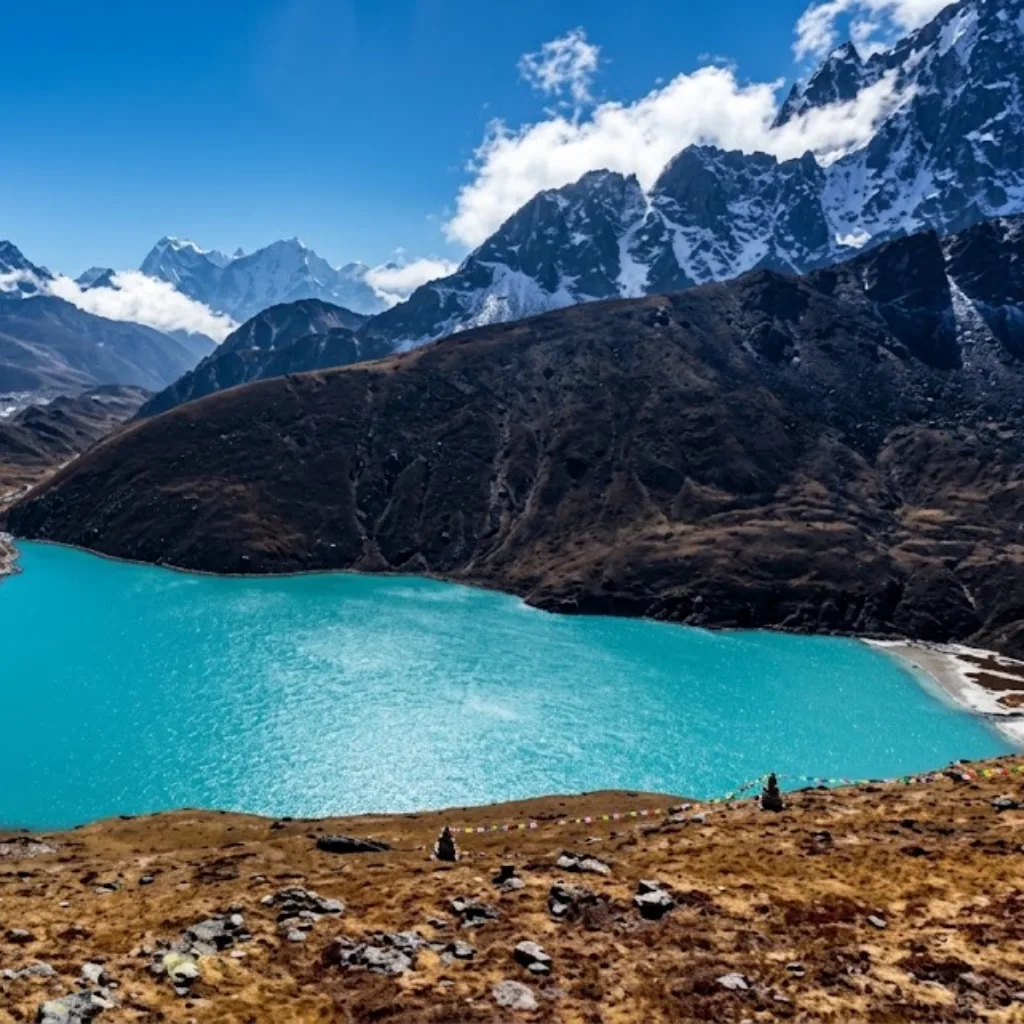
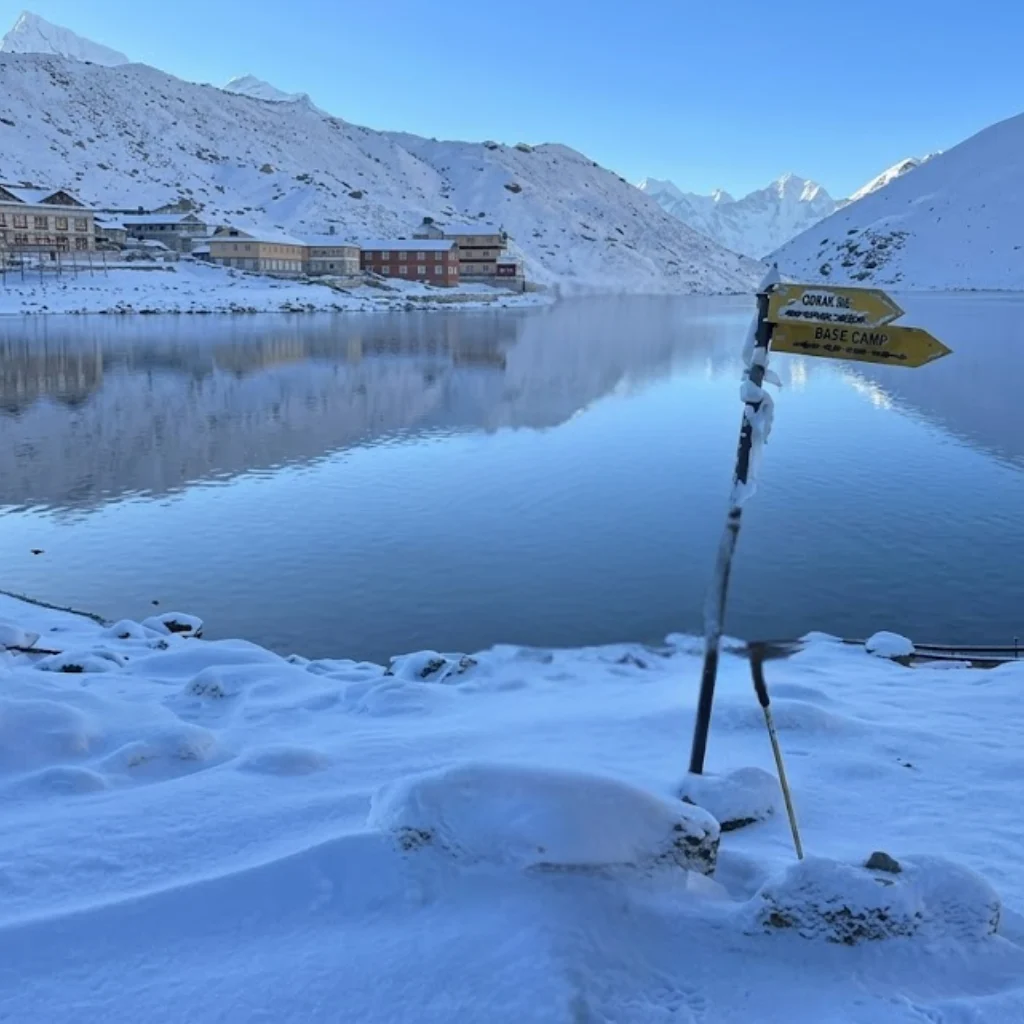
- The Gokyo lakes and Ngozumpa Glacier: Nepal’s longest glacier, with the sacred lake chain at its western foot — the Second, Third and Fourth Lakes on the walk in, and the remote Fifth Lake as a summit-day excursion.
- The helicopter returns – Gokyo to Kathmandu in 1–2 hours: A pre-booked private flight from the Gokyo helipad along the glacier corridor south, giving a last aerial view of the lake chain and the Everest group before landing in the capital.
- Luxury lodge nights in Phakding and Namche – 2 nights at each comfort hub: Upgraded lodges with attached bathrooms and better bedding for the two nights the itinerary spends in each village, including the Namche acclimatisation day.
- The Everest View Hotel acclimatisation day – 3,880 m / 12,730 ft: Day three’s climb-high, sleep-low hike with the first big panorama of Everest, Lhotse, Nuptse and Ama Dablam, and an optional walk across to Khumjung village.
- A five-star Kathmandu finale with farewell dinner: The final night is spent in a five-star Kathmandu hotel with a farewell dinner hosted by Nepal Lion Tours — a proper wind-down instead of a scramble to the airport.
- Comfort built in: Licensed English-speaking guide, private helicopter transfers, provided down jacket and sleeping bag, first aid kit, full-board lodge meals and free cancellation up to 14 days before departure.
Gokyo Lake Luxury Trek Overview
The Gokyo Lake Luxury Trek with Helicopter Return is an 8-day, 8-night luxury itinerary through Nepal’s Everest (Khumbu) region built around the turquoise Gokyo lakes and the high viewpoint of Gokyo Ri (5,357 m). You fly by private helicopter from Kathmandu to Lukla, walk up through Namche Bazaar and the Gokyo Valley beside the Ngozumpa Glacier — Nepal’s longest — stand above the lakes on Gokyo Ri for the classic panorama of Everest, Lhotse, Makalu and Cho Oyu, then fly straight from Gokyo to Kathmandu by private helicopter instead of retracing the trail to Lukla. Graded moderate, it compresses a two-week lake trek into eight days without cutting the acclimatisation people actually need.
The luxury framing is real, not a label. Nights are spent in upgraded comfort lodges in Phakding and Namche Bazaar, comfortable local lodges in Dole, Machhermo and Gokyo, and a five-star hotel in Kathmandu with a farewell dinner on the final night. Group size runs from one to ten pax, the private itinerary is yours alone, and the helicopter legs at both ends remove the four-day walk from Lukla and the four-day walk back to it — the reason most Gokyo treks take twelve to fourteen days.
With Nepal Lion Tours, the trek starts from USD 2,802 per person (list price USD 2,950) and includes the private helicopter transfers both ways, full-board meals and lodge accommodation, your licensed English-speaking guide, the Sagarmatha National Park and Khumbu Pasang Lhamu permits, airport transfers, the provided down jacket, sleeping bag and duffel bag, and the five-star Kathmandu night and farewell dinner. The return helicopter is pre-booked as part of the package — not an emergency arrangement.
What Makes the Gokyo Lake Luxury Trek Special?
The private helicopter return is the signature. Where the standard Gokyo Lake Trek walks up to Gokyo and back down the same valley — eight to ten walking days just to cover the ground — this itinerary flies out from the Gokyo helipad directly to Kathmandu in one to two hours, saving three to four days of repetition and freeing the schedule for the best parts: two nights in Namche, two nights in Gokyo, and an unhurried Gokyo Ri summit day. The saved days go into acclimatisation, not exhaustion.
The lake world itself is the other half of the draw. The chain of Gokyo lakes runs along the western flank of the Ngozumpa Glacier, and the itinerary follows it for two full days between Machhermo and Gokyo — with the remote Fifth Lake beside the Ngozumpa Glacier as an afternoon excursion on summit day. On a clear morning, the four 8,000-metre peaks of the region — Everest, Lhotse, Makalu and Cho Oyu — stand in a single line above the turquoise water.
Why Choose the Gokyo Lake Luxury Trek?
Choose it for the Everest region in eight days, with the logistics taken seriously. The two helicopter legs replace the most weather-sensitive and time-consuming parts of a Khumbu itinerary, the comfortable lodge choice keeps the nights civilised, and the five-star Kathmandu finale ends the trip on a high rather than a packed dorm room. It suits travellers who value time, comfort and the scenery over trail miles.
It is also a flexible private departure: your dates, your pace, a dedicated licensed guide, and Nepal Lion Tours logistics — the helicopters, transfers, permits and lodge bookings — managed start to finish. Solo travellers, couples and small groups take the same private itinerary with no fixed group calendar to join, and free cancellation up to fourteen days before departure keeps planning low-risk.
Who Is This 8-Day Gokyo Lake Luxury Trek Suitable For?
- Travellers with limited time who want the Gokyo lakes and a big Everest-region viewpoint without a two-week commitment
- First-time trekkers to Nepal with solid fitness who would rather fly than walk the same trail twice
- Returning walkers who have already done Base Camp and want the quieter Gokyo side in premium comfort
- Couples and small groups who value lodge quality, private flights and a proper end to the trip
- Photographers chasing the Gokyo Ri sunrise over the four great peaks and the glacier lake chain
- Anyone who dislikes retracing their steps — with helicopter legs at both ends, you never walk the same trail twice
It is not the right pick for anyone with a serious heart or lung condition, for travellers unwilling to spend a night at 4,790 m in Gokyo, or for anyone expecting glacier travel — the walk is a viewpoint summit, not a climb, and the itinerary has no technical section at all.
Quick Facts
| Trek Fact | Details |
|---|---|
| Trek Name | Gokyo Lake Luxury Trek with Helicopter Return |
| Duration | 8 days / 8 nights |
| Region | Everest (Khumbu), Koshi, Nepal |
| Maximum Altitude | 5,357 m / 17,575 ft at Gokyo Ri |
| Difficulty | Moderate |
| Main Highlight | Private helicopter to Lukla and back from Gokyo, luxury lodges, and the 5,357 m Gokyo Ri panorama of Everest, Lhotse, Makalu and Cho Oyu |
| Start / End | Kathmandu to Kathmandu |
| Route | Kathmandu – Lukla (helicopter) – Phakding – Namche Bazaar – Dole – Machhermo – Gokyo – Gokyo Ri – Kathmandu (helicopter) |
| Typical Walking | 3–8 hours per day of walking, with helicopter flights on Days 1 and 8 |
| Best Season | Spring and Autumn |
| Price From | USD 2,802 per person (list USD 2,950) |
| Accommodation | Luxury lodges in Phakding and Namche, comfortable lodges to Gokyo, five-star hotel in Kathmandu |
| Guide | Licensed English-speaking trekking guide |
Gokyo Lake Luxury Trek Route and Elevation
The route is compact by design: fly to Lukla by private helicopter, climb the Dudh Koshi Valley through Phakding and Namche, turn up the Gokyo Valley beside the Ngozumpa Glacier, take the summit day from Gokyo Village, and fly back to Kathmandu by helicopter. Because the return is aerial, no walking leg is repeated — a genuine 8-day Gokyo lake luxury trek with the helicopter as the pivot.
Gokyo Lake Luxury Trek Route at a Glance
| Day | Trek Route | Altitude | Highlights |
|---|---|---|---|
| Day 01 | Kathmandu to Lukla by private helicopter, trek to Phakding | Phakding 2,610 m / 8,563 ft | 40–45-minute helicopter flight, Dudh Koshi forest trail |
| Day 02 | Phakding to Namche Bazaar via Monjo and Jorsalle | 3,440 m / 11,286 ft | Sagarmatha gate, suspension bridges, the big zigzag climb |
| Day 03 | Acclimatisation hike to the Everest View Hotel | 3,880 m / 12,730 ft | First Everest panorama, optional Khumjung village |
| Day 04 | Namche Bazaar to Dole | 4,110 m / 13,484 ft | Kyangjuma, Mong La, Ama Dablam and Thamserku views |
| Day 05 | Dole to Machhermo | 4,470 m / 14,665 ft | Luza, Cho Oyu and Kangtega views |
| Day 06 | Machhermo to Gokyo via the Ngozumpa Glacier | 4,790 m / 15,715 ft | Pangka, glacier moraine, Gokyo lakeside arrival |
| Day 07 | Gokyo Ri climb, Fifth Lake exploration | 5,357 m / 17,575 ft | Pre-dawn summit, four 8,000 m peaks, lake panorama |
| Day 08 | Gokyo to Kathmandu by private helicopter | Kathmandu 1,400 m / 4,593 ft | 1–2 hour flight, farewell dinner, five-star hotel night |
Gokyo Lake Luxury Trek Elevation Profile
The profile climbs in dependable, well-spaced steps. From 1,400 m in Kathmandu the first helicopter flight jumps to 2,860 m at Lukla, the walking rises through Phakding (2,610 m) and the Namche zigzags to 3,440 m, then the trail steps up the Gokyo Valley through Dole (4,110 m) and Machhermo (4,470 m) to the highest sleep of the trek at Gokyo Village (4,790 m). Day 7 reaches 5,357 m on Gokyo Ri and returns to the same village bed, and Day 8 drops all the way to 1,400 m in Kathmandu by helicopter.
Physically, that means two distinct challenges rather than one long grind: the Namche climb on Day 2 and the pre-dawn Gokyo Ri ascent on Day 7. Because the itinerary spends two nights at Namche and two at Gokyo, both high efforts sit inside acclimatised legs rather than appearing early — which is what makes an eight-day ascent to 5,357 m realistic rather than reckless. With the provided trekking map, the whole profile reads at a glance.
How to Get to the Gokyo Lake Luxury Trek
The approach is helicopter-based, so the trek stays compact and weather-tolerant: Kathmandu to Lukla by private helicopter in one morning, then straight onto the trail from the helipad. The only real variable is mountain weather, and the itinerary absorbs small delays with the early-start discipline of every aerial day.
Kathmandu to Lukla by Private Helicopter
The journey begins with a 40–45 minute private helicopter flight from Kathmandu over the green mid-hills and up the Dudh Koshi valley, landing at Tenzing-Hillary Airport, Lukla (2,860 m) — one of the highest and most dramatic airports on earth. Flying by helicopter rather than scheduled fixed-wing means the aircraft leaves when you are ready, carries the whole group together, and skips the flight-lottery queuing of the busiest months. Carry today’s needs in your daypack and keep the main bag within the helicopter’s weight limits — your guide confirms the exact allowance at the briefing.
After landing, your team is waiting: your guide, any porter support and a final equipment check before the first walk. The itinerary keeps Day 1 short (Lukla to Phakding, 3–4 hours combined with the flight), so a delayed morning still leaves the day workable.
From Lukla the Trek Begins
The trail starts straight from the helipad: out of the landing village, past stone walls and mani walls, and along the Dudh Koshi Valley through forest and Sherpa settlements to Phakding (2,610 m). This first section is gentle — a soft on-ramp before the Namche climb — and lodges sit every hour or so, so the pace is set by enjoyment. Your guide confirms the day’s plan, checks the permit paperwork for the Monjo gate ahead, and gets you settled into the first upgraded lodge.
Guide’s Note — Nepal Lion Tours
From our experience running helicopter-based Khumbu departures, the flight days are the itinerary’s weather-sensitive links — in high season, low clouds can delay Kathmandu departures by an hour or two. Helicopters are far more tolerant than the scheduled twin-otters: the aircraft leaves once conditions allow rather than waiting for a full-flight window. We run both aerial days early, keep the schedule flexible, and update you the moment the weather changes anything.
— Nepal Lion Tours Lead Trekking Guide
Returning to Kathmandu After the Trek
Day 8 is a private helicopter flight from the Gokyo helipad back to Kathmandu, one to two hours depending on wind. The aircraft follows the glacier and river corridor south, giving you a last aerial view of the Ngozumpa Glacier, the lake chain and the Everest group before landing at the capital’s heliport, where a private transfer runs you to your five-star hotel. Plan your international return with at least one buffer day in Kathmandu — mountain weather can still move the helicopter, and a comfortable evening-plus-farewell-dinner is a far better end to the trip than a stressed connection.
Helicopter Versus Scheduled Flights: The Option
Most Gokyo itineraries use scheduled fixed-wing flights between Kathmandu and Lukla in both directions, subject to weather cancellations and leaving you walking back to Lukla at the end. This package replaces both aerial legs with private helicopters, which are more expensive, depart on your schedule, and allow the return to start from Gokyo itself rather than Lukla — the single feature that turns a twelve-day walk into an eight-day trip. The premium buys time, comfort and the guarantee that the return leg starts where the trek finishes.
A Practical Tip for International Travellers
Book your international return with a buffer — ideally not the same day as the helicopter lands you back in Kathmandu. High-season weather can shift the aerial legs, the five-star final night is part of the package, and a relaxed evening in Kathmandu after Day 8 makes the whole connection comfortable. Access is otherwise straightforward: Kathmandu is a major international gateway, the team meets every arrival, and the helicopter meets you in the city.
Gokyo Lake Luxury Trek Difficulty, Fitness & Altitude
The Gokyo Lake Luxury Trek is graded moderate — the effort is carried by altitude and sustained walking, not technique. There is no climbing, no crampon work and no glacier travel, but the route sleeps above 4,000 m for three consecutive nights, and reaches 5,357 m on Gokyo Ri on a steep pre-dawn ascent. Comfort helps recovery; fitness and altitude tolerance still do the walking.
Where the Effort Actually Is?
Two sections carry the real weight. The Day 2 climb from Phakding to Namche is the famous zigzag, gaining around 800 m up the valley side. The Day 7 Gokyo Ri ascent is a steep two-to-three-hour pre-dawn push in the cold, rewarded by the sunrise panorama. In between, the walking days run five to six hours with modest elevation gains, and the helicopter days bookend the trip with almost no effort at all.
Guide’s Note — Nepal Lion Tours
From our experience operating the Gokyo route, the day that surprises people is Day 7, not Day 2. You wake in the dark at 4,790 m, climb for two to three hours to 5,357 m in the cold, then turn around and come all the way back down to Gokyo before the afternoon Fifth Lake walk. The summit is never cruelly steep — it is the altitude and the early hour that ask the questions. Start slow, keep your pace steady, and the reward is the best viewpoint in the Everest region.
— Nepal Lion Tours Lead Trekking Guide
How to Prepare for the Gokyo Lake Luxury Trek
- Build a base of long walking days: Four-to-six-hour days dominate the schedule, so train with several consecutive 5–6 hour walks before you fly.
- Practice hills and stairs: The Namche zigzag and the Gokyo Ri headwall are stairmaster terrain; weekend steep hillwalking translates directly.
- Train the descent too: Gokyo Ri returns the way it climbed — include long, careful descents and stairs in your training.
- Strengthen legs gently: Lunges, step-ups and light strength work protect the knees that carry you down from 5,357 m.
- Break in your boots: The moraine, rubble and stone stairs of the route punish new footwear.
- Rest before you arrive: Arriving in Kathmandu well-rested makes the whole trek easier; the five-star final night is for recovery, not the start.
How Difficult Is This Trek Compared with Longer Treks?
Compared with the Gokyo Lakes & Cho La Pass Trek (12–14 days), this itinerary covers the same lake world with the same Gokyo Ri high day — the effort is comparable, the calendar shorter, and the walking days a little fuller because the helicopter legs replace twelve days of valley walking. Compared with the Everest Base Camp Trek, it is quieter and higher above 4,000 m, with no crowds at Gorak Shep and a lake-view summit instead of the Kala Patthar dawn. Against the Everest Three Passes Trek (18–21 days), it is the short, comfortable cousin: two summit efforts rather than three, and no back-to-back 5,000 m-plus sleeps.
Altitude, Acclimatization & Safety
The trek’s overnight altitudes run from 2,610 m at Phakding to 4,790 m at Gokyo Village, with 5,357 m at Gokyo Ri as the single high point. This is a genuinely high itinerary, and the safety margin comes from the profile: two nights at Namche with an acclimatisation day, sleeps that step up by under five hundred metres a day between Namche and Gokyo, and the summit effort taken as a same-day excursion from a 4,790 m bed.
Gokyo Lake Luxury Trek Altitude Profile
- Kathmandu — 1,400 m / 4,593 ft: Arrival city, hotel night, helicopter departure point.
- Lukla — 2,860 m / 9,383 ft: Tenzing-Hillary Airport and the start of the walking.
- Phakding — 2,610 m / 8,563 ft: Forested first night on the trail.
- Namche Bazaar — 3,440 m / 11,286 ft: Two nights; the Khumbu capital with the acclimatisation hike.
- Dole — 4,110 m / 13,484 ft: Ridge-top village with the first sustained high views.
- Machhermo — 4,470 m / 14,665 ft: A deliberately shorter day to hold the step smaller.
- Gokyo Village — 4,790 m / 15,715 ft: The highest sleep of the trek and the base for the summit day.
- Gokyo Ri — 5,357 m / 17,575 ft: The pre-dawn summit viewpoint on Day 7.
How the Body Adapts to Altitude
Above about 2,500 m, the body adapts by producing more red blood cells and breathing more deeply to carry oxygen more efficiently — but the change takes days, not hours. The practical version of the science is the itinerary: two nights at Namche, sleeps rising in small steps below five hundred metres, and the high point taken as a same-day hike from a 4,790 m bed. That means a slow, steady walking pace, plenty of water, eating well — dal bhat, not just snacks — and telling your guide immediately how you feel. The two Gokyo nights sit behind the summit effort precisely so the body meets it acclimatised.
Symptoms of Altitude Sickness to Watch For
Mild and expected at this height: headaches that ease with rest and water, mild breathlessness on exertion, poor appetite, and light sleep. These are normal responses above 4,000 m and usually settle within a day.
More concerning and never ignored: a headache that worsens and does not respond to rest, nausea or vomiting, dizziness, confusion, clumsiness or an unsteady walk, and shortness of breath at rest. Any of these means stop ascending, tell your guide, and be ready to descend — descending is the treatment, the helicopter adds a fast evacuation option if needed, and all guides working the Everest route carry the evacuation protocol for it.
How Nepal Lion Tours Supports Altitude Safety
- Conservative step profile: Two nights at Namche, sleeps rising by under 500 m a day, and the summit effort taken as a same-day excursion from Gokyo.
- Experienced, licensed guidance: Your guide watches for early signs, paces the group, and decides the daily plan based on how everyone actually feels.
- Direct communication: You are encouraged to report any symptom the moment it appears, with no judgement and no penalty for slowing down.
- Descend-to-rest structure: Gokyo Ri is climbed from a 4,790 m sleep, and the helicopter return lands you at 1,400 m — you never sleep at maximum altitude.
- Health and evacuation awareness: Travel insurance must cover high-altitude trekking and helicopter evacuation from the Gokyo Valley, where road access does not exist. We brief the plan before departure.
Best Time to Trek Gokyo Lake
The two main seasons — spring (March to May) and autumn (September to November) — offer the clearest, most stable weather and the best views from Gokyo Ri. Trekking is possible year-round with the right preparation, but each season changes the character of the Khumbu trail and the cold you will meet above 4,000 m — and the helicopter legs depend on clear morning windows in every season.
| Season | Months | Weather & Trail Conditions | Mountain Views | Overall |
|---|---|---|---|---|
| Autumn | Sep–Nov | Dry, cool, stable; crisp mornings, clear skies | Excellent on clear days | Best overall |
| Spring | Mar–May | Warmer, drier at altitude; some afternoon clouds | Very good | Highly recommended |
| Winter | Dec–Feb | Bitterly cold above Namche; snow possible on the passes, trail quiet | Good on clear days | Good with preparation |
| Monsoon | Jun–Aug | Wet, cloudy, leeches in forest sections; poorer flying windows | Frequently limited by cloud | Less suitable |
Autumn - September to November
Autumn is the classic Everest season and the most reliable for the summit day. The post-monsoon air is dry, the skies over the Himalayas are at their clearest, and the Gokyo Ri sunrise usually delivers the full line of four 8,000 m peaks unobstructed. Days on the trail are comfortable, but nights and the pre-dawn start are genuinely cold — the luxury lodges’ heated dining rooms are worth their weight in this season. Trail traffic is highest in October, so the lodge booking for Namche and Gokyo matters more than in any other season; book early.
Spring - March to May
Spring offers warmer weather and often the clearest light of the year, with rhododendrons flowering through the forest sections around Mong La and Luza in April. March can still bring high-altitude snow, May softens the snowline but adds afternoon clouds, and the Gokyo lakes sit full from snowmelt. It is an excellent, highly recommended window for most trekkers, particularly for the warmer lodge evenings and the reliable pre-monsoon clarity on the summit.
Winter - December to February
Winter is a seriously-cold season above Namche: daytime walking is bright and bracing, but nights at Dole, Machhermo and Gokyo drop far below freezing, and the lakes can ice over. The reward is a near-empty trail and, often, extraordinarily clear skies — and the helicopter windows are typically stable in the dry cold. It suits winter trekkers and groups flexible enough to adjust the summit day; teahouses in Gokyo stay open through most winters, and we confirm which stops are running for your dates.
Monsoon - June to August
The monsoon keeps the trail green and the Dudh Koshi full, but clouds frequently hide the summits — including at Gokyo Ri — and leeches work through the lower forest. The Gokyo Valley itself is drier than the Base Camp trail because it sits in the Ngozumpa rain shadow, but the helicopter dependency on clear morning windows is the dealbreaker: low clouds in Kathmandu or Lukla can delay both flights for hours in July and August. It is the least suitable window for an itinerary built around two flying days.
Which Season Should You Choose?
Choose autumn for the best chance of clear, golden Gokyo Ri mornings with comfortable days; choose spring for the warmest conditions and the flowering lower valley. Pick winter only if you are prepared for extreme cold, and avoid monsoon unless you have slack in your dates. Weather in the Khumbu changes quickly even in the main seasons — check the mountain forecast before you fly and keep one buffer day in your plan.
Guide’s Note — Nepal Lion Tours
From our experience, the Gokyo Ri sunrise is most dependable in late October and early November, when the post-monsoon sky is at its driest and the four great peaks come without haze. November is our quiet-season pick: the lakes are still full, the Khumbu empties after Dashain, and the helicopter windows are wide open — the same views with far fewer groups on the trail.
— Nepal Lion Tours Lead Trekking Guide
Gokyo Lake Luxury Trek Permits & Regulations
This trek enters Sagarmatha National Park, a UNESCO World Heritage Site in the heart of the Khumbu, and passes through the rural municipality of Khumbu Pasang Lhamu. Two permits are required for foreign trekkers, both arranged by Nepal Lion Tours as part of your pre-trek preparation — you simply carry your passport.
Gokyo Lake Luxury Trek Permits at a Glance
Requirement | Who Needs It? | Who Arranges It? |
|---|---|---|
Sagarmatha National Park Entry Permit | Foreign trekkers entering the park | Nepal Lion Tours |
Khumbu Pasang Lhamu Rural Municipality Permit | All trekkers in the Khumbu | Nepal Lion Tours |
Sagarmatha National Park Entry Permit
The Sagarmatha National Park permit is the main entry ticket to the Khumbu core — the park covers the entire trail from Monjo up through Namche, Dole, Machhermo and Gokyo. The current fee is NPR 3,000 for foreign nationals and NPR 1,500 for SAARC nationals, paid at the park gate near Monjo on Day 2 or arranged in advance. The permit is checked at the Monjo checkpoint on the way in and again when you leave, so carry the original with your passport-sized photograph for the whole trek.
Khumbu Pasang Lhamu Rural Municipality Permit
A second Khumbu entry permit applies to all trekkers (foreign and Nepali), issued by the Khumbu Pasang Lhamu Rural Municipality and collected at the same Monjo checkpoint as the park permit. The current fee is NPR 3,000 for foreign nationals and NPR 2,000 for SAARC nationals. This local permit replaced the old TIMS requirement in the Khumbu and funds trail maintenance, waste management and community services along the route — valid for every village from Phakding to Gokyo.
Do You Need a TIMS Card for the Gokyo Lake Luxury Trek?
No — a TIMS card is not required on this route. The Khumbu Pasang Lhamu Rural Municipality permit has replaced the Trekker Information Management System in the Khumbu, so the two permits above cover the trek. The route also crosses no restricted area, so no Restricted Area Permit, no liaison officer and no minimum-group rule apply — unlike treks in Upper Mustang or Nar Phu. If a modified or multi-region itinerary changes the rules, your Nepal Lion Tours team advises you at booking.
Who Arranges the Permits?
Nepal Lion Tours arranges both permits as part of the package — you provide your passport details, a passport-sized photograph and a signed consent form, and the paperwork is handled at the respective offices in Kathmandu before departure. On the trail, your guide carries the originals from Day 2 onward and presents them at the Monjo checkpoint. Nothing is left for you to collect at the trailhead, and government fees and rules can change — we confirm the current amounts for your dates at booking.
Food & Accommodation on the Gokyo Lake Luxury Trek
Lodges line the entire Gokyo corridor — this is a lodge-based trek, not a camping one — and the luxury framing shows most clearly in the lower half of the route, with upgraded rooms and better bedding in Phakding and Namche and a five-star Kathmandu finale. Meals are full board throughout, cooked in the same wood-stove kitchens where you sleep.
Luxury Lodge Accommodation on the Gokyo Lake Luxury Trek
- Rooms: Private or twin-sharing as standard at every lodge, upgraded in Phakding and Namche with attached bathrooms and better bedding.
- Bathrooms: Attached in Phakding and Namche; shared at most stops in Dole, Machhermo and Gokyo.
- Hot showers: Available at most lodges for a small fee above Namche where solar or gas heat is running — budget NPR 500 to 800.
- Electricity and charging: Solar and hydro power in most villages; charge phones and batteries for a fee that rises with altitude.
- Heated dining rooms: The wood-stove dining room is where everyone gathers above 4,000 m — and the only heated room in each lodge.
- Wi-Fi: Best in Namche and Gokyo, patchier in the smaller villages; a local data SIM often outperforms lodge Wi-Fi.
- Bedding: Provided, with the package’s down jacket and sleeping bag adding reliable warmth for the highest nights.
Nights are in private rooms at each lodge, with the upgraded category in Phakding and Namche and comfortable local lodges above — no heating in the bedrooms above 4,000 m, which is exactly what the provided down jacket and all-season sleeping bag are for. Electricity for charging is available at every lodge on this route, though it costs more where power is solar.
What Food Is Available on the Gokyo Lake Luxury Trek?
The lodge menu repeats along the route but covers real needs at altitude: dal bhat (the classic Nepali lentils and rice — the trekkers’ energy meal, with refills), momos, thukpa noodle soup, fried rice, pasta, soups, potato dishes, eggs, porridge, pancakes, toast and chapatis, plus tea, coffee, hot lemon and drinking chocolate. At Namche, bakeries add fresh bread and pastries. Dal bhat with vegetables is the most reliable high-altitude fuel and the easiest food to ask for seconds of at any lodge. Vegetarian food is widely available, and most lodges can manage basic vegan, gluten-free and allergy requests if you tell us in advance — easier in Namche and Gokyo, thinner in Dole and Machhermo, so carry backup snacks for the middle days. Breakfast is included at the five-star Kathmandu hotel, and the final evening’s farewell dinner is hosted by Nepal Lion Tours.
What Food and Accommodation Are Included?
| Included in the Luxury Package | Usually Paid Separately |
|---|---|
| Meals (breakfast, lunch and dinner) on trekking days, plus a cup of tea or coffee | Additional meals and drinks in Kathmandu beyond the itinerary’s dinner |
| Lodge accommodation during the trek (private or twin-sharing, upgraded where noted) | Extra Kathmandu hotel nights beyond the five-star final night |
| The five-star Kathmandu hotel night and the farewell dinner on Day 8 | Hot showers, Wi-Fi and charging where fees apply |
| Private helicopter Kathmandu–Lukla and Gokyo–Kathmandu | Bottled drinks, alcohol, snacks and extra teas |
| Guide services with his food, lodging and insurance | Tips for the guide and porter team |
| Permits and paperwork; gear (down jacket, sleeping bag, duffel, trekking map) | Travel insurance, personal expenses, emergency services outside the package |
Confirm the exact final split at booking — inclusions above reflect the package page, and the Kathmandu-night policy specifically is confirmed for your dates.
Drinking Water on the Trek
Do not assume mountain tap water is safe to drink untreated. Daily water needs run 3–4 litres at altitude, and the standard approach is a combination of boiled water (sold by lodges for a small fee), bottled water at the bigger villages, and treated water from your own bottle with purification tablets or a filter. A reusable bottle is essential — buying endless plastic bottles above Namche is expensive and the trail sends waste down-valley. Refilling your bottle costs less and does more for the park than buying bottled. Drink regularly through every walking day; dehydration magnifies altitude symptoms more than most trekkers expect.
Staying Comfortable at Lodges
Six habits make the difference between rough and comfortable lodge nights: carry a wide-mouth water bottle you can fill with boiled water, bring a warm sleep setup (the provided sleeping bag plus dry base layers), take a power bank because outlets are rationed and shared, carry cash in Nepali rupees for showers, snacks and extra meals, use layering rather than heavy clothing indoors, and flag any dietary need to your guide at the start so lodges can prepare. The wood-stove dining room of each lodge is where the day is reviewed over dal bhat and the next morning’s start time is set.
Why Book with Nepal Lion Tours?
Nepal Lion Tours is a Kathmandu-based trekking operator that runs Everest-region and Khumbu departures with its own licensed guides, private transport and a direct line between you and the team from first enquiry to final return.
- Local, licensed English-speaking guides — government-licensed, with practical route knowledge of every stone step and lodge on this route, and English (plus Chinese, Korean and Hindi on request) communication.
- A registered trekking company you can verify — based in Kathmandu, with company and licence details provided on request and on the website.
- Private departures from one trekker — your own dates, your own pace, no fixed group calendar to join, for solo travellers and groups up to ten.
- A complete helicopter logistics chain — the Kathmandu–Lukla and Gokyo–Kathmandu helicopters, transfers, permits, lodge bookings and the five-star night all handled end to end.
- Private transfers and straightforward planning — airport pick-ups, helicopter scheduling, teahouse bookings and the permit paperwork handled for you.
- Budget-visible pricing without cutting safety — the Standard tier (from USD 2,802) and Luxury tier (from USD 3,783) share the same route, permit set and guiding; the difference is lodge grade and comfort, never safety or support.
- A local team you can contact before and during your trek — WhatsApp and phone open through departure, so your questions are answered in Kathmandu, not after the fact.
The business of a mountain trek is trust, and everything Nepal Lion Tours does — from the permit paperwork to the helicopter day and the summit pacing — is built so you can concentrate on one thing: walking well.
Book the Gokyo Lake Luxury Trek
Eight days, two private helicopter flights and the best lake scenery in the Everest region without the long walk-out. Secure your spot with a small confirmation to lock the helicopter slots and the best Gokyo and Namche rooms, and the planning starts immediately.
Gokyo Lake Luxury Trek at a Glance
- Duration: 8 days / 8 nights, including the private helicopter transfers at both ends
- Price: From USD 2,802 per person (Standard, 1 traveller; list USD 2,950; group tiers reduce to USD 2,382 per person for 10+; Luxury tier from USD 3,783)
- Difficulty: Moderate
- Maximum Altitude: 5,357 m / 17,575 ft at Gokyo Ri (highest sleep Gokyo Village 4,790 m)
- Accommodation: Upgrade lodges in Phakding and Namche, comfortable lodges to Gokyo, five-star hotel in Kathmandu
- Meals: Breakfast, lunch and dinner on trekking days, plus the farewell dinner and hotel breakfast in Kathmandu
- Permits & Registration: Sagarmatha National Park and Khumbu Pasang Lhamu permits arranged by us
- Transportation: Private helicopter Kathmandu–Lukla and Gokyo–Kathmandu, plus private airport transfers
- Guide: Licensed, English-speaking trekking guide plus optional porter support
- Cancellation: Free cancellation up to 14 days before departure (subject to booking terms)
Ready to Start Your Everest Adventure?
Send us your preferred travel date, group size and Standard or Luxury tier through the booking form — or WhatsApp us at +977-9851039020 — and we’ll confirm availability within twenty-four hours, the current permit fees and your exact price, including the helicopter scheduling for your dates. Whether you’re travelling solo, as a couple, with friends, or with family, we’ll help you prepare for a smooth and enjoyable trek. Your Gokyo Ri sunrise is waiting — choose your dates and start planning today.
Related Everest and Khumbu Treks
The Everest region offers several ways up the same valley, from short view treks to summit climbs — and the Gokyo side adds the best lake scenery on top of the mountain views, most of it now reachable with helicopter returns as well.
| Trek | Duration | Difficulty | Max Altitude | Best For |
|---|---|---|---|---|
| Everest View Hotel Luxury Trek | 9 days | Easy–Moderate | 3,880 m | Everest views in comfort, short and flight-based |
| Everest Base Camp Helicopter Return Trek | 10 days | Moderate | 5,545 m | EBC with a helicopter return instead of the walk-out |
| Gokyo Lakes & Cho La Pass Trek | 12–14 days | Moderate–Challenging | 5,456 m | The full lake circuit with the Cho La crossing |
| Everest Base Camp Luxury Trek | 12 days | Moderate | 5,545 m | EBC and Kala Patthar in premium lodges |
| Everest Base Camp Trek via Kala Patthar | 16 days | Moderate–Challenging | 5,545 m | The classic EBC walk with the Kala Patthar sunrise |
| Island Peak Climbing | 18 days | Challenging | 6,189 m | A 6,000 m Himalayan summit climb |
| Mera Peak Climb | 16 days | Challenging | 6,461 m | Nepal’s highest trekking peak |
The Gokyo Lakes & Cho La Pass Trek shares this itinerary’s lake world and the Gokyo Ri reward, while the Everest Base Camp Helicopter Return Trek uses the same fly-in, fly-out logic a couple of valleys east. All can be combined with Kathmandu sightseeing, a Chitwan jungle safari, or an east-Nepal extension — talk to us about stringing two trips into one.
Trip Essentials
Packing advice, required equipment & gear recommendations
Essential
Gokyo Lake Luxury Trek Packing List
This is a lodge-based trek, not a camping one — you carry only what you walk with, and Nepal Lion Tours provides the heavy cold-weather kit: down jacket, all-season sleeping bag, duffel bag and trekking map. Fill your bag with layers and essentials, not bulk — the luxury lodges and teahouses cover the evening comfort.
Hiking Gear
- Hiking boots, broken in, with good ankle support and grip for moraine and stone stairs
- A comfortable daypack, for the day’s water, layers, snacks, camera and documents
- Trekking poles — genuine protectors on the descents and the Gokyo Ri climb
- A head torch with spare batteries — essential for the pre-dawn Gokyo Ri start
- Water bottles or a hydration bladder — 3 litres total capacity for high days
- Water purification tablets or a filter for topping up from streams and lodges
Clothing: Use Layers Rather Than Bulk
- Base layers: Two lightweight merino or synthetic tops and bottoms, worn at night and under everything.
- Mid-layers: A fleece or soft-shell for the active walking layers; a lightweight puffy for cold stops.
- Outer layers: A waterproof and windproof shell jacket and trousers for snow, wind and the pre-dawn cold.
- Trekking clothes: 2–3 pairs of quick-dry walking trousers, 3–4 trekking tops and T-shirts, and long-sleeve shirts for sun.
- Headwear and gloves: A warm beanie, a sun hat, sun gloves and a liner-plus-insulated glove combination for the high morning.
Sleeping and Evening Comfort
- The provided sleeping bag (all-season) on every high-night bed
- Warm sleep socks and a fleece or down layer for the unheated bedrooms
- Earplugs and a sleep mask for shared lodge nights
- Lightweight camp or slippers for lodge evenings and the five-star room
Toiletries and Personal Health Items
- Basic toiletries and biodegradable soap and hand sanitiser
- Sunscreen (high SPF), lip balm and sunglasses — the sun at altitude is fierce
- A small personal first-aid kit: plasters, blister kit, painkillers, rehydration salts, personal medication
- Moisturiser for dry mountain air and lotion for cracked hands
- Wet wipes for the evenings at simpler lodges
- Any personal prescriptions carried with the guide’s knowledge
Electronics
- A power bank with enough capacity for the higher villages’ rationed outlets
- Universal adapter for Nepal sockets
- Phone with offline maps and message apps; camera with spare batteries and cards
- Note that charging at lodges is usually a small paid service above Namche — budget for it
Documents and Money
- Original passport — required for the park and municipality permits
- A few photocopies of passport and two passport photos for any permit contingencies
- Cash in Nepali rupees — for hot showers, drinks, extra meals, tips and the odd charging fee
- Travel insurance documents including the helicopter evacuation cover above 4,000 m
- Hotel and flight confirmations for the Kathmandu legs
How Much Should You Pack?
Carry light — the walking is easier, the lodges are comfortable, and the helicopters have weight limits. Your duffel (main bag) typically holds about 10–15 kg for the helicopter and the porter; your daypack holds the day’s water, layers, snacks and documents. Keep the high-value items, warmth and camera with you in the daypack, and split the rest sensibly between duffel and daypack. Nepal Lion Tours provides the bulky cold-weather gear, so your own kit is mostly layers, footwear and personal essentials.
Read Before You Book
Permits, terms, medical considerations & advisory guidelines
Advisory
What to Know Before Booking
A few realities of this high, comfortable Everest itinerary, settled before you go — so the trail holds no surprises.
Accommodation and Facilities
The luxury label is most honest in the lower half: upgraded lodges in Phakding and Namche, comfortable local lodges above, shared bathrooms from Dole onward, electricity rationed and chargeable above Namche, Wi-Fi strongest in the big villages and weak high up, and bedrooms unheated — the provided sleeping bag plus your own layers make the difference. Gokyo Village (4,790 m), the highest sleep, is the most basic and the coldest of the trek, and that is by design.
Food and Dietary Requirements
The lodge menu covers energy at altitude, with dal bhat the reliable daily staple. Vegetarian food is widely available at every lodge; vegan, gluten-free and allergy-specific needs are workable in Namche and Gokyo, thinner in Dole and Machhermo, so carry backup snacks for the middle days — and tell us before departure so we can brief the team. Trek meals are included; the farewell dinner and the hotel breakfast outside the itinerary are the included Kathmandu highlights, with extra meals and drinks paid separately.
Altitude, Health and Insurance
You will reach over 5,300 m, so travel insurance that covers high-altitude trekking and helicopter evacuation is mandatory in practice — there is no road beyond Namche, and the scheduled return flight is not an evacuation service. Altitude sickness can affect anyone regardless of fitness, so the two-night Namche acclimatisation and the step profile matter more than training alone; report any symptom to your guide the same day. Bring any personal medication and disclose medical conditions at enquiry.
Money and Tipping
Rupees cash covers what the package does not: hot showers, drinks, extra meals, charging fees and tips. Cards are accepted in Kathmandu but rarely on the trail — withdraw or exchange Nepalese rupees before departure, since there are no ATMs past Namche. Tipping the guide and porter team is customary at the trek’s end — a fixed-sum per-day guideline is provided at briefing, decided by satisfaction and group size.
Culture and Responsible Trekking
- Respect monastery etiquette at the villages, and walk clockwise past chorten and prayer monuments.
- Ask before photographing monks, porters or local people.
- Carry out what you carry in — the Khumbu works hard to keep its trail clean, and so should you.
- Stay on the main trail; the fragile alpine terrain recovers slowly above the treeline.
- Support the local economy — sleep, eat and charge at the lodges; every rupee you spend stays in the valley.
Route Options
- Gokyo Lakes & Cho La Pass Trek (12–14 days) — the same lake world plus the Cho La crossing and the EBC-side valleys.
- Gokyo Lake Trek (12 days) — the classic out-and-back with two Gokyo nights, no helicopter.
- Everest Base Camp Helicopter Return Trek (10 days) — the same fly-in, fly-out logic on the Base Camp trail.
- Everest Three Passes Trek (18–21 days) — the complete high-altitude Khumbu traverse.
Each has its own price, permits and difficulty profile — ask us to compare them side by side for your dates.
Booking and Before You Arrive
- Confirm the helicopter scheduling for your dates — slots fill early in October and April.
- Send passport details for the permits in advance.
- Confirm whether you want porter support and the Luxury tier lodge upgrades.
- Check the helicopter baggage limit before packing your duffel.
- Book your international return with at least one buffer day after Day 8.
- Keep your insurance policy and emergency contacts with you, not at the bottom of the bag.
- Tell us your dietary needs and health questions at enquiry, not on Day 1.
A Few Final Tips
Start training early and gradually, focus on consecutive walking days and descents rather than speed, arrive in Kathmandu a day or two before the trek to recover from the flight in, and pace yourself harder on the first days than your fitness tempts. The reward comes on Day 7: the Gokyo Ri sunrise over four great peaks, earned at the pace you walk — not the pace you planned — and followed by a helicopter ride home.
Day-by-Day Itinerary
Explore each day's route, trekking elevation, and activities
Morning
Your Gokyo Luxury Trek begins with a private helicopter transfer from Kathmandu to Lukla. After an early departure, fly from Kathmandu toward the Khumbu region, enjoying spectacular aerial views of terraced hills, deep river valleys, forested mountains, and snow-capped Himalayan peaks. The helicopter lands at Tenzing-Hillary Airport in Lukla, one of Nepal's most famous mountain airfields.
Midday
After landing in Lukla, meet your trekking crew and prepare for the walking section toward Phakding. Begin along the trail through traditional Sherpa settlements and gradually descend toward the Dudh Koshi River. The route passes stone houses, cultivated fields, prayer wheels, mani walls, and colorful Buddhist prayer flags.
Afternoon
Continue through peaceful pine and rhododendron forests toward Phakding (2,610m). The relatively gentle trail provides an excellent introduction to the Khumbu region while allowing you to gradually adjust to the increasing altitude. Enjoy views of the surrounding hills and the Dudh Koshi River as you approach the village.
Evening
Arrive at Phakding and check into your comfortable lodge. Relax after the trek, enjoy the peaceful Himalayan surroundings, and prepare for the following day's journey toward Namche Bazaar. Your guide will provide a short briefing before dinner and overnight accommodation.
Morning
After breakfast, leave Phakding and follow the Dudh Koshi River toward the upper Khumbu Valley. The trail passes through Toktok and Benkar, with dense pine forests, traditional mountain homes, prayer flags, and several suspension bridges along the route.
Midday
Continue toward Monjo, the gateway to Sagarmatha National Park. After completing the necessary entry procedures, follow the river deeper into the valley. Cross several suspension bridges decorated with colorful Buddhist prayer flags and enjoy the dramatic scenery surrounding the trail.
Afternoon
Cross the famous Hillary Suspension Bridge before beginning the sustained climb toward Namche Bazaar. The trail winds through pine and rhododendron forests, with occasional viewpoints offering views of Kongde Ri and Thamserku. Continue steadily upward until you reach Namche Bazaar at 3,440m.
Evening
Check into your lodge and relax after the day's climb. If conditions permit, take a gentle walk through Namche's vibrant streets, visiting cafés, bakeries, handicraft stores, and local markets. Return to the lodge for dinner and an overnight stay.
Morning
Enjoy breakfast before beginning a gradual acclimatization hike above Namche Bazaar. Walk toward Syangboche, following the hillside trail that climbs above the town. The higher viewpoint provides increasingly impressive views across the Khumbu Valley.
Midday
Continue to the renowned Hotel Everest View, located at approximately 3,880m. From here, enjoy panoramic views of Mount Everest, Lhotse, Nuptse, Ama Dablam, Thamserku, and Kongde Ri when weather conditions are favorable. Take time to enjoy refreshments while appreciating the spectacular Himalayan scenery.
Afternoon
Return toward Namche Bazaar at a comfortable pace. Depending on your interests, you may explore Khumjung Village, visit Khumjung Monastery, or spend time at the local Sherpa museum to learn about the region's culture, history, and mountaineering heritage.
Evening
Return to your lodge and relax. Your guide will discuss the following day's trek toward Dole and provide guidance on hydration, pacing, and altitude awareness. Enjoy dinner and rest overnight in Namche.
Morning
After breakfast, leave Namche Bazaar and follow the trail toward the Gokyo Valley. The route climbs above the main valley and provides magnificent views of Ama Dablam, Thamserku, Lhotse, Nuptse, and Everest. Continue through forests of pine, fir, and rhododendron.
Midday
Continue toward Mong La, an elevated viewpoint offering impressive mountain and valley scenery. Stop for lunch and enjoy the surrounding landscape before continuing toward Phortse Tenga.
Afternoon
Descend gradually toward Phortse Tenga before beginning another ascent toward Dole. The trail passes quiet forests, mountain streams, Buddhist shrines, and occasional prayer flags. Continue steadily until reaching Dole (4,110m).
Evening
Check into your lodge and relax after the day's trek. Enjoy the peaceful mountain atmosphere and views surrounding the small settlement. Have dinner and rest overnight as you prepare for the continued ascent toward Machhermo.
Morning
Begin the day with breakfast before leaving Dole. The trail gradually climbs through open alpine landscapes where the vegetation becomes increasingly sparse. You may see yaks grazing in the meadows, particularly during the warmer trekking seasons.
Midday
Continue toward Luza (approximately 4,360m) while following the upper Dudh Koshi Valley. The surrounding landscape becomes more rugged as you gain altitude, with dramatic mountain slopes and distant snow-covered peaks. Stop for lunch and rest before continuing.
Afternoon
From Luza, continue toward Machhermo along a steadily ascending trail. The higher elevation requires a comfortable pace, so take regular breaks and maintain good hydration. After several hours of trekking, reach Machhermo (4,470m).
Evening
Check into your lodge and enjoy a relaxing evening in the high Himalayas. Machhermo is an important settlement on the Gokyo route and provides spectacular views of the surrounding mountains. Enjoy a warm dinner before resting for the night.
Morning
After breakfast, leave Machhermo and continue toward Gokyo. The trail climbs gradually through increasingly barren alpine terrain, with magnificent views of the surrounding peaks. The route follows the upper section of the Dudh Koshi Valley toward the Gokyo Lakes.
Midday
Continue toward the first of the Gokyo Lakes. The deep turquoise waters contrast beautifully with the rocky alpine landscape and snow-covered mountains. Stop for lunch along the route and enjoy the peaceful surroundings.
Afternoon
Continue toward Gokyo (4,790m), a beautiful settlement located beside the third Gokyo Lake, Gokyo Cho. After reaching the village, check into your lodge and relax. If your energy and weather conditions permit, explore the lakeshore and surrounding valley.
Evening
Enjoy the peaceful atmosphere of Gokyo as the surrounding mountains change color in the evening light. Your guide will brief you about the next day's challenging excursion to Gokyo Ri and the Fifth Lake. Have dinner and rest early.
Morning
Rise early and begin the challenging ascent toward Gokyo Ri. The trail climbs steadily above Gokyo, and the effort is rewarded with extraordinary panoramic views. From the summit, weather permitting, enjoy views toward Mount Everest, Lhotse, Makalu, Cho Oyu, Cholatse, and Taboche.
Midday
Spend time at the summit taking photographs and appreciating the vast Himalayan panorama. Descend carefully back toward the Gokyo Valley and take a well-earned break before continuing toward the upper lakes. Enjoy lunch and allow yourself time to recover from the morning ascent.
Afternoon
Continue toward the Fifth Lake, also known as Ngozumba Cho. The remote route provides views of the Ngozumpa Glacier and surrounding high-altitude terrain. Explore the tranquil lake area before beginning the return journey toward Gokyo.
Evening
Return to Gokyo after the day's high-altitude exploration. Relax at the lodge, enjoy a warm dinner, and take in your final evening beside the Gokyo Lakes. Your guide will confirm the arrangements for the following day's helicopter transfer to Kathmandu.
Morning
Enjoy your final breakfast at the Gokyo lodge before preparing for your private helicopter transfer from Gokyo to Kathmandu. After completing the necessary preparations, board the helicopter and depart the high Himalayan valley.
Midday
Fly above the spectacular landscapes of the Everest region. From the helicopter, enjoy aerial views of glaciers, rugged mountain valleys, high-altitude settlements, forests, terraced hillsides, and winding rivers. The flight provides a completely different perspective of the route you have explored on foot.
Afternoon
Continue the helicopter journey toward Kathmandu, descending gradually from the high Himalayas into the lower valleys. Upon arrival in Kathmandu, transfer to your luxury hotel and check in. Spend the afternoon relaxing, enjoying a spa treatment, shopping in Thamel, or simply resting after the trek.
Evening
In the evening, attend a farewell dinner hosted by Mountain Treks Nepal. Celebrate the completion of your Gokyo Luxury Trek, sharing memories of Gokyo Ri, the Gokyo Lakes, the Fifth Lake, and the spectacular Himalayan landscapes experienced throughout the journey.
Note: All scheduled aerial transfers in this itinerary are by helicopter, including the Kathmandu–Lukla transfer at the beginning and Gokyo–Kathmandu transfer at the end. Helicopter operations remain subject to weather, visibility, aviation regulations, and operational conditions.
Want to customize this itinerary?
Tailor duration, lodges, acclimatization days, or add private helicopter flights.
Inclusions & Exclusions
Everything that is covered and what you'll need to budget separately
What is Included
Fully covered in your package price
- Pick-up or Drop-off service from and to Airport(in our own vehicle)
- Transportation from Kathmandu to Lukla and back to Kathmandu(by flight)
- Food all along the trip(Breakfast, Lunch, Dinner and a cup of coffee or tea) and accommodations during the trip in hotels with family environment
- One licensed English or Chinese or Korean or Hindi along with Nepali speaking trekking guide
- Transportation, food, accommodation and insurance of Guide during the trip
- Down jacket, all-season sleeping bag, duffel bag and trekking map(in case if you don’t have your own. Down jacket, sleeping bag and duffel bag must be returned after completion of the trip)
- First Aid Medical Kit(Carried by the guide)
- the required permits and paperworks
What is Excluded
Personal expenses & optional extras
- International Airfare
- Visa Charges
- Hotel Expenses(In Kathmandu)
- our travel and medical insurance
- Personal Expenses such as shopping, bar bills, hot shower, telephone, laundry, titbits etc
- Food and accommodations in Kathmandu
- Services not mentioned or not promised by the agent/agency
- Emergency expenses such as expenses on charted flights/helicopter
Our Customer Reviews
Authentic experiences and feedback from our travelers
Write a Review
Share your adventure experience with other travelers
Thank You!
Your review has been submitted and is awaiting approval.
Please Wait
You've submitted several reviews recently. Please wait a few minutes before trying again.
No reviews yet
Be the first to share your experience with this trek!
Frequently Asked Questions
Essential information on preparation, route specifics, safety standards, and logistical details.