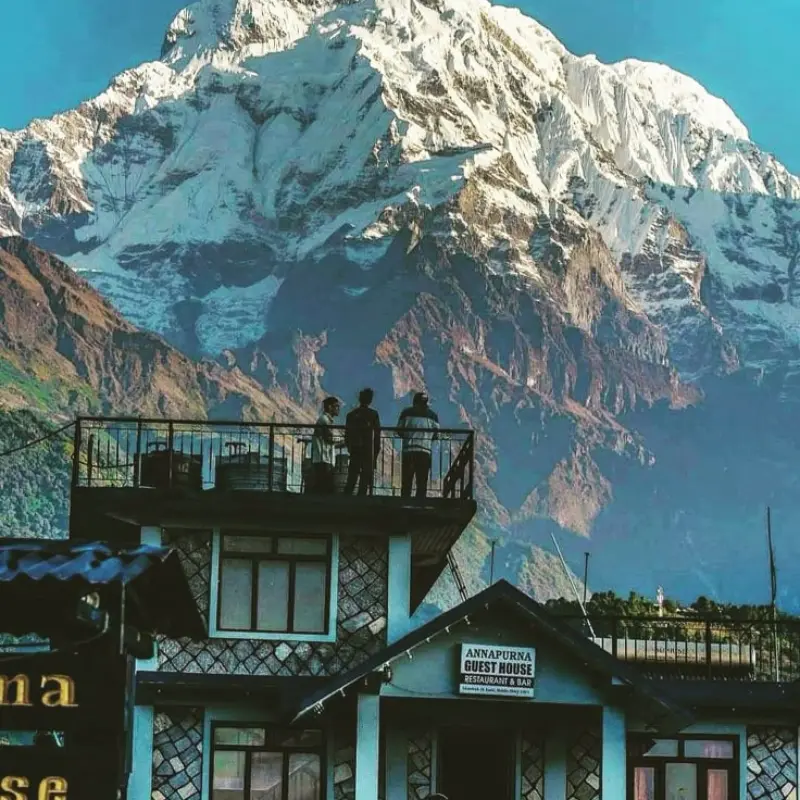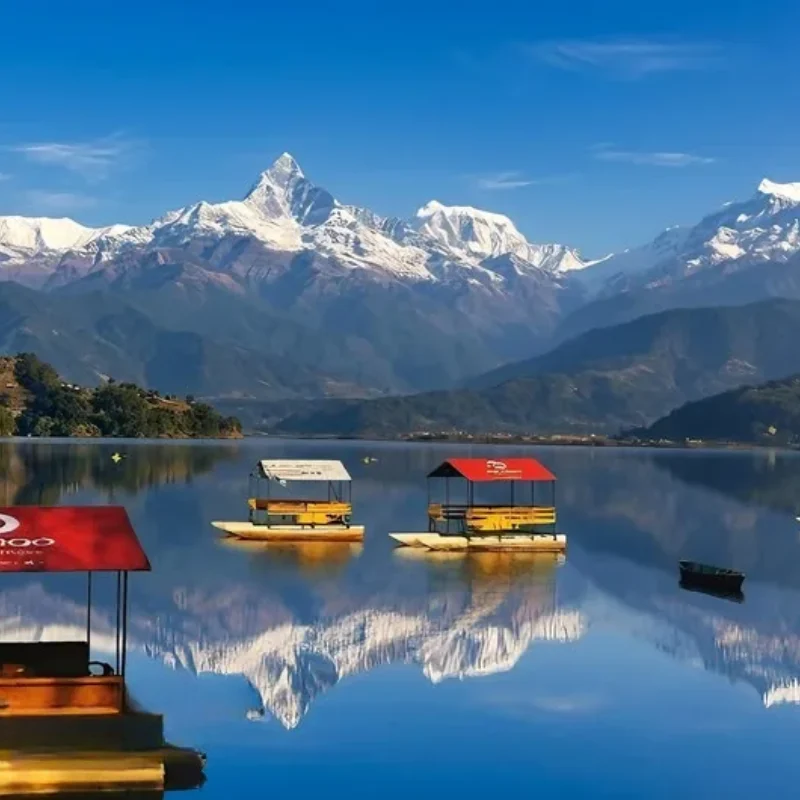
Upper Mustang Jeep Tour — 7 Days | Nepal Lion Tours
Discover the hidden landscapes of Upper Mustang by jeep, exploring ancient villages, dramatic desert valleys, Tibetan-influenced culture, and centuries-old monasteries.



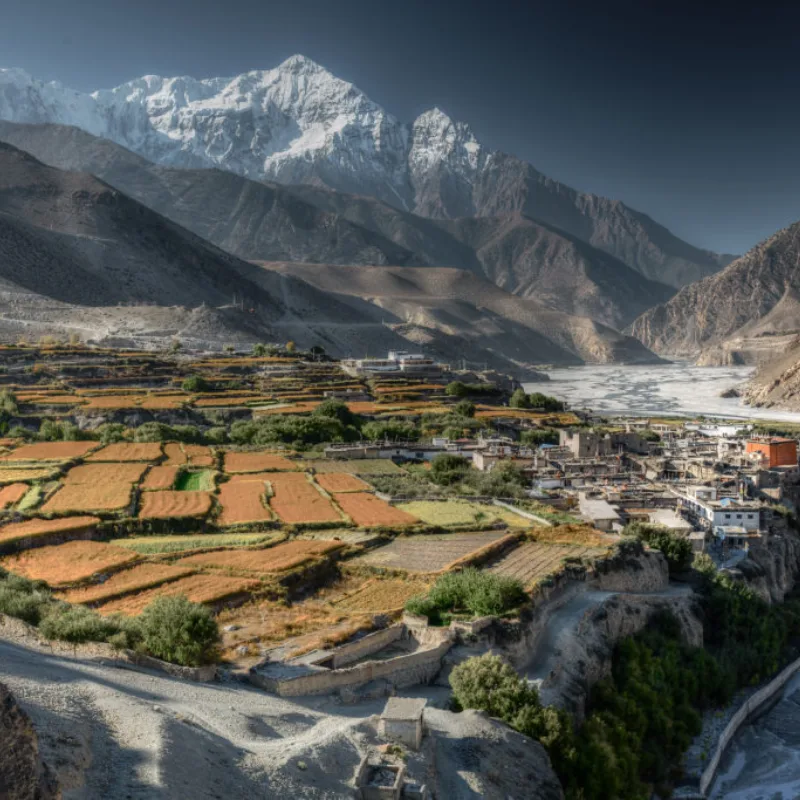
Tour Highlights
A restricted desert kingdom, a walled medieval city, sacred temples and the world’s deepest gorge — covered by 4WD in one week — the Upper Mustang Jeep Tour delivers a new landmark almost daily:
- Lo Manthang — 3,730 m / 12,238 ft: the walled capital of the old Kingdom of Lo, with whitewashed houses, the royal palace, prayer-flag lanes and the region’s densest cluster of ancient monasteries.
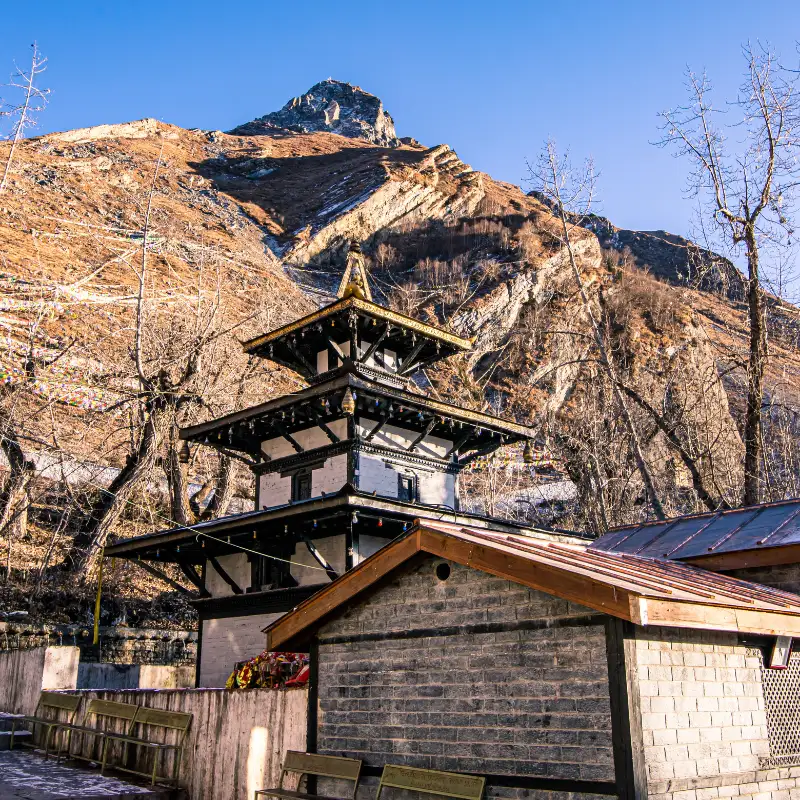
- Muktinath Temple — 3,800 m / 12,467 ft: a sacred Hindu and Buddhist pilgrimage site with 108 water spouts and an eternal flame, reached on the route out of the restricted zone.
- Gharphu Cave: an ancient sky-cave complex in the sandstone cliffs near the route, among the mysterious caves carved high into the canyon walls.
- The canyon desert: the dry, eroded canyons and ochre cliffs between Jomsom and Lo Manthang — a landscape that feels like the Tibet-adjacent desert it is.
- Jomsom — about 2,720 m / 8,924 ft: the gateway town of Mustang at the head of the Kali Gandaki gorge, reached by scenic flight from Pokhara.
- Ghami — about 3,490 m / 11,450 ft: one of Upper Mustang’s oldest villages, a night stop with mani walls, chortens and views over the desert valley toward Nilgiri and Dhaulagiri.
- Pokhara — 822 m / 2,697 ft: the lakeside city closing the loop, with Phewa Lake boating, the World Peace Pagoda and the Lakeside promenade.
- The Thakali villages south of Lo Manthang: apple orchards and Thakali-culture settlements along the return route to Muktinath.
- A 7-day restricted-area loop: the flight-and-jeep format that covers the region’s highlights in one week with 3–7 hour driving days and no camping.
Upper Mustang Jeep Tour Overview
The Upper Mustang Jeep Tour is a 7-day overland tour in Nepal’s Mustang region that explores the former Kingdom of Lo in a 4WD jeep, combining Jomsom, the walled city of Lo Manthang at 3,730 m / 12,238 ft, sacred Muktinath at 3,800 m / 12,467 ft and the lakeside city of Pokhara. Graded Moderate, it suits travellers who want the region’s Tibetan-influenced monasteries, dramatic desert canyons and ancient villages without the heavy trekking of the classic 14-day walk-in itinerary.
The journey starts and ends in Kathmandu. Day one transfers to Pokhara (drive or flight); day two flies to Jomsom at about 2,720 m / 8,924 ft then jeeps north to Ghami at about 3,490 m / 11,450 ft; day three crosses the dry canyon country to Lo Manthang; day four is the walled-city sightseeing day (Gharphu Cave, Jampa, Thupchen and Chhoede monasteries, with an optional Nepal–Tibet border excursion); day five drives south to Muktinath Temple and overnight in Jomsom; day six returns to Pokhara; day seven returns to Kathmandu. In 7 days / 6 nights the tour covers the loop that classic trekkers walk in two weeks.
With Nepal Lion Tours, the Upper Mustang Jeep Tour starts from USD 1,425 per person (Standard tier), stepping down to USD 1,354 (2–4 pax), USD 1,283 (5–9 pax) and USD 1,211 (10+ pax), with a Luxury tier from USD 1,924. The price includes the licensed English-speaking guide, the Pokhara–Jomsom flight and all road transfers, hotels and guest houses, full meals on tour days, all required permits (including the Upper Mustang Restricted Area Permit), the welcome or farewell dinner and the SIM card, map, down jacket, sleeping bag and duffel bag — a fully supported loop where Nepal Lion Tours handles the logistics.
What Makes the Upper Mustang Jeep Tour Special?
The restricted area itself is the draw. Upper Mustang, the former Kingdom of Lo, is one of Nepal’s most protected destinations — entry needs the Restricted Area Permit, the region receives only a few thousand visitors a year, and its Tibetan-Buddhist culture, clay-walled villages and monasteries feel centuries removed from the rest of Nepal. Covering it by jeep means you reach Lo Manthang’s walled city, the sky-cave cliffs, and Muktinath’s 108 water spouts and eternal flame in 4 days inside the zone instead of the 10+ days a trek demands.
It is also a flight-and-jeep loop with no long walking days. The Pokhara–Jomsom flight (~25 minutes) carries the valley legs, the 4WD jeep handles the rough mountain roads north and south, and the group sleeps in guest houses and hotels rather than tents. The tour is ideal for non-trekkers, families, older travellers and anyone on a fixed one-week holiday who still wants the region’s genuine desert-Himalayan atmosphere.
Why Choose the Upper Mustang Jeep Tour?
The practical advantage is the 7-day format with the full Upper Mustang arc. Driving the Jomsom–Ghami–Lo Manthang–Muktinath loop compresses the region’s highlights into one week, keeps daily driving to 3–7 hours with sightseeing stops, and removes the high-altitude trekking and camping of the 14-day version. The Pokhara–Jomsom flight skips the long Kali Gandaki road north, and the Kathmandu–Pokhara transfer can be a drive (6–7 hours) or a ~25–30 minute flight, so every traveller sets the pace they want.
The Luxury tier (from USD 1,924) upgrades the city hotels, support and the cultural dinner, while the Standard tier (from USD 1,425) keeps the same route, guide and permits. Both tiers include the flight, jeeps, meals, accommodation and permits — the only variable is service comfort.
Who Is This 7-Day Tour Suitable For?
- Non-trekkers who want Mustang’s monasteries, walled city and desert landscapes without long walking days.
- Families and older travellers — the jeep format keeps effort low and stops frequent.
- Travellers on a fixed one-week Nepal holiday who want a remote Himalayan loop they can complete in 7 days.
- Culture and history lovers are drawn to the Kingdom of Lo, Lo Manthang’s royal palace and the region’s Tibetan Buddhism.
- Photographers chasing eroded canyons, sky caves, prayer flags and the rain-shadow desert light.
- Spiritual pilgrims for Muktinath Temple, the 108 water spouts and the eternal flame.
- Annapurna trekkers extending a trip with the restricted-area experience they skipped.
- Travellers who prefer driving over trekking and are fine with rough, unpaved mountain roads.
You do not need trekking experience, but the tour does run at altitude — Lo Manthang overnight at 3,730 m / 12,238 ft and Muktinath at 3,800 m / 12,467 ft — and the rough unpaved sections above Jomsom deserve a flexible attitude. The sections below cover the route, permits and logistics in detail.
Guide’s Note — Nepal Lion Tours “With Upper Mustang jeep departures we remind travellers that the permit checkpoint at Kagbeni is the gateway — once you cross it you are inside the restricted zone, and the road north sets the rhythm. From our experience the morning flight to Jomsom is worth every minute; it saves a full day of road and lands you at the start of the desert scenery early.” — Nepal Lion Tours, Mustang Team
Quick Facts
Tour Fact | Details |
|---|---|
Tour Name | Upper Mustang Jeep Tour |
Duration | 7 days / 6 nights |
Region | Mustang, Gandaki, Nepal (restricted area) |
Maximum Altitude | 3,800 m / 12,467 ft at Muktinath; overnight at Lo Manthang 3,730 m / 12,238 ft |
Difficulty | Moderate |
Main Highlight | Lo Manthang (Kingdom of Lo) plus Muktinath Temple and the desert canyons |
Start / End | Kathmandu to Kathmandu |
Route | Kathmandu – Pokhara – Jomsom – Ghami – Lo Manthang – Muktinath – Jomsom – Pokhara – Kathmandu |
Typical Travel | 3–7 hours per day in the jeep, with sightseeing stops |
Best Season | Spring (Mar–May) and autumn (Sep–Nov); rain-shadow means partial monsoon suitability |
Price From | USD 1,425 per person (Standard), USD 1,924 (Luxury) |
Accommodation | Hotels in Pokhara and Kathmandu; guest houses at Ghami, Lo Manthang and Jomsom |
Group Size | 1–10 travellers |
Guide | Licensed English-speaking guide (Chinese, Korean and Hindi guides available) |
Upper Mustang Jeep Tour Route and Itinerary
The route is a clockwise loop of the Mustang massif by flight and 4WD. It runs from Kathmandu to Pokhara, flies to Jomsom, jeeps north through Ghami to Lo Manthang, explores the walled city, drives south through Muktinath to Jomsom, and returns to Pokhara and Kathmandu. The elevation profile starts at 1,400 m / 4,593 ft in Kathmandu, falls to 822 m / 2,697 ft at Pokhara, climbs to 3,800 m / 12,467 ft at Muktinath, and drops back to the valley floor.
Upper Mustang Jeep Tour Route at a Glance
Day | Route | Altitude | Highlights |
|---|---|---|---|
Day 1 | Kathmandu → Pokhara (drive or flight) | 822 m / 2,697 ft | Prithvi Highway, Phewa Lake, Lakeside |
Day 2 | Pokhara → Jomsom (flight) → Ghami (jeep) | about 2,720 m / 8,924 ft | Flight over the Himalaya, 4WD into Upper Mustang |
Day 3 | Ghami → Lo Manthang (jeep) | 3,730 m / 12,238 ft | Canyons, eroded cliffs, the walled city |
Day 4 | Explore Lo Manthang | 3,730 m / 12,238 ft | Gharphu Cave, Jampa, Thupchen, Chhoede monasteries |
Day 5 | Lo Manthang → Muktinath → Jomsom (jeep) | 3,800 m / 12,467 ft | Muktinath Temple, eternal flame, Thakali villages |
Day 6 | Jomsom → Pokhara (flight or drive) | 822 m / 2,697 ft | Aerial or overland return, free evening |
Day 7 | Pokhara → Kathmandu (drive or flight) | 1,400 m / 4,593 ft | Return transfer, tour ends |
Upper Mustang Jeep Tour Elevation Profile
The profile is a single altitude arc with a gentle middle. It starts at Kathmandu at 1,400 m / 4,593 ft, drops to Pokhara at 822 m / 2,697 ft on day one, and climbs steadily through Jomsom at about 2,720 m / 8,924 ft and Ghami at about 3,490 m / 11,450 ft to the tour’s highest overnight stops — Lo Manthang at 3,730 m / 12,238 ft and Muktinath at 3,800 m / 12,467 ft. From Muktinath the route falls back through Jomsom and Pokhara to Kathmandu, so the high-altitude section is compressed into Days 2–5 with a gradual ascent each day. Because you sleep at the highest villages rather than walk over passes, the altitude is manageable — but every traveller feels 3,800 m / 12,467 ft more than they expect at 0 effort. The full profile and a route map are included with your Nepal Lion Tours materials.
How to Get to the Upper Mustang Jeep Tour
The tour’s first legs are transfers, and Nepal Lion Tours coordinates them all: Kathmandu to Pokhara (drive or flight), the Pokhara–Jomsom flight, and the Pokhara–Kathmandu return. From Jomsom the journey continues by 4WD jeep, which stays with the group through the restricted zone and back.
Kathmandu to Pokhara: Drive or Flight
You choose the pace. The drive runs about 6–7 hours on the Prithvi Highway, through the Trishuli valley, green hills, terraced farmland and riverside villages — scenic and cheap. The flight takes roughly 25–30 minutes from Kathmandu’s domestic terminal to Pokhara and is the faster option for one-week itineraries.
Option | Approx. Travel Time | Best For |
|---|---|---|
Domestic flight Kathmandu → Pokhara | Around 25–30 minutes | Fast transfers, one-week itineraries |
Private road transfer on the Prithvi Highway | Around 6–7 hours | Scenery, flexible stops, budget-friendly |
Nepal Lion Tours arranges the chosen option with the group size; the drive is more comfortable with a private vehicle and the flight is simpler for shorter trips. Both end in Pokhara’s Lakeside, where day one finishes beside Phewa Lake.
Pokhara to Jomsom: The Gateway Flight
The Pokhara–Jomsom flight is the journey’s defining transfer — approximately 25 minutes over the Annapurna and Dhaulagiri ranges, landing at Mustang’s gateway town at the head of the Kali Gandaki gorge. Flights are weather-dependent, especially in the afternoon, which is why the itinerary schedules the morning departure. If flight weather closes, the overland alternative via road is arranged instead — Nepal Lion Tours confirms the option at booking and keeps the following jeep itinerary flexible.
Jomsom to Lo Manthang: The 4WD Entry
From Jomsom the 4WD jeep enters the restricted zone after the Kagbeni checkpoint and climbs north through the desert canyons to Ghami (day two) and Lo Manthang (day three). The road is rough, unpaved and narrow in places, crossing stream beds and eroded barriers — the reason the tour uses suitable off-road vehicles. Driving time runs 3–7 hours a day with sightseeing and photography stops; your guide confirms each day’s road condition with local drivers.
Returning After the Tour
The return mirrors the approach: Day 5 drives from Lo Manthang through Muktinath to Jomsom, Day 6 returns to Pokhara by the ~25-minute flight (or the longer overland route), and Day 7 finishes with the drive (6–7 hours) or flight (~35 minutes) Pokhara–Kathmandu. Nepal Lion Tours transfers you to your hotel in Kathmandu or directly to the international airport according to your schedule.
A Practical Tip for International Travellers
Do not schedule your international departure too tightly on Day 7. The Pokhara–Kathmandu road leg needs 6–7 hours with breaks, so Nepal Lion Tours recommends one buffer night in Kathmandu after the final transfer — enough for the welcome or farewell dinner and safe against any flight or road delays before you fly out.
Guide’s Note — Nepal Lion Tours “From our experience running Upper Mustang departures, the two moments travellers underestimate are the early Pokhara–Jomsom flight and the bumpy Ghami–Lo Manthang road. We recommend an early breakfast, a camera ready on the flight, and no tight onward plans on Day 5 — the best monasteries deserve unhurried time.” — Nepal Lion Tours, Mustang Team
Upper Mustang Jeep Tour Difficulty, Fitness & Altitude
The tour is graded Moderate — not because of walking, but because of altitude and rough roads. There is almost no trekking: daily movement is 3–7 hours in a 4WD jeep with short sightseeing walks at monasteries, temples and viewpoints. The genuine demands are the high desert altitude (overnights at 3,730–3,800 m / 12,238–12,467 ft) and the long, unpaved mountain road sections around Upper Mustang.
Where the Effort Actually Is
- The altitude, not the exertion: the highest nights — Lo Manthang at 3,730 m / 12,238 ft and Muktinath at 3,800 m / 12,467 ft — bring real altitude effects to even non-trekkers, made sharper by getting there by vehicle rather than on foot.
- The rough road days: the Jomsom–Ghami and Ghami–Lo Manthang drives are 4–7 hours on narrow, unpaved mountain roads, with stream crossings and switchbacks that demand steady drivers and a flexible schedule.
- The early-morning flight rhythm: the Pokhara–Jomsom flight leaves early and the Lo Manthang sightseeing day runs 6–8 hours, so mornings start early and evenings end with early dinners.
The tour is genuinely suitable for non-trekkers, families and older travellers — the effort is a couple of hours of stepped walking a day at altitude, not consecutive trekking days. Anyone able to manage long jeep travel and gentle at-times-steep paths at 3,000–3,800 m will enjoy it.
How to Prepare for the Upper Mustang Jeep Tour
- Get comfortable with altitude: arrive in Nepal 2–3 days early and spend time in Kathmandu (1,400 m / 4,593 ft) and Pokhara before the high section.
- Walking a little daily — 20–40 minutes of steps and hills in the weeks before keeps the monastery paths easy.
- Prepare for jeep hours: take motion-sickness advice if long winding drives bother you — the canyon roads are serene but wiggly.
- Pack for cold mornings: Lo Manthang and Muktinath drop near 0 °C in spring and autumn mornings; layers matter more than fitness.
- Drink plenty of water from day one — hydration smooths the altitude transition.
- Keep the schedule flexible — flight weather and road conditions occasionally move a leg by half a day.
How Difficult Is the Upper Mustang Jeep Tour Compared with Trekking It?
Considerably easier in effort, similar in altitude. The 14-day Upper Mustang Trek walks most of the same route with mountain passes and consecutive 5–8 hour walking days; the jeep tour covers the loop with driving days and sightseeing stops in 7 days. The altitude experience is comparable — both versions sleep at Lo Manthang and Muktinath — but the jeep version carries none of the physical load and none of the camping, which is exactly why it suits non-trekkers.
Altitude, Acclimatization & Safety
The tour reaches 3,800 m / 12,467 ft at Muktinath and sleeps at 3,730 m / 12,238 ft in Lo Manthang, so altitude awareness matters even though you are not trekking. Because you travel up in a vehicle and down in a vehicle, the ascent is easier than walking it — but the body still needs to adapt, and Nepal Lion Tours’ guide monitors symptoms throughout the high section.
Upper Mustang Jeep Tour Altitude Profile
- Kathmandu — 1,400 m / 4,593 ft: arrival city and first night.
- Pokhara — 822 m / 2,697 ft: lakeside base on days one and six.
- Jomsom — about 2,720 m / 8,924 ft: Mustang gateway and overnight on day five.
- Ghami — about 3,490 m / 11,450 ft: overnight in the restricted zone on day two.
- Lo Manthang — 3,730 m / 12,238 ft: walled capital, nights on days three and four.
- Muktinath — 3,800 m / 12,467 ft: the tour’s highest point, on the day-five drive out.
- Back to Pokhara and Kathmandu: the descent returns you to 822 m / 2,697 ft and 1,400 m / 4,593 ft by day seven.
How the Body Adapts to Altitude
Above 2,500 m / 8,202 ft the body acclimatizes gradually: breathing quickens, resting heart rate rises and sleep thins. The itinerary helps — the ascent is spread over three days (Jomsom, Ghami, then Lo Manthang), each overnight is higher but manageable, and the vehicle keeps physical demand low. Drink 2–3 litres a day, eat at the guest houses, sleep early at Lo Manthang and tell the guide about anything unusual.
Symptoms of Altitude Sickness to Watch For
Mild symptoms (normal, worth monitoring): headache, loss of appetite, nausea, disturbed sleep, mild fatigue.
More concerning symptoms (act immediately): vomiting, worsening headache at rest, confusion, breathlessness at rest, unsteady walking or unusual drowsiness.
The response is simple: stop ascending, tell the guide, rest or descend. The jeep actually helps here — a vehicle can drive down from Lo Manthang to Jomsom within a couple of hours if needed, which is a genuine safety advantage of the format.
How Nepal Lion Tours Supports Altitude Safety
- Gradual vehicle ascent with overnights split across Jomsom, Ghami and Lo Manthang.
- Licensed, experienced guides who monitor altitude symptoms and adjust the day’s plan.
- Early communication — travellers are encouraged to report any symptom without waiting.
- Vehicle descent flexibility — a jeep can bring the group down quickly if symptoms develop.
- Health-and-safety standard — travel insurance covering altitude travel in Nepal and evacuation is recommended and reviewed before departure.
Guide’s Note — Nepal Lion Tours “On the jeep tour we remind first-timers that altitude works on the vehicle as much as on foot — the eye goes from Jomsom to Lo Manthang in hours, so the pace up matters more than the walking. From our experience, arriving with two gentle days in Kathmandu or Pokhara behind you makes the Lo Manthang night noticeably easier, and the guide will happily pace the sightseeing day to how the group actually feels.” — Nepal Lion Tours, Mustang Team
Best Time to Tour Upper Mustang
The best time is spring (March–May) and autumn (September–November) for clear skies, dry roads and the region’s sharpest desert light. Because Upper Mustang lies in the Himalayan rain shadow, it also runs through parts of the monsoon (June–September) when the rest of Nepal is wet — roads stay drier than in the south, though access flights can still be disrupted.
Season | Months | Weather & Road Conditions | Mountain Views | Overall |
|---|---|---|---|---|
Autumn | Sep–Nov | Dry roads, stable flights, cool clear days | Excellent | Best overall |
Spring | Mar–May | Warm days, possible spring blooms, dusty roads | Very good | Highly recommended |
Winter | Dec–Feb | Cold nights, possible light snow high up | Good on clear days | Possible with preparation |
Monsoon | Jun–Aug | Rain-shadow keeps roads drier than the south | Limited in cloud | Possible but weather-dependent |
Autumn — September to November
Autumn is the finest window. After the monsoon drains, the rain-shadow desert stays dry, the Pokhara–Jomsom flight runs most reliably, and the Annapurna and Dhaulagiri walls stand out against the ochre canyons. October offers the most stable weather; November brings colder mornings and quieter villages. Nepal Lion Tours books the Pokhara–Jomsom flight and Lo Manthang guest houses well ahead in October.
Spring — March to May
Spring is the strong second choice. Days warm quickly, apple orchards and barley fields green up in the villages, and mornings stay clear for the Jomsom flight and the monastery walks. April is the peak; May warms further with afternoon wind in the canyons. The region’s famous Tiji Festival falls in this window — festivals around Lo Manthang are possible additions for spring departures.
Winter — December to February
Winter is possible for prepared travellers. Days stay bright and cold, nights drop below -5 °C at Lo Manthang, and the high passes and roads can hold light snow for short periods. Flights are more weather-prone and guest houses thinner, but the empty walls of Lo Manthang in winter light reward flexible travellers. Nepal Lion Tours runs winter departures with careful checks.
Monsoon — June to August
Monsoon is an unusual but real option, thanks to the rain shadow: Upper Mustang receives far less rain than the rest of Nepal, and the desert canyons and green-carpet valleys take on a short-lived bloom. The catch is cloud-on-and-off around Jomsom, which can delay the small Pokhara–Jomsom flights — travellers need flexibility. Nepal Lion Tours recommends the June and early-September edges of the season if dates are fixed.
Which Season Should You Choose?
Choose autumn (September–November) for the most reliable flights, driest roads and clearest views — the best overall window. Choose spring (March–May) for warm days and festival potential. Choose winter for solitude and cold-clear skies, and treat monsoon as weather-dependent rather than impossible. Whichever you pick, check the Jomsom forecast before departure and keep a buffer day before your international flight.
Guide’s Note — Nepal Lion Tours “On clear autumn mornings the flight from Pokhara to Jomsom opens the whole trip — Dhaulagiri on the left, Annapurna on the right, then the desert dropping away under the wings. From our experience October gives the steadiest skies, and the Lo Manthang morning light is at its best before the canyon wind picks up.” — Nepal Lion Tours, Mustang Team
Upper Mustang Jeep Tour Permits & Regulations
Upper Mustang is a restricted area of Nepal, so the tour requires the Upper Mustang Restricted Area Permit in addition to the Annapurna Conservation Area Permit (ACAP) — the whole Mustang region lies inside the ACAP — and, where required, a TIMS card. Nepal Lion Tours arranges all permits as part of the package, and your guide presents the documents at the Kagbeni checkpoint (entry to the restricted zone) and at Lo Manthang.
Upper Mustang Jeep Tour Permits at a Glance
Requirement | Who Needs It? | Who Arranges It? |
|---|---|---|
Restricted Area Permit (RAP) for Upper Mustang | All foreign and SAARC travellers entering the zone north of Kagbeni | Nepal Lion Tours |
Annapurna Conservation Area Permit (ACAP) | Foreign and SAARC travellers in the ACAP | Nepal Lion Tours |
TIMS Card (where required) | Travellers on applicable routes | Nepal Lion Tours |
Upper Mustang Restricted Area Permit (RAP)
The Restricted Area Permit is the defining paperwork of this tour. Since late 2025 the fee is USD 50 per person per day inside the restricted zone — replacing the old USD 500 for 10 days flat fee — so a 7-day tour with about 4 days in the zone (Ghami to Muktinath) works out to roughly USD 200 per person, depending on the nights logged at the checkpoints. The permit is issued only through a registered trekking agency in Kathmandu, priced in USD, and checked at Kagbeni on entry and Lo Manthang on arrival. Nepal Lion Tours arranges it before departure and confirms the exact current fee at booking — government rates and rules can change without notice.
Annapurna Conservation Area Permit (ACAP)
The ACAP covers the entire Mustang region, part of the Annapurna Conservation Area. It costs around NPR 3,000 for foreign travellers and NPR 1,000 for SAARC nationals (fees can be revised — confirm at booking), and it is required alongside the RAP for the sections through the conservation area. Nepal Lion Tours arranges the ACAP with your RAP.
TIMS Card
Where required by current regulations, the TIMS (Trekkers’ Information Management System) card records travellers’ routes and emergency contacts. Its cost varies by nationality and regulation, and Nepal Lion Tours includes the applicable registration at booking. Checkpoints on the Jomsom axis accept the combined permit set you receive.
Is the Nepal–Tibet Border Visit a Separate Permit?
No separate border permit is needed for the tour itself, and the optional Nepal–Tibet border excursion is included as a sightseeing option in the Lo Manthang area only when current access regulations, security requirements, road conditions and local permissions allow. Nepal Lion Tours confirms the option’s availability with the local office before each departure — the border itself is not crossed by the tour.
Who Arranges the Permits?
Nepal Lion Tours arranges the Restricted Area Permit, ACAP and any applicable TIMS card as part of pre-tour paperwork. Carry your original passport for the Kagbeni and Lo Manthang checkpoints, keep the documents in your daypack on driving days, and note that fees and rules can be revised by the government — the current figures are confirmed at booking.
Food & Accommodation on the Upper Mustang Jeep Tour
The tour alternates between city hotels in Pokhara and Kathmandu and family-run guest houses in the Mustang villages — Ghami, Lo Manthang and Jomsom. Standards are higher in Pokhara and the valleys; the guest houses of Upper Mustang are simple, clean and heated by communal stoves, and Nepal Lion Tours guides coordinate beds and menus throughout.
Guest House and Hotel Accommodation
- Pokhara and Kathmandu — hotels with private bathrooms, hot water and reliable dining, on Days 1, 6 and 7.
- Jomsom — guest house on Day 5, with simple twin rooms and shared bathrooms.
- Ghami — guest house on Day 2, a village stop with basic but welcoming rooms.
- Lo Manthang — guest houses for two nights (Days 3–4), the tour’s classic stop with traditional guest houses inside the walled city.
- Heating — communal wood-fired stove rooms at the Upper Mustang stops, where evenings end early.
- Hot water — hot showers are the exception rather than the rule at Ghami and Lo Manthang; solar water is used where available, and a basin wash is the honest plan.
- Dining — guest houses serve set meals at fixed times; the guide orders ahead so the kitchen is ready when the jeep arrives.
What Food Is Available on the Tour?
Mustang guest houses serve the classic Nepali mountain menu with Tibetan touches: dal bhat, thukpa (Tibetan soup-noodles), momos, Tibetan bread, fried rice, pasta, potatoes, eggs and local apple products — Mustang is Nepal’s apple country, and apple pie and local apple cider at Jomsom and Marpha are genuine highlights. Dal bhat remains the reliable hot meal, and vegetarian options are the default. Tell Nepal Lion Tours about vegan, gluten-free or allergy needs at booking so kitchens prepare alternatives.
What Food and Accommodation Are Included?
Included in the Tour Package | Usually Paid Separately |
|---|---|
Breakfast, lunch and dinner on tour days (per the itinerary) | Drinks beyond the daily coffee or tea, apple cider purchases, snacks |
Hotels in Pokhara and Kathmandu, guest houses on the Mustang loop | Extra nights in Kathmandu or Pokhara |
Coffee or tea with meals | Hot showers (where available), bar bills, laundry |
Welcome or farewell dinner at a cultural restaurant (complimentary) | Tips for the guide and drivers |
Meals include Breakfast, Lunch and Dinner on Days 1–6, while Day 7 lists breakfast before the return transfer — confirming the final breakdown at booking.
Drinking Water on the Tour
Do not assume tap water is safe. Use bottled, boiled or treated water from guest houses and hotels, or a reusable bottle with purification tablets or a filter. In the high villages, boil-and-cool water at the guest house and carry 1–2 litres in the jeep each day — hydration is the easiest altitude protection on the tour.
Staying Comfortable on the Road
- Bring a refillable water bottle plus purification tablets or a filter.
- Pack a daypack for the jeep days — water, layers, camera and documents ride with you.
- Keep warm layers and a headlamp at hand for the early flight and cold Lo Manthang evenings.
- Carry cash in NPR — the loop’s guest houses take cash only, and ATMs exist only in Pokhara and Jomsom.
- Ask the guide about dinner timing — Lo Manthang kitchens close early and the stove room is the evening gathering point.
Why Book with Nepal Lion Tours?
Nepal Lion Tours is a registered trekking company based in Kathmandu that operates the Upper Mustang Jeep Tour as a private departure, with one point of contact from enquiry to return. Seven reasons travellers choose us for this restricted-area journey:
- Local, licensed English-speaking guides.
Every departure is led by a government-licensed guide who knows the Jomsom–Ghami–Lo Manthang–Muktinath route personally — the same guides who coordinate the jeep drivers, the checkpoints and the guest houses.
- A registered trekking company you can verify.
Based in Kathmandu, Nepal Lion Tours operates legally as a local agency; company and licence details are provided to travellers on request before booking.
- Private departures from two travellers.
The tour runs as a private trip with your own dates, vehicle and pace — couples, families and friends travel together rather than joining a fixed departure.
- The Restricted Area Permit handled for you.
Nepal Lion Tours arranges the Upper Mustang RAP, ACAP and applicable TIMS as part of the package — the single most complex step of visiting the Kingdom of Lo is done before you fly.
- Flights, jeeps and transfers at one price.
The Kathmandu–Pokhara transfer, Pokhara–Jomsom flight, all four-wheel-drive legs and the Pokhara–Kathmandu return are scheduled and included, so no part of the loop depends on self-arranged transport.
- Transparent pricing without cutting the real experiences.
From USD 1,425 (Standard) or USD 1,924 (Luxury), the difference sits in hotel comfort and service — not in removing Lo Manthang, Muktinath or the canyon drives from the route.
- A local team you can contact before and during the tour.
From your WhatsApp enquiry at +977-9851039020 to the return to Kathmandu, Nepal Lion Tours keeps one direct point of contact for you and your family back home.
Book the Upper Mustang Jeep Tour
A restricted desert kingdom, a walled medieval city, sacred temples and the deepest gorge on Earth — covered by flight and 4WD in 7 days — the Upper Mustang Jeep Tour is the region’s most complete short itinerary, and spring and autumn dates fill the Lo Manthang guest houses early.
Tour at a Glance
- Duration: 7 days / 6 nights
- Price: From USD 1,425 per person (Standard); USD 1,924 (Luxury); group discounts on both tiers
- Difficulty: Moderate — minimal walking, long jeep hours, altitudes to 3,800 m / 12,467 ft
- Maximum Altitude: 3,800 m / 12,467 ft at Muktinath; overnight at Lo Manthang 3,730 m / 12,238 ft
- Accommodation: Hotels in Pokhara and Kathmandu; guest houses at Ghami, Lo Manthang and Jomsom
- Meals: Breakfast, lunch and dinner on tour days (breakfast on Day 7)
- Permits & Registration: Upper Mustang Restricted Area Permit, ACAP and applicable TIMS arranged by Nepal Lion Tours
- Transportation: Pokhara–Jomsom flight, 4WD jeep for the Mustang loop, and Kathmandu–Pokhara transfers (drive or flight)
- Guide: Licensed English-speaking guide (Chinese, Korean and Hindi available)
- Cancellation: Free cancellation up to 14 days before departure (subject to booking terms)
Ready to Start Your Mustang Adventure?
Send your preferred dates, group size and tier (Standard or Luxury) through the booking form or WhatsApp at +977-9851039020, and Nepal Lion Tours will confirm the Restricted Area Permit, the Pokhara–Jomsom flight and Lo Manthang guest house space before you commit. Whether you travel solo, as a couple, with friends or family, we will help you prepare — from the Kathmandu briefing to the prayer flags at Lo Manthang. Your Wall is waiting — choose your dates and start planning your journey today.
Related Mustang and Annapurna Tours
If the Upper Mustang Jeep Tour suits you but you want to compare formats — or if the region tempts you toward the walking version — the Nepal Lion Tours selection around Mustang and the Annapurnas covers both:
Tour | Duration | Difficulty | Max Altitude | Best For |
|---|---|---|---|---|
Ghorepani Poon Hill Luxury Trekking | 6 days | Moderate | 3,210 m / 10,531 ft | Short mountain sunrise without a jeep |
Lower Mustang Trekking | 9 days | Moderate | 3,750 m / 12,303 ft | Walking the Kali Gandaki below the restricted zone |
Upper Mustang Trekking | 14 days | Moderate | 4,100 m / 13,451 ft | The full trekking route into the Kingdom of Lo |
Mustang Tiji Festival Tour | 12 days | Easy | 3,950 m / 12,959 ft | Lo Manthang’s spring festival in full pageant |
Annapurna Circuit Luxury Trek | 13 days | Challenging | 5,416 m / 17,769 ft | Full circuit with Thorong La and Tilicho Lake |
Annapurna Circuit Trek With Tilicho Lake | 15 days | Challenging | 5,416 m / 17,769 ft | Complete circuit with Tilicho and Poon Hill |
All of these run through the same Jomsom and Pokhara hubs and combine easily with a Chitwan Jungle Safari or a Kathmandu heritage few days. If you want Lo Manthang on foot rather than by jeep, Nepal Lion Tours can also adapt the 14-day Upper Mustang Trek to your dates.
Trip Essentials
Packing advice, required equipment & gear recommendations
Essential
Upper Mustang Jeep Tour Packing List
This is a vehicle-based tour with short walking stints, so pack smart, layered and compact — your luggage rides in the jeep, and your daypack carries what the day needs. Nepal Lion Tours provides the down jacket, all-season sleeping bag, duffel bag, SIM card and route map, so your own list focuses on personal gear for cold desert nights and warm valley days.
Gear for the Tour
- Comfortable walking shoes (broken-in) for monastery paths and viewpoints — trekking boots are optional.
- 20 litre daypack with rain cover, used on every driving day.
- Water bottle (1–2 L) plus purification tablets or a filter.
- Headlamp with spare batteries for cold, early Lo Manthang evenings.
- Power bank (10,000–20,000 mAh) — guest-house power is limited in Upper Mustang.
- A small camera or phone with storage — the canyon light rewards a real lens.
Clothing: Layers for Desert Cold and Valley Warmth
Base layers: 1–2 merino or synthetic tops; 3 pairs of trekking socks. Mid-layers: fleece or soft-shell jacket; thermal leggings for Lo Manthang mornings. Outer layers: windproof and water-resistant jacket for the jeep open-edge stops; the loaned down jacket for cold nights. Day clothes: 2 pairs of comfortable long trousers; 1–2 light tops; a sun hat for the exposed valley hours. Headwear and gloves: warm beanie; light gloves for 0 °C spring/autumn mornings; sun gloves for driving windows.
Sleeping and Evening Comfort
- Nepal Lion Tours loaned sleeping bag over the guest-house bedding at Lo Manthang.
- Silk or cotton sleep liner for hygiene at village stops.
- Light slippers or sandals for guest-house evenings.
- Warm camp-style jacket or fleece for the stove-room nights.
Toiletries and Personal Health Items
Sun cream (SPF 50+), lip balm with SPF, toothbrush and paste, biodegradable soap and shampoo, wet wipes, hand sanitiser, quick-dry towel, personal first-aid basics (plasters, blister care, paracetamol, rehydration salts), altitude medication as advised by your doctor and personal prescriptions with spares.
Electronics
Smartphone, power bank (10,000–20,000 mAh), headlamp plus spare batteries, camera or GoPro with storage. The included SIM card keeps you connected at populated stops; Upper Mustang’s villages have little or no signal, and Lo Manthang guest houses charge devices by solar and generator hours.
Documents and Money
- Original passport with visa — needed for the Kagbeni and Lo Manthang checkpoints.
- Permit documents provided by Nepal Lion Tours.
- Travel insurance documents covering tour travel in Nepal and emergency evacuation.
- Cash in NPR — the guest houses of Upper Mustang take cash only; ATMs exist in Kathmandu, Pokhara and Jomsom but not on the loop.
- Optional international card for the Pokhara and Kathmandu hotel nights.
How Much Should You Pack?
Lighter is genuinely better on a jeep tour. Aim for one medium duffel or 40–60 litre rucksack (the loaned duffel bag holds it) plus the 20 litre daypack with water, layers, camera and documents for each driving day. The overnight load-out each evening is just your high-altitude layer, headlamp and toiletries — everything else can stay in the vehicle. Pack the essentials in an outer compartment and keep valuables and medicines in your daypack at all times.
Read Before You Book
Permits, terms, medical considerations & advisory guidelines
Advisory
What to Know Before Booking
Here is the practical fine print for the Upper Mustang Jeep Tour, covering the details that affect comfort, cost and planning before you book.
Permits and the Restricted Area
The tour enters one of Nepal’s restricted areas, so the Restricted Area Permit (about USD 50 per person per day inside the zone) plus the ACAP and applicable TIMS are included and arranged by Nepal Lion Tours — carry your original passport for the Kagbeni checkpoint and the Lo Manthang check. Rules and fees can change; confirm the current amount at booking.
Accommodation and Facilities
The tour uses hotels in Pokhara and Kathmandu (Days 1, 6 and 7) and simple family guest houses in Ghami, Lo Manthang and Jomsom (Days 2–5). At the Upper Mustang stops expect stove-heated dining rooms, basic twin rooms, shared bathrooms, limited hot water and little electricity — part of the region’s authentic character, and exactly why the Luxury tier is a hotel-and-service upgrade, not a change of villages.
Food and Dietary Requirements
Breakfast, lunch and dinner are included on Days 1–6, with breakfast on Day 7. Menus mix dal bhat, thukpa, momos, Tibetan bread and fried rice, with Vegetarian options as standard and Mustang apples a real treat. Tell Nepal Lion Tours about vegan, gluten-free or allergy needs at booking so the guest-house kitchens are warned.
Altitude, Health and Insurance
The tour sleeps at 3,730 m / 12,238 ft (Lo Manthang) and reaches 3,800 m / 12,467 ft (Muktinath), so mild altitude symptoms are common and headaches, appetite and sleep should be watched through Days 3–5. Insurance covering altitude travel and emergency evacuation is strongly recommended and confirmed by Nepal Lion Tours before departure. The high passes of the loop are mild, but altitude is real.
Money and Tipping
Carry NPR cash — the village guest houses accept cash only, and ATMs exist only in Kathmandu, Pokhara and Jomsom. Tipping is voluntary but customary: a guideline for the tour is USD 10–15 per day per guide and a shared amount for the jeep drivers, adjusted to the service delivered.
Culture and Responsible Trekking
- Respect the monasteries — remove shoes where required and keep noise low, especially at Jampa, Thupchen and Chhoede.
- Photograph people politely and ask first, particularly in the small villages.
- Leave no trace in the desert — carry out wrappers and plastic bottles.
- Do not climb the sky-cave walls — the cave sites are fragile and some are sacred.
- Dress modestly at Muktinath and follow your guide’s lead at the water spouts and eternal flame.
- Support the guest houses fairly — buying tea, apple cider or meals where you sleep keeps the villages sustainable.
Route Options
The standard tour is the 7-day flight-and-jeep loop. Variations available with Nepal Lion Tours include the 14-day Upper Mustang Trek (walking the route), the 12-day Mustang Tiji Festival Tour (spring festival window), a longer jeep itinerary with a second Lo Manthang day or a Muktinath–Tatopani extension, and the Lower Mustang Trekking option for travellers who prefer a non-restricted walking alternative.
Booking and Before You Arrive
- Understand the Standard vs Luxury pricing tiers — the difference is hotel comfort and service, not route.
- Confirm that the permits (RAP, ACAP, TIMS) are included — they are stated as included in the package.
- Decide the Kathmandu–Pokhara and Pokhara–Kathmandu legs — drive or flight — at booking so transfers are scheduled.
- Arrive in Kathmandu 2 days before the tour for the briefing and to settle altitude.
- Keep one buffer night in Kathmandu after Day 7 for flight and road safety.
- Arrange your own international flights, Nepal visa and insurance.
- Share any health, age or dietary notes with Nepal Lion Tours before arrival.
A Few Final Tips
Be ready for an early second morning — the Pokhara–Jomsom flight leaves before breakfast-settled hours. Take headache medicine and water everywhere on the loop. Buy apple products at Jomsom on the way back. And remember: the restricted zone is the point — the permit, the checkpoints and the centuries-old walled city are what make this tour unlike anywhere else in Nepal.
Day-by-Day Itinerary
Explore each day's route, trekking elevation, and activities
Your Upper Mustang adventure begins with a scenic journey from Kathmandu to the beautiful lakeside city of Pokhara. You can choose between a comfortable drive or a short domestic flight.
If you travel by road, enjoy the changing scenery along the Prithvi Highway, including winding rivers, green hills, terraced farmland, and traditional villages. After reaching Pokhara, you can relax beside the peaceful Phewa Lake or explore the lively Lakeside area, known for its restaurants, cafés, shops, and relaxed atmosphere.
We begin the morning with a scenic flight from Pokhara to Jomsom, the main gateway to the Mustang region. The short flight offers spectacular views of the surrounding Himalayan peaks and valleys.
After arriving in Jomsom, we continue our journey by jeep toward Ghami. The off-road route takes us through the rugged landscapes of Lower and Upper Mustang, passing traditional settlements, barren hills, and dramatic desert-like scenery.
Our destination is Ghami, one of the oldest and culturally significant villages in Upper Mustang, where we spend the night.
Today, we continue deeper into the remote and fascinating landscapes of Upper Mustang. The road winds through dry valleys, steep canyons, eroded cliffs, and high-altitude terrain as we approach Lo Manthang.
Upon arrival, you will have your first opportunity to explore this historic walled city. Lo Manthang is famous for its traditional whitewashed houses, ancient monasteries, royal palace, and distinctive Tibetan-influenced culture.
Take some time to settle in and enjoy the unique atmosphere of this remarkable Himalayan settlement.
Today is dedicated to discovering the cultural and historical treasures of Lo Manthang and its surrounding areas.
We explore important attractions, including the historic Gharphu Cave and ancient monasteries such as Jampa, Thupchen, and Chhoede. An optional excursion toward the Nepal–Tibet border can also be arranged depending on local conditions and accessibility.
Throughout the day, you can learn about the fascinating history and traditions of the region while observing the unique architecture and lifestyle of the local communities.
This exploration provides a deeper understanding of Upper Mustang's ancient Buddhist heritage and distinctive Tibetan-influenced culture.
We leave Lo Manthang and begin our scenic drive toward Muktinath. Located at a high altitude, Muktinath is one of the most important pilgrimage destinations in Nepal and holds great religious significance for both Hindus and Buddhists.
Upon arrival, we have time to visit the sacred Muktinath Temple and its famous eternal flame before continuing our journey toward Jomsom.
The drive offers impressive views of the Annapurna and Dhaulagiri mountain ranges while passing through traditional villages and settlements influenced by Thakali culture.
We arrive in Jomsom and spend the night there.
Today, we return from Jomsom to Pokhara. You can choose between a scenic morning flight or an adventurous overland journey by road.
The flight provides wonderful aerial views of the Himalayan landscape, while the road journey allows you to experience the changing scenery at a slower pace.
After arriving in Pokhara, the remainder of the day is free for relaxation or optional activities. You may enjoy boating on Phewa Lake, visit the World Peace Pagoda, explore the Lakeside area, or sample local and international cuisine at one of the city's many restaurants.
Today marks the final day of your Upper Mustang journey. After breakfast, you can either take a scenic drive from Pokhara to Kathmandu or choose a short domestic flight.
The road journey takes you through the beautiful hills, valleys, rivers, and rural landscapes of central Nepal, while the flight offers a quicker and convenient alternative.
Upon reaching Kathmandu, our representative will transfer you to your hotel or directly to the airport according to your travel schedule.
Your Upper Mustang adventure concludes with unforgettable memories of the region's dramatic landscapes, ancient settlements, sacred sites, and unique Himalayan culture.
Want to customize this itinerary?
Tailor duration, lodges, acclimatization days, or add private helicopter flights.
Inclusions & Exclusions
Everything that is covered and what you'll need to budget separately
What is Included
Fully covered in your package price
- Airport pickup and drop services on a private vehicle
- Transportation from Kathmandu to Lukla and back to Kathmandu (by flight)
- Food (Breakfast, Lunch, Dinner and a cup of coffee or tea) and accommodations during the trip in hotels and guesthouses with family environment
- One licensed English-speaking trekking guide (Chinese, Korean, Hindi speaking guides are also available)
- Transportation, food, accommodation and insurance of guide during the trip
- Down jacket, all-season sleeping bag, duffel bag (to be returned after completion of the trip)
- First Aid Medical Kit (Carried by the guide)
- All the required permits and paperworks
- Welcome or farewell dinner in Kathmandu at a cultural restaurant (complimentary)
- Mobile SIM Card (works nationwide) and a map of the trekking region
Optional Addons
- Porter extra charge
What is Excluded
Personal expenses & optional extras
- International airfare
- Visa charges
- Your travel and medical insurance
- Personal expenses such as shopping, bar bills, hot shower, telephone, laundry etc.
- Food and accommodation in Kathmandu (except mentioned)
- Other services that are not mentioned
- Tips for guides and porters
Our Customer Reviews
Authentic experiences and feedback from our travelers
Write a Review
Share your adventure experience with other travelers
Thank You!
Your review has been submitted and is awaiting approval.
Please Wait
You've submitted several reviews recently. Please wait a few minutes before trying again.
No reviews yet
Be the first to share your experience with this trek!
Frequently Asked Questions
Essential information on preparation, route specifics, safety standards, and logistical details.