Everest View Hotel Luxury Trek – 7 Days | Nepal Lion Tours
Experience the Everest View Hotel Luxury Trek, combining scenic Himalayan trails, authentic Sherpa culture, premium accommodation, personalized service, and breathtaking panoramic views of Mount Everest and the surrounding snow-capped peaks for an unforgettable mountain escape in comfort and style.
Everest view hotel Luxury Trek

Tour Highlights
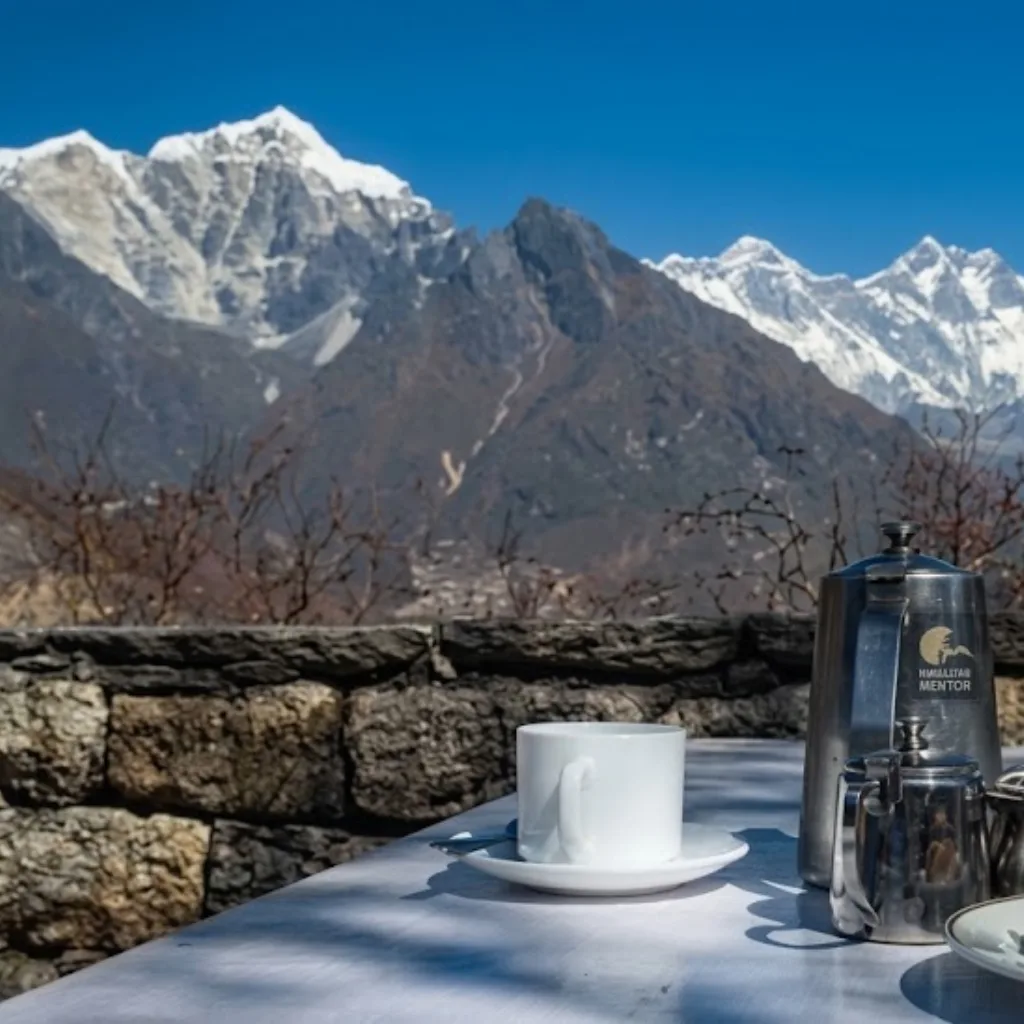
- Hotel Everest View Overnight — 3,880 m / 12,730 ft: the famous glass-fronted hotel above Namche Bazaar, with Everest, Lhotse, Nuptse and Ama Dablam filling the view from your room and the terrace.
- Private Helicopter to Lukla — 2,860 m / 9,383 ft: a Kathmandu–Lukla helicopter sector that skips the commercial flight lottery and starts your Everest scenery before you touch down.
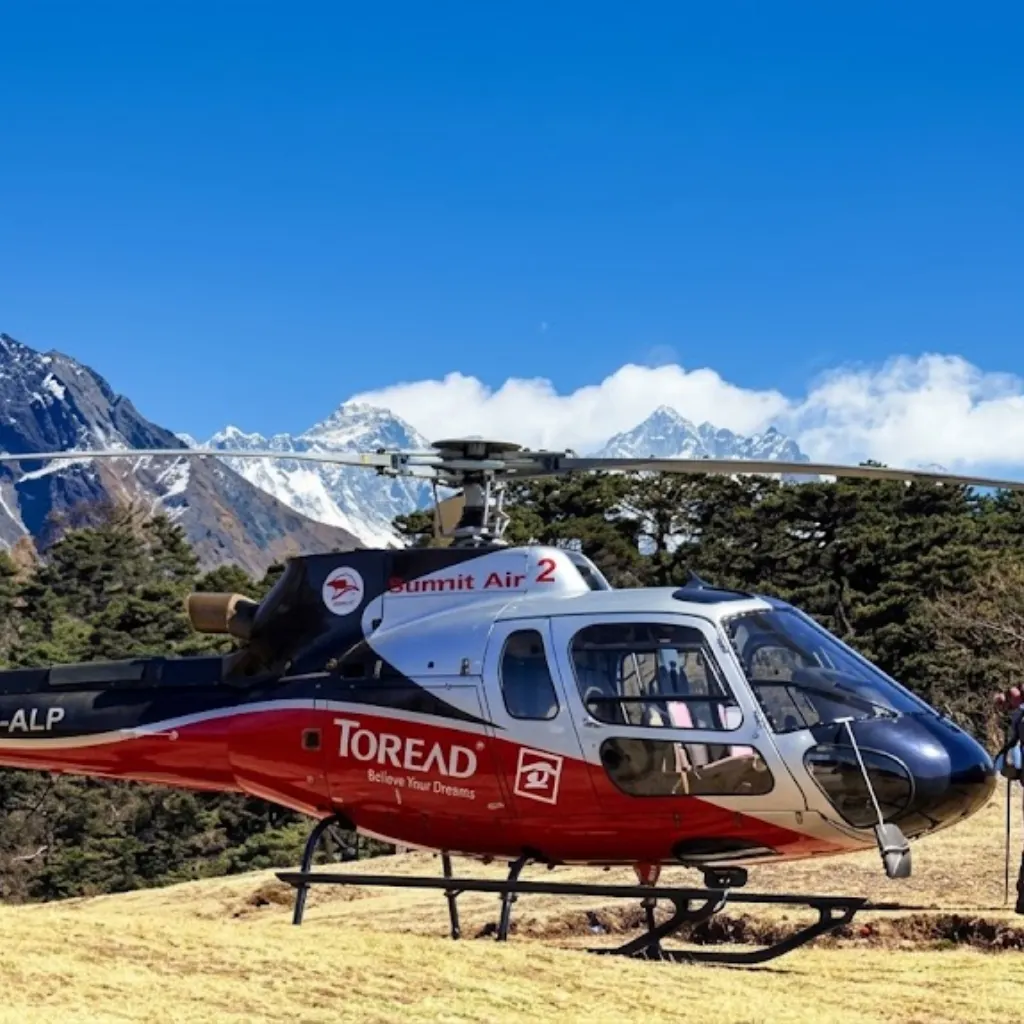
- Everest Base Camp Flyover — 5,364 m / 17,598 ft (aerial): circle over the Khumbu Glacier and the legendary base camp from the rear seat of the helicopter on Day 5.
- Kala Patthar Stop — 5,545 m / 18,192 ft (weather permitting): a short touchdown at the classic viewpoint for the wide-angle Everest, Nuptse and Pumori panorama.
- Namche Bazaar — 3,440 m / 11,286 ft: the Sherpa capital’s stone streets, cafés, bakeries and the famous altitude-era market atmosphere.
- Sagarmatha National Park — Monjo Entrance: walking through a UNESCO World Heritage Site on the Phakding–Namche stretch, past the Hillary Suspension Bridge.
- Dudh Koshi Valley Walk: prayer-flag suspension bridges, Sherpa stone villages and pine forests on the gentle Day 2 and Day 3 approaches.
- Kathmandu at Both Ends: a 5-star arrival night with welcome dinner, a leisure day after the mountains, and a farewell dinner before departure.
- Short and Accessible — 7 days, 3 walking days: a full Everest-region experience in a week, with maximum sleeping altitude of 3,880 m and 3–6 walking hours per day.
Everest View Hotel Luxury Trek Overview
The Everest View Hotel Luxury Trek is a 7-day luxury trek in the Everest (Khumbu) region of Nepal that pairs short, gentle walking with private helicopter flying: you fly from Kathmandu to Lukla by helicopter, trek through Syangboche to the famous Hotel Everest View (3,880 m / 12,730 ft), then fly over Everest Base Camp with a Kala Patthar (5,545 m / 18,192 ft) stop before a direct helicopter return to Kathmandu. Graded easy to moderate, it delivers the fullest Everest panorama experience available in a single week, with only three walking days and every night in premium accommodation.
Starting and ending in Kathmandu, the route follows the classic Everest panorama corridor in miniature: the helicopter sets you down at Lukla (2,860 m), you walk the pretty Dudh Koshi Valley to Phakding, climb to the Sherpa capital of Namche Bazaar (3,440 m), and finish the walking at Hotel Everest View (3,880 m) — the terrace where Everest, Lhotse, Nuptse and Ama Dablam fill the horizon. Day 5 leaves the ground behind: a helicopter flyover of the Khumbu Glacier and Everest Base Camp (5,364 m), a weather-permitting touchdown at Kala Patthar, and a direct flight home.
With Nepal Lion Tours, the package starts from USD 2,170.75 per person in the Standard tier (USD 2,931 in the Luxury tier, with group discounts on both). It includes your licensed English-speaking guide, premium lodges, the Hotel Everest View night, two 5-star Kathmandu hotel nights, meals on trek, the two helicopter sectors, permits, private transfers and trekking gear — a one-week Everest experience with the classic 12-day route’s best views, compressed and upgraded.
What Makes the Everest View Hotel Luxury Trek Special?
The defining overnight is Hotel Everest View, one of the world’s highest-altitude hotels, perched at 3,880 m / 12,730 ft on a ridge above Namche with a glass-fronted terrace that faces Mount Everest (8,849 m), Lhotse (8,516 m), Nuptse (7,861 m) and Ama Dablam (6,812 m). Instead of the standard lodge rooms lower in the valley, you sleep above the Khumbu’s main settlements with north and west-facing windows on the big peaks — the same view photographers chase at Kala Patthar, available from a balcony.
The helicopter aerials are the second signature. Day 2 lifts you from Kathmandu over the foothills to Lukla in about an hour, skipping the weather-dependent commercial Lukla flights that drive most itineraries. Day 5 is the payoff: you rise from the Everest View/Syangboche helipad, pass over the Khumbu Glacier and Everest Base Camp (5,364 m / 17,598 ft), and, conditions allowing, step out at Kala Patthar (5,545 m / 18,192 ft) for the classic 360-degree view of Everest, Nuptse and Pumori — then fly directly back to Kathmandu without retracing the trail at all.
Guide’s Note — Nepal Lion Tours
From our experience operating Everest-region departures, the combination we recommend most for time-poor travellers is exactly this one: three walking days at moderate altitude plus the helicopter days, rather than a rushed 10-km-a-day slog. Guests who stay overnight at Hotel Everest View consistently rate the pre-dawn light on Everest and Lhotse — watched over a real cup of coffee instead of from a crowded viewpoint — as the single best moment of the trip. We recommend booking it as the centrepiece, not an add-on, because the itinerary is built around that terrace.
— Nepal Lion Tours Lead Trekking Guide
Why Choose the Everest View Hotel Luxury Trek?
If you have a week and want the Everest region’s best views without its hardest days, this is the practical choice. The full Everest Base Camp Trek takes 12–14 days and asks for 5–7 hours of walking daily up to 5,364 m. This 7-day version keeps the maximum walking effort to 3–6 hours on three consecutive days, tops out on foot at 3,880 m, and still shows you Everest, Lhotse, Nuptse, Ama Dablam and the Khumbu Glacier — with the Everest Base Camp and Kala Patthar viewpoints reached by helicopter on Day 5.
The logistics are unusually simple. Kathmandu is both the start and end city, the Hotel Everest View sits just 4–5 km of easy trail above Namche, and the two helicopter sectors remove the commercial Lukla flight and the return walk entirely. For families, honeymooners, and travellers with limited leave or mobility concerns, it delivers the Everest photograph in the shortest, most comfortable frame available in the Khumbu.
Who Is This 7-Day Everest View Hotel Trek Suitable For?
- First-time trekkers who want a gentle introduction to mountain travel with premium comfort throughout
- Time-poor travellers who have roughly a week (Kathmandu to Kathmandu) rather than a fortnight
- Honeymooners and couples celebrating with the Hotel Everest View terrace and 5-star Kathmandu hotels
- Families with fit older children — short walking days, no long climbs above 3,880 m
- Younger and senior travellers who want altitude scenery without sleeping above 3,880 m
- View-hunters who want Everest, Lhotse and Ama Dablam photographs with minimal effort
- Travellers wary of high altitude who prefer the safety of a short helicopter stop to days spent above 4,500 m
- Experienced trekkers short on time who accept the helicopter trade-off to see the Khumbu in a week
No previous trekking experience is required, and the two walking days that matter most (Phakding to Namche, and Namche to Hotel Everest View) are well within a normal weekend-hiker’s range. The one stamina caveat is the Phakding–Namche climb on Day 3: roughly 600 m of ascent in 5–6 hours — manageable at a slow pace, but it is the real workout of the trip.
Quick Facts
Trek Fact | Details |
|---|---|
Trek Name | Everest View Hotel Luxury Trek |
Duration | 7 days / 6 nights |
Region | Everest (Khumbu), Koshi, Nepal |
Maximum Altitude | 5,545 m / 18,192 ft at Kala Patthar (helicopter stop) |
Maximum Walking Altitude | 3,880 m / 12,730 ft at Hotel Everest View |
Difficulty | Easy to Moderate |
Main Highlight | Overnight at Hotel Everest View, plus private helicopter flights — Kathmandu to Lukla and an Everest Base Camp / Kala Patthar flyover back to Kathmandu |
Start / End | Kathmandu to Kathmandu |
Route | Kathmandu — Lukla — Phakding — Namche Bazaar — Syangboche — Hotel Everest View — Helicopter Flyover — Kathmandu |
Typical Walking | 3–6 hours per day (3 walking days) |
Best Season | Spring (Mar–May) and Autumn (Sep–Nov) |
Price From | USD 2,170.75 per person (Standard) / USD 2,931 (Luxury) |
Accommodation | 5-star Kathmandu hotels, premium teahouse lodges and Hotel Everest View |
Guide | Licensed English-speaking trekking guide (Chinese, Korean or Hindi available on request) |
Everest View Hotel Luxury Trek Route and Elevation
The route is a compact Everest panorama loop: a helicopter lifts you from Kathmandu (1,400 m) to Lukla (2,860 m), three walking days take you up the Dudh Koshi Valley through Phakding, Namche Bazaar and Syangboche to Hotel Everest View (3,880 m), and the final full day turns the return into a scenic helicopter flight over the Khumbu Glacier, Everest Base Camp and, conditions allowing, Kala Patthar — landing you back in Kathmandu the same afternoon.
Everest View Hotel Luxury Trek Route at a Glance
Day | Trek Route | Altitude | Highlights |
|---|---|---|---|
1 | Arrive Kathmandu | 1,400 m / 4,593 ft | VIP airport arrival, 5-star hotel, senior-guide briefing, welcome dinner |
2 | Helicopter — Kathmandu to Lukla; trek to Phakding | 2,860 m / 9,383 ft down to 2,610 m / 8,563 ft | Private helicopter gateway, Dudh Koshi Valley, first walking day (3–4 hrs) |
3 | Phakding to Namche Bazaar | 2,610 m / 8,563 ft up to 3,440 m / 11,286 ft | Monjo, Sagarmatha National Park, Hillary Suspension Bridge (5–6 hrs) |
4 | Namche Bazaar to Hotel Everest View | 3,440 m / 11,286 ft up to 3,880 m / 12,730 ft | Ama Dablam and Everest panorama, overnight at the hotel (3–4 hrs) |
5 | Helicopter flyover — Everest Base Camp and Kala Patthar; direct to Kathmandu | 5,545 m / 18,192 ft stop, down to 1,400 m / 4,593 ft | Khumbu Glacier and Base Camp aerial, optional Kala Patthar stop, night in Kathmandu |
6 | Leisure day in Kathmandu | 1,400 m / 4,593 ft | Spa, Thamel, rest after the mountains |
7 | Kathmandu departure | 1,400 m / 4,593 ft | VIP transfer to Tribhuvan International Airport, international flight |
Everest View Hotel Luxury Trek Elevation Profile
The profile is gentle because the walking is deliberately held low. You begin at 1,400 m (4,593 ft) in Kathmandu, arrive by helicopter at Lukla 2,860 m (9,383 ft), and descend to your first trek night at Phakding 2,610 m (8,563 ft) — an easy reintroduction to mountain walking. Day 3 is the only real climb: Phakding to Namche Bazaar gains roughly 600 m over 5–6 hours, through suspension bridges and forest switchbacks. Day 4 is a short, steady 3–4 hour ascent from Namche 3,440 m (11,286 ft) past the Syangboche airstrip to Hotel Everest View 3,880 m (12,730 ft).
What the profile means physically: three moderate walking days, no overnight above 3,880 m, and a single high point — the Kala Patthar stop at 5,545 m (18,192 ft) — reached and left by helicopter on Day 5, so you never sleep high. That shallow ascent curve is why the trek is graded easy to moderate despite the Everest altitude on the itinerary. On request, Nepal Lion Tours provides a printed trekking map and an elevation profile of the route as part of your trekking materials.
How to Get to the Everest View Hotel Luxury Trek
Getting here is simpler than on any classic Khumbu itinerary because the city is the trailhead. The trek starts and ends in Kathmandu (1,400 m / 4,593 ft); the two mountain transfers are helicopter sectors chartered by Nepal Lion Tours, so the standard long road day to a remote trailhead simply does not apply to this package.
Kathmandu to Lukla: The Private Helicopter Gateway
Option | Approx. Travel Time | Best For |
|---|---|---|
Private helicopter (this package) | ~45–60 minutes | Scenic aerial route, flexible timing, no commercial flight queue |
Commercial flight (Kathmandu–Lukla) | ~25–35 minutes | Budget-conscious travellers on other packages |
Commercial flight via Ramechhap | ~4-hour road transfer + ~20-minute flight | High-season departures when Kathmandu city airport is busy |
The package’s Day 2 helicopter leaves from a Kathmandu helipad after an early breakfast and carries you over the green foothills and river valleys of the Dudh Koshi watershed to Lukla (2,860 m) in roughly an hour. Compared with the commercial Lukla flight, the private sector gives you a window seat over the Khumbu approach, a flexible departure time, and cover when Kathmandu’s domestic airport is congested. On clear days the rising line of snow peaks appears from the cabin well before touchdown.
From Lukla the Trek Begins
After the helicopter settles at Lukla, your trek starts from the town itself. Lukla sits at 2,860 m (9,383 ft) on a hillside above the Dudh Koshi, and the first walk descends through its Sherpa settlement — stone houses, mani walls, prayer wheels — before dropping to the river. The trail to Phakding (2,610 m / 8,563 ft) is gentle and shaded, roughly 8 km of easy descent taking 3–4 hours, a deliberately soft first day that lets your body begin adjusting while the scenery does the work. Your porter crew is assembled at Lukla, and your guide briefs the day’s route before you set off.
Returning to Kathmandu by Helicopter
You do not walk back. On Day 5, a private charter lifts off from the Syangboche / Hotel Everest View helipad, circles over Namche Bazaar, the ridge lines and the Khumbu Glacier, passes Everest Base Camp (5,364 m / 17,598 ft) from the air and — subject to weather, aviation permissions and aircraft performance — sets down briefly at Kala Patthar (5,545 m / 18,192 ft). From there the helicopter flies directly to Kathmandu, bypassing Lukla and the return trek entirely. Arrival back in the city mid-afternoon leaves the evening free for the farewell dinner at your Kathmandu hotel.
Weather and Flight Reliability in the Khumbu
Helicopters flying in the Himalaya are always weather-dependent. Morning conditions are statistically the most reliable, which is why the Day 2 and Day 5 sectors are scheduled after an early breakfast; afternoon wind and cloud build over the peaks is normal, and a 45–60 minute mid-morning window is the standard operating slot. If a sector is delayed or cancelled, Nepal Lion Tours re-routes the same day when possible or re-schedules with you, and the itinerary’s two 5-star Kathmandu nights provide a natural buffer before and after the flying. We strongly recommend travel insurance that covers helicopter and high-altitude operations for this reason.
Guide’s Note — Nepal Lion Tours
From our experience operating helicopter-inclusive Everest departures, we stress-test every charter before the departure date and brief guests to keep the flight day light — minimal luggage on board, warm layers in the cabin, and no fixed evening commitments the day of an aerial sector. The Kala Patthar stop is realistically a ten-to-fifteen-minute window, and it happens only when the pilot has stable conditions and permission. We recommend treating it as a bonus: the flyover itself is guaranteed, the touchdown is the layer of luck on top.
— Nepal Lion Tours Lead Trekking Guide
A Practical Tip for International Travellers
Do not book an international flight that leaves Kathmandu the same evening as your Day 5 helicopter return. The flight days carry small weather risk, and even on schedule you will want the afternoon to decompress. Give yourself the Day 6 leisure night in Kathmandu before your international departure, as this itinerary intends, and hold roughly 20–40 minutes of road time for the airport transfer plus check-in and security. Access to the trek is straightforward: one city, one helicopter sector, three walking days, one scenic flight home.
Everest View Hotel Luxury Trek Difficulty, Fitness & Altitude
The trek is graded easy to moderate — but easy does not mean flat. The three walking days ask for 3–6 hours of steady effort, the main ascent is the 600 m climb from Phakding to Namche Bazaar, and the final walking day gains only about 440 m to the Hotel Everest View. Nothing on the trail is technical, and no walking happens above 3,880 m, which keeps the physical demands of this itinerary genuinely light by Himalayan standards.
Where the Effort Actually Is?
The effort concentrates in exactly one stretch: Day 3, Phakding (2,610 m) to Namche Bazaar (3,440 m). The day combines the airy prayer-flag suspension bridges over the Dudh Koshi, the forest switchbacks above Monjo, and the final sustained climb into Namche — roughly 600 m of net ascent in 5–6 hours. Day 2 is a gentle descending trail (Lukla to Phakding, 3–4 hours), and Day 4 is a short 3–4 hour uphill stroll from Namche to Hotel Everest View that many guests complete without breaking stride. The rest of the itinerary is helicopter time and rested city days, so the walking load sits below most weekend-moderate hikes.
Guide’s Note — Nepal Lion Tours
From our experience operating this route, the Phakding–Namche section on Day 3 is the one day guests underestimate — it is not steep for long, but it climbs for hours through forest and bridges. We recommend starting after an early breakfast, walking at a conversation pace, and letting the lodge cooks know you are coming up the hill; a mid-day dal bhat refuels the climb better than a big pre-walk breakfast. That single discipline is what makes the rest of the itinerary feel as easy as it looks.
— Nepal Lion Tours Lead Trekking Guide
How to Prepare for the Everest View Hotel Luxury Trek
- Walk regularly — 3–4 months of 3–4 walks a week at 60–90 minutes builds the base you need for consecutive trekking days
- Practise hills and stairs — the Phakding–Namche climb is stair-like; stair-climbing and incline treadmill work prepare the lungs and legs
- Build leg strength — squats, lunges and step-ups over 6–8 weeks protect knees on the descents
- Take one or two longer walks — a 5–6 hour day, or 15 km, once a fortnight mimics the longest trek day
- Train in the shoes you will trek in — broken-in boots or trail runners prevent the only real injury risk on this route (blisters and ankle rolls)
- Practise carrying a 4–6 kg daypack — your main pack rides with the porter, but a loaded daypack on a few walks mirrors the trek
How Difficult Is This Trek Compared with Longer Treks?
Compared with the classic Everest Base Camp Trek — 12–14 days, 5–7 walking hours a day, and sleeping above 4,500 m — this itinerary is clearly easier. You have three walking days instead of ten, a maximum sleeping altitude of 3,880 m (12,730 ft) instead of 5,164 m, and daily walking of 3–6 hours instead of sustained 7-hour pushes. The Kala Patthar exposure is brief and flown, not walked. What it shares with longer treks is the principle of gradual gain: the valley-fed ascent through Namche follows the same acclimatisation corridor, just at a smaller scale.
Altitude, Acclimatization & Safety
The route reaches 5,545 m (18,192 ft) at the Kala Patthar stop, but only briefly and by helicopter, with sleep always below 3,880 m. That design dramatically lowers the acute mountain sickness (AMS) risk profile of a typical Everest itinerary — but altitude deserves respect even in short, flown exposures, and the trek follows the standard gradual-ascent rules throughout.
Everest View Hotel Luxury Trek Altitude Profile
- Kathmandu — 1,400 m / 4,593 ft: arrival night, welcome dinner, briefing
- Lukla — 2,860 m / 9,383 ft: helicopter touchdown on Day 2, start of walking
- Phakding — 2,610 m / 8,563 ft: first trek night by the Dudh Koshi
- Namche Bazaar — 3,440 m / 11,286 ft: Sherpa capital, second trek night
- Hotel Everest View — 3,880 m / 12,730 ft: highest overnight, on the panorama ridge
- Kala Patthar — 5,545 m / 18,192 ft: short helicopter ground stop on Day 5, weather and regulations permitting; no overnight
How the Body Adapts to Altitude
Acclimatisation works on exposure and time. This itinerary gives you two moderate-altitude nights (Phakding 2,610 m and Namche 3,440 m) before the 3,880 m hotel night, then keeps the 5,545 m exposure to minutes rather than days — the opposite of the classic route’s high sleeping camps. Your guide paces each walking day, encourages frequent water and a carbohydrate-rich diet (dal bhat, noodles, porridge), and halts for rest whenever anyone needs it. Drinking 3–4 litres a day is the single most effective habit you can bring.
Symptoms of Altitude Sickness to Watch For
- Mild (normal at altitude, manageable): headache, mild breathlessness on effort, poor sleep, reduced appetite, light dizziness
- More concerning (act immediately): severe headache unrelieved by rest or paracetamol, vomiting, confusion, loss of coordination, breathlessness at rest
The rule is simple: if symptoms appear or worsen, stop ascending, tell your guide, and descend if needed. Because this trek sleeps low, serious cases are rare, but your guide carries the protocol and oxygen contingency and will not hesitate to shorten or re-route a day. Every guest carries the peace of mind that no night is spent above 3,880 m.
How Nepal Lion Tours Supports Altitude Safety
- Gradual route progression — moderate nights at Phakding and Namche before the 3,880 m hotel, per standard acclimatisation practice
- Experienced licensed guidance — a government-licensed English-speaking guide monitors each group’s pace, intake and symptoms throughout
- Early communication — guests are briefed on AMS signs before departure and invited to report anything immediately
- No sleep at maximum altitude — the 5,545 m Kala Patthar exposure is a short helicopter stop, never an overnight
- Health and safety framework — guides carry first-aid kits and oxygen, and we recommend travel insurance covering high-altitude trekking and helicopter evacuation
Best Time to Trek Everest View Hotel Luxury Trek
The best time is generally autumn (September to November) and spring (March to May), when the Khumbu sees its clearest skies and the walking days are warm and dry. The trek runs year-round, but the two shoulder seasons trade comfort for fewer clear-view days — and since much of this itinerary’s reward is visual (the Everest View terrace, the aerial flyover), view clarity matters more here than on most treks.
Season | Months | Weather & Trail Conditions | Mountain Views | Overall |
|---|---|---|---|---|
Autumn | Sep–Nov | Clear, dry and warm; the most stable weather of the year | Excellent on clear days | Best overall |
Spring | Mar–May | Warm and drier, with rhododendron blooms on the lower trail | Very good | Highly recommended |
Winter | Dec–Feb | Cold and clear; fresh snow possible on the trail | Good on clear days | Good with preparation |
Monsoon | Jun–Aug | Heavy rain lower down, cloud and occasional leeches | Frequently limited by cloud | Less suitable |
Autumn — September to November
Autumn is the Everest region’s best season for a reason: the monsoon has flushed the dust, the jet stream is quiet, and October is typically the clearest month of the year. Walking days hover around warm daytime temperatures at Namche altitude, the Hotel Everest View terrace is often completely unobstructed, and helicopter operations enjoy their most stable weather windows. This is the season to book for guaranteed-looking pictures — and for the Kala Patthar stop’s best odds.
Spring — March to May
Spring is the second peak season, with the driest skies of the year arriving from late March and the lower Dudh Koshi trail flushing with rhododendron and magnolia blossom. Days are warm enough that a light layer is enough by midday, and mornings still offer the crisp air that keeps Everest’s faces sharply defined from the hotel terrace. April and early May coincide with climbing-season traffic around Base Camp, which adds a little spectacle to the Day 5 flyover.
Winter — December to February
Winter brings the clearest cold-season skies and nearly empty trails, with daytime temperatures at Namche altitude still comfortable under a good jacket. The trade-offs are real: early-morning temperatures around Hotel Everest View will sit below freezing, occasional snow can dust the trail between Phakding and Namche, and some budget lodges close for the season — though the premium lodges on this itinerary operate through winter. The helicopter sectors gain reliability precisely because winter skies are stable; the Kala Patthar stop stays possible, but the cold at 5,545 m is intense.
Monsoon — June to August
The monsoon months are the least suitable because this is a view-first itinerary. Rain and low cloud in the Dudh Koshi valley make the walking wet and slippery, evergreen forest thickens over the mountain views, and the storm-driven cloud can delay helicopter sectors for hours. That said, the valleys are at their greenest, prices are lowest, and the odd clear spell between storms does happen — we simply do not recommend the monsoon to first-time visitors booking this trek specifically for its panoramas.
Which Season Should You Choose?
Choose autumn (September to November) if you want the highest probability of uninterrupted Everest, Lhotse and Ama Dablam views and the most reliable helicopter days. Choose spring (March to May) if you prefer the warmer, flower-lined lower trail and slightly lower crowds than October. Choose winter (December to February) for the clearest cold-season skies, empty trails and lower prices if you do not mind freezing mornings at the hotel. Avoid the monsoon unless you are flexible with flying days. Whichever you pick, mountain weather changes quickly — check the forecast before your departure and keep your helicopter days flexible.
Guide’s Note — Nepal Lion Tours
On clear autumn or spring mornings the view from the Hotel Everest View terrace typically opens up with Everest and Nuptse lit full-face, and the Day 5 flight window is usually the first two or three hours after breakfast. From our experience, departures that fly on a clear morning and stroll up the short path to Hotel Everest View around midday get the full sweep — early light for the flight, full daylight for the terrace. We schedule exactly that sequence, and we recommend you take the terrace coffee at first light rather than after lunch.
— Nepal Lion Tours Lead Trekking Guide
Everest View Hotel Luxury Trek Permits & Regulations
The route enters Sagarmatha National Park at Monjo on Day 3 and passes through the Khumbu Pasang Lhamu Rural Municipality, so trekkers need the two standard Khumbu permits — and no restricted-area permit is required. Nepal Lion Tours arranges and delivers both permits as part of the pre-trek paperwork, so you only need a valid passport to travel with.
Everest View Hotel Luxury Trek Permits at a Glance
Requirement | Who Needs It? | Who Arranges It? |
|---|---|---|
Sagarmatha National Park Entry Permit | Foreign trekkers entering the park | Nepal Lion Tours |
Khumbu Pasang Lhamu Rural Municipality Permit | All trekkers in the Khumbu | Nepal Lion Tours |
Sagarmatha National Park Entry Permit
The Sagarmatha National Park Entry Permit is a NPR 3,000 entry fee for foreign nationals (NPR 1,500 for SAARC nationals), payable on arrival at the park office near Monjo or pre-arranged in Kathmandu. Sagarmatha National Park is a UNESCO World Heritage Site protecting the snow leopard’s home range and the forested stairway of the Dudh Koshi. Your guide carries the paperwork and completes the stamping at the park entrance on Day 3 — you simply pause, show your passport, and continue.
Khumbu Pasang Lhamu Rural Municipality Permit
The Khumbu Pasang Lhamu Rural Municipality Permit is a NPR 3,000 local fee for foreign trekkers (NPR 2,000 for SAARC nationals) that funds community trails, health posts and school projects across the Khumbu. This municipality permit replaces the TIMS card on standard Everest-region routes, and it applies to every trekker in the region — including a luxury 3-day walk like this one. Nepal Lion Tours registers it before departure and the fee is collected on the trail on arrival in the region.
Do You Need a TIMS Card for the Everest View Hotel Trek?
No. The TIMS (Trekkers’ Information Management System) card is not required on standard Everest-region routes; the Khumbu Pasang Lhamu Rural Municipality Permit has replaced it for trekkers in the Khumbu. Your two required documents are the Sagarmatha National Park Permit and the Khumbu Pasang Lhamu Municipality Permit above. Note that Nepali regulations require foreign trekkers to be accompanied by a licensed guide since April 2023, and a registered agency (such as Nepal Lion Tours) must process the permits — another reason these are handled for you.
Who Arranges the Permits?
Nepal Lion Tours arranges all applicable permits as part of your pre-trek preparation. You are asked to carry your original passport throughout the trek for identification checks and permit verification at the Monjo park entry and by local rangers. Government fee structures do change and can be revised mid-season, so confirm current amounts at booking — the figures above reflect the 2026 schedule and are a guideline, with the NPR-to-USD value moving loosely around NPR 138 to USD 1.
Food & Accommodation on the Everest View Hotel Luxury Trek
Food and lodging follow the luxury version of the Khumbu standard: comfortable, locally run teahouses at Phakding and Namche, the famous Hotel Everest View for the panorama night, and 5-star hotels for the two Kathmandu nights. Meals are served as a full board on trek — breakfast, lunch, dinner and tea or coffee — with menus far broader than the budget routes because you stay at the valley’s larger, better-stocked lodges.
Premium Accommodation on the Everest View Hotel Luxury Trek
- Day 1 and Day 5–6 Kathmandu: 5-star hotels such as The Dwarika’s Hotel, Kathmandu Marriott or Hyatt Regency Kathmandu (or an equivalent property), with spa, pool and lounge facilities
- Phakding (Day 2): a premium lodge such as Yeti Mountain Home or an equivalent luxury lodge, with private bathrooms, hot water and a proper restaurant
- Namche Bazaar (Day 3): the best teahouse in town, with comfortable twin rooms, attached bathrooms and bakery-fresh breakfasts
- Hotel Everest View (Day 4): the highlight — a glass-fronted high-altitude hotel at 3,880 m / 12,730 ft, with rooms facing Everest, Lhotse and Ama Dablam and a panoramic terrace for meals
- Standard throughout: twin-sharing rooms, private or attached bathrooms at every stop, warm dining rooms and space to relax after walking
Rooms at all four mountain stops are in walkable condition with proper beds rather than the shared dormitories of budget routes, and electricity for charging is available in your room at the lodges (with solar backup common across the Khumbu). The Hotel Everest View is the anchor of the itinerary — its location, not its five-star sheen, is the point.
What Food Is Available on the Everest View Hotel Luxury Trek?
The menus at these lodges cover the usual Khumbu range with more variety than smaller teahouses and better cooking. Expect dal bhat (rice, lentil soup and seasonal curry) as the trekker’s staple and energy source, momos (steamed or fried dumplings), Tibetan bread, thukpa noodle soup, fried rice, chow mein, pasta with several sauces, vegetable curries, garlic soup, omelettes, porridge, muesli, pancakes, toast and fresh bakery bread in Namche. Vegetarian options are widely available — in fact dal bhat is naturally vegetarian — and the larger lodges handle vegan and gluten-free requests with advance notice. Tell Nepal Lion Tours about any allergies or dietary needs at booking so we can brief your lodges before you arrive.
What Food and Accommodation Are Included?
Included in the Trek Package | Usually Paid Separately |
|---|---|
Teahouse and lodge accommodation on trek (twin-sharing, private bathrooms) | Extra Kathmandu hotel nights before or after the package |
Hotel Everest View night and the 5-star Kathmandu hotel nights per itinerary | Meals in Kathmandu if you extend your stay outside the itinerary |
Breakfast, lunch and dinner on trek, plus tea or coffee with meals | Drinks beyond teahouse tea/coffee, bar bills, snacks |
Private helicopter sectors (Kathmandu–Lukla and Everest View–Kathmandu) | International airfare, Nepal visa fees |
Licensed English-speaking guide, porter crew and their costs | Tipping for guides and porters |
Sagarmatha National Park and Khumbu Pasang Lhamu permits | Travel insurance, personal expenses, laundry, hot showers at lodges that charge |
The package covers all meals on trek and the two helicopter sectors, your full mountain accommodation and the itinerary’s Kathmandu hotel nights. What you pay separately is essentially your airfare, visa, insurance and extras — and the page’s own exclusions list Kathmandu meals and hotel expenses, so confirm the exact Kathmandu-night arrangement with our sales team if you plan extra city days.
Drinking Water on the Trek
Don’t assume tap water is safe to drink in the Khumbu. The safest option is treated water: lodges sell boiled and bottled water, and Nepal Lion Tours recommends carrying a reusable bottle and purification tablets or a filter so you can refill from the reliable sources your guide identifies. Drink 3–4 litres a day without waiting for thirst — dehydration is the most common reason trekkers feel ordinary headaches at altitude. Reusable bottles cut plastic waste on a route that already struggles to manage it, and your guide will point out the safe refill points.
Staying Comfortable on a Luxury Everest Trek
- Carry your own water bottle — with a purification method, so you never rely on single-use plastic
- Use the provided sleeping bag liner even at the lodges — standard bedding is rarely washed between guests, and a silk liner adds comfort at the Hotel Everest View
- Pack a medium power bank — charging is available but outlets are limited to evening hours in some lodges
- Keep 3,000–5,000 NPR in cash on hand — for hot showers (rare on this route, but some lodges charge), drinks and tips
- Layer up for the cold mornings — the Hotel Everest View and Namche mornings sit below 5°C in winter; a down jacket (provided) plus a warm layer is enough
- Tell Nepal Lion Tours about dietary needs — vegan, gluten-free and allergy requirements are briefed to the lodges in advance, not at the kitchen door
Why Book with Nepal Lion Tours?
Nepal Lion Tours operates this Everest View Hotel Luxury Trek itself — the permits, the helicopter charters, the lodges and the guide team are arranged by a Kathmandu-based team that answers before, during and after your trip. The difference shows in the details that matter on a helicopter-inclusive itinerary: confirmed charter slots, hotels and lodges that know our groups, and a guide who has walked the Phakding–Namche–Everest View corridor many times.
- Licensed, English-speaking local guides.
Your guide is government-licensed, trained in high-altitude safety and first aid, and intimately familiar with the Everest panorama corridor from Lukla to Hotel Everest View. They pace the walking, brief the helicopter days, identify birds and peaks, and are the difference between a transfer between hotels and a cultural journey.
- A registered trekking company you can verify.
Nepal Lion Tours is a registered Nepali trekking company based in Kathmandu, and company and licence details are provided on request. You travel with an operator accountable to the NTB and Nepal’s trekking regulations, which has also become mandatory in the Everest region (licensed-guide rule since April 2023).
- Private departures from two trekkers.
The helicopter sectors are private charters — the aircraft is yours, not shared with strangers — and the itinerary runs as a private group from the moment you leave Kathmandu. Couples, families and friends walk at their own pace with no fixed group schedules.
- The Hotel Everest View overnight as a built-in highlight.
This package treats the famous 3,880 m terrace hotel as the centrepiece of the itinerary, not an optional day trip, so the sunset and first-light Everest panoramas are yours without a pre-dawn march or a crowded viewpoint.
- Private transfers and straightforward logistics.
Airport VIP pick-ups, the Kathmandu helipad transfers and the Day 5 city return are all handled by our own coordination — you meet the helicopter by arrangement, not by chasing a schedule.
- Luxury value without removing the main experiences.
The Standard tier (from USD 2,170.75) keeps the identical route, lodges and flights as the Luxury tier (from USD 2,931) — the difference is hotel and lodge grade. Every tier still includes the helicopter sectors, the Hotel Everest View night and all trek meals.
- A local team you can contact before and during the trek.
From your first enquiry to the airport drop, you reach a Kathmandu-based team on WhatsApp at +977-9851039020 — for re-routing, flight updates, dietary notes, or simply advice on what to wear in October.
Book the Everest View Hotel Luxury Trek
Seven days — three gentle walking days, two helicopter scenic sectors, two 5-star Kathmandu nights and one unforgettable night at 3,880 meters with Everest outside the window. This is the shortest, most comfortable route to the Everest-postcard view in Nepal, and it is priced to keep the luxury within reach.
Trek at a Glance
- Duration: 7 days / 6 nights, Kathmandu to Kathmandu
- Price: From USD 2,170.75 per person (Standard); USD 2,931 (Luxury) — group discounts from 2 pax
- Difficulty: Easy to Moderate (3 walking days, 3–6 hours a day)
- Maximum Altitude: 5,545 m / 18,192 ft at Kala Patthar (helicopter stop; no overnight above 3,880 m)
- Accommodation: 5-star Kathmandu hotels, premium teahouse lodges and Hotel Everest View
- Meals: Breakfast, lunch and dinner on trek, plus tea or coffee
- Permits & Registration: Sagarmatha National Park and Khumbu Pasang Lhamu Municipality permits arranged by Nepal Lion Tours
- Transportation: Private helicopter sectors, private road transfers and airport pick-up/drop-off
- Guide: Licensed English-speaking trekking guide (Chinese, Korean or Hindi on request)
- Cancellation: Free cancellation up to 14 days before departure (subject to booking terms)
Ready to Start Your Everest Adventure?
Send us your preferred travel date and group size through the booking form or WhatsApp at +977-9851039020, and we’ll confirm availability, the helicopter slot and your exact price tier — Standard or Luxury — before you commit. Whether you’re travelling solo, as a couple, with friends, or with family, we’ll help you prepare for a smooth and enjoyable trek. Your Everest-view morning is waiting — choose your dates and start planning your week in the Khumbu today.
Related Everest Treks
If you like the Everest scenery but want a different length, pace or price, these Nepal Lion Tours routes cover the same region in other ways.
| Trek | Duration | Difficulty | Max Altitude | Best For |
|---|---|---|---|---|
| Everest Panorama Trek | 6–8 days | Easy–Moderate | 3,880 m (Everest View Hotel) | Shortest route to big Everest views, flight-based |
| Everest Base Camp Luxury Trek | 10 days | Moderate | 5,545 m | Premium EBC trek with Kala Patthar, without helicopters |
| Everest Base Camp Trek via Kala Patthar | 12 days | Moderate | 5,545 m | The classic EBC walk on the full 12-day schedule |
| Gokyo Lake Trek | 10 days | Moderate | 5,357 m | Turquoise lakes and the Gokyo Ri panorama |
| Gokyo Lake Luxury Trek with Helicopter Return | 8 days | Moderate | 5,357 m | Luxury lakes trek finished with a helicopter flight home |
| Everest Three Passes Trek | 18–21 days | Challenging | 5,535 m | The full high-altitude Khumbu traverse |
The Everest View Hotel Luxury Trek fits naturally as the upgrade version of the short Everest panorama itineraries, or as a shorter, higher-comfort alternative to the classic 12-day Base Camp route. If you have time after the mountains, it combines easily with Kathmandu sightseeing, Pokhara, or a Chitwan Jungle Safari — ask us to build the sequence into a single itinerary.
Trip Essentials
Packing advice, required equipment & gear recommendations
Essential
Everest View Hotel Luxury Trek Packing List
Packing for this trek is straightforward because you are not camping: the lodges and hotels provide beds, meals and shelter, and Nepal Lion Tours provides a down jacket, an all-season sleeping bag, a duffel bag and a trekking map if you don’t have your own (the jacket, sleeping bag and duffel are returned after the trip). You pack for three walking days in the moderate-altitude Khumbu plus a cold 3,880 m hotel night — layers, not bulk.
Hiking Gear
- Broken-in trekking boots or sturdy trail runners — the trail between Lukla and Namche is well-graded but stony
- Trekking poles — genuinely useful on the long descent to Phakding and the Namche climb
- Daypack (25–35 litres) — for water, snacks, layers, camera and documents
- Water bottles or bladder (2–3 litres) — plus a purification method
- Headlamp or torch — for early lodge mornings and any pre-dawn flights
- Small quick-dry towel — the premium lodges provide towels, but a spare is handy
- Duffel bag — your gear bag rides with the porter crew while your daypack walks with you
Clothing: Use Layers Rather Than Bulk
Base layers: a light merino or synthetic top and bottoms to wick sweat under your outer layers.
Mid-layers: a fleece or soft-shell jacket for the lodge breaks and the Namche mornings.
Outer layers: a water- and windproof shell jacket (rain protection in the valley, wind protection at the ridge); the supplied down jacket is worn over it for the cold Hotel Everest View evening and the Kala Patthar stop.
Trekking clothes: 2–3 pairs of quick-dry trekking trousers or shorts, 3–4 lightweight shirts or t-shirts, and a change of clothes for the evenings in Kathmandu.
Headwear and gloves: a warm beanie, a sun hat with a brim, sunglasses (the glare over snow is intense at 3,880 m), and light gloves for morning starts.
Sleeping and Evening Comfort
- Silk or cotton sleeping bag liner for use in the lodge bedding
- Warm sleepwear — lodge rooms are not heated overnight at this altitude
- Down or fleece jacket for the cold dining-room-to-room walk at the Hotel Everest View
- Flip-flops or slippers for lodge and hotel rooms
Toiletries and Personal Health Items
- Personal medication and a small first-aid kit (paracetamol, plasters, antiseptic wipes, blister plasters)
- Sunscreen (SPF 30+) and lip balm — ultraviolet is strong in thin, clear mountain air
- Diamox (acetazolamide) — optional altitude medication; discuss with your doctor before travel
- Hand sanitiser and biodegradable soap
- Toothbrush, toothpaste, deodorant and personal toiletries in travel sizes
- Wet wipes — useful at the lodge stops for freshening up
- Earplugs for lighter sleep at busy lodges
- Rehydration sachets or electrolyte tablets
- Insect repellent — low risk on this route but standard for the valley floor
- Any prescription medicines with a doctor’s note
- Small pills or lozenges for sore throat at altitude
Electronics
- Power bank (10,000–20,000 mAh) — charging is available at the lodges and hotels, but evening outlets can be busy
- Universal travel adapter (Nepal uses the Indian/Nepali three-round-pin socket)
- Phone and charging cable — plus a zip-lock bag for mountain dust and rain
- Camera or GoPro with spare batteries and memory cards — cold air drains batteries fast at altitude
Documents and Money
- Passport with at least 6 months’ validity — required for permits and the Monjo park check
- 2–3 passport photos and photocopies of your passport, visa and insurance
- Travel insurance documents with an emergency contact number
- Cash in Nepali rupees (NPR 20,000–30,000) for drinks, tips and shopping — ATMs work in Kathmandu, but the mountain villages don’t have reliable ones (Namche is the last reliable cash point)
- Credit card as a backup — accepted in Kathmandu, rarely on the trail
How Much Should You Pack?
Lighter is better. Everything you carry beyond your daypack is carried by a porter, so the limit is really about what you can personally shoulder for the 3–6 walking hours. A duffel of 10–12 kg is plenty for a 7-day luxury itinerary — the provided down jacket and sleeping bag ride in it, so your own clothing load is small. Keep your daypack to 4–6 kg — water, layers, camera, snack, documents — and leave the rest for the crew. If in doubt, pack fewer outfits and plan to wear layers more than once; the lodges and hotels make warmth easy.
Read Before You Book
Permits, terms, medical considerations & advisory guidelines
Advisory
What to Know Before Booking
The Everest View Hotel Luxury Trek is one of the most accessible high-scenery routes in Nepal because the walking is short and the sleeping altitude is low — but a few practical notes will make the week smoother.
Accommodation and Facilities
Your nights are split between 5-star Kathmandu hotels, premium teahouse lodges at Phakding and Namche, and Hotel Everest View at 3,880 m / 12,730 ft. The mountain stops all have private rooms and attached bathrooms; electricity and charging are available each evening, and Wi-Fi exists at the lodges but is satellite-backed and slower than you are used to. The 5-star Kathmandu properties (such as The Dwarika’s, Marriott or Hyatt Regency) bring the spa, pool and lounge facilities you expect. Be aware that lodge plumbing at altitude is more honest than hotel plumbing — hot water is reliable but not endless.
Food and Dietary Requirements
Meals are full board on trek — breakfast, lunch, dinner and tea or coffee — with dal bhat, noodles, momos, pasta and bakery goods through the valley’s best kitchens. Vegetarian is widely available and naturally excellent, and larger lodges handle vegan and gluten-free with advance notice. Advise Nepal Lion Tours of allergies or dislikes at booking; we brief the lodges in advance rather than leaving it to the kitchen on the night.
Altitude, Health and Insurance
The route sleeps below 3,880 m and reaches 5,545 m only as a short helicopter stop, which makes altitude issues uncommon — but not impossible — and travel insurance is mandatory in practice. Your policy must cover trekking in Nepal, medical treatment, helicopter and high-altitude activities, and ideally helicopter evacuation (the standard recommendation for any Khumbu itinerary), with your altitude limit checked against the 5,545 m maximum. Carry your insurance documents and an emergency contact number in your daypack.
Money and Tipping
USD prices on the page convert to Nepali rupee payment at current rates; carry NPR 20,000–30,000 in cash for the trail (drinks, hot showers at lodges that charge them, tips, small shopping), since ATMs are effectively limited to Kathmandu and Namche. Tipping is customary but not compulsory: a rough guideline is USD 5–10 per day for your guide and USD 3–5 for a porter, split at your discretion at the end of the trip.
Culture and Responsible Trekking
- Dress conservatively in villages and remove shoes before entering monasteries or private homes
- Walk clockwise around mani walls and chortens, and never touch or climb prayer stones
- Ask before photographing people, especially monks and children
- Carry out what you carry in — plastic is a real problem on the Everest trail, and treated water from a reusable bottle helps
- Buy local — tea, yak cheese and crafts from Sherpa-run shops keep money in the valley
- Leave no trace — stay on trails, use the provided toilets and never wash in streams
Route Options
This itinerary is the fixed 7-day frame that combines the Everest View overnight with two helicopter sectors, but the region offers variations. Everest Panorama Trek (6–8 days) covers the same lower-valley scenery without the helicopter flyover. Everest Base Camp Luxury Trek (10 days) walks the full route to Gorak Shep and Kala Patthar with premium lodges along the way. Everest Base Camp Trek via Kala Patthar (12 days) is the classic full walk. Gokyo Lake Luxury Trek with Helicopter Return swaps the Base Camp aerial for the turquoise lakes. And Everest Three Passes (18–21 days) is the full high-altitude traverse for experienced trekkers. We can also tailor the 7-day frame with extra Kathmandu days or a Pokhara add-on.
Booking and Before You Arrive
- Understand the tier difference — Standard (from USD 2,170.75) and Luxury (from USD 2,931) share the identical route, lodges and flights; the difference is hotel and lodge grade
- Confirm the Kathmandu-night inclusion — the itinerary shows 5-star hotel nights around the trek, but the page’s exclusions list Kathmandu hotel costs, so get your exact night tally in writing
- Supply passport details in advance — permits are pre-registered and your guide carries the originals at checkpoints
- Check your insurance covers the 5,545 m helicopter stop
- Book helicopter-inclusive dates early — charter slots are limited in October and April
- Pack the pharmacy basics — altitude headaches respond to rest, water and paracetamol
- Arrive at least a day before the trek start — Day 1 includes the briefing and welcome dinner, and the buffer protects against flight delays into Nepal
A Few Final Tips
Keep your flight-day expectations flexible — the helicopters fly on weather, not sentiment, and the Kala Patthar stop is a bonus rather than a guarantee. Photograph the terrace in both afternoon and first light; the two light directions show different faces of Everest. Bring a book or cards for the evening downtime. And remember that this is a luxury trip, not a fitness test: you are chasing a view, and the view is here to wait for you at as relaxed a pace as you want.
Day-by-Day Itinerary
Explore each day's route, trekking elevation, and activities
Morning
Arrive at Tribhuvan International Airport (TIA) in Kathmandu, where you will receive a VIP welcome from your Mountain Treks Nepal representative. After completing immigration, baggage collection, and customs formalities, meet your private driver and transfer comfortably into the city.
Midday
Continue to your selected 5-star hotel, such as The Dwarika’s Hotel, Kathmandu Marriott Hotel, Hyatt Regency Kathmandu, or an equivalent luxury property. Complete check-in and settle into your room. Take time to rest after your international journey and enjoy the hotel's facilities.
Afternoon
Spend a relaxed afternoon at the hotel. Depending on your arrival time and energy, you may enjoy the swimming pool, spa, lounge, or surrounding area. Use this time to organize your belongings and prepare for your upcoming journey into the Everest region.
Evening
Meet your senior Sherpa guide for a comprehensive trip briefing covering the trekking route, altitude, weather conditions, helicopter arrangements, safety procedures, and daily schedule. Later, enjoy a welcome dinner featuring refined Nepalese cuisine before returning to your luxury room for an overnight stay.
Morning
After an early breakfast, transfer to the helicopter departure point and board your private helicopter from Kathmandu to Lukla. The flight offers spectacular aerial views of the Kathmandu Valley, rolling Himalayan foothills, deep river valleys, and snow-capped peaks as you approach the Khumbu region.
Midday
After landing at Lukla (2,860m), meet your porter crew and make final preparations for the trek. Begin walking through Lukla's traditional Sherpa settlement before gradually descending toward the Dudh Koshi River. The trail passes stone houses, cultivated fields, mani walls, prayer wheels, and colorful Buddhist prayer flags.
Afternoon
Continue along the peaceful Dudh Koshi Valley toward Phakding (2,610m). The relatively gentle trail provides an ideal introduction to trekking in the Khumbu while allowing your body to begin adjusting to the increasing altitude. Upon arrival, check into your luxury lodge and enjoy a hot shower and time to relax.
Evening
Spend a peaceful evening at the lodge surrounded by the Himalayan landscape. Your guide will brief you about the following day's trek toward Namche Bazaar. Enjoy a carefully prepared multi-course dinner featuring local and international dishes before resting in your heated room.
Morning
Begin the day with a gourmet breakfast before following the Dudh Koshi River northward. The trail passes through small Sherpa settlements and peaceful pine-covered sections, with several suspension bridges decorated with colorful Buddhist prayer flags along the route.
Midday
Continue toward Monjo, the entrance point to Sagarmatha National Park. After completing the necessary park formalities, continue through the river valley toward the famous suspension bridges. The surrounding landscape becomes increasingly dramatic as the valley narrows and the mountains rise above the trail.
Afternoon
Cross the renowned Hillary Suspension Bridge before beginning the longer uphill section toward Namche Bazaar. The trail winds through pine and rhododendron forests, with occasional viewpoints revealing the dramatic peaks of the Khumbu region. Continue steadily upward until reaching Namche Bazaar (3,440m).
Evening
Check into your luxury lodge and relax after the day's ascent. If time and energy permit, take a gentle walk through Namche's stone-paved streets and explore its cafés, bakeries, boutique shops, and traditional Sherpa surroundings. Return to the lodge for dinner and a comfortable overnight stay.
Morning
After breakfast, begin a scenic uphill hike from Namche Bazaar toward Syangboche. As the trail climbs above the town, the views gradually expand across the Khumbu Valley. On clear days, you can see Ama Dablam, Thamserku, Kongde, Lhotse, Nuptse, and Mount Everest.
Midday
Continue toward the renowned Hotel Everest View, situated at approximately 3,880m. The trail passes through open mountain terrain and quiet Himalayan surroundings before reaching the hotel. Enjoy lunch while taking in panoramic views of the surrounding peaks.
Afternoon
Check into your luxury room or suite and spend the afternoon enjoying the hotel's glass-fronted terrace and panoramic mountain setting. Relax with tea, coffee, or refreshments while observing the changing light across Mount Everest and the surrounding Himalayan peaks.
Evening
Enjoy a refined dinner with spectacular mountain views. Your senior Sherpa guide will provide a detailed briefing about the following day's helicopter adventure, including the planned flight over the Khumbu Valley, Everest Base Camp, and the Kala Patthar area. The flight and any ground stop remain subject to weather, aviation regulations, and operational conditions.
Morning
After breakfast, proceed to the helicopter departure point near Syangboche/Hotel Everest View. Board your private chartered helicopter and rise above the Khumbu Valley. Enjoy extraordinary aerial views of Namche Bazaar, surrounding ridges, glaciers, and some of the world's highest mountains as you fly toward the Everest region.
Midday
Continue over the Khumbu Glacier and Everest Base Camp, enjoying a unique aerial perspective of the legendary climbing region. Subject to weather, aviation permissions, aircraft performance, and operational conditions, the helicopter may make a brief ground stop in the Kala Patthar area at approximately 5,545m. Step out to experience the dramatic high-altitude landscape and photograph Mount Everest, Nuptse, Pumori, and the surrounding Himalayan peaks.
Afternoon
Re-board the helicopter and begin your return journey. Rather than returning to Lukla, fly directly from the Everest View/Syangboche area toward Kathmandu by helicopter, creating a seamless luxury transfer and avoiding the need for a conventional Lukla return flight. Enjoy final aerial views of the Khumbu mountains before descending toward Kathmandu.
Evening
Upon arrival in Kathmandu, transfer to your 5-star hotel and settle into your luxury accommodation. Spend the evening relaxing after the helicopter journey or enjoy the hotel's spa, swimming pool, or other facilities. Later, celebrate the completion of your Everest adventure with a special farewell dinner hosted by Mountain Treks Nepal.
Morning
Enjoy a leisurely breakfast at your 5-star hotel following your return from the Everest region. Take the morning at your own pace and relax after several days of trekking and helicopter travel. You may use the hotel's spa, swimming pool, fitness center, or other wellness facilities.
Midday
Enjoy lunch at the hotel before deciding whether to explore Kathmandu or continue with a relaxed luxury experience. If you wish to explore the city, your private vehicle can take you to selected cultural and historical areas according to your interests.
Afternoon
Spend the afternoon exploring Thamel and its surrounding streets, browsing Nepalese handicrafts, souvenirs, traditional products, cafés, and boutiques. Alternatively, return to the hotel for a spa treatment or simply enjoy some quiet time in your luxury accommodation.
Evening
Return to the hotel and enjoy a relaxed final evening in Kathmandu. Have dinner at the property or a selected restaurant and organize your luggage and travel documents for the following day's international departure.
Morning
Enjoy your final luxury breakfast at the hotel and take some time to relax before departure. Complete your packing and check out according to your international flight schedule.
Midday
At the appropriate time, meet your private driver in the hotel lobby and transfer comfortably to Tribhuvan International Airport. Allow sufficient time for traffic, airport check-in, baggage procedures, immigration, and security formalities.
Afternoon
Arrive at the airport and complete the required international departure procedures. Your Mountain Treks Nepal representative can provide assistance with the departure process as required before you proceed toward the international departure area.
Evening
Board your international flight and depart Nepal, concluding your luxury Everest experience. Your journey combines a private helicopter flight from Kathmandu to Lukla, luxury trekking through the Khumbu region, an overnight stay at Hotel Everest View, and a spectacular direct helicopter flight from the Everest View/Syangboche area back to Kathmandu.
Want to customize this itinerary?
Tailor duration, lodges, acclimatization days, or add private helicopter flights.
Inclusions & Exclusions
Everything that is covered and what you'll need to budget separately
What is Included
Fully covered in your package price
- Pick-up or Drop-off service from and to Airport(in our own vehicle)
- Transportation from Kathmandu to Lukla and back to Kathmandu(by flight)
- Food all along the trip(Breakfast, Lunch, Dinner and a cup of coffee or tea) and accommodations during the trip in hotels with family environment
- One licensed English or Chinese or Korean or Hindi along with Nepali speaking trekking guide
- Transportation, food, accommodation and insurance of Guide during the trip
- Down jacket, all-season sleeping bag, duffel bag and trekking map(in case if you don’t have your own. Down jacket, sleeping bag and duffel bag must be returned after completion of the trip)
- First Aid Medical Kit(Carried by the guide)
- the required permits and paperworks
- 2 Night Hotel Free
What is Excluded
Personal expenses & optional extras
- International Airfare
- Visa Charges
- Hotel Expenses(In Kathmandu)
- our travel and medical insurance
- Personal Expenses such as shopping, bar bills, hot shower, telephone, laundry, titbits etc
- Food and accommodations in Kathmandu
- Services not mentioned or not promised by the agent/agency
- Emergency expenses such as expenses on charted flights/helicopter
Our Customer Reviews
Authentic experiences and feedback from our travelers
Write a Review
Share your adventure experience with other travelers
Thank You!
Your review has been submitted and is awaiting approval.
Please Wait
You've submitted several reviews recently. Please wait a few minutes before trying again.
Olivia Hansen
I judge every trip partly by the food, and this one did well. The day we did Short and Accessible was probably my favourite. The kids were fascinated by Baggage Collection, which kept them moving without complaint. I found the rhythm of the days surprisingly restorative. We learned more from our guide in a few days than from any guidebook. Breakfasts were simple but filling, which is exactly what we needed before a long day. I would leave a little room in the plan for spontaneous stops. The heat in the lower sections was more tiring than the altitude. The kitchen handled our dietary requests without any fuss. The landing sites were more remote than I expected, which made the whole thing feel special. The meals were not fancy, but they were memorable. Tip: Tip the crew directly if you can, and ask what is appropriate.
Jonas Roux
Our trip began with a lot of questions and ended with a long list of places we want to return to. Dudh Koshi Valley Walk was even better than the photos suggest. The scale of Everest view hotel is hard to capture in a photograph. The landing sites were more remote than I expected, which made the whole thing feel special. The booking details were accurate, and there were no surprise costs. We ordered too much on the first night and learned to share after that. It is the kind of trip that keeps unfolding in your memory long after you get home. Tip: Take the early start option when it is offered; the light and the crowds are better.
Liam Holm
We took the helicopter option to save time, and it was worth every penny. The path beyond Comfortably Into The City. Midday Continue was quieter and more beautiful than the main trail. We almost skipped Private Helicopter to Lukla because we were tired, and I am glad we did not. Taking the helicopter cut out days of walking and gave us more time in the mountains. The team was flexible when our plans changed slightly. We ordered too much on the first night and learned to share after that. We would book something similar again.
Ingrid Meijer
This one had been on our list for a while, and it mostly lived up to the hype. The tea house near Meet Your Private Driver had the best view of the whole trip. The food afterwards, after Namche Bazaar, tasted especially good. Taking the helicopter cut out days of walking and gave us more time in the mountains. Good value overall.
Beatrice Nygaard
The flight in was a highlight before the trip had even properly started. The day we did Kathmandu at Both Ends was probably my favourite. The stories around Customs Formalities made the place feel alive rather than just scenic. We felt looked after without feeling watched. Having a fixed plan made the trip feel relaxed rather than rigid. Highly recommended.
Frequently Asked Questions
Essential information on preparation, route specifics, safety standards, and logistical details.