Kathmandu Pokhara Chitwan Luxury — 9 Days | Nepal Lion Tours
Experience Nepal in exceptional comfort with luxury holidays across Kathmandu, Pokhara, and Chitwan. Discover historic heritage sites, enjoy breathtaking Himalayan scenery, relax at premium lakeside resorts, and experience exclusive wildlife adventures in Chitwan with personalized travel experiences from Nepal Lion Tours.
Kathmandu , Pokhara And Chitwan (Luxury)

Tour Highlights
Tour Highlights
Nine days of UNESCO heritage, two Himalayan sunrises, lakeside Pokhara and a Chitwan safari make this the most complete easy-grade circuit in Nepal.
- Kathmandu Durbar Square — 1,400 m / 4,593 ft: Walk the old royal square with its pagoda temples, stone statues, courtyards and the living street life of the old city.
- Swayambhunath Stupa — 1,400 m / 4,593 ft: Climb the hilltop shrine known as the Monkey Temple for valley views, prayer flags and the great white dome with its painted eyes.
- Boudhanath Stupa — 1,400 m / 4,593 ft: Circle one of the largest Buddhist stupas in the world, turn the prayer wheels and watch the afternoon light on the gilded spire.
- Pashupatinath Temple — 1,400 m / 4,593 ft: Visit Nepal’s most important Hindu complex beside the Bagmati River, with its shrines, cremation ghats and evening ritual atmosphere.
- Patan Durbar Square — about 1,350 m / 4,429 ft: Explore the Malla royal square of Lalitpur, with its Krishna Mandir, palace courtyards and the densest concentration of Newari craftsmanship in the valley.
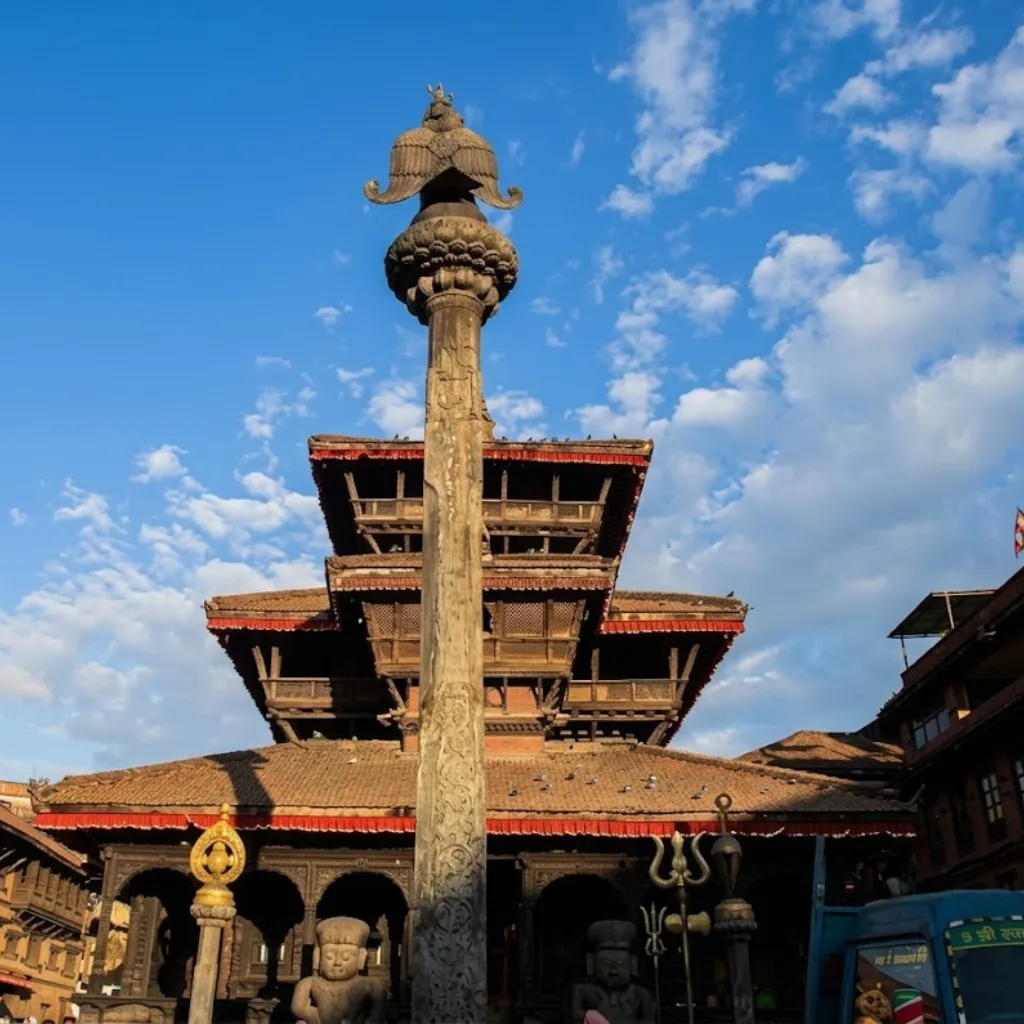
- Bhaktapur Durbar Square — 1,401 m / 4,596 ft: See the 55-Window Palace, Nyatapola Temple and the pottery squares of the best-preserved medieval city in Nepal.
- Nagarkot sunrise — 2,175 m / 7,136 ft: Watch first light on Langtang Lirung, Ganesh Himal, Dorje Lakpa and Gaurishankar, with the valley folded below.
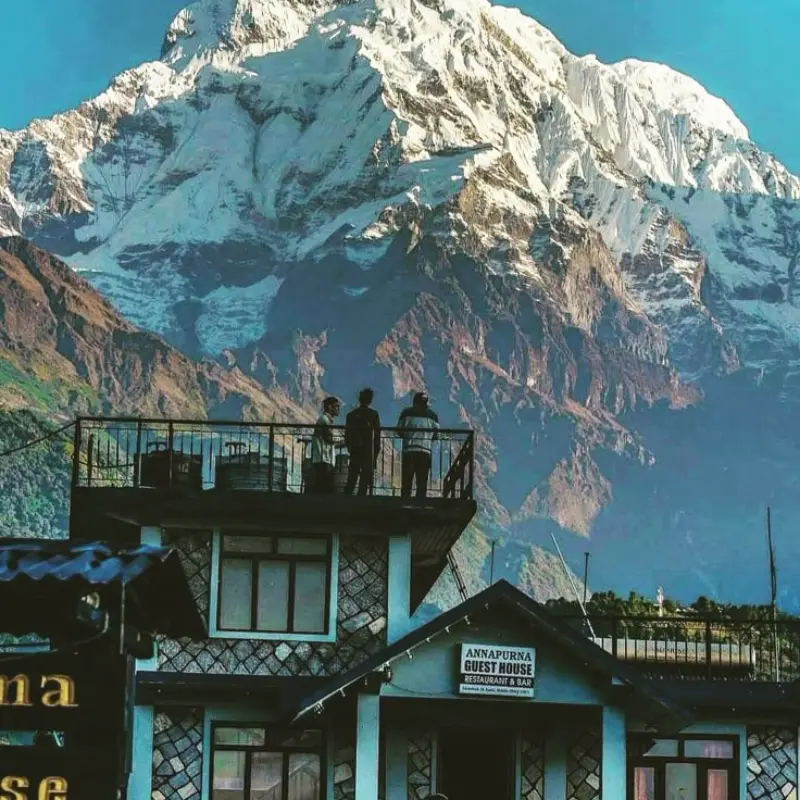
- Sarangkot sunrise — 1,592 m / 5,223 ft: Look across Phewa Lake to Dhaulagiri, Annapurna I, Machhapuchhre and Lamjung Himal from the ridge above Pokhara.
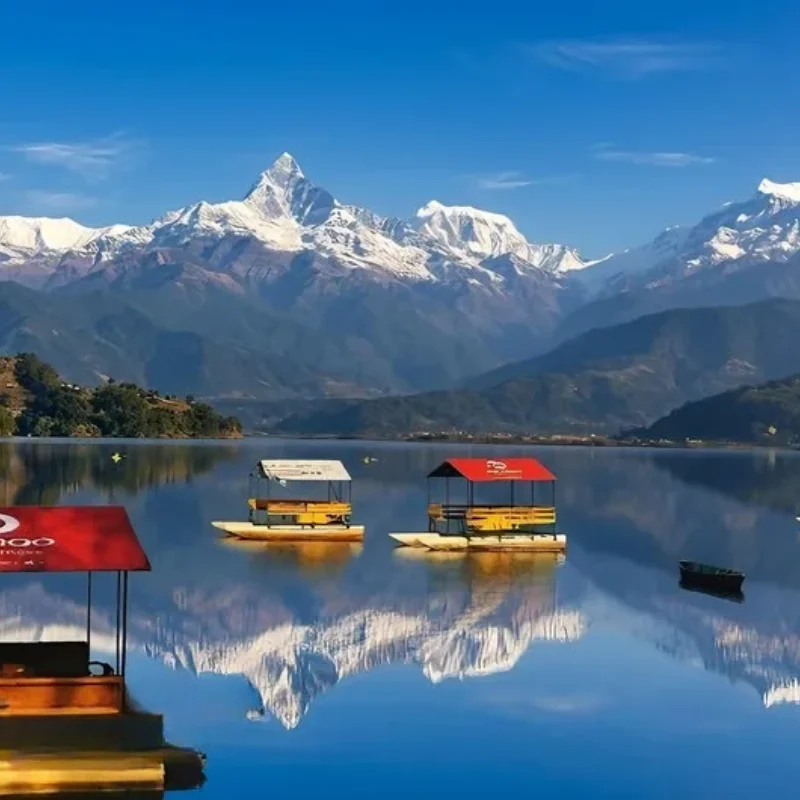
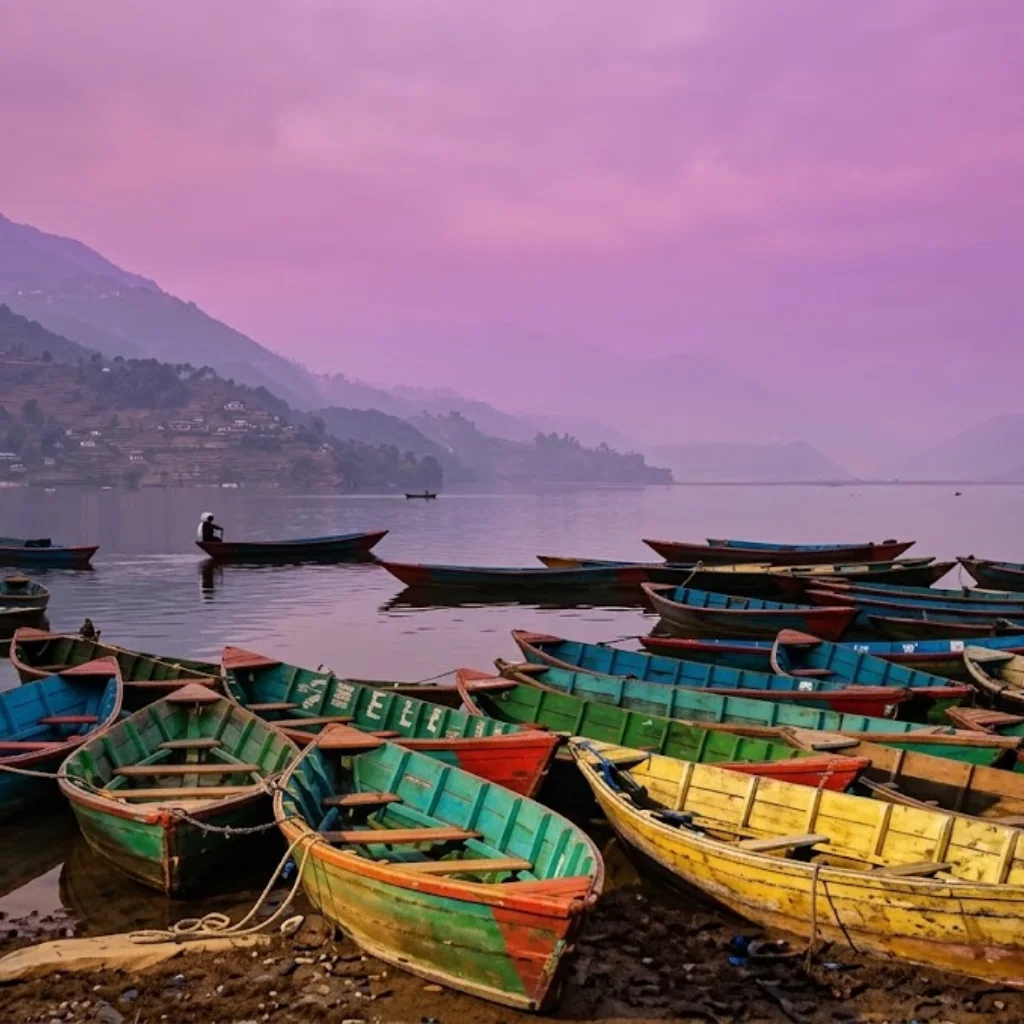
- Pokhara lakeside — 822 m / 2,697 ft: Boat on Phewa Lake, see Davis Falls, walk into Gupteshwor Cave and watch the Seti River cut its gorge through the city.
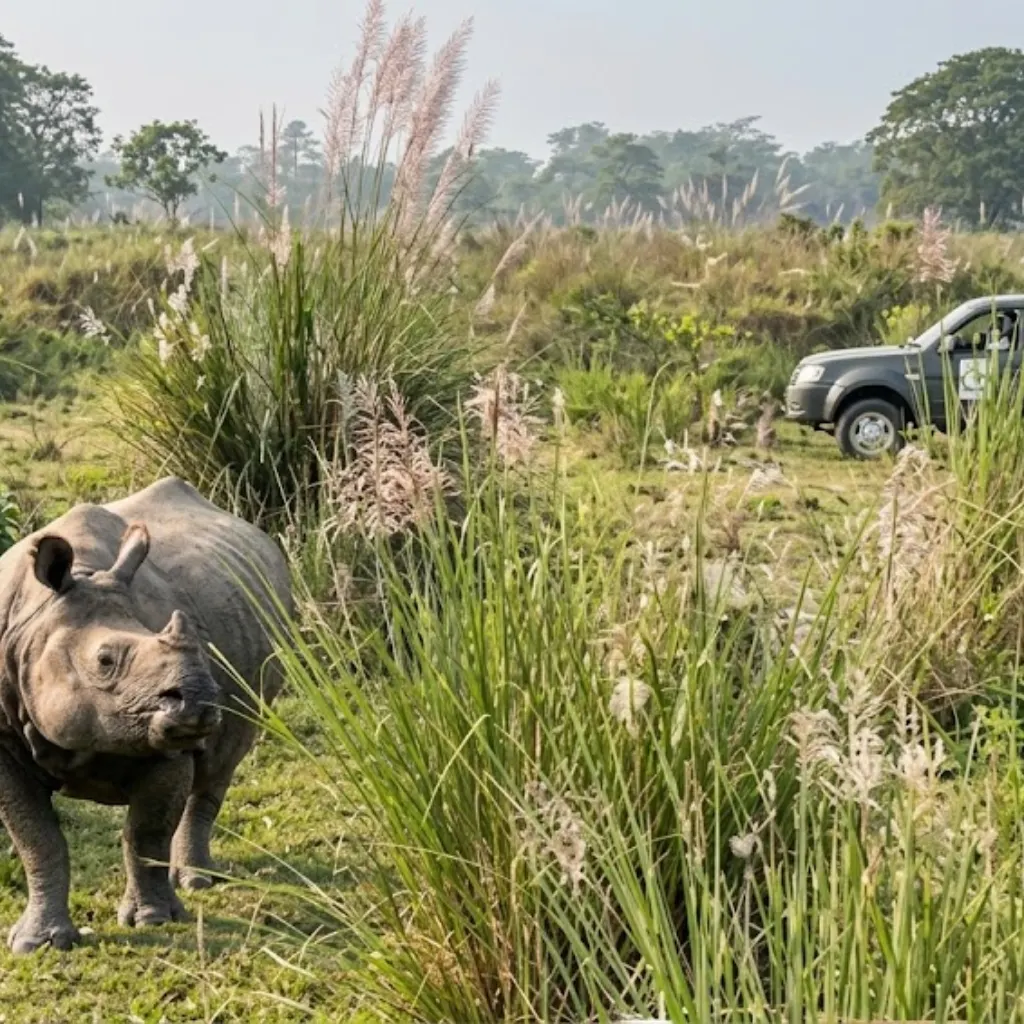
- Chitwan National Park — 415 m / 1,362 ft: Canoe the Rapti River past gharial and marsh mugger crocodiles, take a jeep safari for one-horned rhinos and deer, and walk the forest with a naturalist.
- Farewell dinner in Kathmandu: Close the tour with a traditional Nepalese meal and, where available, live cultural music on Day 08.
The Kathmandu, Pokhara and Chitwan Luxury Tour is a 9-day / 8-night private journey through Nepal’s three defining landscapes: the UNESCO heritage of the Kathmandu Valley, the lake-and-mountain setting of Pokhara, and the subtropical wildlife of Chitwan National Park. The route reaches 2,175 m / 7,136 ft at Nagarkot, is graded easy, and is built for travellers who want culture, Himalayan sunrises and a jungle safari without a day of trekking.
The itinerary opens with three nights in Kathmandu and a full valley circuit — Kathmandu Durbar Square, Swayambhunath, Boudhanath, Pashupatinath, Patan Durbar Square and Bhaktapur Durbar Square — before climbing to Nagarkot for sunrise over the Langtang and Ganesh Himal ranges. It then drops to Pokhara for two nights beside Phewa Lake, the Sarangkot sunrise and the Annapurna panorama, continues to Chitwan for two nights of canoeing, jeep safari and guided jungle walks, and returns to Kathmandu for a farewell dinner.
With Nepal Lion Tours, the Kathmandu Pokhara Chitwan luxury tour starts from USD 1,425 per person, 5% off the listed USD 1,500. The published inclusions cover eight nights of 3-star category accommodation, daily breakfast, full board in Chitwan, a farewell dinner, private air-conditioned transport, a licensed English-speaking guide, sightseeing entrance fees and government taxes. The current inclusions specify 3-star hotels; premium 4- and 5-star upgrades in each city can be quoted on request. The final price varies with group size, dates, room category and any itinerary changes.
What Makes the Kathmandu, Pokhara and Chitwan Luxury Tour Special?
Three UNESCO cities in one route. Kathmandu, Patan and Bhaktapur each hold a Durbar Square, and the valley adds Swayambhunath, Boudhanath and Pashupatinath. That is six UNESCO-listed monuments and squares in the first three days, seen with a private guide rather than a shared coach group.
Two Himalayan sunrises from two different ranges. Nagarkot looks north to Langtang Lirung, Ganesh Himal, Dorje Lakpa and Gaurishankar. Sarangkot looks west to Dhaulagiri, Annapurna I, Machhapuchhre and Lamjung Himal. Both are reached by private vehicle before dawn, with tea and a warm car waiting.
A genuine Chitwan safari. Two nights inside the Chitwan area add a canoe trip on the Rapti River, a jeep safari, a guided jungle walk with a naturalist and birdwatching. Chitwan National Park is Nepal’s first national park, a UNESCO World Heritage Site and roughly 952 km² / 368 sq mi of sal forest, grassland and riverine habitat.
One continuous loop, no internal flight required. The standard route runs Kathmandu → Nagarkot → Pokhara → Chitwan → Kathmandu by private vehicle. An optional 20-minute Bharatpur–Kathmandu flight can replace the final long drive at USD 143 per person.
A private vehicle for the whole journey. Airport transfers, sightseeing, sunrise runs and the three inter-city legs use your own air-conditioned vehicle and driver, so luggage stays with you and the schedule bends to your pace.
A 3-star base with a clear upgrade path. The published inclusions use 3-star category hotels in every destination, which keeps the tour practical for families and groups. If you want the fully premium version, the team can quote 4- and 5-star properties in Kathmandu, Nagarkot, Pokhara and Chitwan.
Wildlife without roughing it. Chitwan is visited from a hotel base with full board, not a tented camp. You get the early-morning safari and the evening jungle sounds, then a hot shower and a proper dinner.
Why Choose the Kathmandu, Pokhara and Chitwan Luxury Tour?
This is the most complete first-time Nepal itinerary that does not require trekking. In nine days you cover the valley’s living heritage, two sunrise viewpoints, the Annapurna panorama, a lakeside city and a UNESCO wildlife park. Most shorter tours choose either culture or nature; this one does both, and the driving distances are broken by nights in the right places.
The route is also logical. Kathmandu, Nagarkot, Pokhara and Chitwan sit on a single loop, so you are never backtracking for a day. Nagarkot breaks the climb out of the valley, Pokhara breaks the drive to the Terai, and Chitwan breaks the return. That pacing matters: the longest day is 6–7 hours in the vehicle, not twelve.
For families and mixed-age groups, the tour is easy to adjust. The vehicle can wait at every site, the safari is done with a naturalist, and the hotels are chosen for location and comfort rather than remoteness. The optional Bharatpur flight is a useful escape valve if the final drive does not appeal.
And for travellers who want a premium finish, the upgrade path is straightforward: keep the same route and guide, and move the room standard up in each city. The team can quote the difference before you book.
Who Is This 9-Day Luxury Tour Suitable For?
The 9-day Kathmandu, Pokhara and Chitwan luxury tour is a good choice for:
- First-time visitors to Nepal who want the classic circuit — heritage, mountains, lakes and wildlife — in one booking.
- Couples and honeymooners who want a private vehicle, two sunrise mornings and a lakeside stay rather than a group coach.
- Families with children old enough for short walks, early starts and a jeep safari; the private car makes the long days manageable.
- Senior travellers who prefer door-to-door transfers, low walking distances and hotels with full services.
- Wildlife and photography enthusiasts who want Chitwan’s rhinos, birds and river life alongside the Himalayan panoramas.
- Travelers who do not want to trek but still want to stand above the clouds at Nagarkot and Sarangkot.
- Guests adding a Nepal leg to a longer Asia trip who need a complete, guided itinerary with a single point of contact.
- Travellers who want a 3-star base with the option to upgrade to premium hotels without changing the route.
No trekking experience is needed. The physical expectation is comfortable walking for a few hours on uneven stone streets, temple steps, cave stairs and forest trails, plus the short transfer from the vehicle to each viewpoint.
Quick Facts
| Tour Fact | Details |
|---|---|
| Tour Name | Kathmandu, Pokhara and Chitwan Luxury Tour |
| Duration | 9 days / 8 nights |
| Region | Kathmandu Valley, Nagarkot, Pokhara and Chitwan, Nepal |
| Maximum Altitude | 2,175 m / 7,136 ft at Nagarkot |
| Difficulty | Easy |
| Main Highlight | Two Himalayan sunrises and a Chitwan jungle safari |
| Tour Style | Private cultural, scenic and wildlife tour |
| Start / End | Kathmandu to Kathmandu |
| Route | Kathmandu – Patan – Bhaktapur – Nagarkot – Pokhara – Sarangkot – Chitwan – Kathmandu |
| Typical Sightseeing | 4–7 hours per day, by private vehicle |
| Best Season | Spring (March–May) and autumn (September–November) |
| Price From | USD 1,425 per person (5% off USD 1,500) |
| Accommodation | 3-star category hotels; 4- and 5-star upgrades available |
| Meals | Daily breakfast, full board in Chitwan, farewell dinner |
| Guide | Licensed English-speaking guide |
| Group Size | Private departures, quoted by group size |
Kathmandu, Pokhara and Chitwan Luxury Tour Route and Elevation
The Kathmandu, Pokhara and Chitwan luxury tour route is a nine-day loop through Nepal’s central belt. It starts at Tribhuvan International Airport (1,400 m / 4,593 ft), spends three nights in the Kathmandu Valley, climbs to Nagarkot (2,175 m / 7,136 ft) for the first sunrise, drops to Pokhara (822 m / 2,697 ft) for two nights, crosses to Chitwan (415 m / 1,362 ft) for the safari, and returns to Kathmandu for the final night.
The high point of the tour is Nagarkot at 2,175 m / 7,136 ft, which is also the highest overnight. The lowest point is Chitwan at about 415 m / 1,362 ft. Between them the road crosses the Mahabharat Range and the middle hills, so the driving days are scenic rather than flat.
Because the route stays below 2,500 m / 8,202 ft, there is no acclimatization schedule. The altitude is worth knowing for clothing and sleep, not for training.
Kathmandu, Pokhara and Chitwan Luxury Tour Route at a Glance
| Day | Tour Route | Altitude | Highlights |
|---|---|---|---|
| Day 01 | Arrival in Kathmandu | 1,400 m / 4,593 ft | Airport welcome, private transfer, hotel check-in, trip briefing |
| Day 02 | Kathmandu Valley cultural tour | 1,400 m / 4,593 ft | Kathmandu Durbar Square, Swayambhunath, Boudhanath, Pashupatinath |
| Day 03 | Kathmandu → Patan → Bhaktapur → Nagarkot | 2,175 m / 7,136 ft | Patan and Bhaktapur Durbar Squares, 32 km hill drive, Nagarkot overnight |
| Day 04 | Nagarkot sunrise → Pokhara | 822 m / 2,697 ft | Sunrise on the Langtang and Ganesh Himal ranges, 6–7 hour drive, lakeside evening |
| Day 05 | Pokhara sightseeing | 822 m / 2,697 ft | Davis Falls, Gupteshwor Cave, Seti Gorge, Phewa Lake boating |
| Day 06 | Pokhara → Sarangkot → Chitwan | 1,592 m / 5,223 ft (sunrise); 415 m / 1,362 ft (night) | Sarangkot sunrise, 30-minute hill drive, 5-hour drive to Chitwan |
| Day 07 | Chitwan jungle safari | 415 m / 1,362 ft | Rapti River canoe, jeep safari, guided jungle walk, birdwatching |
| Day 08 | Chitwan → Kathmandu | 1,400 m / 4,593 ft | 6–7 hour drive or optional 20-minute Bharatpur flight, farewell dinner |
| Day 09 | Final departure | 1,400 m / 4,593 ft | Breakfast, check-out, private airport transfer |
Kathmandu, Pokhara and Chitwan Luxury Tour Elevation Profile
The elevation profile has two clear rises and one long descent:
- Kathmandu — 1,400 m / 4,593 ft: Arrival city and the base for the first two nights.
- Nagarkot — 2,175 m / 7,136 ft: The tour’s high point and highest overnight, reached on Day 03.
- Pokhara — 822 m / 2,697 ft: A drop of roughly 1,350 m / 4,429 ft from Nagarkot, spread over the Day 04 drive.
- Sarangkot — 1,592 m / 5,223 ft: A short sunrise climb above Pokhara on Day 06, then back down.
- Chitwan — 415 m / 1,362 ft: The lowest overnight, on the edge of the Terai.
- Kathmandu — 1,400 m / 4,593 ft: The final night after the return drive.
The important planning point is not altitude sickness but temperature. Nagarkot is cool before dawn even in spring and autumn, while Chitwan is warm and humid at almost any time of year. Pack for both.
Day-by-Day Route Notes
Day 01 — Arrival in Kathmandu
You land at Tribhuvan International Airport, clear immigration and baggage, and meet the Nepal Lion Tours representative in the arrivals hall. The private transfer to your Kathmandu hotel takes about 20–30 minutes depending on traffic. The evening is free apart from a short trip briefing, where the guide confirms the next day’s start time and checks your dietary needs.
Day 02 — Kathmandu Valley Cultural Tour
The first full day covers the valley’s four essential sites: Kathmandu Durbar Square, Swayambhunath, Boudhanath and Pashupatinath. Sightseeing runs about 4–5 hours with a private vehicle between stops, so there is time for lunch and a slower afternoon. The guide handles tickets and explains the etiquette at each temple.
Day 03 — Patan, Bhaktapur and Nagarkot
The morning visits Patan Durbar Square and Bhaktapur Durbar Square, the two finest Newari royal squares in the valley. In the afternoon the road climbs about 32 km / 20 mi to Nagarkot, usually 1–2 hours from Bhaktapur. You arrive in time for the evening view and an early night before sunrise.
Day 04 — Nagarkot Sunrise and Drive to Pokhara
You wake before dawn for the Nagarkot sunrise, then return for breakfast and begin the long drive to Pokhara. The road takes 6–7 hours, descending through the middle hills and following river valleys. You reach Pokhara in the late afternoon or early evening, with time for a lakeside walk before dinner.
Day 05 — Pokhara Sightseeing
A gentle day around Pokhara: Davis Falls, Gupteshwor Cave, the Seti River Gorge and a boat ride on Phewa Lake. The cave is over 2,000 m / 6,562 ft long and contains a Shiva Lingam shrine; the passages are damp and low in places, so non-slip shoes help.
Day 06 — Sarangkot Sunrise and Drive to Chitwan
An early start for the Sarangkot sunrise, about a 30-minute drive from Pokhara. After breakfast, the route turns south-east for Chitwan, a drive of about 5 hours. You arrive in the Terai by afternoon, with time to settle into the hotel before the first jungle activity or a quiet evening.
Day 07 — Chitwan Jungle Safari
The full safari day can include a canoe ride on the Rapti River, a jeep safari, a guided jungle walk with a naturalist and birdwatching. Chitwan is home to the one-horned rhinoceros, Asian elephant, sloth bear, wild boar, langur and several deer species, as well as gharial and marsh mugger crocodiles. The naturalist sets the order of activities around park rules and wildlife movements.
Day 08 — Chitwan to Kathmandu
The return drive to Kathmandu takes 6–7 hours. If you prefer to skip the road, an optional Bharatpur–Kathmandu flight takes about 20 minutes and costs USD 143 per person, not included in the package. The evening closes with a farewell dinner at a traditional Nepalese restaurant.
Day 09 — Final Departure
After breakfast, the private vehicle takes you to Tribhuvan International Airport, timed for about three hours before your international flight. The guide confirms the pickup the evening before and helps with luggage.
Route Map and Elevation Profile
A route map and elevation profile can be provided with your tour materials so you can follow the loop from the valley to the Terai. The profile is simple: a climb to Nagarkot, a descent to Pokhara, a short rise to Sarangkot, a drop to Chitwan, and a final return to Kathmandu.
How to Get to the Kathmandu, Pokhara and Chitwan Luxury Tour
The Kathmandu, Pokhara and Chitwan Luxury Tour begins and ends at Tribhuvan International Airport (KTM) in Kathmandu, Nepal’s only international gateway. You fly into the capital, are met after immigration and baggage claim, and transferred by private vehicle to your hotel. From there, Nepal Lion Tours handles every road transfer, the sunrise drives, the safari vehicles and the optional internal flight.
If you are arriving on a long-haul service, we recommend landing at least one evening before Day 01 so the first sightseeing day is not compromised by jet lag. The tour itself is a loop, so there is no need to book separate internal flights unless you choose the Bharatpur option.
Getting to Nepal: Fly into Kathmandu
Flying into Kathmandu is the standard way to begin the tour. Tribhuvan International Airport has direct and one-stop connections from Delhi, Kolkata, Varanasi, Bangkok, Kuala Lumpur, Dubai, Doha, Istanbul, Guangzhou and other regional hubs, with onward links from Europe, North America and Australia.
- Direct regional flights: Delhi, Kolkata, Varanasi, Bangkok, Kuala Lumpur, Dubai, Doha, Istanbul and Guangzhou are among the most common connections.
- Overland entry: It is possible to enter Nepal by road from India or Tibet, but for a fixed-date tour with hotel and safari bookings, flying into Kathmandu is far more practical.
- Visa on arrival: Most nationalities can obtain a Nepal tourist visa at the airport or through the online pre-application system; the visa fee is separate from the tour price.
- Airport transfer: A Nepal Lion Tours representative meets you outside arrivals with your name board and takes you to the hotel by private vehicle, about 20–30 minutes from the terminal depending on traffic.
Arriving at Tribhuvan International Airport
Tribhuvan International Airport is compact and easy to navigate. After immigration and baggage claim, you pass through customs into the arrivals hall, where your representative will be waiting. The drive into central Kathmandu is short but can be slow during the evening peak.
- Meet-and-greet: Your driver and representative track your flight, so a delayed arrival does not leave you without a transfer.
- Money: Change a small amount of money at the airport or use an ATM before leaving; you will need Nepalese rupees for tips, drinks and small purchases.
- SIM card: Local data SIMs are available at the airport; your guide can also help arrange one on Day 02.
- Hotel check-in: Most Kathmandu hotels hold rooms for international arrivals; early check-in can be requested and is subject to availability.
Getting Around by Private Vehicle
All ground transport on this tour is private. The same vehicle and driver stay with your group for the airport transfers, the valley sightseeing, the sunrise runs and the inter-city legs. That matters on a route with three long drives: you can stop for photographs, use a clean toilet, and keep your luggage with you rather than checking it onto a bus.
| Leg | Approx. Distance | Approx. Time | Notes |
|---|---|---|---|
| Kathmandu airport → hotel | 6–8 km | 20–30 minutes | Meet-and-greet on arrival |
| Kathmandu → Patan → Bhaktapur → Nagarkot | 32 km / 20 mi from Bhaktapur | 1–2 hours to Nagarkot | Sightseeing stops en route |
| Nagarkot → Pokhara | About 200 km / 124 mi | 6–7 hours | The longest driving day |
| Pokhara → Sarangkot | About 8–10 km | 30 minutes | Pre-dawn start |
| Pokhara → Chitwan | About 150 km / 93 mi | 5 hours | Descends into the Terai |
| Chitwan → Kathmandu | About 160 km / 99 mi | 6–7 hours | Optional flight instead |
| Chitwan → Bharatpur airport | Short transfer | About 20–30 minutes | Only if flying out |
Drive times in Nepal depend on road conditions, monsoon repairs and traffic. The guide builds in stops and adjusts the day if the road is slower than expected.
The Optional Bharatpur–Kathmandu Flight
The standard itinerary returns from Chitwan to Kathmandu by road, but an optional flight from Bharatpur to Kathmandu can replace the final long drive. The flight takes about 20 minutes and is quoted at USD 143 per person, not included in the package price.
The flight is weather-dependent and operates with small aircraft. If you choose it, Nepal Lion Tours will adjust the Chitwan departure time and arrange the transfer to Bharatpur airport. The road drive remains the more flexible option because it is not affected by mountain weather.
Final Departure from Kathmandu
The final transfer to Tribhuvan International Airport takes about 20–30 minutes, timed for about three hours before your international flight. The guide confirms the pickup time the evening before and helps with luggage.
- Flight buffer: If you have a long-haul connection, keep a night in Kathmandu at the end rather than flying out on the same day as the Chitwan return.
- Airport drop: Your representative meets you at the hotel and accompanies you to the terminal entrance.
- Onward travel: If you are continuing to Bhutan, Tibet or a trek, the team can arrange the next leg before you leave.
A Practical Tip for International Travellers
Do not book your international departure for the same day as the Chitwan–Kathmandu drive. Even with an early start, road delays can push the arrival into the evening. A final night in Kathmandu is the simplest insurance, and it also gives you time for the farewell dinner without watching the clock.
Keep your passport, visa and booking confirmations in your daypack rather than checked luggage, and share your international flight number with the Nepal Lion Tours team so the airport transfer can be timed correctly.
Kathmandu, Pokhara and Chitwan Luxury Tour Difficulty, Fitness & Altitude
The Kathmandu, Pokhara and Chitwan luxury tour is graded easy, and that grade is accurate: there is no trekking, no carrying a pack and no sustained uphill walking. The most demanding moments are temple steps, uneven stone streets in Patan and Bhaktapur, the low passages of Gupteshwor Cave, and the short forest walks in Chitwan.
Sightseeing days run about 4–7 hours, including drives and stops, with a private vehicle between every site. You can set the pace, take a coffee break when you want one and skip a stop if the day feels full.
Where the Effort Actually Is
The effort is minimal and spread across short walks rather than long distances. The Kathmandu Valley days involve about 2–4 hours on foot over cobbled streets, temple platforms and market lanes. Patan and Bhaktapur are similar, with more stairs at the temple compounds.
The two sunrise mornings are the only early starts. Nagarkot is a short walk from the hotel to the viewpoint; Sarangkot involves a 30-minute drive and a 5–10 minute walk to the rail. Both are cold before dawn, but the car waits nearby and breakfast follows.
In Chitwan, the jeep safari involves sitting rather than walking, the canoe is stable and the guided jungle walk is slow and flat. The naturalist sets the pace and turns back if the group is uncomfortable. The cave at Pokhara has damp, low sections; a torch and non-slip shoes help, and the guide adjusts the route for anyone who prefers to wait outside.
How to Prepare for the Kathmandu, Pokhara and Chitwan Luxury Tour
No training programme is needed. A little walking before you travel makes the temple days more enjoyable, especially if you are not used to standing for long periods.
- Walk regularly: Two or three 30–45 minute walks per week in the month before travel are plenty.
- Practice stairs: Temple platforms and cave steps are easier if your legs are used to short climbs.
- Bring broken-in shoes: Comfortable, non-slip walking shoes matter more than hiking boots.
- Prepare for early starts: The Nagarkot and Sarangkot pickups leave before dawn; early nights on Days 03 and 05 help.
- Pack light for sightseeing: A daypack with water, sunscreen and a light layer is all you need.
- Check your medication: Carry personal prescriptions in your daypack, not in checked luggage.
How Difficult Is This Tour Compared with Nepal Treks?
This tour is far easier than any trek in Nepal. A Poon Hill trek, for example, involves 4–6 hours of walking a day and climbs to 3,210 m / 10,531 ft; this itinerary tops out at 2,175 m / 7,136 ft and reaches it by car.
| Factor | This Luxury Tour | A Typical Nepal Trek |
|---|---|---|
| Maximum altitude | 2,175 m / 7,136 ft at Nagarkot | 3,210–5,545 m / 10,531–18,192 ft |
| Walking per day | 1–4 hours, light | 4–7 hours, sustained |
| Terrain | Streets, temple steps, cave, forest trail | Trails, staircases, mountain paths |
| Luggage | Daypack only | Daypack plus duffel/porter |
| Acclimatization | Not required | Often required above 3,000 m / 9,843 ft |
| Best for | Families, seniors, non-trekkers, wildlife lovers | Walkers and adventure travellers |
If you are reasonably mobile and can manage a few flights of stairs, you can complete this tour comfortably. Guests with limited mobility should tell Nepal Lion Tours in advance so the guide can plan shorter walking routes and closer vehicle drop-offs.
Altitude, Acclimatization & Safety
The tour’s highest point is Nagarkot at 2,175 m / 7,136 ft, where you spend one night. Sarangkot is visited at 1,592 m / 5,223 ft for less than an hour at sunrise, and Chitwan sits at just 415 m / 1,362 ft.
At these elevations, altitude sickness is very unlikely. The section below is included for completeness and for travellers who plan to add a trek after the tour.
Kathmandu, Pokhara and Chitwan Luxury Tour Altitude Profile
- Kathmandu — 1,400 m / 4,593 ft: Arrival city and the base for three nights.
- Nagarkot — 2,175 m / 7,136 ft: The tour’s high point and highest overnight.
- Pokhara — 822 m / 2,697 ft: Lakeside base for two nights.
- Sarangkot — 1,592 m / 5,223 ft: Sunrise viewpoint above Pokhara.
- Chitwan — 415 m / 1,362 ft: The lowest overnight, in the Terai.
- Kathmandu return — 1,400 m / 4,593 ft: Final night before departure.
How the Body Adapts to Altitude
Altitude becomes a concern for most travellers above about 2,500 m / 8,202 ft, where the body needs time to adjust to lower oxygen levels. This tour never reaches that height, so no acclimatization day is needed.
The practical advice is still worth following: drink water, eat regularly, avoid overexertion on the first day after a long flight and tell your guide if you feel unwell.
Symptoms of Altitude Sickness to Watch For
Mild AMS symptoms can include:
- Headache
- Nausea or reduced appetite
- Fatigue or unusual tiredness
- Dizziness
- Difficulty sleeping
More concerning symptoms can include:
- Severe or persistent headache
- Repeated vomiting
- Confusion or unusual behaviour
- Difficulty walking or poor coordination
- Shortness of breath while resting
If any of these develop, stop and tell your guide. Descent is the most effective treatment for serious altitude illness, but on this itinerary the quickest response is usually rest, hydration and a check with a doctor if symptoms persist.
How Nepal Lion Tours Supports Comfort and Safety
- Private vehicle throughout: You are never left to find a taxi or carry luggage between stops.
- Licensed guide: Your guide manages the day’s timing, tickets, restaurants and local advice, and is contactable by phone.
- Careful pacing: The itinerary alternates sightseeing with rest, and the long drives are broken by stops.
- Safari naturalist: Chitwan activities are led by a park naturalist who knows the wildlife rules and the safe routes.
- 24/7 WhatsApp line: The office number +977-9851039020 stays available before and during the tour.
Guide’s Note — Nepal Lion Tours The two sunrise mornings are what guests remember, but they are also the two days when people underestimate the cold. Nagarkot at 2,175 m before dawn can be close to freezing in winter, and Sarangkot is windy even in spring. We carry blankets in the vehicle and stop for tea on the way back. If the mountain is clouded in, we enjoy the valley lights and try again the next morning where the schedule allows. — Nepal Lion Tours
Best Time for the Kathmandu, Pokhara and Chitwan Luxury Tour
The best time for the Kathmandu, Pokhara and Chitwan luxury tour is generally autumn (September–November) and spring (March–May). Autumn usually brings the clearest mountain views and the most stable weather, while spring adds warm days and comfortable safari conditions. The tour runs year-round, but winter mornings are cold at Nagarkot and the monsoon brings cloud, rain, humidity and a higher chance of road delays.
| Season | Months | Weather & Travel Conditions | Mountain Views | Chitwan Conditions | Overall |
|---|---|---|---|---|---|
| Autumn | September–November | Dry, mild and stable; festival season | Excellent on clear mornings | Warm, dry, good visibility | Best overall |
| Spring | March–May | Warm, with rhododendron blooms | Very good | Hot by late May; animals near water | Highly recommended |
| Winter | December–February | Cold mornings; clear but hazy afternoons | Good on clear days | Mild days, cool nights | Good with warm layers |
| Monsoon | June–August | Wet, humid; road and flight delays possible | Often limited by cloud | Lush, hot, muddy; leeches on some trails | Less suitable |
Autumn — September to November
Autumn is the best overall season for the tour. Post-monsoon air is clearer, the rice terraces are turning gold and the views from Nagarkot and Sarangkot are at their sharpest. October and November are the peak weeks, so book hotels and the optional flight early.
Dashain and Tihar usually fall in this window, bringing colour and celebration to Kathmandu and Pokhara. Expect busier temples and higher demand for the best rooms, but also the most photogenic light of the year. In Chitwan, the grass is tall after the monsoon, which can make wildlife harder to spot, but the weather is pleasant and the park is fully open.
Spring — March to May
Spring is the second excellent window. Days are warm, rhododendrons are in bloom on the hills around Nagarkot and Pokhara, and the mountain views are usually clear in the morning. By late May, haze and pre-monsoon clouds can build in the afternoon.
Spring is a good choice for photographers and for travellers who want the lakeside at its most comfortable. In Chitwan, temperatures rise through April and May, so the safari is scheduled for the cooler early morning and late afternoon. Book the sunrise viewpoints early, as they get busy around the equinox.
Winter — December to February
Winter is quiet, clear and cold. Kathmandu and Pokhara days are pleasant in the sun, but mornings and evenings are chilly, and Nagarkot before dawn can be close to freezing. Bring a warm jacket, gloves and a hat. Chitwan is mild and comfortable, with cool nights and good wildlife visibility as the vegetation thins.
Winter also brings some of the clearest mountain views of the year, with fewer travellers and lower hotel demand. Morning fog can delay flights and slow the highways, so keep a buffer before international departures.
Monsoon — June to August
The monsoon is the least predictable season for mountain views. Rain, cloud and humid conditions can hide the Himalaya for days, and road travel is slower because of landslides and repairs. The landscape is exceptionally green, the rivers are full and hotel rates are lower.
In Chitwan, the monsoon brings heat, mud and high grass. Some jungle walks may be shortened or replaced with jeep and canoe activities, and leeches are possible on damp trails. If you travel in monsoon, build extra time around the drives, keep a rain shell in your daypack and treat the sunrises as a bonus rather than a guarantee.
Which Season Should You Choose?
Choose autumn for the clearest mountain views and the most reliable sightseeing weather. Choose spring for flowers, warm days and a lively lakeside. Winter suits travellers who prefer quiet hotels, crisp skies and comfortable safari temperatures and do not mind cold mornings. Monsoon suits value-focused travellers who can accept cloud, rain and a slower road schedule.
Weather in Nepal changes quickly, so check the forecast shortly before departure regardless of the season.
Guide’s Note — Nepal Lion Tours Nagarkot and Sarangkot behave differently. Nagarkot faces the Langtang and Ganesh Himal ranges and often clears earlier; Sarangkot looks west and can hold cloud until the sun is well up. In winter the air is often the clearest of the year, but the wait is colder. We set both pickup times the evening before based on the forecast, and we would rather leave ten minutes early than miss the first light. — Nepal Lion Tours
Kathmandu, Pokhara and Chitwan Luxury Tour Permits & Regulations
The Kathmandu, Pokhara and Chitwan Luxury Tour does not require any trekking permits, TIMS card or restricted-area permit. The route stays in the Kathmandu Valley, Nagarkot, Pokhara and Chitwan and uses public roads and park-approved safari routes. The only official document most travellers need is a valid Nepal tourist visa plus a passport valid for at least six months.
Nepal Lion Tours arranges the Chitwan National Park entry, the safari permits, the hotel registrations, the guide credentials and the sightseeing tickets. You should still carry your original passport, as hotels, airports and park checkpoints require it.
Kathmandu, Pokhara and Chitwan Luxury Tour Permits at a Glance
| Requirement | Who Needs It? | Who Arranges It? |
|---|---|---|
| Nepal Tourist Visa | Most foreign nationals entering Nepal | You, on arrival or online; Nepal Lion Tours can advise |
| TIMS Card | Not required — no trekking | Not applicable |
| Chitwan National Park entry permit | Every visitor entering the park | Nepal Lion Tours and your guide |
| Restricted-area permit | Not required — the route stays outside restricted zones | Not applicable |
| Attraction entrance tickets | Included for the listed sights | Nepal Lion Tours and your guide |
| Safari and canoe permits | Included in the Chitwan activities | Nepal Lion Tours and the park naturalist |
Visa rules, park fees and entry procedures are set by the Government of Nepal and can change. Confirm the current requirements before departure.
Nepal Tourist Visa and Entry Formalities
Most visitors can obtain a Nepal tourist visa on arrival at Tribhuvan International Airport. The process requires a passport valid for at least six months, recent passport photographs and the visa fee, payable in cash or by card at the desk. The online pre-application system shortens the queue but does not replace the desk.
- Visa duration and fee: The published rates are USD 40 for a 30-day visa and USD 100 for a 90-day visa, with two passport photographs required. Confirm the current fee before travel.
- Not included in the tour price: The visa fee is separate from the package and is paid directly to the immigration authorities.
- SAARC nationals: Different rules and fees may apply; check before travel.
- Keep a copy: Store a photo of your passport and visa in your phone as a backup.
Chitwan National Park Entry and Attraction Fees
Chitwan National Park entry, the safari permits, the canoe and the naturalist-guided activities are included in the standard tour package. Your guide and the lodge handle the park formalities, so you do not queue at the gate.
The same applies to the listed cultural sights: Kathmandu Durbar Square, Swayambhunath, Boudhanath, Pashupatinath, Patan Durbar Square and Bhaktapur Durbar Square. If you add an optional activity such as a private birdwatching walk, a jungle drive at a different time or a cultural show, the guide can advise on any separate ticket.
Do You Need a Restricted-Area Permit?
No. The tour does not enter Upper Mustang, Manaslu, Dolpo or any other restricted trekking area. The route is a city, hill and Terai itinerary using public roads and national park access, so no restricted-area permit, TIMS card or conservation-area permit applies.
If you extend the trip with a trek after the tour, that extension may require permits. Nepal Lion Tours will explain and arrange them separately before you commit.
Who Arranges the Permits?
Nepal Lion Tours arranges the tour-side documentation: Chitwan park entry, safari permits, hotel registrations, guide credentials and sightseeing tickets. Your only task is the Nepal visa and carrying your passport.
Because government fees and park rules can be revised, confirm the current visa and entry requirements before departure. The team will send a pre-travel checklist once your dates are confirmed.
Chitwan Park Rules and Wildlife Etiquette
Chitwan is a protected national park, not a zoo. The rules exist for your safety and for the animals’ wellbeing.
- Stay with your guide or naturalist at all times. Do not walk off the trail or leave the jeep without permission.
- Keep a safe distance from wildlife. Never approach, feed or try to touch an animal, and do not block its path.
- Keep noise low. Loud voices and music disturb wildlife and make sightings less likely.
- Do not bring single-use plastic into the park. Carry a reusable bottle and take everything out with you.
- Wear muted colours on jungle walks. Bright clothing can attract attention; neutral greens, browns and greys are better.
- Follow the naturalist’s instructions immediately. If an animal is close, the guide will tell you whether to stay still, back away or return to the vehicle.
Food & Accommodation on the Kathmandu, Pokhara and Chitwan Luxury Tour
Accommodation and dining are a central part of the Kathmandu, Pokhara and Chitwan luxury tour, not an afterthought. The published inclusions use 3-star category hotels in Kathmandu, Nagarkot, Pokhara and Chitwan, with private rooms, en-suite bathrooms and breakfast. The tour is sold as a premium private circuit, and 4- and 5-star upgrades can be quoted in each city if you want a higher room standard.
Meals follow the inclusions: daily breakfast at the hotels, full board during the two Chitwan nights and a farewell dinner in Kathmandu on Day 08. The day cards also describe lunch and dinner on the touring days; the inclusions list is the accurate guide to what is covered, so confirm the meal plan for your dates at booking.
Accommodation by Destination
You stay eight nights across four destinations. Exact properties are confirmed at booking and selected for location, service and room quality rather than a single brand.
| Destination | Nights | Category | Meal Plan | Why It Works |
|---|---|---|---|---|
| Kathmandu | 3 (Days 01, 02, 08) | 3-star, upgrade available | Breakfast | Central base for the valley circuit and farewell dinner |
| Nagarkot | 1 (Day 03) | 3-star, upgrade available | Breakfast | Hilltop location for the sunrise |
| Pokhara | 2 (Days 04, 05) | 3-star, upgrade available | Breakfast | Close to Lakeside and Phewa Lake |
| Chitwan | 2 (Days 06, 07) | 3-star, upgrade available | Full board | Near the park with safari access |
- Kathmandu: A 3-star hotel with en-suite rooms, restaurant, Wi-Fi and reliable service, usually within a short drive of the heritage sites and Thamel.
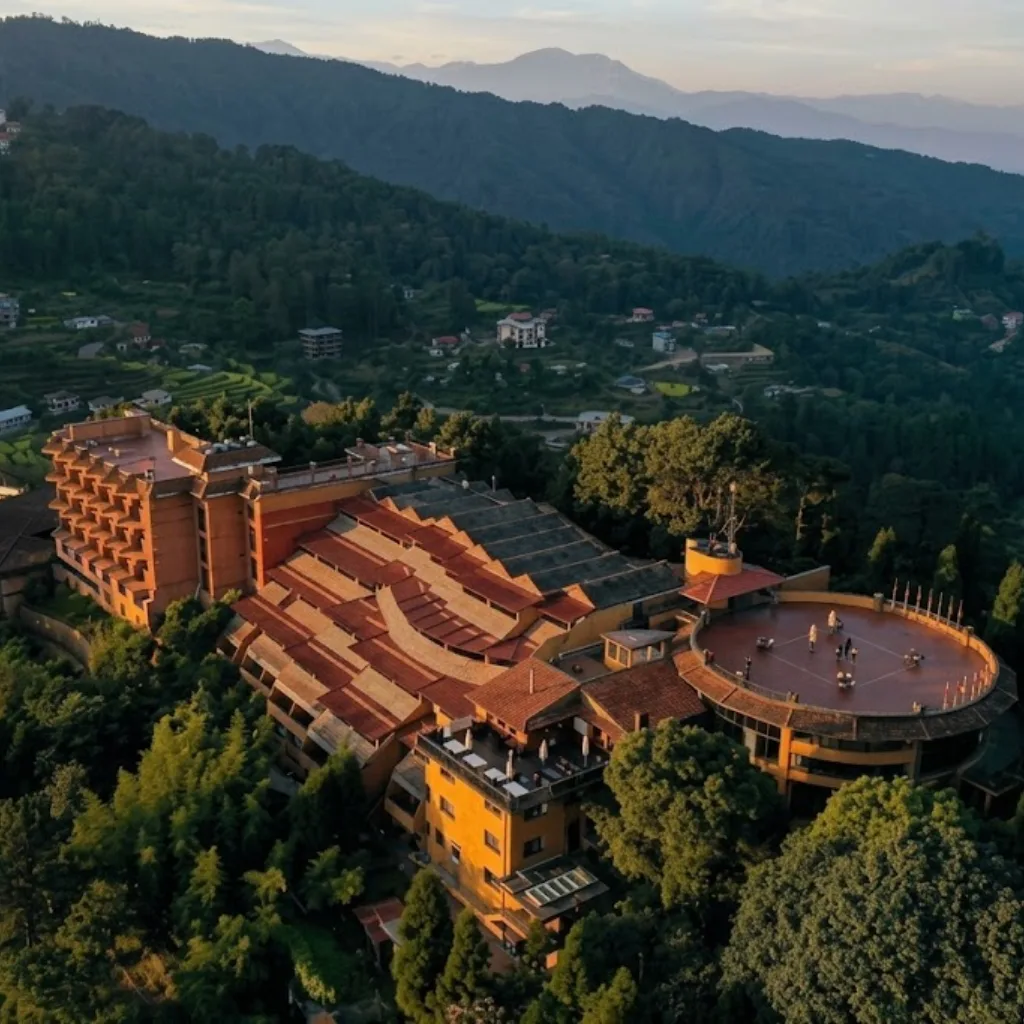
- Nagarkot: A hill hotel chosen for the sunrise view and a quiet night, with breakfast and a restaurant.
- Pokhara: A lakeside hotel with en-suite rooms, breakfast and easy access to Phewa Lake, Davis Falls and the Sarangkot road.
- Chitwan: A safari hotel or lodge near the park with full board, a restaurant and space to relax between activities.
- Room type: Standard twin/double sharing is included; upgraded rooms, suites and single occupancy are available on request, usually at a supplement.
- Private bathrooms: All rooms are en-suite, with hot water and daily housekeeping.
Property names are not published until the booking is confirmed, because availability changes by season and we would rather promise a standard than a name.
What Food Is Available on the Kathmandu, Pokhara and Chitwan Luxury Tour?
The tour combines hotel dining, Nepali restaurants, Chitwan lodge meals and a farewell dinner. Menus cover Nepali classics, Newari specialties, Indian dishes and international options, with vegetarian choices widely available.
Popular dishes and experiences include:
- Dal bhat with rice, lentils, seasonal vegetables, pickle and papad
- Momo — steamed or fried dumplings with tomato chutney
- Newari classics such as bara (lentil patty), chatamari (rice crepe) and samay baji
- Thakali sets from the Annapurna region, built around rice, lentils, greens and pickles
- Tibetan bread, thukpa and noodle soups
- Fresh fish from Phewa Lake at selected Lakeside restaurants
- Chitwan-style river fish and jungle curries at the safari lodge
- Indian curries, biryani and tandoori dishes
- Continental breakfasts, pastries and coffee at the hotels
- Seasonal fruit and local yoghurt, including Bhaktapur’s juju dhau
The Day 08 farewell dinner usually includes traditional Nepali dishes and, where available, live music or a cultural performance. The guide will confirm the venue and menu in advance.
What Food and Accommodation Are Included?
| Included in the Tour Package | Usually Paid Separately |
|---|---|
| 8 nights in 3-star category hotels | International flights and Nepal visa |
| Daily breakfast at the hotels | Lunches and dinners outside Chitwan and the farewell dinner |
| Full board during 2 nights in Chitwan | Drinks and alcoholic beverages |
| Farewell dinner on Day 08 | Snacks, desserts and room service |
| Private air-conditioned vehicle and driver | Optional Bharatpur–Kathmandu flight (USD 143 per person) |
| Licensed English-speaking guide | Optional activities and spa treatments |
| Chitwan National Park entry and safari activities | Travel insurance |
| Entrance fees for the listed sights | Tips and personal expenses |
| Airport meet-and-greet and transfers | Single supplement where applicable |
| Government taxes and service charges | Services not listed in the inclusions |
Always check the final inclusions at booking, as hotel facilities, meal arrangements and park activities can change with the season and the confirmed property.
Chitwan Full-Board Dining
The two Chitwan nights include full board — breakfast, lunch and dinner at the safari hotel. Meals are usually served buffet-style or as a set menu, with Nepali and continental options, and the kitchen can handle vegetarian requests with notice.
The safari day often starts early, so breakfast may be before or after the morning activity depending on the park schedule. The naturalist and the lodge coordinate the timing. Bottled or filtered water is provided, and the lodge will advise on what to carry into the park.
Drinking Water on the Tour
Do not drink untreated tap water in Nepal. Hotels usually provide bottled or filtered water in the room, and the vehicle carries bottled water for sightseeing days. For environmental reasons, carry a reusable bottle and refill it from a trusted filtered source where available.
At restaurants, bottled water and boiled tea are the safe choices. Avoid ice in street drinks if you have a sensitive stomach, and keep a water bottle in your daypack on long sightseeing days and in Chitwan.
Staying Comfortable in the Hotels and Lodge
A few simple habits make the stays more enjoyable:
- Carry a daypack with water, sunscreen, a light layer and your camera.
- Use the hotel safe for your passport and spare cash.
- Pack swimwear if you plan to use a pool at an upgraded property.
- Keep a power bank for long sightseeing days and safari mornings.
- Tell the guide about dietary needs at the start of the tour.
- Confirm wake-up calls for the Nagarkot and Sarangkot mornings and the departure day.
Guide’s Note — Nepal Lion Tours The 3-star label can undersell the experience on this route. What matters is the location: a Nagarkot hotel that faces the sunrise, a Pokhara hotel within walking distance of the lake, and a Chitwan lodge that knows the park gates and the naturalists. We inspect the properties we use and keep the same guide with you across all four destinations. If you want the fully premium version, ask for the 4- or 5-star upgrade quote — the route does not change, only the room standard. — Nepal Lion Tours
Why Book with Nepal Lion Tours?
A nine-day multi-region tour is only as good as the coordination behind it. With Nepal Lion Tours, the Kathmandu, Pokhara and Chitwan Luxury Tour is built around private transport, licensed guiding, verified hotels and a single point of contact from arrival to departure.
- Local, licensed English-speaking guides
Each departure is accompanied by a government-licensed guide who knows the Kathmandu Valley, the Nagarkot and Sarangkot sunrise routes, the Pokhara lakeside and the Chitwan park rules. Guides and group leaders complete a wilderness first-aid medical course.
- A registered tour company you can verify
Nepal Lion Tours is registered in Nepal under Reg. No. 184920/074/075, based in Thamel, Kathmandu, and a member of the Nepal Tourism Board, TAAN and KEEP. Company documents are available on request.
- Private departures for couples, families and groups
The tour runs privately, with your own vehicle, guide and pace. You are not joining a fixed group or waiting for strangers at each stop.
- A route that covers culture, mountains and wildlife
Nine days link six UNESCO-listed monuments and squares, two Himalayan sunrises, lakeside Pokhara and a Chitwan safari. Most tours of this length cover only one or two of those.
- Verified hotels with a clear upgrade path
The published inclusions use 3-star category hotels in all four destinations, with 4- and 5-star upgrades available on request. You know the standard before you book.
- Private transfers and an optional internal flight
Airport meet-and-greet, private air-conditioned vehicles and the option of a 20-minute Bharatpur–Kathmandu flight replace the final long drive if you prefer.
- A local team you can contact before and during the tour
From the first enquiry to the final airport drop, the Kathmandu office and the WhatsApp line +977-9851039020 give you a direct contact for questions, changes and local advice.
Book the Kathmandu, Pokhara and Chitwan Luxury Tour
Ready for 9 days of UNESCO heritage, two Himalayan sunrises, lakeside Pokhara and a Chitwan safari? The Kathmandu, Pokhara and Chitwan Luxury Tour brings Nepal’s three defining regions together in one private, professionally guided itinerary.
Tour at a Glance
- Duration: 9 days / 8 nights
- Price: From USD 1,425 per person (5% off the listed USD 1,500)
- Difficulty: Easy
- Maximum Altitude: 2,175 m / 7,136 ft at Nagarkot
- Accommodation: 3-star category hotels; 4- and 5-star upgrades available
- Meals: Daily breakfast, full board in Chitwan, farewell dinner
- Permits & Documentation: Nepal tourist visa; Chitwan park entry included; no trekking permits required
- Transportation: Private air-conditioned vehicle, airport transfers and optional Bharatpur–Kathmandu flight
- Guide: Licensed English-speaking guide
- Cancellation: Free cancellation up to 14 days before departure, subject to the booking terms
How to Reserve
Reserving the tour takes three simple steps. First, send your preferred travel dates and group size through the booking form or WhatsApp. Second, the team confirms hotel availability, the guide, the Chitwan activities and the final price for your dates. Third, pay the deposit to secure the booking and share your international flight details so the airport transfer can be scheduled.
- Share your dates: Give a preferred start date and any flexibility you have, especially for October–November and March–April.
- Confirm the room standard: Choose the 3-star base or request a 4- or 5-star upgrade quote.
- Share arrival details: Send your international flight number and arrival time for the meet-and-greet.
Ready to Start Your Nepal Adventure?
Secure your Kathmandu, Pokhara and Chitwan Luxury Tour dates with Nepal Lion Tours today. Send your preferred travel date and group size through the booking form or WhatsApp at +977-9851039020, and the team will confirm the hotels, guide, safari and itinerary.
Whether you are travelling as a couple, with family or with friends, we will help you prepare a smooth, comfortable nine days from Kathmandu’s heritage squares to the Nagarkot and Sarangkot sunrises, the shores of Phewa Lake and the forests of Chitwan.
Your complete Nepal journey is waiting — choose your dates and start planning today.
Related Nepal Tours
If the Kathmandu, Pokhara and Chitwan Luxury Tour fits your style, these related journeys offer different ways to see Nepal — from a shorter luxury city-and-lake break to a classic sunrise trek and a high-ridge adventure.
| Tour | Duration | Difficulty | Max Altitude | From (USD) | Best For |
|---|---|---|---|---|---|
| Kathmandu Pokhara Luxury Tour | 7 days | Easy | 1,590 m / 5,217 ft | 1,752 | Heritage and lakeside comfort without Chitwan |
| Kathmandu Chitwan Luxury Tour | 6 days | Easy | 1,350 m / 4,429 ft | 1,140 | Capital culture and a shorter safari |
| Ghorepani Poon Hill Luxury Trek | 6 days | Moderate | 3,210 m / 10,531 ft | 540.55 | A short luxury trek with the classic Poon Hill sunrise |
| Poon Hill Hot Spring Trekking | 5 days | Moderate | 3,210 m / 10,531 ft | 344.10 | Sunrise views plus the Jhinu Danda hot springs |
| Annapurna Panorama View Trek | 9 days | Moderate | 3,210 m / 10,531 ft | 645.05 | Wider Annapurna foothill scenery and village life |
| Mardi Himal Trekking (Long Trek) Luxury | 11 days | Moderate | 4,500 m / 14,764 ft | 891.10 | Quieter high ridges beneath Machhapuchhre |
If you want to add a trek, the Ghorepani Poon Hill Luxury Trek is the natural next step from Pokhara, while Mardi Himal suits travellers ready for a longer high-ridge experience. If you want the same cultural circuit without the safari, the Kathmandu Pokhara Luxury Tour covers the valley and the lake in seven days. The team can combine any of these into one quote.
Trip Essentials
Packing advice, required equipment & gear recommendations
Essential
Kathmandu, Pokhara and Chitwan Luxury Tour Packing List
Packing for the Kathmandu, Pokhara and Chitwan luxury tour is simple because you are staying in hotels rather than lodges or tents. The key is to dress in layers for cold sunrise mornings, warm Terai days and air-conditioned vehicles, bring comfortable shoes for temple streets and cave stairs, and pack a few extras for the jungle.
Nepal Lion Tours arranges the vehicle, guide, hotels and safari activities; you only need a daypack and personal clothing. If you extend the trip with a trek, the team will provide a down jacket, sleeping bag, duffel bag and trekking map for that section.
Clothing
- Light day layers: 2–3 breathable shirts or tops for sightseeing.
- A warm mid-layer: a fleece or light down jacket for Nagarkot and Sarangkot before dawn.
- A packable rain shell: useful in monsoon and for sudden showers in spring.
- Smart-casual evening wear: a clean shirt or dress for the farewell dinner and hotel restaurants.
- Comfortable trousers or dresses: loose, breathable fabrics work best in the valley heat and the Terai.
- A warm hat and gloves in winter: Nagarkot before sunrise can be close to freezing.
- Long sleeves and trousers for Chitwan: they protect against insects and sun on jungle walks.
- Muted colours for safari: greens, browns and greys rather than bright white or neon.
- Swimwear: for the hotel pool at an upgraded property.
Footwear and Day Gear
- Comfortable, non-slip walking shoes for cobbled streets, temple steps, the cave and forest trails.
- A 20–30 litre daypack with a rain cover.
- A reusable water bottle and, if you prefer, a small filter.
- Sunglasses and a sun hat for the strong mid-day sun.
- A small torch or headlamp for the Gupteshwor Cave and the pre-dawn viewpoint walks.
- Binoculars for Chitwan birdwatching and wildlife viewing.
Chitwan and Wildlife Gear
- Insect repellent with DEET or picaridin for the Terai, especially at dusk.
- Long socks and closed shoes for jungle walks; avoid sandals on forest trails.
- A light rain jacket in monsoon and a dust mask or scarf in the dry season.
- A dry bag or plastic pouch for your phone and camera on the canoe and in rain.
- A zoom lens or binoculars for rhinos, deer and birds; keep the camera strap secure in the jeep.
Evening and Dining
- One smart outfit for the farewell dinner.
- A light wrap or jacket for air-conditioned restaurants and rooftop bars.
- Comfortable sandals for the hotel and Lakeside evenings.
Toiletries and Personal Health Items
- Sunscreen and SPF lip balm
- Personal medications and prescriptions
- A small first-aid kit with plasters and antiseptic
- Hand sanitiser and wet wipes
- Insect repellent for Chitwan and evening lakeside
- Oral rehydration salts for hot days and travel stomach
- Toothbrush, toothpaste and personal toiletries
- Quick-dry towel if you plan to swim
Electronics
- Phone and charging cable
- Power bank (10,000–20,000 mAh)
- Camera and spare batteries
- Universal travel adapter (Nepal uses Types C/D at 230 V)
- Offline maps and booking confirmations downloaded before you leave
Wi-Fi is reliable in the hotels and most restaurants, but it can be slow in Nagarkot, Chitwan and on the road. Do not rely on continuous connectivity during safari days.
Documents and Money
- Passport with at least six months’ validity
- Nepal visa or the online visa application confirmation
- Travel insurance details and emergency contacts
- Printed or digital copies of hotel, flight and safari bookings
- Nepalese rupees in smaller notes for tips, drinks and small purchases
- A payment card as backup, plus some USD or EUR cash
How Much Should You Pack?
Pack light: this is a hotel-based tour, not an expedition. A 25–35 litre bag or a small roller plus a daypack is enough for nine days. Laundry is available at the hotels, so you do not need a full week’s wardrobe.
Keep your passport, medication, camera and a light layer in your daypack, and leave the rest at the hotel. If you are continuing to a trek, pack the trekking items separately and let the team store your city clothes in Kathmandu.
The goal is comfort, not volume: versatile layers, good shoes, rain and insect protection, and the documents you actually need.
Read Before You Book
Permits, terms, medical considerations & advisory guidelines
Advisory
What to Know Before Booking
The Kathmandu, Pokhara and Chitwan luxury tour is an easy, hotel-based itinerary, but a little preparation makes the nine days smoother. Here are the practical points worth understanding before you book.
Accommodation and Facilities
You stay eight nights in 3-star category hotels across Kathmandu, Nagarkot, Pokhara and Chitwan. Rooms are en-suite and twin/double sharing is standard. Upgraded rooms, suites and single occupancy are available on request, usually at a supplement, and 4- and 5-star upgrades can be quoted in each city.
Hotel facilities vary by property. Confirm whether your preferred hotel has a pool, spa, gym or lift before booking, and tell the team if you need an accessible room or connecting rooms for a family. Nagarkot hotels are smaller and simpler than city hotels; the trade-off is the sunrise view.
Food and Dietary Requirements
The package includes daily breakfast, full board during the two Chitwan nights and a farewell dinner on Day 08. Lunches and dinners outside Chitwan are generally paid separately unless your final quote says otherwise.
If you are vegan, gluten-free, Jain, halal or have a food allergy, tell Nepal Lion Tours before departure so the hotels, lodges and restaurants can be briefed. Street food is excellent but choose busy stalls and avoid uncooked items if you have a sensitive stomach. In Chitwan, the lodge kitchen can usually prepare simple, mild meals for sensitive diets with notice.
Altitude, Health and Insurance
Altitude is not a concern on this tour. The highest point and highest overnight is Nagarkot at 2,175 m / 7,136 ft, well below the 2,500 m / 8,202 ft threshold where altitude sickness usually begins.
Travel insurance is still strongly recommended. Choose a policy that covers medical treatment, trip interruption and evacuation appropriate to Nepal, and check the altitude limits if you plan to add a trek. Carry personal medication in your daypack and tell your guide about any medical condition.
Money and Tipping
Carry Nepalese rupees in smaller notes for tips, drinks, snacks and small purchases. ATMs are available in Kathmandu and Pokhara, and cards are accepted at hotels and larger restaurants, but cash is smoother for markets, roadside stops and Chitwan.
Tipping is customary but voluntary. A guide tip of NPR 1,000–2,000 for the week and a driver tip of NPR 500–1,000 are common, depending on group size and service. There is no obligation.
Culture and Responsible Travel
The route passes through living religious sites and traditional communities. A few simple habits show respect:
- Remove shoes before entering temple floors and monastery buildings.
- Dress modestly at Pashupatinath and Boudhanath, covering shoulders and knees.
- Ask before photographing local people, monks or cremation areas.
- Walk clockwise around Boudhanath Stupa and other Buddhist sites.
- Avoid touching offerings, statues and prayer flags.
- Carry reusable bottles and avoid single-use plastic, especially in Chitwan National Park.
Chitwan Safari Safety and Health
Chitwan is a genuine wildlife park, and the rules matter. Stay with your naturalist, keep quiet, never feed or approach animals, and follow instructions immediately if a rhino or elephant is nearby. The jeep and canoe are the safest ways to cover ground; jungle walks are slow and guided for a reason.
Take insect repellent, wear long sleeves and trousers at dusk, and use a mosquito net if your lodge provides one. Malaria risk in Chitwan is low but present; speak to a travel doctor about prophylaxis before you leave. Leeches are possible on damp monsoon trails, so tuck trousers into socks and check after walks.
Route Options
The standard itinerary runs Kathmandu → Nagarkot → Pokhara → Chitwan → Kathmandu over nine days. It can be adjusted in several ways:
- Upgrade the hotels to 4- or 5-star properties in any or all destinations.
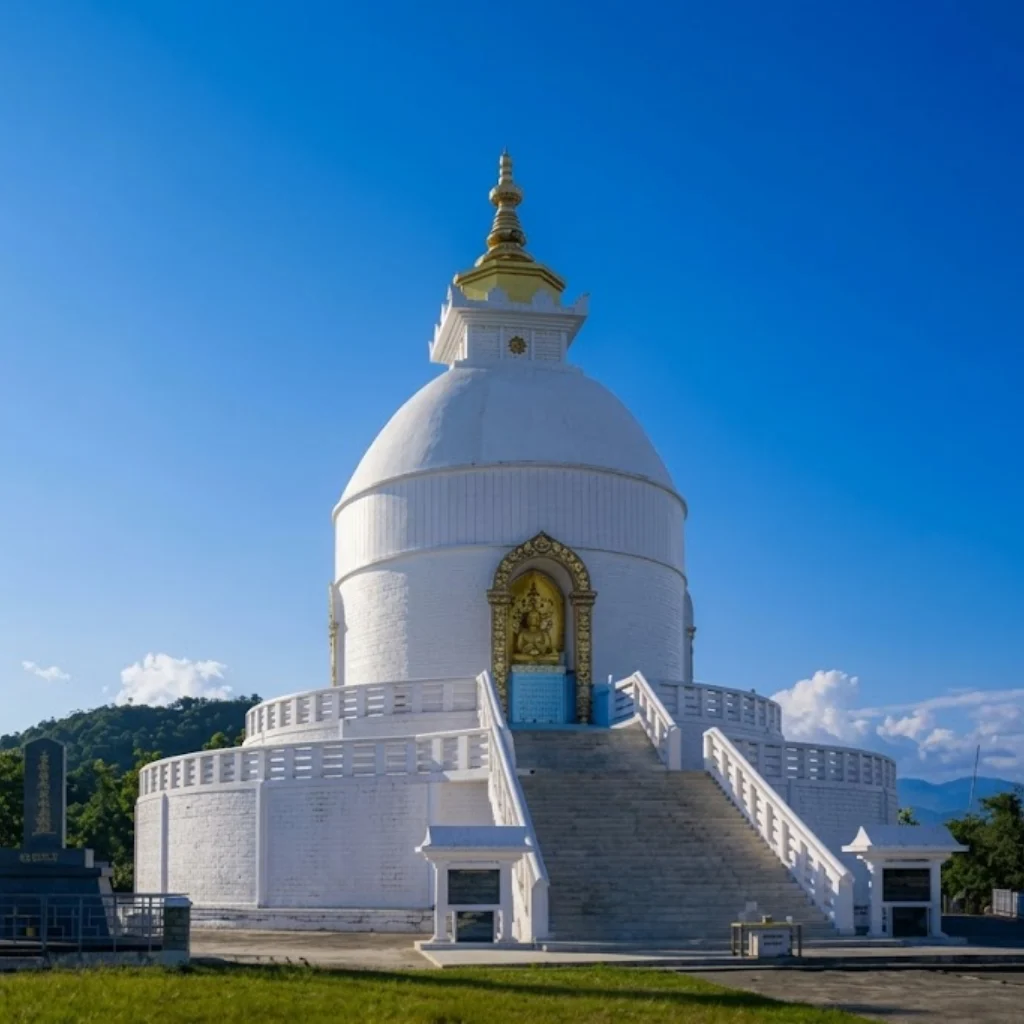
- Add a night in Pokhara for paragliding, boating on Phewa Lake or a World Peace Pagoda sunset.
- Add a night in Chitwan for a second jeep safari or a birdwatching morning.
- Replace the final drive with the optional Bharatpur–Kathmandu flight.
- Add a short trek such as Ghorepani Poon Hill or Mardi Himal after the tour.
- Add a helicopter or mountain flight for a closer Everest or Annapurna view, arranged through a licensed charter operator.
Discuss any change with Nepal Lion Tours before booking so the hotels, safari and guide days can be confirmed together.
Booking and Before You Arrive
Before confirming your Kathmandu, Pokhara and Chitwan luxury tour, make sure you understand:
- What is included in the package price.
- The exact hotels and room categories confirmed for your dates.
- The meal plan, especially lunches and dinners outside Chitwan.
- The Chitwan activity schedule and any park closures.
- The cancellation and payment terms.
- Your travel insurance coverage.
- The airport transfer details and your international flight numbers.
Once your dates are confirmed, share your arrival and departure details so the team can schedule the meet-and-greet and check-in.
A Few Final Tips
Bring broken-in shoes, keep a light layer in your daypack and download offline maps before you leave the airport. Carry small notes for tips and market purchases, and keep your passport in the hotel safe except when travelling.
Most importantly, leave a little flexibility in your schedule. Road travel, mountain weather and park activities can shift, and a relaxed plan is always more enjoyable than a tightly timed one.
Day-by-Day Itinerary
Explore each day's route, trekking elevation, and activities
Morning
Upon arriving at Tribhuvan International Airport, you will be welcomed by one of our representatives. After a warm introduction, you will be transferred to your hotel in Kathmandu. Check in, settle into your room, and take some time to relax after your journey.
Evening
Later, attend a pre-trip meeting with your tour guide to review the itinerary, discuss important travel information, and address any remaining questions. The rest of the evening is free for you to relax, prepare for the upcoming journey, or explore the nearby streets at your own pace.
Overnight: Hotel in Kathmandu
Morning
After breakfast at the hotel, begin your cultural sightseeing tour with a visit to Kathmandu Durbar Square. Explore its historic royal palaces, traditional courtyards, temples, and remarkable architectural structures that reflect Nepal's royal heritage.
Continue to Swayambhunath Stupa, an important Buddhist landmark situated on a hilltop overlooking Kathmandu Valley. Enjoy the spiritual atmosphere and panoramic views of the surrounding city.
Midday
Proceed to Bouddhanath Stupa, one of the largest Buddhist stupas in Nepal and an important centre of Tibetan Buddhist culture. Explore the surrounding monasteries, traditional shops, and prayer wheels while experiencing the peaceful atmosphere of this sacred site.
Afternoon
Complete the sightseeing program with a visit to Pashupatinath Temple, one of the most significant Hindu pilgrimage destinations in Nepal. Located beside the sacred Bagmati River, the temple complex offers insight into traditional Hindu rituals, religious practices, and Nepal's spiritual heritage.
Together, these UNESCO World Heritage landmarks showcase Nepal's centuries-old civilization, religious traditions, traditional craftsmanship, and remarkable artistic achievements.
Evening
After completing the sightseeing tour, return to your hotel. Enjoy the remaining time relaxing or exploring the nearby streets independently.
Morning
After breakfast, begin your cultural exploration with a visit to Patan Durbar Square. This historic city is famous for its traditional Newari architecture, artistic craftsmanship, and ancient monuments.
Explore the former royal palace complex, temples, and traditional courtyards associated with Nepal's Malla dynasty. Observe the intricate wood carvings, decorative windows, beautifully designed doors, and architectural details that reflect the remarkable skills of Newari artisans.
Midday
Continue your sightseeing journey to Bhaktapur Durbar Square, another historic destination known for its well-preserved medieval architecture and cultural heritage.
Explore the former royal palace, ancient temples, traditional courtyards, and surrounding monuments. The city's carved wooden windows, decorative rooftops, and traditional buildings provide a fascinating glimpse into Nepal's historic Newari civilization.
Afternoon
After exploring Patan and Bhaktapur, continue your journey by road toward Nagarkot, a popular hill station situated on the eastern edge of Kathmandu Valley.
The drive takes approximately 1–2 hours, covering around 32 km. Nagarkot is home to communities including the Tamang and Newar people and is well known for its peaceful surroundings and Himalayan mountain scenery.
Upon arrival, check into your hotel and enjoy the surrounding landscape.
Evening
Spend the evening relaxing at your hotel and enjoying the peaceful hilltop atmosphere. If the weather is clear, you may also enjoy beautiful mountain views before preparing for the following morning's sunrise experience.
Morning
Wake up early to experience the spectacular sunrise over the snow-covered Himalayan mountains from Nagarkot.
On a clear morning, you may enjoy impressive views of Langtang Lirung, Ganesh Himal, Dorje Lakpa, and Gaurishankar. Watch as the first sunlight gradually illuminates the surrounding mountain peaks.
After enjoying the scenery, return to your hotel for breakfast and prepare for the journey to Pokhara.
Midday
After breakfast, depart Nagarkot and begin the scenic drive toward Pokhara, widely known as the City of Lakes.
The route passes through beautiful river valleys, green hills, terraced agricultural fields, and traditional rural settlements. Enjoy the changing landscapes as you travel through the countryside of central Nepal.
Afternoon
Continue the road journey toward Pokhara, passing through winding highways, riverside settlements, and lush green landscapes.
Take suitable breaks along the way before reaching Pokhara. Upon arrival, transfer to your hotel and complete the check-in process.
Evening
Enjoy some free time to relax after the long drive. You may also take a leisurely walk around Pokhara's Lakeside area, known for its restaurants, shops, and beautiful surroundings.
Morning
Breakfast: Enjoy breakfast at your hotel before beginning the sightseeing tour.
Start with a visit to Davis Falls, one of Pokhara's popular natural attractions. Observe the powerful flow of water as it disappears into an underground channel.
Midday
Continue to Gupteshwor Cave, located opposite Davis Falls. Extending for more than 2,000 metres, it is considered one of the longest caves in Nepal.
Explore its naturally formed rock structures and underground passages. One notable formation resembles a Shiva Lingam, which holds religious significance in Hindu tradition.
Lunch: Enjoy lunch at a local restaurant before continuing the sightseeing tour.
Afternoon
Proceed to Seti Gorge, an impressive natural formation created by the Seti River as it cuts through the underlying rock formations of Pokhara.
After exploring the gorge, continue to Phewa Lake for a relaxing boating experience.
Evening
Enjoy a peaceful boat ride across Phewa Lake, where the surrounding green hills and reflection of Machhapuchhre (Fishtail Mountain) create a beautiful setting.
Return to your hotel after completing the sightseeing activities.
Dinner: Enjoy dinner at your hotel or a suitable restaurant in Pokhara.
Morning
Wake up early and drive for approximately 30 minutes to Sarangkot, a popular viewpoint overlooking the Annapurna region.
Enjoy a beautiful sunrise across the Annapurna range, Dhaulagiri, Machhapuchhre, and Lamjung Himal.
After returning to your hotel in Pokhara, enjoy breakfast before checking out.
Midday
Depart Pokhara and begin your journey toward Chitwan National Park.
The road gradually descends from the hills toward the warmer Terai lowlands, passing through green hills, agricultural landscapes, and river valleys.
Lunch: Stop along the way for lunch before continuing the journey.
Afternoon
Continue driving through the countryside, passing traditional villages, cultivated fields, and riverside settlements.
As you approach Chitwan, the landscape changes into the warmer and flatter Terai region. Upon arrival, transfer to your hotel and complete the check-in process.
Evening
Enjoy some leisure time at the hotel after the journey.
Dinner: Have dinner at the hotel and relax before the following day's jungle activities.
Morning
Breakfast: Begin the day with breakfast at your hotel.
After breakfast, start your wildlife adventure with an exciting canoe ride along the Rapti River.
Look for the fish-eating gharial and marsh mugger crocodiles resting along the riverbanks. The peaceful canoe experience also provides opportunities to observe the surrounding birdlife.
Midday
Continue with an exciting jeep safari through the grasslands and Sal forests of Chitwan National Park.
Look out for one-horned rhinoceroses, Asian elephants, sloth bears, wild boars, langurs, and different deer species, including sambar, spotted deer, and hog deer.
Lunch: Take a break for lunch during the day's jungle activities.
Afternoon
Join an experienced local naturalist for a guided jungle walk through the surrounding forest.
Learn about native plants, wildlife habitats, and the region's natural ecosystem. You can also enjoy birdwatching while discovering the different bird species found in the national park.
Evening
Return to your hotel after completing the day's jungle activities.
Dinner: Enjoy dinner at the hotel and spend the evening relaxing.
Morning
Breakfast: Enjoy breakfast at your hotel before checking out.
Begin the return journey toward Kathmandu, leaving behind the warm lowland landscapes of Chitwan.
Midday
Travel through the flat Terai region before gradually entering Nepal's green hill landscapes.
Enjoy views of terraced agricultural fields, flowing rivers, traditional rural villages, and roadside settlements.
Lunch: Stop at a suitable restaurant along the highway and enjoy lunch during the journey.
Afternoon
Continue the scenic drive toward Kathmandu through the winding roads and changing landscapes of central Nepal.
Upon reaching Kathmandu Valley, transfer to your hotel and complete the check-in process.
Alternative Flight Option: Guests who prefer to avoid the road journey can choose a domestic flight from Bharatpur Airport in Chitwan to Kathmandu. The flight takes approximately 20 minutes and costs an additional USD 143 per person. This flight is not included in the tour package.
Evening
Spend the remaining evening relaxing at your hotel or exploring the surrounding area independently.
Dinner: Enjoy your final dinner in Kathmandu at the hotel or a suitable restaurant.
Morning
Breakfast: Enjoy your final breakfast at the hotel before preparing for departure.
One of our representatives will pick you up from your hotel and transfer you to Tribhuvan International Airport approximately three hours before your scheduled flight.
This arrangement provides sufficient time to complete baggage procedures, security screening, and immigration formalities without any last-minute rush.
Midday / Afternoon
Complete the airport departure formalities and board your onward flight.
Your 9-day Kathmandu, Pokhara, and Chitwan journey comes to an end, leaving you with unforgettable memories of Nepal's cultural heritage, Himalayan scenery, beautiful landscapes, and wildlife experiences.
End of the 9-Day Kathmandu, Pokhara and Chitwan Tour.
Want to customize this itinerary?
Tailor duration, lodges, acclimatization days, or add private helicopter flights.
Inclusions & Exclusions
Everything that is covered and what you'll need to budget separately
What is Included
Fully covered in your package price
- All ground transportation by private vehicle, including airport transfers.
- Three nights’ accommodation at a 3-star category hotel in Kathmandu, including breakfast.
- One night’s accommodation at a 3-star category hotel in Nagarkot, including breakfast.
- Two nights’ accommodation at a 3-star category hotel in Pokhara, including breakfast.
- Two nights’ accommodation at a 3-star hotel in Chitwan National Park with full-board meals.
- All guided sightseeing tours and activities, including applicable entrance fees.
- Farewell dinner at a traditional Nepalese restaurant in Kathmandu.
- All applicable government taxes and office service charges.
What is Excluded
Personal expenses & optional extras
- Meals and beverages not specifically mentioned under the Meal Inclusions in the itinerary.
- International airfare.
- Nepal entry visa. A tourist visa can be obtained upon arrival at Tribhuvan International Airport in Kathmandu. A multiple-entry tourist visa valid for 30 days costs US$40 or the equivalent in foreign currency, while a 90-day multiple-entry tourist visa costs US$100. Please bring two passport-size photographs.
- Tips and gratuities for the tour guide and driver.
Our Customer Reviews
Authentic experiences and feedback from our travelers
Write a Review
Share your adventure experience with other travelers
Thank You!
Your review has been submitted and is awaiting approval.
Please Wait
You've submitted several reviews recently. Please wait a few minutes before trying again.
Mia Zimmermann
My partner and I took turns carrying the daypack, and the kids handled it better than we did. The pace of Kathmandu was relaxed, which we appreciated. We took a short detour near Pokhara and found a quiet spot with a great view. The porters and support team worked hard and made the trip feel safe. A good mix of adventure and comfort for us. Tip: If you are travelling with children, build in a slower day halfway through.
Nora Sommer
I had wanted to see a rhino in the wild for years, and this trip delivered. I would recommend giving Kathmandu more time rather than less. I had seen Chitwan on a documentary, and the real thing was better. We saw rhinos, deer and far more birds than I could name. Packing and unpacking every day got old, but the logistics themselves were fine. It was nice to spend a few days where the biggest decision was what to order for dinner. The hotel stop near Kathmandu had the best view from the dining room. We would go again.
Florence Jansen
I had wanted to see a rhino in the wild for years, and this trip delivered. I had low expectations for Chitwan and ended up loving it. I had seen Pokhara on a documentary, and the real thing was better. The trip had enough variety that no two days felt the same. The early morning drives were cold, but the light and the animals made it worthwhile. We came for the animals and left with a much better understanding of the park. Tip: Tip the crew directly if you can, and ask what is appropriate.
Linnea Brandt
The meals were simple in places but always fresh, which is what matters to me. The guide knew a lot about Pokhara and told us the kind of details you do not find in guidebooks. I would plan another trip around Kathmandu alone. The tea stops were just as memorable as the meals, especially the ginger tea on cold mornings. A solid trip from start to finish.
Daniel Fontaine
This one had been on our list for a while, and it mostly lived up to the hype. Pokhara felt less like an and more like a proper experience. I would put Chitwan near the top of anything we did on this trip. We brought a small notebook and wrote something each evening, which I am glad we did. The light after the rain was beautiful. Breakfasts were basic but filling, and the tea was always hot. It was not perfect, but it was real, and that is what I remember. One of the drivers had a great sense of humour and kept us entertained. We were a bit tired by the end of most days, but in a good way. A good reminder that the best sightings often happen when you stop rushing. Tip: Ask the guide about the quieter alternatives if a stop is busy.
Frequently Asked Questions
Essential information on preparation, route specifics, safety standards, and logistical details.