Nar Phu Trekking — 16 Days | Nepal Lion Tours
A Remote Himalayan Journey Through Ancient Villages, Tibetan Culture and the Spectacular Kang La Pass
Tour Highlights
Sixteen days of restricted valleys, stone villages and two Himalayan passes — the Nar Phu Trek is dense with defining moments:
- Nar Phu Restricted Valleys — up to 4,110 m / 13,484 ft: two of Nepal’s most remote valleys, opened only recently and still governed by a restricted-area permit.
- Kang La Pass — 5,322 m / 17,460 ft: the Day 9 crossing, with panoramic views of Pisang, Annapurna II, Gangapurna and Tilicho, and blue sheep often grazing on the descent.
- Thorong La Pass — 5,416 m / 17,769 ft: the trek’s highest point and one of the world’s highest trekking passes, crossed at dawn on Day 13.
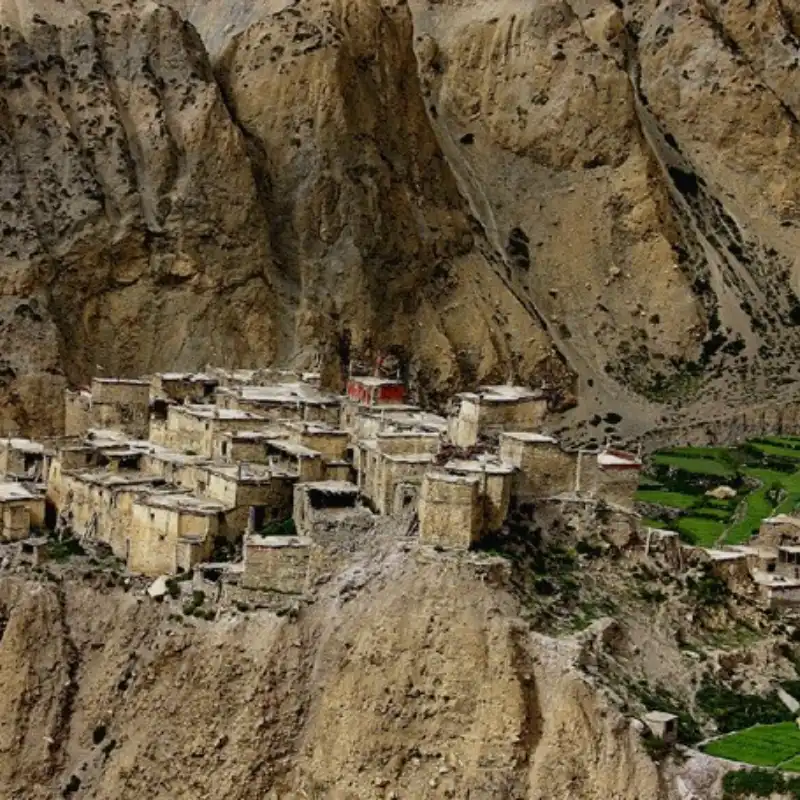
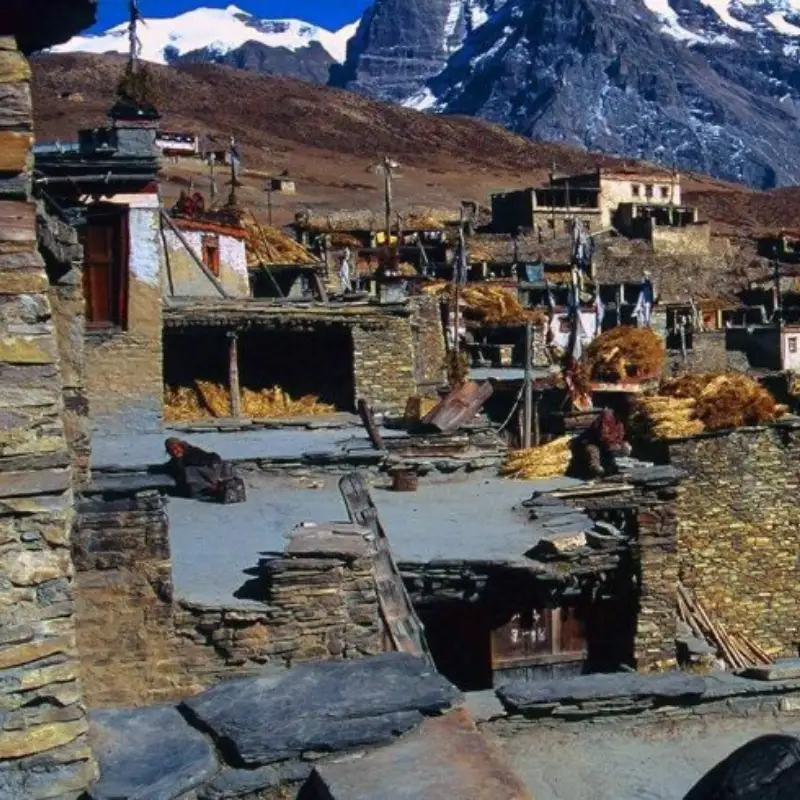
- Phu Gaon — 4,080 m / 13,383 ft: a dramatic flat-roofed stone village tucked among cliffs, with an ancient monastery on the hill above and a full acclimatization day on Day 6.
- Nar Village — 4,110 m / 13,484 ft: a centuries-old isolated settlement where Tibetan culture and architecture survive intact, reached by a gentle Day 8 walk.
- Braga Monastery: the famous ancient monastery of Braga, visited on the Day 10 descent toward Manang.
- Muktinath — 3,800 m / 12,467 ft: the sacred Hindu and Buddhist pilgrimage temple where eternal flames burn beside 108 water spouts — the Day 13 finishes.
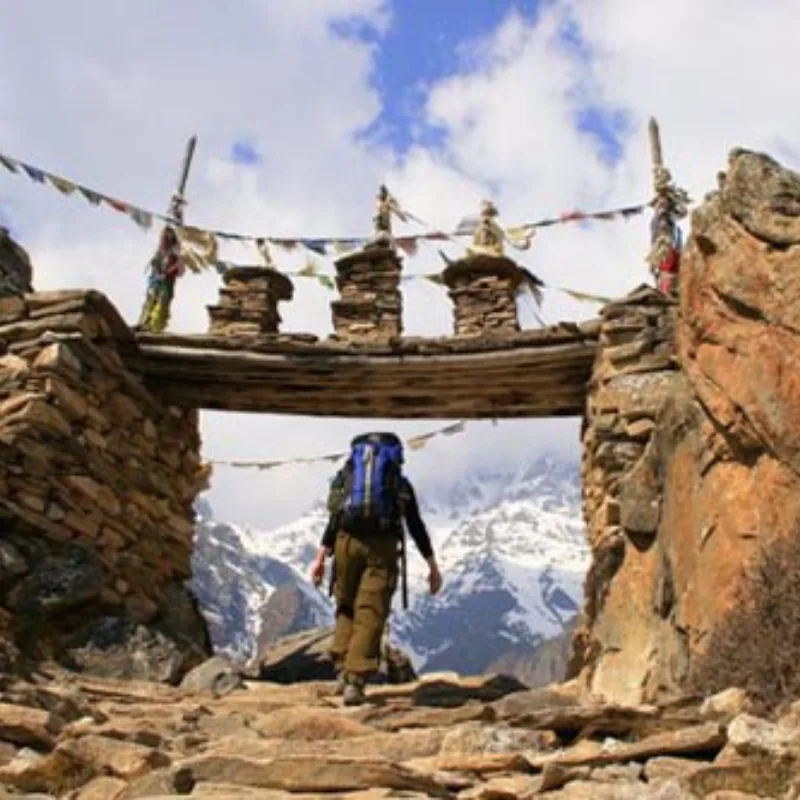
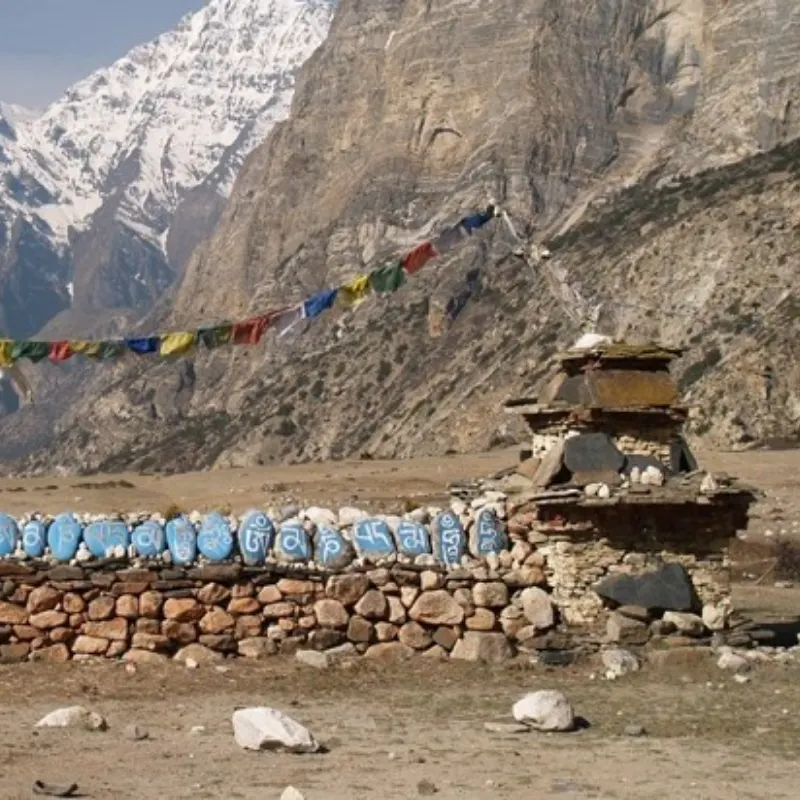
- Remote trail character: far fewer trekkers than the main circuit below Kang La, with mani walls, chortens and traditional Tibetan villages at almost every bend.
- The road-supported format: a jeep to Koto and a drive out via Pokhara keep this ambitious 5,416 m / 17,769 ft route inside 16 days.
Nar Phu Trekking Overview
The Nar Phu Trekking is a 16-day restricted-area trek in Nepal’s Annapurna region that links two of the Himalaya’s most remote valleys — Nar and Phu — with the classic Annapurna Circuit high route. It crosses the Kang La Pass at 5,322 m / 17,460 ft, then joins the Thorong La approach and finishes with the crossing of Thorong La at 5,416 m / 17,769 ft, the trek’s highest point and one of the world’s highest trekking passes. Graded strenuous, it suits experienced, well-prepared trekkers who want Tibetan-style villages, ancient monasteries and genuinely quiet trails.
The journey starts in Kathmandu, with a bus to Besisahar and a jeep into the Marsyangdi valley to Koto at 2,600 m / 8,530 ft. The trail then climbs the Phu Valley to Phu Gaon at 4,080 m / 13,383 ft for an acclimatization day, crosses to the Nar Valley via Nar Phedi and Nar Village at 4,110 m / 13,484 ft, and climbs the Kang La Pass at 5,322 m / 17,460 ft to Ngawal. From there it descends the Annapurna Circuit route through Braga, Manang, Yak Kharka and Thorong Phedi to Thorong La at 5,416 m / 17,769 ft, then down to sacred Muktinath at 3,800 m / 12,467 ft before the drives via Pokhara back to Kathmandu.
With Nepal Lion Tours, the package starts from USD 849 per person and includes a licensed English-speaking trekking guide (Chinese, Korean and Hindi speaking guides are also available), all required permits including the Nar Phu restricted-area permit, teahouse and guest-house accommodation, breakfast, lunch and dinner on trekking days, private airport transfers, a down jacket, all-season sleeping bag and duffel bag for the trail, a mobile SIM card and a trekking map of the region.
What Makes the Nar Phu Trekking Special?
The Nar Phu Trek is a window into a world that stayed closed to outsiders for decades — the Nar and Phu valleys were restricted areas until the early 2000s, and their flat-roofed stone villages, mani walls, chortens and Tibetan dialect remain remarkably intact. Add the Kang La Pass at 5,322 m / 17,460 ft, the herders who winter their yaks between Nar and Phu, the chance of spotting blue sheep, and the grand finale crossing of Thorong La at 5,416 m / 17,769 ft, and it becomes one of the most varied and rewarding long treks in the Annapurna region. The route lets you experience a restricted valley and the classic circuit in a single 16-day journey.
Why Choose the Nar Phu Trekking?
The Nar Phu Trek combines two experiences that usually need two separate trips: the remote, permit-controlled Tibetan valleys of Nar and Phu, and the high-pass grandeur of the Annapurna Circuit with Kang La and Thorong La. It is quieter than the main circuit — Phu Gaon, Nar Phedi and Nar Village see a fraction of the trekkers that Manang does — and yet the logistics are familiar: guest houses all the way, a jeep road in to Koto, and a drive out from Muktinath to Pokhara. For trekkers who have done the foothill routes and now want remoteness with altitude, this is the natural next step.
Who Is This 16-Day Nar Phu Trek Suitable For?
- Experienced trekkers who have already done a high Himalayan route and want two big passes in one trip.
- Fitness-focused adventurers comfortable with 7–10 hour walking days and two nights above 4,000 m / 13,123 ft.
- Culture seekers are drawn to the Tibetan-influenced villages and ancient monasteries of Phu, Nar and Braga.
- Wildlife watchers hoping to spot blue sheep around Kang La, Yak Kharka and Thorong Phedi.
- Photographers chasing flat-roofed stone villages, mani walls, pass panoramas and the Mustang rain shadow.
- Small private groups (from 2 trekkers) who want their own pace, dates and a dedicated guide.
- Trekkers who value prestige: a restricted-area trek through Nar and Phu alongside 5,416 m / 17,769 ft is a genuine Himalayan badge of achievement.
The route has no technical climbing, but it is not a first-timer’s trek: the Kang La day runs about 10 hours, and the Thorong La day adds another long high-altitude climb, so solid fitness and prior altitude experience are strongly recommended.
Guide’s Note — Nepal Lion Tours “The Nar Phu valleys were closed for so long that even today the permits make every step feel like a privilege. From our experience running Nar Phu departures, the trekkers who enjoy it most arrive with two things: patience for the permit paperwork on Day 2, and respect for the Kang La day in Phu Gaon — that acclimatization stop is what makes the 5,322 m pass possible two days later. We tell every group to treat Phu Gaon like a school, not a rest day.” — Nepal Lion Tours Trekking Guide
Quick Facts
Trek Fact | Details |
|---|---|
Trek Name | Nar Phu Trekking |
Duration | 16 days / 15 nights |
Region | Annapurna, Gandaki, Nepal |
Maximum Altitude | 5,416 m / 17,769 ft at Thorong La Pass |
High Pass Crossed | Kang La at 5,322 m / 17,460 ft on Day 9 |
Difficulty | Strenuous |
Main Highlight | Restricted Nar and Phu valleys plus Kang La and Thorong La passes |
Start / End | Kathmandu to Kathmandu |
Route | Koto – Meta – Phu Gaon – Nar Phedi – Nar – Kang La – Ngawal – Manang – Yak Kharka – Thorong Phedi – Thorong La – Muktinath – Pokhara |
Typical Walking | 3–10 hours per day |
Best Season | Spring and Autumn (March–May, September–November) |
Price From | USD 849 per person |
Accommodation | Guest houses on the trail, 3-star hotels in Kathmandu and Pokhara |
Guide | Licensed English-speaking trekking guide (Chinese, Korean, Hindi available) |
Nar Phu Trekking Route and Elevation
The Nar Phu Trek uses the Marsyangdi valley road to reach Koto at 2,600 m / 8,530 ft, then walks the Phu Valley, crosses the Kang La, drops into the Nar Valley, and joins the Annapurna Circuit at Ngawal for the Thorong La finish. Road transfers at both ends keep the itinerary focused on the remote middle section.
Nar Phu Route at a Glance
Day | Route | Altitude (Day High Point) | Highlights |
|---|---|---|---|
Day 1 | Arrival in Kathmandu | 1,400 m / 4,593 ft | Airport pickup, hotel, guide meeting |
Day 2 | Permit preparation in Kathmandu | 1,400 m / 4,593 ft | Restricted-area permit, optional sightseeing |
Day 3 | Kathmandu → Besisahar → Koto | 2,600 m / 8,530 ft | Bus to Besisahar, jeep to Koto, Manaslu views |
Day 4 | Koto → Meta | 3,560 m / 11,680 ft | Checkpoint, forests, suspension bridges, Tibetan-style shift |
Day 5 | Meta → Phu Gaon | 4,080 m / 13,383 ft | Phu Valley cliffs, mani walls, monastery hike option |
Day 6 | Acclimatization in Phu Gaon | 4,080 m / 13,383 ft | Village walks, rest, monastery, valley exploration |
Day 7 | Phu Gaon → Nar Phedi | 3,490 m / 11,450 ft | Khyang, gorges, waterfalls, Pisang views |
Day 8 | Nar Phedi → Nar Village | 4,110 m / 13,484 ft | Short climb to the historic Nar settlement |
Day 9 | Nar Village → Ngawal via Kang La | 5,322 m / 17,460 ft | The pass, Annapurna II, Gangapurna, Tilicho, blue sheep, long descent |
Day 10 | Ngawal → Manang | 3,549 m / 11,643 ft | Braga monastery, descent to the Annapurna Valley |
Day 11 | Manang → Yak Kharka | 4,060 m / 13,316 ft | Tenki, Letdar, high slopes, blue sheep |
Day 12 | Yak Kharka → Thorong Phedi | 4,525 m / 14,845 ft | Marsyangdi River, high camp, pass preparation |
Day 13 | Thorong Phedi → Thorong La → Muktinath | 5,416 m / 17,769 ft | Pre-dawn pass, Gangapurna/Annapurna/Thorong/Khatung Kang panorama, Muktinath temples |
Day 14 | Muktinath → Pokhara (drive) | 850 m / 2,788 ft | Scenic drive, Jomsom and Tatopani, Pokhara rest, optional flight upgrade |
Day 15 | Pokhara → Kathmandu (tourist bus) | 1,400 m / 4,593 ft | Return drive, farewell dinner |
Day 16 | Final departure | 1,400 m / 4,593 ft | Airport transfer, journey home |
Nar Phu Elevation Profile
The profile is two climbs, one descent, then a low-altitude road finish. It rises from Koto at 2,600 m / 8,530 ft up the Phu Valley to Phu Gaon at 4,080 m / 13,383 ft, holds there for an acclimatization day, dips to Nar Phedi at 3,490 m / 11,450 ft, and climbs again to Nar Village at 4,110 m / 13,484 ft. The first true summit is Kang La at 5,322 m / 17,460 ft on Day 9, a long pre-dawn climb followed by a long descent to Ngawal on the far side.
The route then steps down to Manang at 3,549 m / 11,643 ft, climbs Yak Kharka at 4,060 m / 13,316 ft and Thorong Phedi at 4,525 m / 14,845 ft over two days, and makes the second summit on Day 13: Thorong La at 5,416 m / 17,769 ft, crossed at dawn and descended the same day to Muktinath at 3,800 m / 12,467 ft. From there the trip drops by road to Pokhara at 850 m / 2,788 ft and back to Kathmandu at 1,400 m / 4,593 ft. The full elevation profile and a trekking map are included in your Nepal Lion Tours materials.
How to Get to the Nar Phu Trekking
The Nar Phu Trek starts and ends in Kathmandu, with a road approach up the Marsyangdi valley to the trailhead at Koto. Because the route avoids Lukla-style flight dependency, the schedule stays reliable even when mountain weather turns.
Kathmandu to Besisahar: Bus or Private Vehicle?
The first leg heads north from Kathmandu toward Besisahar, the gateway town of the Marsyangdi valley:
Option | Approx. Travel Time | Best For |
|---|---|---|
Tourist/public bus to Besisahar | Around 5–6 hours | Budget-conscious travellers |
Private vehicle to Besisahar | Around 5–6 hours | Flexible or private travel |
Private vehicle for the whole day (Kathmandu → Koto) | Around 7–9 hours total | Who want the transfer done in one go with stops |
Road times are approximate and affected by traffic, weather and road construction. Besisahar has no commercial airport, so the practical choices are public bus or a private vehicle; the bus leg is the budget pick and the private vehicle gives more control over timing and photo stops at the Lata Manang waterfalls and Manaslu views.
Besisahar to Koto: Into the Marsyangdi Valley
From Besisahar, a 4-wheel-drive jeep carries the group up the rough gravel road through the Marsyangdi valley to Koto at 2,600 m / 8,530 ft — about 2–3 hours over the upper road sections. The drive passes the waterfalls around Lata Manang and, on clear days, offers views of the Manaslu range. At Koto the group explores the village while Nepal Lion Tours arranges the local guest house for the first night on the trail.
Guide’s Note — Nepal Lion Tours “From our experience running Nar Phu departures, Day 3 is the longest, most tiring travel block of the trip — public bus to Besisahar, then the jeep into the valley. We recommend a real breakfast in Kathmandu, water for the road, and loose layers because the valley heats up fast below 2,600 m. By the time you reach Koto the traffic noise is gone and the first mani wall tells you the trek has properly begun.” — Nepal Lion Tours Trekking Guide
Returning to Kathmandu After the Trek
The return is a two-day road journey. On Day 14, the group drives from Muktinath through Jomsom and Tatopani to Pokhara in about 5–6 hours, with a night in a Pokhara hotel. On Day 15, a tourist bus leaves Pokhara around 7:30 AM and reaches Kathmandu in about 7–9 hours, followed by a farewell dinner. Trekkers short on time can instead take the Pokhara–Kathmandu flight (about 25–30 minutes) at an additional cost of USD 105 per person, or a deluxe night bus that connects with international flights the next morning.
A Practical Tip for International Travellers
Leave a full day’s buffer in Kathmandu after Day 15 before your international flight — the Pokhara–Kathmandu bus runs 7–9 hours and can be delayed by traffic. If your schedule is tight, book the optional flight at USD 105 per person or the deluxe night bus to arrive rested. Access to this trek is straightforward and road-supported, so with one buffer day the logistics are easy to manage.
Nar Phu Trekking Difficulty, Fitness & Altitude
The Nar Phu Trek is graded strenuous, and the page’s FAQ calls it challenging — both descriptions are accurate. There is no technical climbing, but the itinerary asks for 7–10 hour days, a Kang La crossing at 5,322 m / 17,460 ft, and a Thorong La crossing at 5,416 m / 17,769 ft, with two nights above 4,000 m / 13,123 ft. This is a trek for fit, experienced walkers.
Where the Effort Actually Is?
Three sections carry most of the load:
- Kang La day (Day 9): a pre-dawn climb from Nar Village at 4,110 m / 13,484 ft up over Kang La at 5,322 m / 17,460 ft, followed by a long, knee-heavy descent to Ngawal — roughly 10 hours in total.
- Thorong La day (Day 13): an early start from Thorong Phedi at 4,525 m / 14,845 ft up roughly 850–900 m / 2,789–2,953 ft to Thorong La at 5,416 m / 17,769 ft, then a long descent to Muktinath at 3,800 m / 12,467 ft — a full 8–10 hour day in cold morning air.
- The Phu Valley climbs (Days 4–5): steady 7–8 hour ascents through forest and suspension-bridge country as the trail rises from Koto at 2,600 m / 8,530 ft to Phu Gaon at 4,080 m / 13,383 ft.
Outside those sections the trail is a mix of forested valley paths, cliff-hugging routes, mani-wall corridors and high, exposed ridges — all manageable in good walking boots with a steady pace.
Guide’s Note — Nepal Lion Tours “The Kang La day is short relative to the Thorong Phedi push, but it is the day everyone remembers — a sea of headlamps leaving Nar before sunrise, then the full Annapurna wall opening up at the top. From our experience, hydration and a light pack matter more than speed: the descent into the Nar side is long and rocky, and tired legs meet steep trail. We recommend carrying an extra 500 ml of water on Day 9 and keeping breakfast early.” — Nepal Lion Tours Trekking Guide
How to Prepare for the Nar Phu Trek
- Walk 8–10 weeks beforehand, building to 6–8 hours of continuous walking with a loaded daypack.
- Practice long descents — the Kang La and Thorong La downhills punish unprepared knees, so add downhill training.
- Build leg and core strength with squats, lunges and step-ups for the repeated ascents above 4,000 m / 13,123 ft.
- Do one or two prior high-altitude treks or long high-mountain hikes to know how your body responds above 3,500 m / 11,483 ft.
- Front-load your endurance — the hardest days are Day 9 and Day 13, not Day 1.
- Rest well the week before departure — arrive in Kathmandu fresh, not already tired.
How Difficult Is Nar Phu Compared with Other Treks?
The Nar Phu Trek sits at the top end of the Annapurna difficulty ladder. It crosses two passes above 5,300 m — Kang La at 5,322 m / 17,460 ft and Thorong La at 5,416 m / 17,769 ft — which places it above Annapurna Base Camp at 4,130 m / 13,550 ft and well above Poon Hill at 3,210 m / 10,531 ft. Unlike the standard Annapurna Circuit, it adds a restricted-area section with more remote trail, fewer lodges and a 10-hour pass day. Trekkers who can handle 7–10 hours day after day and already know their altitude response will manage it; those without high-altitude experience should consider the Annapurna Circuit or Annapurna Base Camp first.
Altitude, Acclimatization & Safety
The Nar Phu Trek reaches 5,416 m / 17,769 ft and sleeps two nights near or above 4,100 m / 13,451 ft (Phu Gaon and Nar), so altitude is the central safety factor. The itinerary builds in an acclimatization day at Phu Gaon and a steady two-day approach to Thorong Phedi, but every trekker should know how the body responds.
Nar Phu Altitude Profile
- Kathmandu — 1,400 m / 4,593 ft: overnight city at the start and end.
- Koto — 2,600 m / 8,530 ft: the trailhead village on Marsyangdi.
- Meta — 3,560 m / 11,680 ft: first Tibetan-style overnight.
- Phu Gaon — 4,080 m / 13,383 ft: acclimatization base with the Day 6 rest day.
- Nar Phedi — 3,490 m / 11,450 ft: lower overnight bridging Phu and Nar.
- Nar Village — 4,110 m / 13,484 ft: one of the highest inhabited villages reached on the trek.
- Kang La — 5,322 m / 17,460 ft: high point of Day 9 (not slept at).
- Ngawal — a high village on the descent (altitude not listed on the page): rest stop after Kang La.
- Manang — 3,549 m / 11,643 ft: developed village, rest and supplies on Day 10.
- Yak Kharka — 4,060 m / 13,316 ft: high yak-grazing country on Day 11.
- Thorong Phedi — 4,525 m / 14,845 ft: base camp for Thorong La, night before the pass.
- Thorong La — 5,416 m / 17,769 ft: the trek’s highest point on Day 13.
- Muktinath — 3,800 m / 12,467 ft: descent finish and pilgrimage site.
- Pokhara — 850 m / 2,788 ft: low-altitude rest night on Day 14.
How the Body Adapts to Altitude
Acclimatization is a gradual, steady process. This itinerary caps most daily gains at a moderate pace, adds a rest day at Phu Gaon at 4,080 m / 13,383 ft, and spaces the two pass days nearly a week apart so the body adjusts between them. On the trail: keep a conversational pace, drink 3–4 litres of fluid a day, eat well even without appetite, sleep at the planned stops (never on a pass), and tell the guide immediately about headache, nausea, dizziness or breathlessness.
Symptoms of Altitude Sickness to Watch For
- Persistent headache that does not clear with rest or paracetamol
- Loss of appetite and nausea
- Unusual fatigue or weakness
- Dizziness and poor sleep
- Shortness of breath after little effort
More concerning signs that need immediate action:
- Confusion, clumsiness or loss of balance
- Repeated vomiting
- Bluish or grey lips and fingertips
- Breathlessness at rest
- Inability to walk or think clearly
The protocol is always the same: stop ascending, tell your guide, and be prepared to descend. With a licensed guide monitoring the group and the permit registration of the route, Nepal Lion Tours manages altitude risk proactively.
How Nepal Lion Tours Supports Altitude Safety
- An acclimatization day at Phu Gaon before the Kang La crossing, plus a measured two-day approach to Thorong Phedi.
- Licensed, experienced guides who watch hydration, pace and symptoms across both pass days.
- Early reporting encouraged — small complaints are taken seriously before they escalate.
- No sleeping at the passes: both Kang La at 5,322 m / 17,460 ft and Thorong La at 5,416 m / 17,769 ft are climbed in daylight and descended the same day.
- Pre-trek health briefing plus advice on travel insurance covering trekking above 5,000 m and emergency evacuation.
Best Time to Trek Nar Phu
The best time for the Nar Phu Trek is autumn (September–November) and spring (March–May), the two windows the page folds into its Mar–Nov season range. Stable weather and clear views matter doubly on a trek with two high passes, because Kang La and Thorong La can hold snow well beyond winter if conditions stay cold.
Season | Months | Weather & Trail Conditions | Mountain Views | Overall |
|---|---|---|---|---|
Autumn | September–November | Clear, dry trails on both passes | Excellent on clear days | Best overall |
Spring | March–May | Warmer, drier; rhododendrons lower down | Very good in mornings | Highly recommended |
Winter | December–February | Snow on Kang La and Thorong La; cold guest houses | Good on clear days | Possible with preparation |
Monsoon | June–August | Wet trails, leeches below Koto, cloudy passes | Frequently limited | Less suitable |
Autumn — September to November
Autumn is the classic season for the Nar Phu Trek. From September to November, the monsoon clears, skies sharpen and both passes firm up into their easiest condition — October in particular gives the clearest views of Annapurna II, Gangapurna, Tilicho and Pisang from the top of Kang La. Nights at Phu Gaon and Nar Village turn cold, so the loaned sleeping bag and down jacket earn their keep from the first valley night. This is also the season when the restricted-area permit queue at the government office in Kathmandu is longest, so Nepal Lion Tours books Day 2 paperwork early.
Spring — March to May
Spring runs a close second. From March to May, days warm quickly, trails dry, and the lower Marsyangdi forest between Koto and Meta greens out with rhododendron bloom. Mornings are the clear window for Kang La; afternoon cloud is common but rarely settles in for the day. March can still hold early-season snow on the high passes, so Nepal Lion Tours checks current conditions and asks flexible March dates before confirming departures.
Winter — December to February
Winter is possible but serious. From December to February, temperatures drop well below -10 °C at Phu Gaon and Thorong Phedi, and fresh snow can park on Kang La and Thorong La for days. The Nar and Phu villages are at their quietest and most atmospheric, but the pass days demand patience and strong gear. Nepal Lion Tours runs winter departures only after confirming the passes are clear, and always with the option to wait a day for a weather window.
Monsoon — June to August
Monsoon (June–August) is the least suitable season. Trails turn slippery, leeches appear in the forests below Koto, and the Kang La crossing frequently sits in cloud, robbing the journey of its signature views. Some hardy trekkers still go for the green valleys and empty trails, but the two-pass combination makes monsoon a poor-value risk.
Which Season Should You Choose?
Choose autumn (September–November) for the most reliable pass days and the best views — it is the clear pick for most trekkers. Choose spring (March–May) for warmer days and flowering valleys with almost-as-good mornings. Choose winter only if you are experienced, insulated and flexible on dates; avoid monsoon unless you have no choice. Because the Nar Phu permits and pass conditions vary with season, Nepal Lion Tours confirms both the closure status of the passes and the current fee schedule before locking your dates.
Guide’s Note — Nepal Lion Tours “On clear autumn mornings the view from Kang La opens up in layers — Pisang and Annapurna II ahead, Gangapurna and Tilicho to the west, and the Nar Valley falling away behind you. From our experience the first two weeks of October give the most reliable pass mornings, but even in good seasons we plan a buffer day so the group can hold at Phu Gaon or Nar if the trail report is bad. The passes decide the schedule, not the calendar.” — Nepal Lion Tours Trekking Guide
Nar Phu Trekking Permits & Regulations
The Nar Phu Trek enters the Annapurna Conservation Area and then passes into a restricted trekking region, so trekkers need three sets of registration: the ACAP, the TIMS card where applicable, and a Nar Phu special restricted-area permit. Nepal Lion Tours arranges all of them as part of pre-trek preparation, and your guide carries the paperwork for the checkpoint before the Koto–Meta walk on Day 4.
Nar Phu Permits at a Glance
Requirement | Who Needs It? | Who Arranges It? |
|---|---|---|
ACAP — Annapurna Conservation Area Permit | Foreign and SAARC trekkers entering ACAP | Nepal Lion Tours |
TIMS Card (Trekkers’ Information Management System) | Trekkers on applicable Annapurna routes | Nepal Lion Tours |
Nar Phu Special Restricted-Area Permit | All trekkers entering the restricted Nar and Phu valleys | Nepal Lion Tours |
Annapurna Conservation Area Permit (ACAP)
The ACAP is the standard entry permit for the Annapurna Conservation Area, covering the route from Koto into Phu, Nar and beyond to Thorong La. It is issued against your passport number and costs around NPR 3,000 for foreign trekkers and NPR 1,000 for SAARC nationals (government fees can be revised — confirm at booking). Nepal Lion Tours arranges the ACAP with the other permits during the Day 2 paperwork session so the trail starts without queues.
TIMS Card (Trekkers’ Information Management System)
The TIMS Card records your route and emergency contact details in the official trekkers’ registration system and is checked alongside the ACAP on applicable Annapurna routes. The fee varies by nationality and current regulations, so the current figure is confirmed at booking. Nepal Lion Tours handles TIMS registration as part of the same Day 2 paperwork; you only need your original passport and two passport-size photographs.
Nar Phu Special Restricted-Area Permit
Because Nar and Phu form a restricted trekking region, every trekker needs a Nar Phu special restricted-area permit in addition to the conservation-area and trekking registrations. The permit schedule varies by season — peak-season weeks are the most expensive, with a lower daily rate in the off-season — and must be processed in person on a regular working day (government offices close on public holidays). The fee structure is revised periodically, so Nepal Lion Tours confirms the exact current rate for your dates before departure. For reference, peak-season first-week fees around USD 90 with reduced off-peak first-week fees around USD 75 are commonly cited, but the confirmed figure at booking always takes precedence.
Do You Need a Restricted-Area Permit for Nar Phu?
Yes — the Nar Phu Trek is a restricted-area trek. Unlike the standard Poon Hill, Annapurna Base Camp or Annapurna Circuit routes, the Nar and Phu valleys sit in a restricted zone that has required a special permit since they opened. The Kang La crossing and the Phu–Nar section fall inside the restricted area; the Thorong La stretch from Ngawal onward runs on the ordinary circuit. Regulations can change and custom itineraries differ, so Nepal Lion Tours confirms requirements for each departure.
Who Arranges the Permits?
Nepal Lion Tours arranges all required permits — ACAP, TIMS and the Nar Phu restricted-area permit — as part of your booking, using the passport-size photos you provide. Your Day 2 is set aside precisely for this paperwork, on a working day. Bring your original passport for identification, and Nepal Lion Tours confirms the final fees (which can be revised by the authorities) before each departure.
Food & Accommodation on the Nar Phu Trek
The Nar Phu Trek runs through the Annapurna teahouse and guest-house network, with lodges at Koto, Meta, Phu Gaon, Nar Phedi, Nar Village, Ngawal, Manang, Yak Kharka, Thorong Phedi and Muktinath. Accommodation is simpler and more remote than on the main circuit — particularly above 3,500 m / 11,483 ft — so expectations should match a true Himalayan guest-house experience.
Teahouse Accommodation on the Nar Phu Trek
- Rooms: basic twin-sharing rooms with foam mattresses at smaller lodges; private options improve at Manang and the bigger villages.
- Bathrooms: shared facilities are the norm in the Nar and Phu valleys; attached bathrooms exist at some Manang and Jomsom-area lodges on the return.
- Hot showers: available at most guest houses for a small fee, with solar water — hotter earlier in the day.
- Electricity: solar and generator power at most lodges; plug points in the dining room, and limited charging above 4,000 m / 13,123 ft.
- Heated dining rooms: the stove or fireplace room is the warm space each evening — the social hub of every lodge.
- Wi-Fi: weak to absent in the Nar and Phu valleys; connection improves at Manang and Muktinath, but do not plan on it.
- Bedding: pillow and blanket are provided, but the loaned all-season sleeping bag makes nights at Phu Gaon, Nar Village and Thorong Phedi genuinely comfortable.
What Food Is Available on the Nar Phu Trek?
Guest-house kitchens serve a familiar trekking menu: dal bhat, momos, noodles, fried rice, pasta, soups, potatoes, eggs, porridge, pancakes, toast and roti. Dal bhat (lentil soup with rice) is the reliable energy meal — hot, filling and easy to refill — and Nepal Lion Tours guides recommend it generously before Kang La and Thorong La. Vegetarian food is the default and abundant; tell Nepal Lion Tours in advance about vegan, gluten-free or allergy needs so the kitchens can prepare alternatives, especially in the smaller Nar and Phu villages.
What Food and Accommodation Are Included?
Included in the Trek Package | Usually Paid Separately |
|---|---|
Breakfast, lunch and dinner plus tea or coffee on trekking days | Drinks, bottled water, desserts and extra snacks |
Guest-house accommodation in the valleys (twin-sharing) | Hot showers and heater fees as charged by lodges |
3-star hotel nights in Kathmandu and Pokhara as per itinerary | Food and accommodation in Kathmandu outside the itinerary |
Welcome or farewell dinner at a cultural restaurant in Kathmandu (complimentary) | Wi-Fi, laundry and phone calls where lodges charge |
Airport pickup and drop on a private vehicle | Tips for guide and porter teams |
The exact split can vary by departure, so confirm your inclusions at booking — Nepal Lion Tours lists them clearly in your confirmation.
Drinking Water on the Trek
Do not assume tap water on the Nar Phu Trek is safe to drink. Use bottled, boiled or treated water from lodge kitchens, or a reusable bottle with purification tablets/filter. Target 3–4 litres a day, especially on the Kang La and Thorong La days. Carrying a thermos lets you refill from dining-room urns at every stop and reduces plastic on a remote, restricted route.
Staying Comfortable at Guest Houses
- Carry a refillable bottle or thermos and top up at each dining room.
- Sleep in the loaned all-season sleeping bag — the difference is obvious at Phu Gaon, Nar and Thorong Phedi.
- Pack a power bank because sockets are limited and solar power is precious.
- Keep warm layers, headlamp and water by your bed for the pre-dawn Kang La and Thorong La starts.
- Carry small denomination Nepali rupees for the odd hot shower or extra snack.
- Confirm your dietary needs with Nepal Lion Tours in advance so even remote kitchens are prepared.
Why Book with Nepal Lion Tours?
Nepal Lion Tours is a registered trekking company based in Kathmandu that specialises in remote and restricted-area itineraries, with a single point of contact from enquiry to return. Six reasons trekkers choose us for this 16-day Nar Phu journey:
Local, licensed English-speaking guides. Every Nar Phu departure is led by a government-licensed guide who has walked the Phu and Nar valleys, Kang La and Thorong La route; Chinese, Korean and Hindi speaking guides are also available on request.
A registered trekking company you can verify. Nepal Lion Tours is a registered Nepali operator based in Kathmandu; licence and company details are provided to travellers on request, so you can check us before you fly.
The paperwork is handled for you. The Nar Phu restricted-area permit, ACAP and TIMS all need official processing on a working day — Nepal Lion Tours manages the Day 2 permit preparation so you spend your time in Kathmandu, not in queues.
A remote restricted route plus two high passes. This 16-day itinerary delivers the Nar and Phu valleys, Kang La at 5,322 m / 17,460 ft and Thorong La at 5,416 m / 17,769 ft in one well-spaced program — the combination most trekkers search for specifically.
Private departures from two trekkers. From just 2 trekkers, the group gets its own guide, dates and pace — essential on an itinerary where acclimatization and pass-day timing matter more than group size.
Budget-friendly pricing without cutting the core experiences. From USD 849 standard and USD 1,146 luxury, the difference lies in comfort (hotels, rooms, service class), not in removing the Nar and Phu valleys, Kang La or Thorong La from the route.
A team you can contact before and during your trek. One call — WhatsApp at +977-9851039020 — reaches the office that arranges your permits, transfers and lodges, before and during the trek.
We also include the loaned gear (down jacket, all-season sleeping bag, duffel bag), a mobile SIM card, a trekking map and a welcome or farewell dinner — the practical extras that make a remote trek feel well supported.
Book the Nar Phu Trekking
Sixteen days, one restricted valley, two passes above 5,300 m — the Nar Phu Trek is the full-commitment Annapurna journey, and its spring and autumn departures book early because the permit window and pass conditions are best then.
Trek at a Glance
- Duration: 16 days / 15 nights
- Price: From USD 849 per person (standard), tiered by group size — 1 trekker USD 849, 2–4 trekkers USD 807, 5–9 trekkers USD 764, 10+ trekkers USD 722; luxury from USD 1,146 — 1 trekker USD 1,146, 2–4 USD 1,089, 5–9 USD 1,031, 10+ USD 974
- Difficulty: Strenuous
- Maximum Altitude: 5,416 m / 17,769 ft at Thorong La Pass
- High Pass: Kang La at 5,322 m / 17,460 ft
- Accommodation: Guest houses on the trail, 3-star hotels in Kathmandu and Pokhara
- Meals: Breakfast, lunch and dinner on trekking days plus a farewell dinner
- Permits & Registration: ACAP, TIMS and the Nar Phu restricted-area permit, arranged by Nepal Lion Tours
- Transportation: Private airport transfers, bus to Besisahar, jeep to Koto, Muktinath–Pokhara drive, Pokhara–Kathmandu tourist bus (optional flight USD 105 per person)
- Guide: Licensed English-speaking trekking guide (Chinese, Korean, Hindi available)
- Cancellation: Free cancellation up to 14 days before departure (subject to booking terms)
Ready to Start Your Remote Annapurna Adventure?
Send your preferred travel date and group size through the booking form or WhatsApp at +977-9851039020, and Nepal Lion Tours will confirm permit availability and pass conditions for your dates before you commit. Whether you are travelling solo, as a couple, with friends, or with family, we will help you prepare for a smooth and enjoyable trek — from the Kathmandu briefing to the view from Kang La. Your two passes are waiting — choose your dates and start planning your trek today.
Related Annapurna Treks
If the Nar Phu Trek tempts you but the 16 days, restricted-area permit or the two passes above 5,300 m feel like a big first step, the Annapurna region offers a ladder of alternatives:
Trek | Duration | Difficulty | Max Altitude | Best For |
|---|---|---|---|---|
Ghorepani Poon Hill Trekking | 4 days | Easy–Moderate | 3,210 m / 10,531 ft | Short getaway focused on the sunrise viewpoint |
Poon Hill Teahouse Trekking | 7 days | Easy–Moderate | 3,210 m / 10,531 ft | Slower-paced, more time in villages |
Annapurna Panorama View Trek | 9 days | Easy–Moderate | 3,210 m / 10,531 ft | Wider foothill scenery, villages and views |
Annapurna Base Camp Trek | 10–12 days | Moderate | 4,130 m / 13,550 ft | Reaching the heart of the Annapurna amphitheatre |
Annapurna Circuit Trek | 14–18 days | Moderate–Challenging | 5,416 m / 17,769 ft | The classic long high-altitude journey, no restricted permit |
All of these run through the Annapurna teahouse network and combine easily with Pokhara or a Chitwan Jungle Safari. If you want remoteness without the second pass, Nepal Lion Tours can also craft a Phu–Nar–Kang La only version that ends back in Koto.
Trip Essentials
Packing advice, required equipment & gear recommendations
Essential
Nar Phu Trekking Packing List
This is a guest-house trek, not an expedition — you sleep in lodges every night — but the Nar Phu route reaches 5,416 m / 17,769 ft and spends two nights above 4,000 m / 13,123 ft, so a serious cold-weather kit matters. Nepal Lion Tours provides a down jacket, all-season sleeping bag, duffel bag and trekking map for the trail.
Hiking Gear
- Waterproof trekking boots, broken in, with ankle support for the long Kang La and Thorong La descents
- Trekking poles — strongly recommended for both pass descents
- A 25–35 litre daypack with a rain cover, carried daily
- A headlamp with spare batteries — essential for the pre-dawn pass starts
- A reusable water bottle or thermos (1–2 litres) plus purification tablets/filter
- Sun hat, sunglasses and high-SPF sunscreen — the sun is intense above 4,000 m / 13,123 ft
- Blister plasters, painkillers and personal medication in a small first-aid kit
Clothing: Use Layers Rather Than Bulk
Base layers - 1–2 merino or synthetic long-sleeve tops for warmth without sweat - 3–4 pairs of wool/synthetic trekking socks (never cotton)
Mid-layers - A fleece jacket for cold villages and pass mornings - Quick-dry trekking trousers plus thermal bottoms for nights at Phu Gaon and Thorong Phedi
Outer layers - A waterproof and windproof shell jacket — the wind on Kang La and Thorong La is the real hazard - A warm down jacket (loaned by Nepal Lion Tours) for mornings, evenings and passes
Trekking clothes - 2–3 trekking shirts and 1 pair of spare quick-dry trousers - Rain trousers for wet valley days in spring and monsoon
Headwear and gloves - A warm beanie or balaclava and a sun hat - Warm gloves for the passes and thin gloves for everyday walking
Sleeping and Evening Comfort
- All-season sleeping bag rated to about -10 °C (loaned) — nights at Phu Gaon, Nar and Thorong Phedi are genuinely cold
- A thin liner or sheet for hygiene in guest-house beds
- Earplugs and a sleep mask for shared rooms and early starts
- Warm sleeping socks and a fleece top
Toiletries and Personal Health Items
- Travel towel (fast-drying) and toiletries
- Toilet paper (a small stash) and hand sanitiser
- Lip balm with SPF and moisturiser — dry air cracks skin fast above 4,000 m / 13,123 ft
- Personal medication plus painkillers, throat lozenges and stomach tablets
- Anti-diarrhoeal tablets and rehydration salts
- Electrolyte sachets for the two pass days
- Sunscreen with high SPF and moisturising eye drops
- Blister plasters, antiseptic cream and light bandages
- A note with your insurance, medical and emergency contacts
- Period products if needed — scarce in the Nar and Phu valleys
- Wet wipes — showers are limited at the high guest houses
- A small sewing kit and duct tape for repairs
Electronics
- Smartphone with offline maps loaded (signal is poor in the Nar and Phu valleys)
- Power bank (10,000–20,000 mAh) — charging is scarce above 4,000 m / 13,123 ft
- Camera or GoPro plus spare batteries/cards — protect from cold at Kang La and Thorong La
- Universal adapter (Nepal type C/D plugs) and cables
Charging works at most guest houses below Phu Gaon; beyond that, solar power and shared sockets make the power bank essential for Nar Village and Thorong Phedi.
Documents and Money
- Your original passport and two passport-size photographs — required for the Nar Phu restricted-area permit on Day 2
- Permits (ACAP, TIMS, Nar Phu restricted-area permit) prepared by Nepal Lion Tours
- Travel insurance documents covering trekking above 5,000 m
- Cash in Nepali rupees — for hot showers, drinks, extra snacks and tips; ATMs thin out after Kathmandu and Pokhara
- A credit/debit card as a backup for city hotels
How Much Should You Pack?
Lighter is better on the Nar Phu Trek, where each stage is walked fully. Keep the main duffel under 10–12 kg / 22–26 lb; your daypack carries only water, layers, snacks, rain shell, first aid and camera. Because lodges are simple and you never know exactly what the next evening will bring, keep your sleeping layer, charger and torch accessible. Pack for the passes, not the valley — the warm jacket, gloves and thermos earn their weight the moment the wind arrives at 5,322 m and 5,416 m.
Read Before You Book
Permits, terms, medical considerations & advisory guidelines
Advisory
What to Know Before Booking
The Nar Phu Trekking is a remote, high-altitude trek with rugged trails, traditional villages and limited facilities, so good preparation is important. Here are the practical things worth knowing before you book.
Accommodation and Facilities
Expect simple, locally run guest houses through the Nar and Phu valleys, with more comfort from Manang onward and 3-star hotels in Kathmandu and Pokhara. The remotest lodges — Meta, Phu Gaon, Nar Village and Thorong Phedi — have shared bathrooms, solar power and little or no signal. This is the character of the trek, and Nepal Lion Tours explains it before you book so nothing surprises you on trail.
Food and Dietary Requirements
The menu repeats across the guest-house network — dal bhat, momos, noodles, fried rice, pasta, eggs and soups — with generous portions. Vegetarian trekkers eat very well; vegan and gluten-free trekkers need advance notice so Nepal Lion Tours can confirm kitchen options in the remote villages. Bring trusted snacks (energy bars, nuts, chocolate) for the long pass days when appetite often fades at altitude.
Altitude, Health and Insurance
The Nar Phu Trek reaches 5,416 m / 17,769 ft and sleeps near or above 4,100 m / 13,451 ft at Phu Gaon and Nar Village — altitude is the single biggest factor on the route. Travel insurance is strongly recommended and must cover trekking in Nepal above 5,000 m, including medical treatment and helicopter evacuation; check altitude limits carefully.
Money and Tipping
Carry cash in Nepali rupees for everything outside the inclusions — hot showers, drinks, bottled water, extra snacks and tips. Many guest houses above Chame have no card payment, and ATMs are scarce once you leave the cities. Tipping your guide and porter is customary; Nepal Lion Tours advises appropriate amounts at the pre-trek briefing.
Culture and Responsible Trekking
- Dress modestly in villages and at monasteries and Muktinath temple — shoulders and knees covered.
- Ask before photographing people, monks and temple interiors in the Nar and Phu valleys.
- Carry out your rubbish — the restricted valleys are fragile and carry no waste infrastructure.
- Fill your bottle rather than buying plastic at every stop.
- Do not feed wildlife (including the blue sheep) and keep food sealed in your pack.
- Stay in locally operated lodges and eat where your guide directs — this sustains the valley economy.
Route Options
- Add a Kang La-only return: finish the Phu–Nar loop back through Koto for a shorter restricted-valley-only trek.
- Skip the Thorong La finish: end at Manang and drive out, saving a day and the 5,416 m / 17,769 ft crossing.
- Combine with the full circuit: continue from Thorong La into the complete Annapurna Circuit for a longer journey.
- Upgrade the exit: the Pokhara–Kathmandu flight (USD 105 per person) or deluxe night bus replace the 7–9 hour tourist bus.
Booking and Before You Arrive
Make sure you understand:
- Your inclusions — which meals, rooms, transfers and permits are inside the price; you will get a written confirmation.
- The tiered pricing — USD 849 / 807 / 764 / 722 by group size (standard) applies from the first booking.
- The luxury upgrade — from USD 1,146, for higher-comfort rooms, hotels and service.
- The permit schedule — the Nar Phu restricted-area permit fees vary by season; confirmed figures are given at booking.
- Your insurance — must cover trekking above 5,000 m; checked at briefing.
- Visa and arrival — Nepal visa on arrival is standard; passport needs 6 months’ validity.
- Fitness honestly — if in doubt, train longer or choose a lower two-pass-free trek.
A Few Final Tips
Book early for October when the restricted permit processing windows and best pass weather align. Talk to Nepal Lion Tours about your walking pace — private departures adjust routines to your group. Treat the acclimatization day at Phu Gaon as the plan, not an option: it is what makes Day 9 possible.
Day-by-Day Itinerary
Explore each day's route, trekking elevation, and activities
Upon your arrival at Tribhuvan International Airport, our representative will welcome you and transfer you comfortably to your hotel. After check-in, you can spend the remainder of the day resting and recovering from your journey. You will also have the opportunity to meet your trekking guide and discuss the upcoming adventure. We recommend checking your trekking equipment and purchasing any necessary last-minute supplies before the trek begins.
Today is dedicated to completing the necessary permit arrangements for the Nar Phu Trek. Since Nar Phu is a restricted trekking region, a special permit is required. Permit processing should be completed on a regular working day, as government offices remain closed during public holidays. Please bring your original passport and two passport-size photographs for the permit application.
If you would like to explore Kathmandu, we can arrange an optional guided sightseeing tour. You may visit some of the city's most significant cultural and historical attractions, including Pashupatinath Temple, Boudhanath Stupa, and Kathmandu Durbar Square.
Our journey begins with a public mini-bus ride from Kathmandu toward Besisahar. From there, we continue by local private jeep toward Koto. The drive takes us through the picturesque Nepalese countryside, passing green hills, forests, rivers, and cascading waterfalls.
Along the route, you can enjoy impressive views of the Manaslu mountain range when the weather is clear. We will also pass the beautiful waterfalls around Lata Manang before continuing toward Koto. After reaching Koto, you can take some time to explore the village while our team arranges your accommodation at a comfortable local lodge.
After breakfast, we begin the trek after completing the required formalities at the government checkpoint. The trail gradually climbs through beautiful forests and across suspension bridges before reaching Dharmasala and eventually Meta.
As we gain altitude, the landscape begins to transform into a more Tibetan-style environment. You will notice changes in the local architecture, language, traditions, and culture. After arriving at Meta, relax and enjoy the spectacular mountain scenery, particularly as the evening sun illuminates the distant peaks of the Annapurna range.
Today, we venture farther into the remote and culturally rich Tibetan-influenced region of the Nar Phu Valley. This area remained restricted to outsiders for many years, making the journey particularly fascinating.
The trail follows the river and passes several mani walls and traditional Buddhist features. Gradually, we climb toward the Phu Valley, where dramatic cliffs, unusual rock formations, and breathtaking landscapes surround the trail.
After reaching Phu Gaon, a traditional village dramatically situated among the rocks and surrounded by a beautiful valley, you can relax and explore the area. If you still have energy, you may take a short additional hike to the ancient Buddhist monastery located above the village or simply enjoy the remarkable views.
Today is reserved for acclimatization in Phu Gaon. Taking time to adjust to the increasing altitude is an important part of the trek. You can explore the traditional village, walk around the surrounding valley, visit local cultural sites, or simply rest and enjoy the spectacular Himalayan environment.
After breakfast, we leave Phu Gaon and descend toward Khyang before continuing our journey toward Nar Phedi. Along the route, the trail passes through impressive gorges and alongside beautiful waterfalls.
You will also have opportunities to admire views of the surrounding Himalayan peaks, including Pisang Mountain. The trail toward Nar Phedi includes some demanding sections, but the dramatic scenery makes the effort worthwhile. We eventually arrive at Nar Phedi, where we spend the night.
Today, we take a relatively short hike toward Nar Village. Once a completely isolated settlement, Nar and its surrounding region have a long and fascinating history dating back many centuries.
Upon reaching the village, we will have time to experience the traditional lifestyle, architecture, culture, and spiritual heritage of the local people. Take a leisurely walk through the village and enjoy the peaceful atmosphere of this remote Himalayan settlement.
This is one of the most challenging and rewarding days of the entire trek as we cross the high-altitude Kang La Pass. We start early in the morning and maintain a steady pace as we gradually make our way toward the pass.
As we climb higher, spectacular Himalayan panoramas begin to unfold. From the trail, you can enjoy magnificent views of Pisang, Annapurna II, Gangapurna, Tilicho, and other surrounding peaks.
After reaching Kang La Pass at 5,322 meters, we begin our descent toward Ngawal. The long descent takes us through dramatic mountain landscapes before finally reaching the village. With some luck, you may also spot Himalayan wildlife such as blue sheep or other mountain animals along the route.
Leaving Ngawal behind, we gradually descend from the higher Tibetan-style landscape toward the greener surroundings of the Annapurna Valley. The trail offers beautiful views of the surrounding mountains and meadows.
We pass through Braga, a traditional village famous for its impressive ancient monastery. After enjoying the scenery and cultural atmosphere, we continue toward Manang. A short ascent near the end of the trail brings us into Manang village.
Manang is a relatively developed settlement with various facilities, making it a convenient place to rest and replenish any personal supplies before continuing toward the Thorong La region.
Today, we continue toward Yak Kharka as we approach the Thorong La Pass section of the trek. We first walk toward Tenki before gradually ascending through the high-altitude landscape toward Letdar and Yak Kharka.
The trail follows the high slopes of the Annapurna region and offers another opportunity to observe Himalayan wildlife, including the blue sheep. As we gain elevation, it is important to maintain a comfortable pace and stay properly hydrated.
Upon reaching Yak Kharka, we settle into our accommodation and take time to rest in preparation for the next stage of the journey.
We set off early from Yak Kharka and continue toward Thorong Phedi. The trail includes several ascents and descents as we make our way toward the Marsyangdi River.
After taking a short break and having lunch, we continue along the route toward Thorong Phedi and the higher camp area. As we are now at a significant altitude, we encourage you to monitor your physical condition and inform the guide if you experience any signs of altitude-related discomfort.
We spend the evening resting and preparing for the early start required to cross Thorong La Pass the following day.
Today is another major highlight of the trek as we cross the famous Thorong La Pass at 5,416 meters. We begin early from the high camp and climb gradually toward the pass.
As the sun rises, the surrounding peaks create an impressive Himalayan panorama, including Gangapurna, Annapurna, Thorong, and Khatung Kang. After reaching the summit of Thorong La, we take a short break to appreciate the spectacular views before beginning the long descent toward Muktinath.
Muktinath is an important pilgrimage destination for both Hindus and Buddhists and holds great religious significance. The area is home to several temples, shrines, and sacred sites. After exploring the pilgrimage area, we spend the night in Muktinath.
After breakfast, we begin an early morning scenic drive from Muktinath toward Pokhara. Depending on road and traffic conditions, the journey generally takes around 5–6 hours.
Upon reaching Pokhara, we check into our hotel and have time to relax after the long journey.
For travelers with limited time, an alternative arrangement can be made. You may take a flight from Pokhara to Kathmandu on the same day at an additional cost of USD 105 per person, or we can arrange a deluxe night bus to Kathmandu so that you can connect with your international flight the following day.
After breakfast, we board the tourist bus from Pokhara to Kathmandu at approximately 7:30 AM. The journey takes around 7–9 hours, depending on road and traffic conditions.
After arriving in Kathmandu, you can rest at the hotel and enjoy some free time. In the evening at approximately 6:00 PM, we will organize a farewell dinner together with the Nepal Nirvana management team to celebrate the successful completion of your Nar Phu adventure.
Your memorable Nar Phu Trek officially comes to an end today. After breakfast, our airport representative will transfer you to Tribhuvan International Airport according to your flight schedule.
We say goodbye as you depart Nepal, taking with you unforgettable memories of the remote Nar Phu Valley, high mountain passes, traditional Himalayan villages, and the spectacular Annapurna region.
Want to customize this itinerary?
Tailor duration, lodges, acclimatization days, or add private helicopter flights.
Inclusions & Exclusions
Everything that is covered and what you'll need to budget separately
What is Included
Fully covered in your package price
- Airport pickup and drop services on a private vehicle
- Transportation from Kathmandu to Lukla and back to Kathmandu (by flight)
- Food (Breakfast, Lunch, Dinner and a cup of coffee or tea) and accommodations during the trip in hotels and guesthouses with family environment
- One licensed English-speaking trekking guide (Chinese, Korean, Hindi speaking guides are also available)
- Transportation, food, accommodation and insurance of guide during the trip
- Down jacket, all-season sleeping bag, duffel bag (to be returned after completion of the trip)
- First Aid Medical Kit (Carried by the guide)
- All the required permits and paperworks
- Welcome or farewell dinner in Kathmandu at a cultural restaurant (complimentary)
- Mobile SIM Card (works nationwide) and a map of the trekking region
Optional Addons
- Porter extra charge
What is Excluded
Personal expenses & optional extras
- International airfare
- Visa charges
- Your travel and medical insurance
- Personal expenses such as shopping, bar bills, hot shower, telephone, laundry etc.
- Food and accommodation in Kathmandu (except mentioned)
- Other services that are not mentioned
- Tips for guides and porters
Our Customer Reviews
Authentic experiences and feedback from our travelers
Write a Review
Share your adventure experience with other travelers
Thank You!
Your review has been submitted and is awaiting approval.
Please Wait
You've submitted several reviews recently. Please wait a few minutes before trying again.
No reviews yet
Be the first to share your experience with this trek!
Frequently Asked Questions
Essential information on preparation, route specifics, safety standards, and logistical details.