Luxury Travel in Nepal: The Complete Guide for First-Time Visitors (2026)
Table of Contents
+
For decades, Nepal appeared in travel imagination as one thing: a destination for backpackers and hard-core trekkers. That picture is now incomplete. Luxury travel in Nepal has become one of Asia’s most compelling high-end stories — heritage palace hotels, world-record mountain lodges, private helicopter access to the highest peaks on earth, tiger-country safari camps with plunge pools, and Himalayan wellness programmes — at a level that surprises even travellers who know luxury well.
This is the complete guide for first-time visitors: what luxury travel in Nepal actually means, what is possible, when to come, how long to stay, what it costs, and how to plan a first trip without the usual mistakes. Consider it the orientation we wish every guest had before their first conversation with us.
What Is Luxury Travel in Nepal?
At its simplest, a luxury trip in Nepal means: 4- and 5-star hotels or the equivalent in boutique heritage and mountain-lodge categories, a private licensed guide who adapts each day to you, private transfers in quality vehicles, and the freedom to upgrade any experience — a helicopter to Everest instead of a two-week trek, a private courtyard dinner in a medieval Newari townhouse, a sunrise yoga session on a Himalayan lodge deck.
The definition matters, because Nepal’s luxury operates differently from the Maldives or the Swiss Alps:
| Standard Nepal trip | Luxury travel in Nepal | |
|---|---|---|
| Accommodation | Tourist-class hotels, shared-bathroom teahouses | Named heritage hotels, premium lodges, suite categories |
| Guiding | Shared group guide | Private licensed guide, specialist per region |
| Transport | Tourist buses, shared vans, long road days | Private vehicle and driver, domestic flights, helicopter transfers |
| Pace | Packed schedule, multiple cities in days | Breathing room: long breakfasts, unhurried evenings |
| Access | Public sites on public hours | Private cultural access, naturalist-led safaris, chartered mountain days |
| Helicopter use | Rare add-on | Core logistics tool — the thing that rewrites what’s possible |
The honest summary: in Nepal, luxury is not mainly about thread count. It is about access, time and friction removed — the difference between watching Nepal and moving through it on your own terms.
Is Nepal Really Set Up for Luxury Travel?
The most common first-timer doubt, answered directly: yes — and the infrastructure has matured fast.
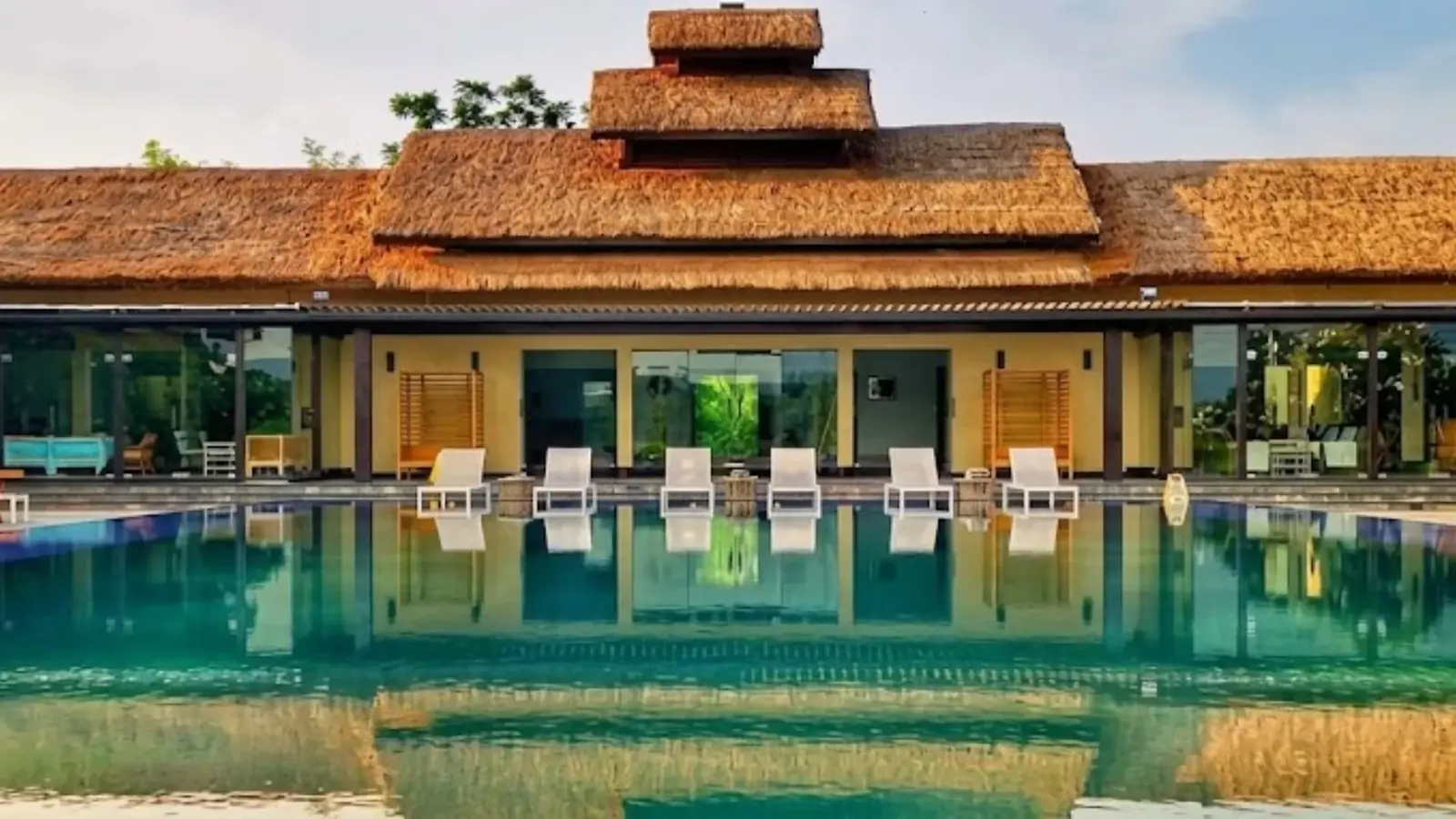
- Hotels. Kathmandu holds some of the most architecturally significant hotels in Asia: heritage properties built from reclaimed Newari woodwork, international five-star brands, and a new generation of contemporary hotels opened in 2025–26. (We confirm availability and current category for every property we use on your dates.)
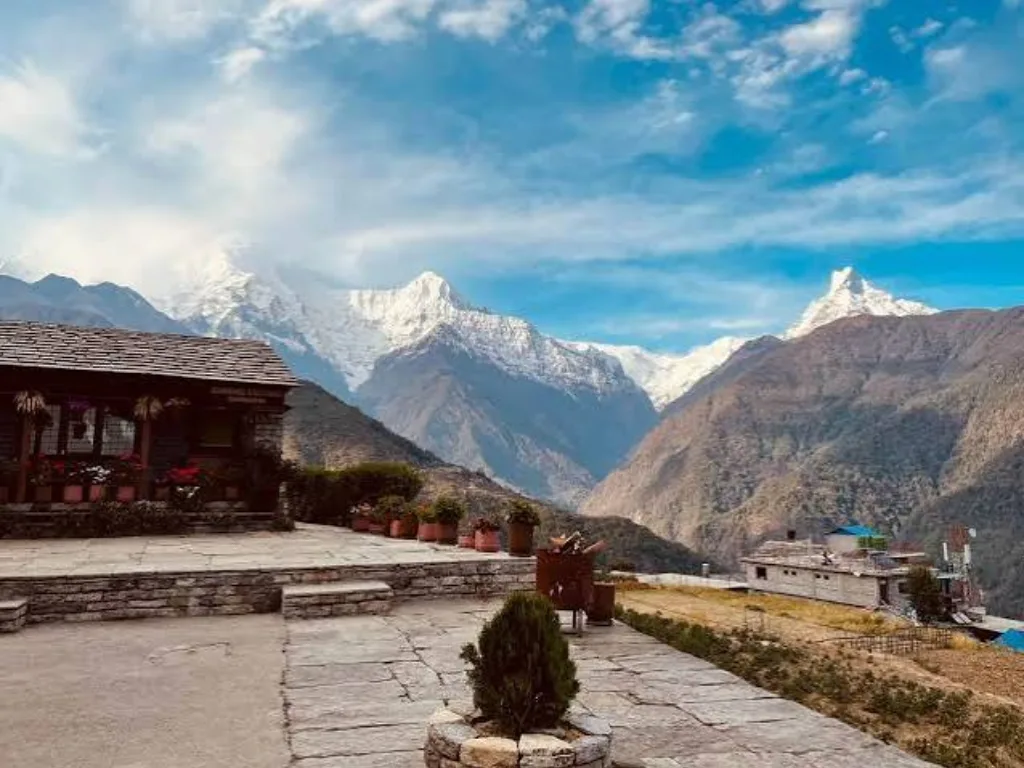
- Mountain lodges. Purpose-built lodge networks on the Everest and Annapurna routes now deliver heated rooms, en-suite bathrooms, proper food and wine at altitude — the teahouse era is no longer the only option.
- Helicopters. Licensed charter operators run scenic flights, transfers and rescues year-round; a shared Everest flight or a full private charter can be arranged on a day’s notice in season.
- Safari lodges. Chitwan and Bardia host internationally standard jungle lodges with naturalists, private jeeps and riverside villas comparable to East African safari camps.
- Arrival. VIP concierge services at Tribhuvan International Airport can fast-track immigration and baggage, so your first hour in Nepal feels like the trip rather than a queue.
What Nepal does not have is Paris-style turnkey luxury everywhere — which is exactly why the operator you travel with matters more here than almost anywhere else. We cover how to choose one in our 9 questions guide.
The Five Luxury Zones of Nepal
Industry specialists describe the country as five distinct luxury zones. First-time visitors should treat them as building blocks:
| Zone | Character | Signature stay type | Signature experience |
|---|---|---|---|
| Kathmandu Valley | Heritage and culture | Palace / heritage hotels | Private UNESCO touring, artisan workshops, tasting menus |
| Pokhara & middle hills | Wellness and views | Ridge-top resorts, lakeside villas | Phewa Lake by private boat, Sarangkot sunrise, spa programmes |
| Chitwan & Bardia (Terai) | Wildlife | Luxury jungle lodges | Private jeep safaris, canoe trips, Tharu culture |
| Everest & Annapurna | High Himalaya | Premium mountain lodges | Everest helicopter day, luxury lodge trekking |
| Upper Mustang & remote regions | Cultural remoteness | Expedition lodges | Walled city of Lo Manthang, rain-shadow landscapes |
Most first trips combine three zones — Kathmandu, the mountains (by air), and one of jungle or lakeside — which is why the classic first-timer itinerary works so well.
Luxury Travel in Nepal vs Other Luxury Destinations
First-timers often ask why Nepal, when the Maldives or the Swiss Alps are more obviously “luxury.” Three structural reasons:
| What you want | Nepal’s answer |
|---|---|
| Scale of experience in one trip | A heritage capital, the world’s highest peaks, tiger-country jungles and alpine lakes within a single 10-day route |
| Access per dollar | Heritage hotels, private guiding, domestic flights and a helicopter day at figures below comparable European or East African itineraries |
| Rarity | A breakfast at the world’s highest-placed hotel, a private audience with a monastery’s abbot, a walled medieval city only reachable by air or a restricted-area permit |
Published operator analysis puts it bluntly: a high-end Nepal itinerary can deliver experiences that would cost several times more in comparable destinations — the Dolomites charge more for a fraction of the drama, East African safaris cost double for wildlife encounters that, while world-class, lack Nepal’s cultural and spiritual depth. The value story is not that Nepal is inexpensive; it is that the ratio of what you experience to what you pay is unusually favourable at the top end — and the reason for that is an industry still maturing rather than a service standard being cut.
The Signature Experiences of Luxury Travel in Nepal
The Everest helicopter day
If one experience defines luxury Himalayan travel, it is this: before dawn, a helicopter lifts off Kathmandu, flies alongside Ama Dablam, Nuptse and Everest, lands at Kala Patthar (5,545m) for photographs, then sets you down for breakfast at Hotel Everest View — recognised by Guinness World Records as the highest-placed luxury hotel on earth — and you are back in the city by lunch. No two-week trek required. Shared flights and full private charters both work; the trade-offs are explained in our luxury Nepal tour cost guide. Tours are arranged through licensed charter operators, and weather always has the final say — a professional itinerary plans an alternative day for exactly that reason.
Heritage hotels that are the destination themselves
Sleeping in Kathmandu’s heritage hotels is closer to staying in a living museum than a hotel: courtyards, hand-carved timber, collections of Nepali art, restaurants serving multi-course tasting menus of the country’s regional cuisines. Pair them with a private guide who reads the city — the difference between seeing a durbar square and understanding one.
Jungle safari, refined
Chitwan National Park and Bardia National Park put you in tiger country: one-horned rhinos, Bengal tigers (429 recorded across Nepal in the national tiger census), gharial crocodiles and some of Asia’s best birdlife — from a lodge with a plunge pool, a naturalist, and a private jeep that stops when you want it to. Chitwan offers the deeper luxury-lodge infrastructure; Bardia is wilder and quieter. We break down the choice in our Chitwan vs Bardia luxury lodge guide.
Luxury mountain lodges and slow trekking
You do not have to trek — but if you walk, you walk well: private rooms with en-suite bathrooms, heated dining rooms, a porter for each traveller, meals to your dietary needs, and the option of a helicopter ride out. Gentle valley and heritage trails suit first-timers far better than high-altitude routes, and they deliver the same mountains.
Wellness in the middle hills
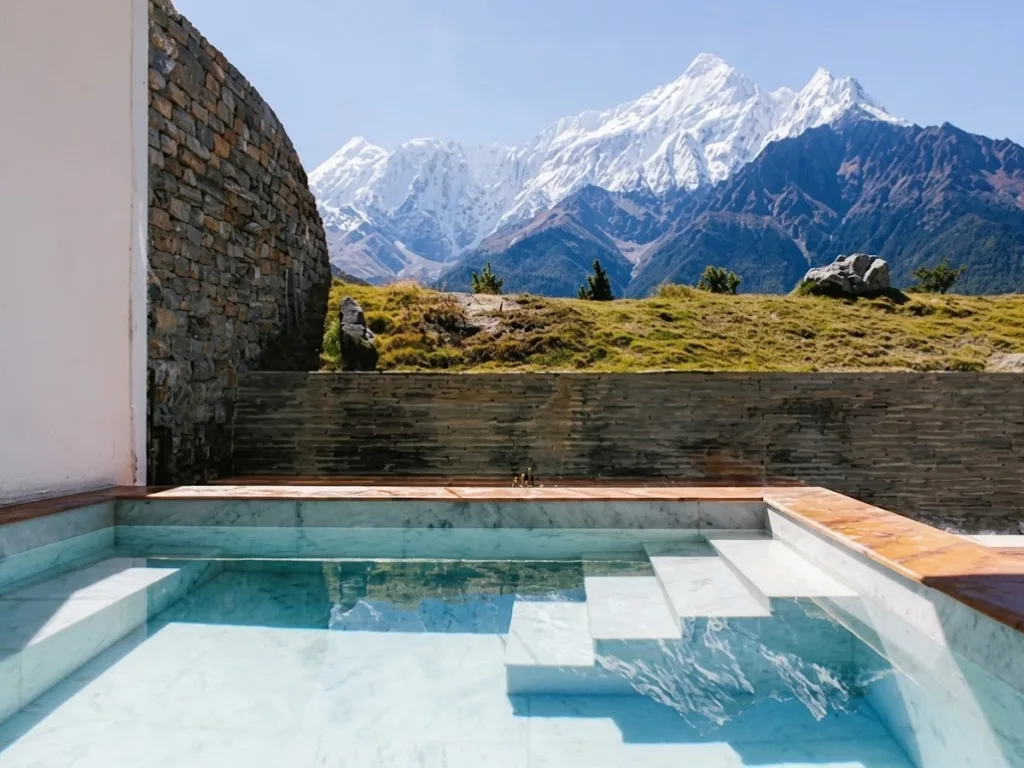
Ridge-top retreats around Pokhara, Nagarkot and Dhulikhel run structured programmes — Ayurvedic consultations, panchakarma, yoga, farm-to-table organic cuisine — against a panorama of Himalayan peaks. For honeymooners and anyone pairing an active leg with real recovery, two or three wellness nights turn a trip from busy into balanced.
Private cultural access
The public version is a monument ticket. The luxury version: a specialist guide in Newari art and architecture, dawn at Boudhanath Stupa before the crowds, a private blessing at a monastery, an afternoon with master metalworkers in Bhaktapur away from the tour buses. The sites are the same; the access is not.
Dining worth planning around
Nepal’s food culture has never been properly exported, and luxury itineraries are where it shows best: multi-course tasting menus tracing every ethnic culinary tradition of the country, served in restored Newari architecture; refined Thakali kitchens serving buckwheat and Himalayan momos; farm-to-table menus grown on the property’s own land at lodge altitude. Mountain lodges have made serious dining at 4,000 metres genuinely possible — and dietary requirements, handled in advance, are handled well. (We confirm current menus and restaurant availability when we build your itinerary.)
What to Expect on the Ground: First-Timer Practicalities
- Visa. On arrival at Tribhuvan, most nationalities receive a tourist visa: 15 days USD 30, 30 days USD 50, 90 days USD 125 (government-published fees). A good operator confirms requirements for your nationality before you fly.
- Flights. Domestic flights are short and frequent — Kathmandu–Pokhara takes about 25 minutes against a full day on the road — but they shift with weather, especially mountain sectors. Itineraries need buffers, and good ones have them.
- First day. Long-haul arrivals deserve a calm day: private airport greeting, an unhurried afternoon, a gentle evening. Anything more ambitious is a common first-timer mistake.
- Pace. Luxury travel in Nepal is deliberately slower than most trips to the country. Long breakfasts, spa gaps between sightseeing days, and a built-in alternative day for weather are features, not padding.
- Dress and culture. Modest dress at temples and monasteries; shoes off at shrines; ask before photographing people. Nepal is deeply hospitable and layered — a private guide reads the etiquette for you in real time.
- Connectivity. Good hotels and lodges carry reliable Wi-Fi; the further into the mountains you go, the more intermittent it gets. Consider that a feature.
- Altitude. Only mountain legs carry altitude risk, and a well-built first trip either avoids high sleeping altitudes or ascends gradually. State your fitness level honestly when you plan — good operators advise accordingly, not aspirationally.
Best Time to Go for Luxury Travel in Nepal
| Season | Months | What it offers | Watch out for |
|---|---|---|---|
| Autumn (peak) | Sep–Nov | Clearest post-monsoon skies, sharp mountain views, festivals (Dashain, Tihar) | Busiest month (October): best suites and helicopter slots book 4–6 months ahead |
| Spring (peak) | Mar–May | Rhododendron blooms, stable helicopter weather, warm valleys | Same early booking pressure |
| Winter (quiet) | Dec–Feb | Clear days, few crowds, excellent Chitwan wildlife viewing | Cold evenings in the valley; high passes inaccessible |
| Monsoon (niche) | Jun–Sep | Lush, green, empty; Upper Mustang sits in the rain shadow with blue skies | Road delays and flight disruptions elsewhere in Nepal |
For a first luxury trip, October–November or March–May is the answer almost every time: best mountain visibility, best lodge availability, best helicopter flying. If your dates fall in the monsoon, the itinerary should be built around rain-shadow regions and city-and-safari content — which is a planner’s job, not a guess.
How Many Days Do You Need?
| Trip length | What works | Best for |
|---|---|---|
| 7 days | Kathmandu + Everest helicopter day + one zone (Chitwan or Pokhara) | travellers with limited time who still want the full arc |
| 10 days | The classic first-timer composition: heritage, Himalayan drama, lakeside calm or a safari finale | most first luxury trips to Nepal |
| 14 days | Deeper valley touring, a slow Pokhara or wellness chapter, a lodge trek or Upper Mustang | travellers who want depth without rushing |
| 2+ weeks | Everything above with room for a second safari, Mustang or a multi-country extension | returns, honeymoons, milestone journeys |
Seven days works, but it samples. Ten days is the length where Nepal shifts from a highlight reel to an experience.
What Luxury Travel in Nepal Costs
Expectations differ wildly here — quotes range from USD 499 for five days to USD 30,000+ for fourteen — so we published a full, sourced breakdown: What Does a Luxury Nepal Tour Cost in 2026?. The short version for first-timers: entry-level luxury private trips start around USD 4,000–6,500 per person for 10 days, fully specified itineraries run USD 8,000–13,000, and the difference is hotel tier, helicopter terms, guide model and inclusions — not a mystery.
First-Timer Mistakes to Avoid
- Treating Nepal like a booking-engine destination. Weather grounds helicopters, roads wash out, flights shift. A real operator pivots for you; a self-booked itinerary absorbs the shock.
- Choosing on headline price alone. “5-star or similar” and “helicopter included” hide the two biggest cost lines. Ask for named hotels and helicopter terms — our operator checklist has the exact questions.
- Cramming five zones into ten days. Depth beats coverage: three zones done properly outperform five done as a checklist.
- Ignoring season. Peak suites and helicopter slots sell out 4–6 months ahead; monsoon itineraries need to be designed, not improvised.
- Skipping insurance with evacuation cover. For any mountain component, confirm your policy covers your trip’s maximum altitude and helicopter evacuation before departure.
- Underestimating arrival day. Build a calm first day after long-haul flights — a private airport greeting and a light afternoon set the tone better than a full sightseeing schedule.
How to Plan Your First Luxury Nepal Trip
- Pick your season (autumn or spring for a first visit) and lock dates early.
- Choose your zones — three is ideal for 10 days.
- Decide your mountain moment — Everest helicopter day vs a gentle lodge trek; both are valid, they suit different people.
- Select your operator — verify registration, ask the nine questions, confirm who operates on the ground.
- Build the itinerary with breathing room — a good plan includes a weather alternative day by design.
- Confirm in writing — named hotels, room categories, meal inclusions, permits, helicopter terms, cancellation and weather policies.
Or start with ours: the Kathmandu–Chitwan Luxury Tour is a natural first luxury Nepal itinerary — heritage capital, wildlife finale — and every element can be tailored.
Frequently Asked Questions
Q. Is luxury travel in Nepal suitable for first-time visitors?
+
Yes — it is arguably the most rewarding way to see the country on a first visit. Private guiding removes the logistical friction, luxury hotels cushion the long-haul arrival, and helicopter and domestic-flight access compress distances that would otherwise eat days of road travel.
Q. Do I need to trek to experience Nepal’s mountains?
+
No. A single-day Everest helicopter tour delivers close views of the world’s highest peaks, a Kala Patthar landing and breakfast at the world’s highest-placed hotel — without a single night above 3,000 metres. Travellers who want to walk can choose gentle heritage trails staying in premium lodges instead of teahouses.
Q. When is the best time for luxury travel in Nepal?
+
October–November and March–May: clearest mountain views, best flying weather for helicopters, and the widest choice of suites and lodges. Winter suits Chitwan safaris and quiet city stays; the monsoon rewards travellers who route their trip into the Upper Mustang rain shadow.
Q. How long should a first luxury Nepal trip be?
+
Ten days is the classic first-timer length — Kathmandu heritage, an Everest helicopter day, and either Pokhara’s lakeside calm or a Chitwan safari finale. Seven days works with a tighter route; fourteen days allows a lodge trek, wellness chapter or Upper Mustang.
Q. Can Nepal be combined with other countries?
+
Yes — multi-region journeys pairing Nepal with Bhutan or Tibet run above USD 30,000 per person at the top end, and India extensions are common. Within Nepal, helicopter and domestic-flight networks make multi-zone itineraries straightforward.
Q. Is luxury Nepal suitable for families and solo travellers?
+
Both, with the right itinerary: families do best with shorter driving legs, connecting rooms or family villas, and a safari finale; solo travellers get the most from private guiding (the single biggest comfort advantage) while being matched with an itinerary where single-room supplements are stated upfront. Couples gravitate to wellness nights, private helicopter days and heritage suites — tell us which of the three you are when you enquire, and the route follows from it.
Q. Plan Your First Luxury Journey With Nepal Lion Tours
+
We are a Kathmandu-based luxury tour operator — the ground team, not a reseller — and first trips are where we do our best work. Everything we send you is written: named accommodation (with availability confirmed for your dates), itemised inclusions, helicopter terms stated plainly through a licensed charter operator, and a registration you can verify — Reg. No. 184920/074/075 — with free cancellation up to 14 days before departure, subject to booking terms.
Tell us your travel dates and group size through the booking form or WhatsApp +977-9851039020, and you will speak to someone in Kathmandu who plans these itineraries every day. Whether you’re travelling solo, as a couple, with friends, or with family, we’ll help you design a premium journey that matches both your expectations and your numbers — start with the Kathmandu–Chitwan Luxury Tour, or read what it actually costs before you decide anything.
Admin
A passionate explorer and writer dedicated to sharing authentic stories, local insights, and expert travel guides from the heart of the Himalayas.
No comments yet
Be the first to share your thoughts and experiences on this story!